Car Body Parts
CN → US| HS编码 | 关税税率 | 原产国 | 目的国 | 文档 |
|---|---|---|---|---|
| 8708295160 | 0.0% | CN | US | 官方文档 |
| 8708106050 | 87.5% | CN | US | 官方文档 |
| 8512202080 | 35.0% | CN | US | 官方文档 |
| 8512909000 | 37.5% | CN | US | 官方文档 |
| 8708295160 | 0.0% | CN | US | 官方文档 |
商品图片
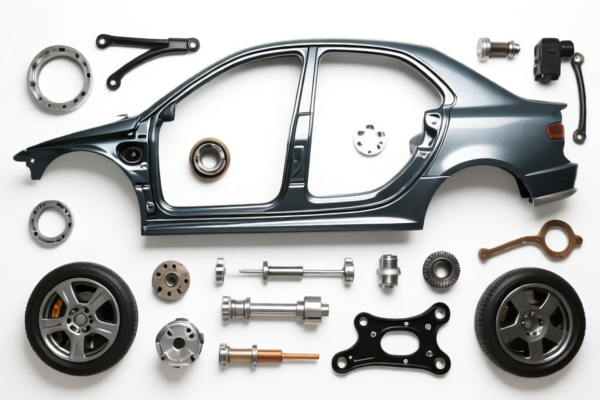
AI分析
🚗 Car Body Parts (Automotive Body Components & Accessories)
🌐 HS Code Reference & Customs Clearance Guide | 2026 Latest Tariff Analysis | Professional Compliance Strategy
📌 I. Product Definition & Classification: Do You Know "Body Parts"?
Car body parts refer to non-structural or semi-structural components that make up the exterior and interior shell of a vehicle, as well as specific lighting/signaling equipment attached to the body. In international trade, these items are often fragmented across multiple HS codes depending on their specific function, material, and integration level.
Key categories include: * General Body Parts & Kits: Bumpers, spoilers, fenders, doors, hoods, and side skirts. * Lighting & Signal Equipment: Headlights, taillights, fog lights, and turn signals. * General Accessories: Trims, moldings, and unspecified body attachments.
⚠️ Critical Distinction:
- If the item is a specific lighting unit (e.g., LED headlamp) → It likely falls under Chapter 85.
- If the item is a generic structural part (e.g., bumper, hood) → It falls under Chapter 87.
- Misclassification Risk: Declaring a headlight as a "general body part" or vice versa can lead to significant duty differences due to different "Section Notes" and "Explanatory Notes."
📦 II. HS Code Classification Details (2026 Latest Tariff Reference)
Based on the provided data, here are the specific HS codes applicable to Car Body Parts, categorized by function and nature.
| HS Code | Product Description | Application Scenario | Key Differentiator |
|---|---|---|---|
8708.29.51.60 |
Body Parts & Accessories | Bumper kits, side skirts, spoilers, general body shell components | Primary Code for General Body Parts. Applies to parts not specified elsewhere (like lights). Note: Includes "body kits." |
8708.29.51.60 |
Other Body Parts | Same as above, generic fallback for body components without specific material conflict | Fallback/Default Code. Used when no specific material (steel/aluminum/copper) is declared or when it doesn't fit other sub-headings. |
8708.10.60.50 |
Vehicle Parts & Accessories | General automotive parts, unspecified body accessories | Broad Category. Used for parts that don't fit specific "body" or "lighting" definitions. Often a "catch-all" for general auto parts. |
8512.20.20.80 |
Lighting/Signaling Equipment Parts | Headlights, taillights, turn signals, fog lights | Specific to Lighting. If the part is purely for illumination/signaling, it MUST go here, not under 8708. |
8512.90.90.00 |
Other Parts for Vehicles | Lighting housing, reflectors, other signaling accessories | Fallback for Lighting. Used for lighting-related parts that aren't complete lamps. |
🔍 Key Insight:
-8708.29.51.60is the most common code for standard body kits (bumper, lips, diffusers) if they are not made of steel/aluminum/copper specifically targeted by higher tariffs.
-8512.20.20.80is mandatory for functional lights. Do not use8708for headlights; customs will reclassify them.
-8708.10.60.50is a general fallback if the part is clearly an auto part but doesn't fit the "body" or "lighting" specifics.
💰 III. 2026 Latest Tariff Rate Breakdown (Including Supplementary Duties)
✅ Applicable Country: United States (US)
✅ Origin: China (CN)
✅ Effective Date: Current rates apply (including Section 301 & 122 Clauses)
🎯 1. 8708.29.51.60 & 8708.29.51.60 (Body Parts / Body Kits)
| Item | Details |
|---|---|
| Base Duty Rate | 2.5% |
| Section 301 Supplementary Duty | +25% |
| Section 122 Duty (Steel/Aluminum/Copper) | +50% (If material is Steel, Aluminum, or Copper) |
| Other Supplementary Duties | +10% (Specific 122 Clause Tariffs) |
| Total Effective Duty Rate | 87.5% (If material is Steel/Al/Cu) 37.5% (If material is Plastic/Carbon Fiber/Composite) |
| Tax Calculation | CIF Value × Total Rate |
| De Minimis Exemption | ❌ Not Applicable (High-duty items are excluded from de minimis) |
| Legal Authority Path | HTSUS:8708.29.51.60 → USITC Footnote → IEEPA Section 301 → Section 122 |
📌 Explanation:
- Scenario A (Plastic/CF/Composite Body Parts):
Base (2.5%) + Section 301 (25%) + Other (10%) = 37.5%
- Scenario B (Steel/Aluminum/Copper Body Parts):
Base (2.5%) + Section 301 (25%) + Section 122 (50%) + Other (10%) = 87.5%
- ⚠️ Critical: If your body kit is made of aluminum, you are hit with the 50% Section 122 tariff. This significantly increases costs. Declaring material accurately is vital.
🎯 2. 8708.10.60.50 (General Vehicle Parts)
| Item | Details |
|---|---|
| Base Duty Rate | 2.5% |
| Section 301 Supplementary Duty | +25% |
| Section 122 Duty | +50% (If material is Steel/Al/Cu) |
| Other Supplementary Duties | +10% |
| Total Effective Duty Rate | 87.5% (If material is Steel/Al/Cu) 37.5% (If material is Non-Metal) |
| Tax Calculation | CIF Value × Total Rate |
📌 Note: This code generally mirrors the
8708.29.51.60rate structure but is used for parts that don't fit the "body" definition precisely. It is still subject to the same heavy supplementary duties.
🎯 3. 8512.20.20.80 & 8512.90.90.00 (Lighting & Signal Parts)
| Item | Details |
|---|---|
| Base Duty Rate | 0.0% (For 8512.20) / 2.5% (For 8512.90) |
| Section 301 Supplementary Duty | +25% |
| Section 122 Duty | Not Applicable (Lighting is generally exempt from Steel/Aluminum/Copper Section 122 duties unless specifically listed, but typically 8512 is treated differently) |
| Other Supplementary Duties | +10% |
| Total Effective Duty Rate | 35.0% (For 8512.20.20.80: 0% + 25% + 10%) 37.5% (For 8512.90.90.00: 2.5% + 25% + 10%) |
| Tax Calculation | CIF Value × Total Rate |
📌 Advantage:
- Lighting parts (8512) have a lower total duty rate (35-37.5%) compared to metal body parts (87.5%).
- Do not misclassify lights as body parts to save duty. Customs audits will reclassify and charge penalties.
- Lighting parts are NOT subject to the 50% Section 122 Steel/Aluminum tariff in the same way body panels are.
🛠️ IV. Customs Clearance Practical Advice (Proven Pitfall Avoidance)
✅ 1. Required Documentation Checklist
| Document | Mandatory? | Description |
|---|---|---|
| ✅ Product Specification Sheet | ✔️ | Must detail material (Plastic, Steel, Aluminum, Carbon Fiber, etc.). This is CRITICAL for Section 122 determination. |
| ✅ Commercial Invoice | ✔️ | Must clearly state "Car Body Parts" or "Lighting Assembly" and include HTS codes. |
| ✅ Packing List | ✔️ | Detailed list of items, quantities, and weights. |
| ✅ Product Photos | ✔️ | Clear images showing the part, labels, and any branding. |
| ✅ Material Declaration | ✔️ | Explicitly state: "Made of ABS Plastic" vs. "Made of Aluminum." Avoid vague terms like "Mixed Materials." |
| ✅ Country of Origin | ✔️ | Certificate of Origin if claiming any preferential treatment (though China origin likely incurs full duties). |
✅ 2. Declaration Strategy (Key Tips)
🔥 "Material Determines Duty, Function Determines Code!"
| Scenario | Correct Declaration | Incorrect Declaration | Risk |
|---|---|---|---|
| Plastic Bumper Kit | HS 8708.29.51.60 |
Declare as "Plastic Trim" | Correct duty: 37.5% |
| Aluminum Hood | HS 8708.29.51.60 (with material note) |
Declare as "Plastic Hood" | HIGH RISK: If found to be Aluminum, duty jumps to 87.5% + penalties. |
| LED Headlight | HS 8512.20.20.80 |
Declare as "Body Part" | REJECTION: Misclassification. Duty will be assessed as 87.5% or goods held. |
| Tail Light Housing | HS 8512.90.90.00 |
Declare as "Body Part" | RECLASSIFICATION: Customs will correct to 8512. Potential fine for false declaration. |
✅ 3. Special Considerations
| Situation | Advice |
|---|---|
| Mixed Materials (e.g., Steel Bumper Cover) | Declare as Steel. Expect 87.5% total duty. Consider if switching to Aluminum or Plastic can reduce cost (though Aluminum also triggers Section 122). |
| Body Kits with Integrated Lights | Split the shipment or declare separately. Lights go to 8512, Body to 8708. This optimizes duty (35% vs 87.5%). |
| Carbon Fiber Parts | Declare as Composite/Carbon Fiber. Not subject to Section 122 Steel/Aluminum/Copper duties. Duty remains 37.5%. |
| Stainless Steel Exhaust Tips | If classified as "Body Parts," Stainless Steel may be treated differently. Check specific HTS notes. Often 8708 applies, but material declaration is key. |
🌍 V. Global Market Comparison (2026 Latest)
| Country/Region | Recommended HS Code | Estimated Duty (China Origin) | Notes |
|---|---|---|---|
| 🇺🇸 USA | 8708.29.51.60 / 8512.20.20.80 |
37.5% - 87.5% | Highest duty due to Section 301 + 122. Material declaration is critical. |
| 🇨🇳 China | 8708.99 / 8512.20 |
5% - 10% | Lower base duties. No Section 301/122 for imports into China. |
| 🇪🇺 EU | 8708.29 / 8512.20 |
0% - 4.5% | Generally low base duties. No equivalent to US Section 122/301. |
| 🇯🇵 Japan | 8708.99 / 8512.20 |
0% - 10% | Preferential rates may apply under JETI/EPA. |
📌 Conclusion:
- The US market is the most challenging for car body parts due to Section 122 (Steel/Al/Cu) and Section 301 tariffs.
- Lighting parts are more cost-effective to import into the US than metal body parts.
- Material selection (Plastic/CF vs. Metal) has a massive impact on landed cost in the US.
📌 VI. Common Mistakes & Pitfalls (Lessons Learned)
❌ Mistake 1: Declaring an Aluminum Bumper as "Plastic Part" to avoid Section 122
👉 Result: Customs inspection reveals aluminum. Backdated duty (87.5%) + Penalty + Storage fees.
❌ Mistake 2: Grouping Headlights with Bumpers under 8708
👉 Result: Misclassification. Customs may reject the entry or reassess at higher rates. Lights should be under 8512.
❌ Mistake 3: Ignoring Material Declaration
👉 Result: Customs will assume the highest duty rate (Steel/Aluminum) if material is unclear.
✅ Correct Approach:
"Body Side Skirt, Model XYZ, Made of ABS Plastic, for Car Brand Y, HTS 8708.29.51.60"
"LED Headlight Assembly, Model ABC, HTS 8512.20.20.80"
🎯 VII. Conclusion: Smart Classification, Lower Costs!
🎯 Remember:
🔹 "Lighting = 35%, Plastic Body = 37.5%, Metal Body = 87.5%"
🔹 "Declare Material Clearly, Or Pay The Premium!"
🔹 "Split Shipments: Lights & Body Parts Separately!"
📌 Pro Tip:
If you are importing large volumes of metal body parts into the US, consider:
1. Transshipment through a third country (e.g., Vietnam, Mexico) to change origin (Note: Rules of Origin apply strictly).
2. Application for Exclusions under Section 301/122 if available.
3. Pre-Ruling: Request an International Trade Commission (ITC) Ruling or CBP Pre-Ruling to confirm classification and duty rate before shipment.
📣 Immediate Action:
📞 Consult with a licensed customs broker.
📄 Provide detailed material specs and product photos.
🚀 Optimize Your Supply Chain for the US Market!
✨ Professional Clearance Starts with Accurate Classification!
💼 Every Percent of Duty Counts in Profit Margins!
用户评价
关于 HS 编码归类
协调制度(HS)是由世界海关组织(WCO)制定的国际贸易商品分类标准。全球 200 多个国家采用 HS 系统作为海关关税、贸易统计和进出口监管的基础。
每个 HS 编码遵循以下层级结构:
- 章(2 位)——商品大类(例如:第 84 章:机器和机械设备)
- 品目(4 位)——章内的更具体分类
- 子目(6 位)——国际通用细分,所有 WCO 成员国统一使用
- 本国细分(8-10 位)——各国自行扩展的细分编码,如美国 HTSUS 10 位编码
正确的 HS 编码归类对于顺利通关、准确缴纳关税和遵守贸易法规至关重要。错误归类可能导致海关延误、多缴关税或罚款。
从CN进口到US时,适用的关税税率可能包括:
- 最惠国(MFN)税率——适用于 WTO 成员国的标准关税税率
- 普通税率——适用于无贸易协定国家
- 贸易救济关税——附加关税,如 301 条款(反倾销)、232 条款(国家安全)或反补贴税
本页内容仅供参考。如需正式归类,请咨询当地海关或持牌报关代理。