Car Body Parts
CN → US| HS Code | Tariff Rate | Origin | Destination | Doc |
|---|---|---|---|---|
| 8708295160 | 0.0% | CN | US | Official Doc |
| 8708106050 | 87.5% | CN | US | Official Doc |
| 8512202080 | 35.0% | CN | US | Official Doc |
| 8512909000 | 37.5% | CN | US | Official Doc |
| 8708295160 | 0.0% | CN | US | Official Doc |
Product Images
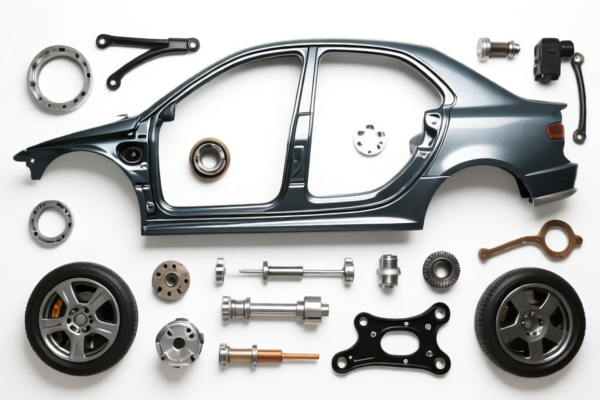
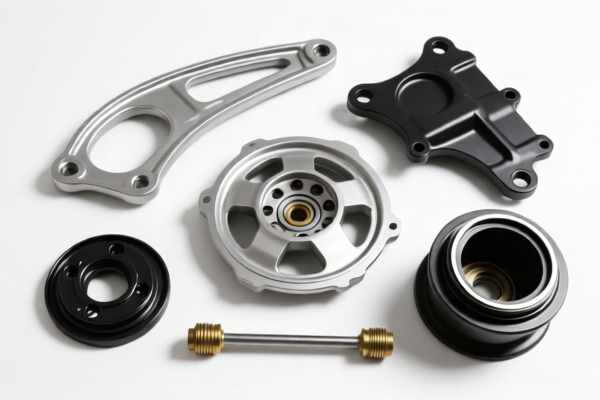
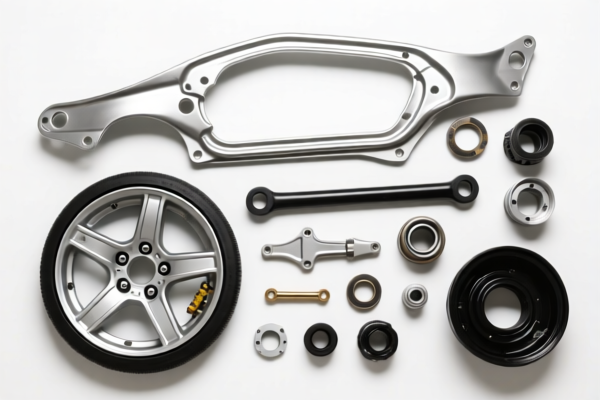
AI Analysis
🚗 Car Body Parts (Automotive Body Components & Accessories)
🌐 HS Code Reference & Customs Clearance Guide | 2026 Latest Tariff Analysis | Professional Compliance Strategy
📌 I. Product Definition & Classification: Do You Know "Body Parts"?
Car body parts refer to non-structural or semi-structural components that make up the exterior and interior shell of a vehicle, as well as specific lighting/signaling equipment attached to the body. In international trade, these items are often fragmented across multiple HS codes depending on their specific function, material, and integration level.
Key categories include: * General Body Parts & Kits: Bumpers, spoilers, fenders, doors, hoods, and side skirts. * Lighting & Signal Equipment: Headlights, taillights, fog lights, and turn signals. * General Accessories: Trims, moldings, and unspecified body attachments.
⚠️ Critical Distinction:
- If the item is a specific lighting unit (e.g., LED headlamp) → It likely falls under Chapter 85.
- If the item is a generic structural part (e.g., bumper, hood) → It falls under Chapter 87.
- Misclassification Risk: Declaring a headlight as a "general body part" or vice versa can lead to significant duty differences due to different "Section Notes" and "Explanatory Notes."
📦 II. HS Code Classification Details (2026 Latest Tariff Reference)
Based on the provided data, here are the specific HS codes applicable to Car Body Parts, categorized by function and nature.
| HS Code | Product Description | Application Scenario | Key Differentiator |
|---|---|---|---|
8708.29.51.60 |
Body Parts & Accessories | Bumper kits, side skirts, spoilers, general body shell components | Primary Code for General Body Parts. Applies to parts not specified elsewhere (like lights). Note: Includes "body kits." |
8708.29.51.60 |
Other Body Parts | Same as above, generic fallback for body components without specific material conflict | Fallback/Default Code. Used when no specific material (steel/aluminum/copper) is declared or when it doesn't fit other sub-headings. |
8708.10.60.50 |
Vehicle Parts & Accessories | General automotive parts, unspecified body accessories | Broad Category. Used for parts that don't fit specific "body" or "lighting" definitions. Often a "catch-all" for general auto parts. |
8512.20.20.80 |
Lighting/Signaling Equipment Parts | Headlights, taillights, turn signals, fog lights | Specific to Lighting. If the part is purely for illumination/signaling, it MUST go here, not under 8708. |
8512.90.90.00 |
Other Parts for Vehicles | Lighting housing, reflectors, other signaling accessories | Fallback for Lighting. Used for lighting-related parts that aren't complete lamps. |
🔍 Key Insight:
-8708.29.51.60is the most common code for standard body kits (bumper, lips, diffusers) if they are not made of steel/aluminum/copper specifically targeted by higher tariffs.
-8512.20.20.80is mandatory for functional lights. Do not use8708for headlights; customs will reclassify them.
-8708.10.60.50is a general fallback if the part is clearly an auto part but doesn't fit the "body" or "lighting" specifics.
💰 III. 2026 Latest Tariff Rate Breakdown (Including Supplementary Duties)
✅ Applicable Country: United States (US)
✅ Origin: China (CN)
✅ Effective Date: Current rates apply (including Section 301 & 122 Clauses)
🎯 1. 8708.29.51.60 & 8708.29.51.60 (Body Parts / Body Kits)
| Item | Details |
|---|---|
| Base Duty Rate | 2.5% |
| Section 301 Supplementary Duty | +25% |
| Section 122 Duty (Steel/Aluminum/Copper) | +50% (If material is Steel, Aluminum, or Copper) |
| Other Supplementary Duties | +10% (Specific 122 Clause Tariffs) |
| Total Effective Duty Rate | 87.5% (If material is Steel/Al/Cu) 37.5% (If material is Plastic/Carbon Fiber/Composite) |
| Tax Calculation | CIF Value × Total Rate |
| De Minimis Exemption | ❌ Not Applicable (High-duty items are excluded from de minimis) |
| Legal Authority Path | HTSUS:8708.29.51.60 → USITC Footnote → IEEPA Section 301 → Section 122 |
📌 Explanation:
- Scenario A (Plastic/CF/Composite Body Parts):
Base (2.5%) + Section 301 (25%) + Other (10%) = 37.5%
- Scenario B (Steel/Aluminum/Copper Body Parts):
Base (2.5%) + Section 301 (25%) + Section 122 (50%) + Other (10%) = 87.5%
- ⚠️ Critical: If your body kit is made of aluminum, you are hit with the 50% Section 122 tariff. This significantly increases costs. Declaring material accurately is vital.
🎯 2. 8708.10.60.50 (General Vehicle Parts)
| Item | Details |
|---|---|
| Base Duty Rate | 2.5% |
| Section 301 Supplementary Duty | +25% |
| Section 122 Duty | +50% (If material is Steel/Al/Cu) |
| Other Supplementary Duties | +10% |
| Total Effective Duty Rate | 87.5% (If material is Steel/Al/Cu) 37.5% (If material is Non-Metal) |
| Tax Calculation | CIF Value × Total Rate |
📌 Note: This code generally mirrors the
8708.29.51.60rate structure but is used for parts that don't fit the "body" definition precisely. It is still subject to the same heavy supplementary duties.
🎯 3. 8512.20.20.80 & 8512.90.90.00 (Lighting & Signal Parts)
| Item | Details |
|---|---|
| Base Duty Rate | 0.0% (For 8512.20) / 2.5% (For 8512.90) |
| Section 301 Supplementary Duty | +25% |
| Section 122 Duty | Not Applicable (Lighting is generally exempt from Steel/Aluminum/Copper Section 122 duties unless specifically listed, but typically 8512 is treated differently) |
| Other Supplementary Duties | +10% |
| Total Effective Duty Rate | 35.0% (For 8512.20.20.80: 0% + 25% + 10%) 37.5% (For 8512.90.90.00: 2.5% + 25% + 10%) |
| Tax Calculation | CIF Value × Total Rate |
📌 Advantage:
- Lighting parts (8512) have a lower total duty rate (35-37.5%) compared to metal body parts (87.5%).
- Do not misclassify lights as body parts to save duty. Customs audits will reclassify and charge penalties.
- Lighting parts are NOT subject to the 50% Section 122 Steel/Aluminum tariff in the same way body panels are.
🛠️ IV. Customs Clearance Practical Advice (Proven Pitfall Avoidance)
✅ 1. Required Documentation Checklist
| Document | Mandatory? | Description |
|---|---|---|
| ✅ Product Specification Sheet | ✔️ | Must detail material (Plastic, Steel, Aluminum, Carbon Fiber, etc.). This is CRITICAL for Section 122 determination. |
| ✅ Commercial Invoice | ✔️ | Must clearly state "Car Body Parts" or "Lighting Assembly" and include HTS codes. |
| ✅ Packing List | ✔️ | Detailed list of items, quantities, and weights. |
| ✅ Product Photos | ✔️ | Clear images showing the part, labels, and any branding. |
| ✅ Material Declaration | ✔️ | Explicitly state: "Made of ABS Plastic" vs. "Made of Aluminum." Avoid vague terms like "Mixed Materials." |
| ✅ Country of Origin | ✔️ | Certificate of Origin if claiming any preferential treatment (though China origin likely incurs full duties). |
✅ 2. Declaration Strategy (Key Tips)
🔥 "Material Determines Duty, Function Determines Code!"
| Scenario | Correct Declaration | Incorrect Declaration | Risk |
|---|---|---|---|
| Plastic Bumper Kit | HS 8708.29.51.60 |
Declare as "Plastic Trim" | Correct duty: 37.5% |
| Aluminum Hood | HS 8708.29.51.60 (with material note) |
Declare as "Plastic Hood" | HIGH RISK: If found to be Aluminum, duty jumps to 87.5% + penalties. |
| LED Headlight | HS 8512.20.20.80 |
Declare as "Body Part" | REJECTION: Misclassification. Duty will be assessed as 87.5% or goods held. |
| Tail Light Housing | HS 8512.90.90.00 |
Declare as "Body Part" | RECLASSIFICATION: Customs will correct to 8512. Potential fine for false declaration. |
✅ 3. Special Considerations
| Situation | Advice |
|---|---|
| Mixed Materials (e.g., Steel Bumper Cover) | Declare as Steel. Expect 87.5% total duty. Consider if switching to Aluminum or Plastic can reduce cost (though Aluminum also triggers Section 122). |
| Body Kits with Integrated Lights | Split the shipment or declare separately. Lights go to 8512, Body to 8708. This optimizes duty (35% vs 87.5%). |
| Carbon Fiber Parts | Declare as Composite/Carbon Fiber. Not subject to Section 122 Steel/Aluminum/Copper duties. Duty remains 37.5%. |
| Stainless Steel Exhaust Tips | If classified as "Body Parts," Stainless Steel may be treated differently. Check specific HTS notes. Often 8708 applies, but material declaration is key. |
🌍 V. Global Market Comparison (2026 Latest)
| Country/Region | Recommended HS Code | Estimated Duty (China Origin) | Notes |
|---|---|---|---|
| 🇺🇸 USA | 8708.29.51.60 / 8512.20.20.80 |
37.5% - 87.5% | Highest duty due to Section 301 + 122. Material declaration is critical. |
| 🇨🇳 China | 8708.99 / 8512.20 |
5% - 10% | Lower base duties. No Section 301/122 for imports into China. |
| 🇪🇺 EU | 8708.29 / 8512.20 |
0% - 4.5% | Generally low base duties. No equivalent to US Section 122/301. |
| 🇯🇵 Japan | 8708.99 / 8512.20 |
0% - 10% | Preferential rates may apply under JETI/EPA. |
📌 Conclusion:
- The US market is the most challenging for car body parts due to Section 122 (Steel/Al/Cu) and Section 301 tariffs.
- Lighting parts are more cost-effective to import into the US than metal body parts.
- Material selection (Plastic/CF vs. Metal) has a massive impact on landed cost in the US.
📌 VI. Common Mistakes & Pitfalls (Lessons Learned)
❌ Mistake 1: Declaring an Aluminum Bumper as "Plastic Part" to avoid Section 122
👉 Result: Customs inspection reveals aluminum. Backdated duty (87.5%) + Penalty + Storage fees.
❌ Mistake 2: Grouping Headlights with Bumpers under 8708
👉 Result: Misclassification. Customs may reject the entry or reassess at higher rates. Lights should be under 8512.
❌ Mistake 3: Ignoring Material Declaration
👉 Result: Customs will assume the highest duty rate (Steel/Aluminum) if material is unclear.
✅ Correct Approach:
"Body Side Skirt, Model XYZ, Made of ABS Plastic, for Car Brand Y, HTS 8708.29.51.60"
"LED Headlight Assembly, Model ABC, HTS 8512.20.20.80"
🎯 VII. Conclusion: Smart Classification, Lower Costs!
🎯 Remember:
🔹 "Lighting = 35%, Plastic Body = 37.5%, Metal Body = 87.5%"
🔹 "Declare Material Clearly, Or Pay The Premium!"
🔹 "Split Shipments: Lights & Body Parts Separately!"
📌 Pro Tip:
If you are importing large volumes of metal body parts into the US, consider:
1. Transshipment through a third country (e.g., Vietnam, Mexico) to change origin (Note: Rules of Origin apply strictly).
2. Application for Exclusions under Section 301/122 if available.
3. Pre-Ruling: Request an International Trade Commission (ITC) Ruling or CBP Pre-Ruling to confirm classification and duty rate before shipment.
📣 Immediate Action:
📞 Consult with a licensed customs broker.
📄 Provide detailed material specs and product photos.
🚀 Optimize Your Supply Chain for the US Market!
✨ Professional Clearance Starts with Accurate Classification!
💼 Every Percent of Duty Counts in Profit Margins!
Customer Reviews
About HS Code Classification
The Harmonized System (HS) is an internationally standardized nomenclature developed by the World Customs Organization (WCO) to classify traded products. Over 200 countries use the HS system as the basis for customs tariffs, trade statistics, and import/export regulations.
Each HS code follows a hierarchical structure:
- Chapter (2 digits) — Broad category of goods (e.g., Chapter 84: Machinery and Mechanical Appliances)
- Heading (4 digits) — More specific grouping within the chapter
- Subheading (6 digits) — Internationally standardized breakdown, used by all WCO member countries
- National subdivisions (8-10 digits) — Country-specific extensions for further classification, such as US HTSUS 10-digit codes
Correct HS code classification is essential for smooth customs clearance, accurate duty payment, and compliance with trade regulations. Misclassification can lead to customs delays, overpayment of duties, or penalties.
When importing from CN to US, the applicable tariff rates may include:
- Most-Favored-Nation (MFN) rate — The standard duty rate applied to WTO members
- General rate — Applied to countries without trade agreements
- Trade remedy duties — Additional tariffs such as Section 301 (anti-dumping), Section 232 (national security), or countervailing duties
The information provided on this page is for reference purposes only. For official classification, please consult with your local customs authority or a licensed customs broker.