Car Key
CN → US| HS编码 | 关税税率 | 原产国 | 目的国 | 文档 |
|---|---|---|---|---|
| 8512909000 | 37.5% | CN | US | 官方文档 |
| 8543709860 | 37.6% | CN | US | 官方文档 |
| 8543706000 | 35.0% | CN | US | 官方文档 |
商品图片
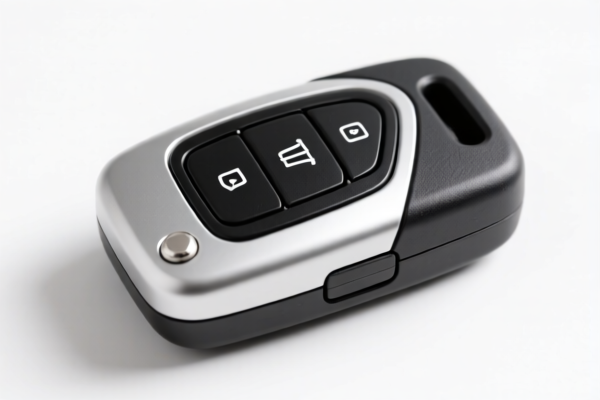
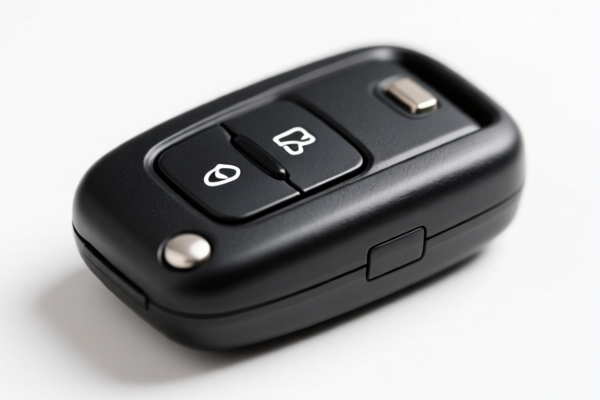
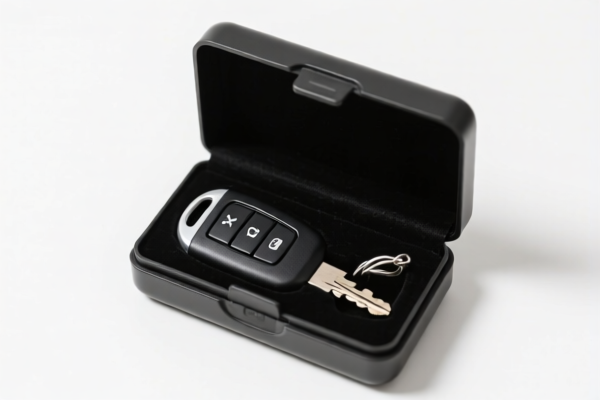
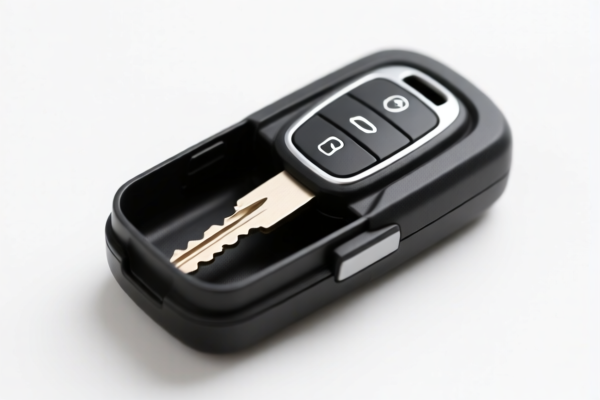
AI分析
🔑 Car Key (Vehicle Keys & Remotes)
🌐 HS Code Reference & Customs Clearance Guide | 2026 Latest Tariff Analysis | Professional Customs Strategy
📌 Part 1: Product Definition & Classification: What exactly is a "Car Key"?
A car key is not just a piece of metal; in the context of international trade, it is a sophisticated signal/control device or an electronic assembly for motor vehicles. Its classification depends heavily on its specific function, internal circuitry, and whether it acts as a standalone electronic device or a dedicated vehicle part.
Key Functional Distinctions: * Vehicle Signal/Control Component: Keys that function strictly as part of the vehicle's immobilizer, door lock, or ignition system are classified as parts/accessories for motor vehicles. * Standalone Electronic Device: Keys with independent processing functions (e.g., complex Bluetooth pairing, standalone remote controls not strictly bound to vehicle specific protocols in a generic sense) may fall under Other Electrical Machines/Devices.
⚠️ Critical Classification Point:
- If the key is a dedicated immobilizer/ignition component for a specific vehicle model → It is treated as a vehicle part.
- If the key is a generic electronic remote with independent logic, not explicitly listed as a vehicle part → It falls under the "Other Machinery/Devices" catch-all category.
📦 Part 2: HS Code Classification Details (Based on Provided Data)
Based on the provided data, there are three primary classification scenarios for Car Keys. Each has distinct tax implications.
| HS Code | Product Description & Logic | Tax Rate (Total) | Key Characteristics |
|---|---|---|---|
8512.90.90.00 |
Parts of Signal/Control Equipment for Motor Vehicles | 37.5% | Treated as a vehicle part. Fits the "Signal/Control Equipment" category. |
8543.70.98.60 |
Other Electrical Machines/Devices (Catch-all) | 37.6% | Treated as a standalone electronic device. Has independent function, not an amplifier or instrument pedal. |
8543.70.60.00 |
Other Electrical Machines/Devices (Specific Function) | 35.0% | Treated as a functional device (e.g., start/connect). No material conflict. |
🔍 Key Insight:
- The difference between 35.0% and 37.6% lies in the Base Duty.
-8512.90.90.00(Vehicle Part) has a 2.5% base duty.
-8543.70.98.60(Generic Electronic) has a 2.6% base duty.
-8543.70.60.00(Specific Functional Device) has a 0.0% base duty, making it the most tax-efficient option if applicable.
💰 Part 3: 2026 Tariff Rate Breakdown (Detailed)
✅ Applicable Market: United States (US)
✅ Origin: China (CN)
✅ Effective Date: Current tariffs apply (including Section 301 and IEEPA provisions)
🎯 1. 8512.90.90.00 – Vehicle Signal/Control Equipment Parts
- Summary: Classified as a part of the vehicle's signal/control system.
- Tax Breakdown:
- Base Duty: 2.5%
- Section 301 Add-on: 25.0%
- IEEPA (122 Clause): 10.0%
- Total Tariff: 37.5%
- Legal Path:
8512.90.90.00→Section 301: 25%→IEEPA: 10%
📌 Note: This is the standard classification for OEM or direct replacement vehicle keys that integrate directly with the car's immobilizer system.
🎯 2. 8543.70.98.60 – Other Electrical Machines/Devices (General)
- Summary: Classified as a standalone electronic device with independent function, not explicitly listed elsewhere (like amplifiers or instrument pedals).
- Tax Breakdown:
- Base Duty: 2.6%
- Section 301 Add-on: 25.0%
- IEEPA (122 Clause): 10.0%
- Total Tariff: 37.6%
- Legal Path:
8543.70.98.60→Section 301: 25%→IEEPA: 10%
📌 Note: This classification is riskier and slightly more expensive. It applies if customs considers the key a generic electronic gadget rather than a vehicle part.
🎯 3. 8543.70.60.00 – Other Electrical Machines/Devices (Specific Function)
- Summary: Classified as a device with a specific function (e.g., start/connect), fitting the "Other" catch-all principle with no material conflict.
- Tax Breakdown:
- Base Duty: 0.0%
- Section 301 Add-on: 25.0%
- IEEPA (122 Clause): 10.0%
- Total Tariff: 35.0%
- Legal Path:
8543.70.60.00→Section 301: 25%→IEEPA: 10%
📌 💡 Optimization Opportunity:
- This is the lowest tariff option (35.0%).
- It is achievable if the product can be justified as a functional electronic device with a 0% base duty, rather than a vehicle part (2.5% base) or generic device (2.6% base).
- Requirement: Must demonstrate the key’s function as a "specific functional device" (e.g., start/connection logic) without conflicting material definitions.
🛠️ Part 4: Customs Clearance Practical Advice
✅ 1. Documentation Checklist (Essential for Clearance)
| Document | Required? | Purpose |
|---|---|---|
| Product Specification Sheet | ✅ Yes | Must detail: Signal frequency, protocol (e.g., RF, Bluetooth), function (lock/unlock/start), and whether it is vehicle-specific. |
| Circuit Diagram / Block Diagram | ✅ Yes | Critical to prove if it is a standalone electronic device (for 8543) or a vehicle part (for 8512). |
| Product Photos | ✅ Yes | Show labels, connectors, and any branding. |
| Commercial Invoice | ✅ Yes | Describe the item accurately (e.g., "Electronic Car Key Remote" vs. "Vehicle Immobilizer Part"). |
| Origin Certificate | ✅ Yes | To verify China origin for Section 301/IEEPA calculations. |
✅ 2. Declaration Strategy (Key Tips)
🔥 "Function Determines Code: Vehicle Part vs. Electronic Device!"
| Scenario | Recommended HS Code | Reasoning |
|---|---|---|
| OEM Replacement Key (Vehicle-specific, integrates with immobilizer) | 8512.90.90.00 |
Clearly a part of vehicle signal/control equipment. |
| Generic Electronic Key/Remote (Independent function, no specific vehicle tie) | 8543.70.98.60 |
Standalone electronic device, catch-all category. |
| Smart Key with Start/Connect Function (Justified as specific functional device) | 8543.70.60.00 |
Best for tax savings (35%). Emphasize "start/connect" function. |
⚠️ Warning:
- Do not misdeclare a vehicle-specific key as a generic electronic device to save tax if it clearly functions as a vehicle part. Customs may reclassify and penalize.
- However, if the key has independent logic (e.g., a universal remote starter or a Bluetooth key fob not tied to a specific car's immobilizer),8543.70.60.00may be a defensible and cheaper option.
✅ 3. Special Cases & Pitfalls
| Situation | Advice |
|---|---|
| Key with Battery | The battery is typically declared separately or included in the unit value. Ensure the HS code reflects the key itself. |
| Smart Key vs. Traditional Key | Traditional metal keys (no electronics) may fall under 8302.41 (low duty). Electronic keys fall under 85xx. Ensure you are not declaring an electronic key as a simple metal part. |
| OEM vs. Aftermarket | Aftermarket keys often have more flexibility in declaration. Emphasize functional independence to potentially use 8543 categories. |
| Section 301 Exemptions | Check if your specific key type has been exempted from the 25% Section 301 tariff. Rare for consumer electronics, but possible for specific industrial controls. |
🌍 Part 5: Global Market Comparison (2026)
| Market | Recommended HS Code (Electronic Key) | Estimated Total Duty | Notes |
|---|---|---|---|
| 🇺🇸 USA | 8512.90.90.00 or 8543.70.60.00 |
35.0% – 37.6% | High tariffs due to Section 301 + IEEPA. |
| 🇨🇳 China | 8302.41 (Metal) / 8543.70 (Electronic) |
0% – 5% | Low import duties for car accessories. |
| 🇪🇺 EU | 8302.41 (Metal) / 8543.70 (Electronic) |
0% – 4.5% | No major retaliatory tariffs. |
| 🇬🇧 UK | 8302.41 / 8543.70 |
0% – 4.5% | Post-Brexit rates generally low for accessories. |
📌 Conclusion:
- The US market is the most challenging due to 35-37.6% total tariffs.
- China, EU, and UK have significantly lower duties.
- If shipping to the US, optimizing the HS Code to8543.70.60.00(35%) instead of8512.90.90.00(37.5%) can save 2.5% on the CIF value, which is significant for high-volume shipments.
📌 Part 6: Common Mistakes & Pitfalls
❌ Mistake 1: Declaring an electronic key as a metal key part (8302).
👉 Result: Customs will reclassify, adding 25% Section 301 + 10% IEEPA duties, plus potential fines.
❌ Mistake 2: Using 8543.70.98.60 (37.6%) when 8543.70.60.00 (35.0%) is applicable.
👉 Result: Overpaying 2.6% unnecessarily. Always check if the "specific function" argument holds for 60.00.
❌ Mistake 3: Ignoring the IEEPA 10% Clause.
👉 Result: Many importers only factor in the 25% Section 301 tariff, leading to a 10% budget shortfall in landed costs.
🎯 Part 7: Final Recommendation
🎯 Key Takeaway:
🔹 For Vehicle-Specific Keys: Use
8512.90.90.00(37.5%). It is the most compliant.
🔹 For Generic/Smart Keys: Argue for8543.70.60.00(35.0%) by emphasizing specific functionality (start/connect) and 0% base duty.
🔹 Avoid:8543.70.98.60(37.6%) unless no other category fits, as it has the highest base duty.
📌 Pro Tip:
- Provide Circuit Diagrams: To support
8543.70.60.00, show that the key has independent electronic processing (not just a simple transponder chip wired to the car).- Pre-Ruling: If shipping high volumes, consider applying for a US Customs Ruling to secure the 35.0% rate.
📣 Action Plan:
📞 Contact your customs broker with the product specs.
📄 Prepare documentation highlighting the "Start/Connect" function.
📉 Calculate savings: On a $10,000 shipment, choosing8543.70.60.00(35%) over8512.90.90.00(37.5%) saves $250.
🚀 Clear customs faster, save costs, and stay compliant!
✨ Professional Customs, Precise Classification!
💼 Every percentage point matters in global trade!
用户评价
关于 HS 编码归类
协调制度(HS)是由世界海关组织(WCO)制定的国际贸易商品分类标准。全球 200 多个国家采用 HS 系统作为海关关税、贸易统计和进出口监管的基础。
每个 HS 编码遵循以下层级结构:
- 章(2 位)——商品大类(例如:第 84 章:机器和机械设备)
- 品目(4 位)——章内的更具体分类
- 子目(6 位)——国际通用细分,所有 WCO 成员国统一使用
- 本国细分(8-10 位)——各国自行扩展的细分编码,如美国 HTSUS 10 位编码
正确的 HS 编码归类对于顺利通关、准确缴纳关税和遵守贸易法规至关重要。错误归类可能导致海关延误、多缴关税或罚款。
从CN进口到US时,适用的关税税率可能包括:
- 最惠国(MFN)税率——适用于 WTO 成员国的标准关税税率
- 普通税率——适用于无贸易协定国家
- 贸易救济关税——附加关税,如 301 条款(反倾销)、232 条款(国家安全)或反补贴税
本页内容仅供参考。如需正式归类,请咨询当地海关或持牌报关代理。