Car Key
CN → US| HS Code | Tariff Rate | Origin | Destination | Doc |
|---|---|---|---|---|
| 8512909000 | 37.5% | CN | US | Official Doc |
| 8543709860 | 37.6% | CN | US | Official Doc |
| 8543706000 | 35.0% | CN | US | Official Doc |
Product Images
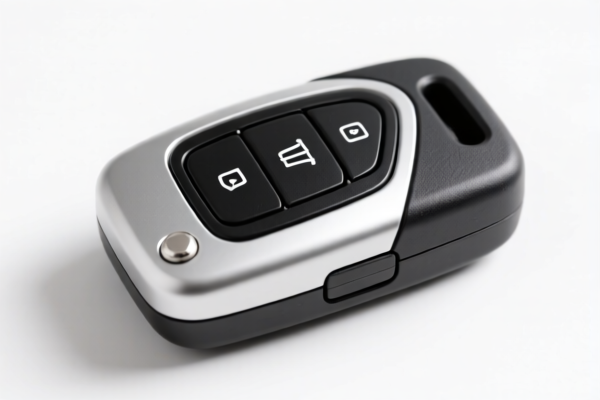
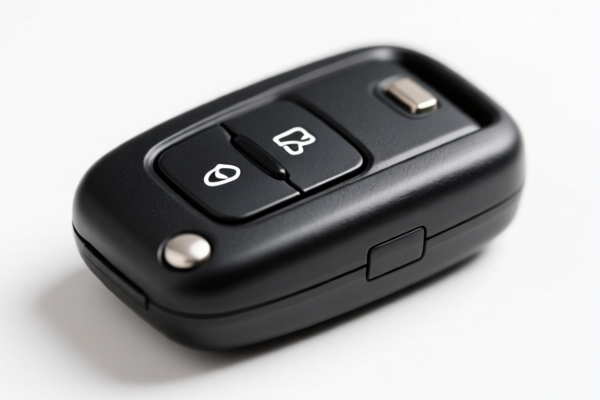
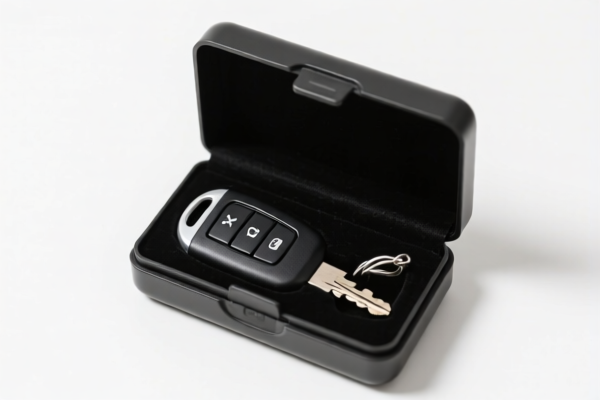
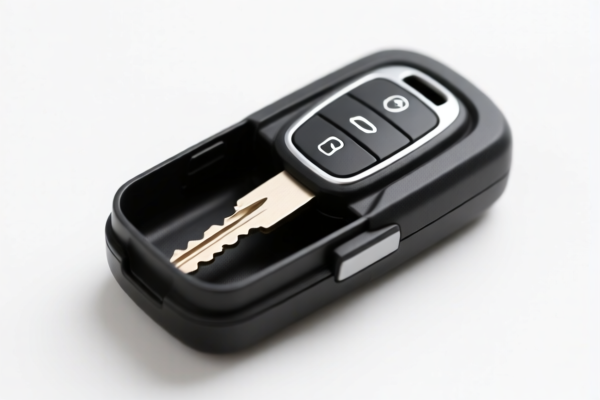
AI Analysis
🔑 Car Key (Vehicle Keys & Remotes)
🌐 HS Code Reference & Customs Clearance Guide | 2026 Latest Tariff Analysis | Professional Customs Strategy
📌 Part 1: Product Definition & Classification: What exactly is a "Car Key"?
A car key is not just a piece of metal; in the context of international trade, it is a sophisticated signal/control device or an electronic assembly for motor vehicles. Its classification depends heavily on its specific function, internal circuitry, and whether it acts as a standalone electronic device or a dedicated vehicle part.
Key Functional Distinctions: * Vehicle Signal/Control Component: Keys that function strictly as part of the vehicle's immobilizer, door lock, or ignition system are classified as parts/accessories for motor vehicles. * Standalone Electronic Device: Keys with independent processing functions (e.g., complex Bluetooth pairing, standalone remote controls not strictly bound to vehicle specific protocols in a generic sense) may fall under Other Electrical Machines/Devices.
⚠️ Critical Classification Point:
- If the key is a dedicated immobilizer/ignition component for a specific vehicle model → It is treated as a vehicle part.
- If the key is a generic electronic remote with independent logic, not explicitly listed as a vehicle part → It falls under the "Other Machinery/Devices" catch-all category.
📦 Part 2: HS Code Classification Details (Based on Provided Data)
Based on the provided data, there are three primary classification scenarios for Car Keys. Each has distinct tax implications.
| HS Code | Product Description & Logic | Tax Rate (Total) | Key Characteristics |
|---|---|---|---|
8512.90.90.00 |
Parts of Signal/Control Equipment for Motor Vehicles | 37.5% | Treated as a vehicle part. Fits the "Signal/Control Equipment" category. |
8543.70.98.60 |
Other Electrical Machines/Devices (Catch-all) | 37.6% | Treated as a standalone electronic device. Has independent function, not an amplifier or instrument pedal. |
8543.70.60.00 |
Other Electrical Machines/Devices (Specific Function) | 35.0% | Treated as a functional device (e.g., start/connect). No material conflict. |
🔍 Key Insight:
- The difference between 35.0% and 37.6% lies in the Base Duty.
-8512.90.90.00(Vehicle Part) has a 2.5% base duty.
-8543.70.98.60(Generic Electronic) has a 2.6% base duty.
-8543.70.60.00(Specific Functional Device) has a 0.0% base duty, making it the most tax-efficient option if applicable.
💰 Part 3: 2026 Tariff Rate Breakdown (Detailed)
✅ Applicable Market: United States (US)
✅ Origin: China (CN)
✅ Effective Date: Current tariffs apply (including Section 301 and IEEPA provisions)
🎯 1. 8512.90.90.00 – Vehicle Signal/Control Equipment Parts
- Summary: Classified as a part of the vehicle's signal/control system.
- Tax Breakdown:
- Base Duty: 2.5%
- Section 301 Add-on: 25.0%
- IEEPA (122 Clause): 10.0%
- Total Tariff: 37.5%
- Legal Path:
8512.90.90.00→Section 301: 25%→IEEPA: 10%
📌 Note: This is the standard classification for OEM or direct replacement vehicle keys that integrate directly with the car's immobilizer system.
🎯 2. 8543.70.98.60 – Other Electrical Machines/Devices (General)
- Summary: Classified as a standalone electronic device with independent function, not explicitly listed elsewhere (like amplifiers or instrument pedals).
- Tax Breakdown:
- Base Duty: 2.6%
- Section 301 Add-on: 25.0%
- IEEPA (122 Clause): 10.0%
- Total Tariff: 37.6%
- Legal Path:
8543.70.98.60→Section 301: 25%→IEEPA: 10%
📌 Note: This classification is riskier and slightly more expensive. It applies if customs considers the key a generic electronic gadget rather than a vehicle part.
🎯 3. 8543.70.60.00 – Other Electrical Machines/Devices (Specific Function)
- Summary: Classified as a device with a specific function (e.g., start/connect), fitting the "Other" catch-all principle with no material conflict.
- Tax Breakdown:
- Base Duty: 0.0%
- Section 301 Add-on: 25.0%
- IEEPA (122 Clause): 10.0%
- Total Tariff: 35.0%
- Legal Path:
8543.70.60.00→Section 301: 25%→IEEPA: 10%
📌 💡 Optimization Opportunity:
- This is the lowest tariff option (35.0%).
- It is achievable if the product can be justified as a functional electronic device with a 0% base duty, rather than a vehicle part (2.5% base) or generic device (2.6% base).
- Requirement: Must demonstrate the key’s function as a "specific functional device" (e.g., start/connection logic) without conflicting material definitions.
🛠️ Part 4: Customs Clearance Practical Advice
✅ 1. Documentation Checklist (Essential for Clearance)
| Document | Required? | Purpose |
|---|---|---|
| Product Specification Sheet | ✅ Yes | Must detail: Signal frequency, protocol (e.g., RF, Bluetooth), function (lock/unlock/start), and whether it is vehicle-specific. |
| Circuit Diagram / Block Diagram | ✅ Yes | Critical to prove if it is a standalone electronic device (for 8543) or a vehicle part (for 8512). |
| Product Photos | ✅ Yes | Show labels, connectors, and any branding. |
| Commercial Invoice | ✅ Yes | Describe the item accurately (e.g., "Electronic Car Key Remote" vs. "Vehicle Immobilizer Part"). |
| Origin Certificate | ✅ Yes | To verify China origin for Section 301/IEEPA calculations. |
✅ 2. Declaration Strategy (Key Tips)
🔥 "Function Determines Code: Vehicle Part vs. Electronic Device!"
| Scenario | Recommended HS Code | Reasoning |
|---|---|---|
| OEM Replacement Key (Vehicle-specific, integrates with immobilizer) | 8512.90.90.00 |
Clearly a part of vehicle signal/control equipment. |
| Generic Electronic Key/Remote (Independent function, no specific vehicle tie) | 8543.70.98.60 |
Standalone electronic device, catch-all category. |
| Smart Key with Start/Connect Function (Justified as specific functional device) | 8543.70.60.00 |
Best for tax savings (35%). Emphasize "start/connect" function. |
⚠️ Warning:
- Do not misdeclare a vehicle-specific key as a generic electronic device to save tax if it clearly functions as a vehicle part. Customs may reclassify and penalize.
- However, if the key has independent logic (e.g., a universal remote starter or a Bluetooth key fob not tied to a specific car's immobilizer),8543.70.60.00may be a defensible and cheaper option.
✅ 3. Special Cases & Pitfalls
| Situation | Advice |
|---|---|
| Key with Battery | The battery is typically declared separately or included in the unit value. Ensure the HS code reflects the key itself. |
| Smart Key vs. Traditional Key | Traditional metal keys (no electronics) may fall under 8302.41 (low duty). Electronic keys fall under 85xx. Ensure you are not declaring an electronic key as a simple metal part. |
| OEM vs. Aftermarket | Aftermarket keys often have more flexibility in declaration. Emphasize functional independence to potentially use 8543 categories. |
| Section 301 Exemptions | Check if your specific key type has been exempted from the 25% Section 301 tariff. Rare for consumer electronics, but possible for specific industrial controls. |
🌍 Part 5: Global Market Comparison (2026)
| Market | Recommended HS Code (Electronic Key) | Estimated Total Duty | Notes |
|---|---|---|---|
| 🇺🇸 USA | 8512.90.90.00 or 8543.70.60.00 |
35.0% – 37.6% | High tariffs due to Section 301 + IEEPA. |
| 🇨🇳 China | 8302.41 (Metal) / 8543.70 (Electronic) |
0% – 5% | Low import duties for car accessories. |
| 🇪🇺 EU | 8302.41 (Metal) / 8543.70 (Electronic) |
0% – 4.5% | No major retaliatory tariffs. |
| 🇬🇧 UK | 8302.41 / 8543.70 |
0% – 4.5% | Post-Brexit rates generally low for accessories. |
📌 Conclusion:
- The US market is the most challenging due to 35-37.6% total tariffs.
- China, EU, and UK have significantly lower duties.
- If shipping to the US, optimizing the HS Code to8543.70.60.00(35%) instead of8512.90.90.00(37.5%) can save 2.5% on the CIF value, which is significant for high-volume shipments.
📌 Part 6: Common Mistakes & Pitfalls
❌ Mistake 1: Declaring an electronic key as a metal key part (8302).
👉 Result: Customs will reclassify, adding 25% Section 301 + 10% IEEPA duties, plus potential fines.
❌ Mistake 2: Using 8543.70.98.60 (37.6%) when 8543.70.60.00 (35.0%) is applicable.
👉 Result: Overpaying 2.6% unnecessarily. Always check if the "specific function" argument holds for 60.00.
❌ Mistake 3: Ignoring the IEEPA 10% Clause.
👉 Result: Many importers only factor in the 25% Section 301 tariff, leading to a 10% budget shortfall in landed costs.
🎯 Part 7: Final Recommendation
🎯 Key Takeaway:
🔹 For Vehicle-Specific Keys: Use
8512.90.90.00(37.5%). It is the most compliant.
🔹 For Generic/Smart Keys: Argue for8543.70.60.00(35.0%) by emphasizing specific functionality (start/connect) and 0% base duty.
🔹 Avoid:8543.70.98.60(37.6%) unless no other category fits, as it has the highest base duty.
📌 Pro Tip:
- Provide Circuit Diagrams: To support
8543.70.60.00, show that the key has independent electronic processing (not just a simple transponder chip wired to the car).- Pre-Ruling: If shipping high volumes, consider applying for a US Customs Ruling to secure the 35.0% rate.
📣 Action Plan:
📞 Contact your customs broker with the product specs.
📄 Prepare documentation highlighting the "Start/Connect" function.
📉 Calculate savings: On a $10,000 shipment, choosing8543.70.60.00(35%) over8512.90.90.00(37.5%) saves $250.
🚀 Clear customs faster, save costs, and stay compliant!
✨ Professional Customs, Precise Classification!
💼 Every percentage point matters in global trade!
Customer Reviews
About HS Code Classification
The Harmonized System (HS) is an internationally standardized nomenclature developed by the World Customs Organization (WCO) to classify traded products. Over 200 countries use the HS system as the basis for customs tariffs, trade statistics, and import/export regulations.
Each HS code follows a hierarchical structure:
- Chapter (2 digits) — Broad category of goods (e.g., Chapter 84: Machinery and Mechanical Appliances)
- Heading (4 digits) — More specific grouping within the chapter
- Subheading (6 digits) — Internationally standardized breakdown, used by all WCO member countries
- National subdivisions (8-10 digits) — Country-specific extensions for further classification, such as US HTSUS 10-digit codes
Correct HS code classification is essential for smooth customs clearance, accurate duty payment, and compliance with trade regulations. Misclassification can lead to customs delays, overpayment of duties, or penalties.
When importing from CN to US, the applicable tariff rates may include:
- Most-Favored-Nation (MFN) rate — The standard duty rate applied to WTO members
- General rate — Applied to countries without trade agreements
- Trade remedy duties — Additional tariffs such as Section 301 (anti-dumping), Section 232 (national security), or countervailing duties
The information provided on this page is for reference purposes only. For official classification, please consult with your local customs authority or a licensed customs broker.