Car Reflective Vest
CN → US| HS编码 | 关税税率 | 原产国 | 目的国 | 文档 |
|---|---|---|---|---|
| 6217909045 | 32.1% | CN | US | 官方文档 |
| 6117809510 | 32.1% | CN | US | 官方文档 |
| 6117809540 | 32.1% | CN | US | 官方文档 |
| 6217909095 | 32.1% | CN | US | 官方文档 |
商品图片
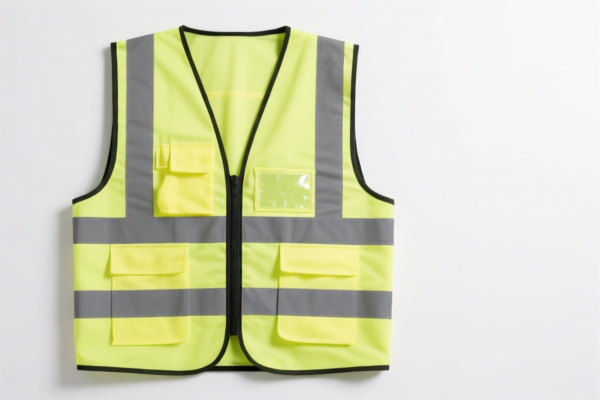
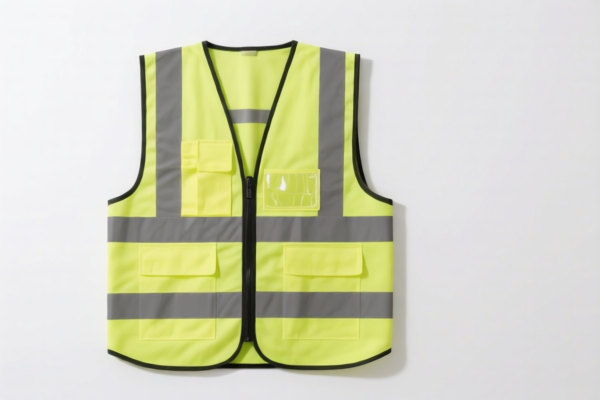
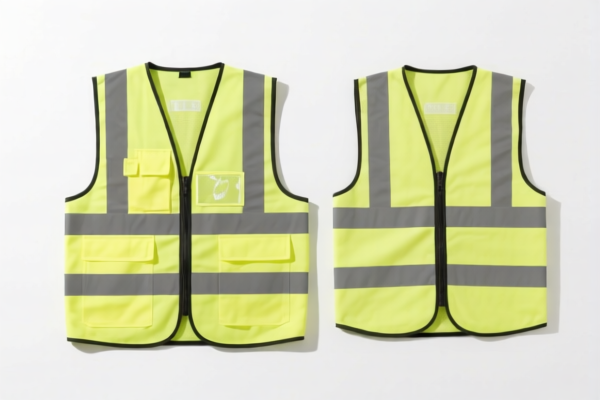

AI分析
🚗 Car Reflective Vest (Automotive Safety Vests)
🌐 HS Code Reference & Customs Clearance Guide | 2026 Latest Tariff Analysis | Professional Compliance Strategy
📌 1. Product Definition & Classification: Do You Really Understand "Car Reflective Vest"?
A Car Reflective Vest is a critical safety device designed for high-visibility in low-light conditions, primarily used by drivers, passengers, and roadside assistance personnel. In international trade, these items are classified based on their material composition, knitting/weaving structure, and functional form as "accessories" or "parts" of clothing, rather than complete garments.
Key Classification Logic: * Not a "Garment": Unlike shirts or pants, vests used for safety often fall under "accessories" or "parts" because they may lack sleeves, collars, or full body coverage. * Material Matters: Most are made from polyester (synthetic fibers), which determines the subheading (usually Chapter 61 for knitted or Chapter 62 for woven). * Function: The reflective strips are integral to the product, meaning the vest is classified as a whole unit, not just "reflective tape."
⚠️ Critical Distinction:
- If the vest is knitted (stretchy, mesh-like) → Usually falls under 6117 (Made-up clothing accessories).
- If the vest is woven (stiff, durable polyester fabric) → Usually falls under 6217 (Made-up clothing accessories/parts).
- Note: Regardless of knit or weave, the tax burden described in the data is identical due to US trade policies.
📦 2. HS Code Classification Details (2026 Latest Tariff Authority)
Based on the provided data, here are the four specific HS Codes applicable to Car Reflective Vests, covering different material and structural interpretations:
| HS Code | Product Description | Material/Structure Interpretation | Classification Logic |
|---|---|---|---|
6117.80.95.10 |
Children's/General Reflective Vest, Knitted/Hooked | Knitted or Crocheted accessory | Falls under "Other made-up clothing accessories," knitted. |
6117.80.95.40 |
Children's/General Reflective Vest, Synthetic Fiber | Artificial Fiber (Polyester/Nylon) | Specifically classifies as "Other" synthetic fiber accessories. |
6217.90.90.45 |
Car Reflective Vest, Woven/Polyester | Woven component/auxiliary part | Classified as a "part/accessory" of apparel, woven type. |
6217.90.90.95 |
Car Reflective Vest, Formed Accessory | Finished Form, Synthetic/Polyester | Broad "Other" category for formed accessories made of synthetic fibers. |
🔍 Key Insight:
- All four codes point to "Accessories/Parts" rather than "Garments."
- Whether Knitted (6117) or Woven (6217), the final Total Tax Rate is identical in this specific dataset.
- The difference lies in the physical structure of the fabric (knit vs. woven) and specific synthetic fiber sub-classifications.
💰 3. 2026 Latest Tariff Rate Breakdown (Detailed Tax Clause Explanation)
✅ Applicable Country: United States (US)
✅ Origin: China (CN) (Implied by the specific tax components)
✅ Total Tax Rate: 32.1%
✅ Validity: Current as per the provided dataset
🎯 Unified Tax Structure for All Listed HS Codes
| HS Code | Base Tariff | Section 301 (Add'l Tariff) | Section 122 Tariff | Total Effective Rate |
|---|---|---|---|---|
6117.80.95.10 |
14.6% | 7.5% | 10.0% | 32.1% |
6117.80.95.40 |
14.6% | 7.5% | 10.0% | 32.1% |
6217.90.90.45 |
14.6% | 7.5% | 10.0% | 32.1% |
6217.90.90.95 |
14.6% | 7.5% | 10.0% | 32.1% |
📌 Detailed Tax Clause Explanation
-
Base Tariff (14.6%):
- This is the standard Most Favored Nation (MFN) rate for "Other made-up clothing accessories" under Chapters 61 and 62.
- Legal Basis: US Harmonized Tariff Schedule (HTSUS) general rates for textile accessories.
-
Section 301 Add'l Tariff (7.5%):
- This is the US-China Trade War tariff. It applies to specific categories of Chinese imports.
- Context: Many textile accessories fall into "List 3" or "List 4B" exclusions or partial inclusions. Here, it is applied at 7.5%.
- Warning: This rate can fluctuate based on US Trade Representative (USTR) exclusions. If no exclusion applies, the full 7.5% is charged.
-
Section 122 Tariff (10%):
- ⚠️ Critical Note: Section 122 of the Trade Act of 1974 allows the President to adjust tariff rates for national security purposes.
- Application: A 10% rate is applied here, likely referencing specific national security or emergency measures affecting textiles/apparel.
- Impact: This is a non-negotiable additional duty on top of the base and 301 tariffs for this dataset.
-
Total Calculation:
- Formula: $CIF \times (14.6\% + 7.5\% + 10.0\%) = CIF \times 32.1\%$
- Example: For a $1,000 shipment of Car Reflective Vests, the total tax paid is $321.
📌 Interpretation:
- No De Minimis Exemption: These tariffs apply to all shipments, regardless of value. Small packages (under $800) DO NOT escape this 32.1% tax if the HS code is properly assessed.
- Cumulative Burden: The combination of Base + 301 + 122 creates a high barrier to entry. Profit margins must account for this ~1/3 tax cost.
🛠️ 4. Customs Clearance Practical Advice (Avoid Pitfalls)
✅ 1. Required Documentation Checklist
| Document | Mandatory? | Purpose |
|---|---|---|
| ✅ Product Specification Sheet | ✔️ | Detail fabric type (Knitted/Woven), material % (e.g., 100% Polyester), and reflective material type (e.g., 3M Scotchlite). |
| ✅ Technical Diagram | ✔️ | Show how reflective strips are attached (sewn vs. heat-bonded) to justify "Accessory" vs. "Garment" classification. |
| ✅ Commercial Invoice | ✔️ | Must clearly state: "Reflective Safety Vest, Made in China, Material: 100% Polyester, HS Code: [Insert Correct Code]". |
| ✅ Labeling/Marking | ✔️ | Ensure each vest is marked "Made in China" to avoid Country of Origin penalties. |
| ✅ Fiber Content Label | ✔️ | US Customs requires accurate fiber content disclosure (e.g., "100% Polyester"). |
✅ 2. Classification Strategy (Key Tips)
🔥 "Know Your Fabric: Knit is 6117, Woven is 6217"
| Scenario | Recommended HS Code | Reason |
|---|---|---|
| Stretchy, Mesh Vest | 6117.80.95.10 or 6117.80.95.40 |
If the fabric is knitted (loops), it falls under Chapter 61. Choose .40 for synthetic focus, .10 for general accessory. |
| Stiff, Woven Polyester Vest | 6217.90.90.45 or 6217.90.90.95 |
If the fabric is woven (threaded), it falls under Chapter 62. Use .95 for broader "other" category if .45 doesn't fit exact specs. |
| Children-Specific Vest | 6117.80.95.10 |
Explicitly stated in data as "Children's," which may help if marketing is child-focused. |
| Unisex/Adult Vest | Any of the above | The data shows all codes result in 32.1%, so classification precision is less critical for tax, but accuracy is critical for compliance. |
📌 Pro Tip:
- Do NOT try to classify as a "Garment" (e.g., 6109/6211) to avoid the 7.5% 301 tariff. This is risky. Customs may reject it if it lacks full body coverage (sleeves/collar).
- Stick to "Accessory" (6117/6217) as it accurately describes the product and has a predictable 32.1% rate.
✅ 3. Special Considerations
| Situation | Action |
|---|---|
| Mixed Container | If shipping vests with other non-taxable items, ensure separate invoicing for vests to avoid over-tariffing the entire container. |
| Exclusion Requests | Check if the 7.5% Section 301 tariff is eligible for exclusion (USTR Exclusion List). If excluded, total tax drops to 24.6%. |
| Section 122 Validity | Confirm the 10% Section 122 rate is still active. This rate can be subject to policy changes. Consult a customs broker for real-time status. |
🌍 5. Global Market Comparison (Contextual)
| Market | Recommended HS Code | Estimated Total Tax | Notes |
|---|---|---|---|
| 🇺🇸 USA | 6117.80.95.10 / 6217.90.90.95 |
32.1% | High due to 301 + 122 tariffs. |
| 🇪🇺 EU | 6217.90.90 |
~4-6% | No 301 tariffs. CE marking required. |
| 🇨🇳 China | 6117.80.95 |
0-5% | Low import duty. Focus on domestic sales. |
| 🇬🇧 UK | 6117.80.95 |
~4-6% | Post-Brexit tariff, no US 301. |
📌 Conclusion:
The US market is significantly more expensive due to political tariffs. For profit maximization, consider market diversification or supply chain adjustments (e.g., sourcing from non-China countries if possible) to mitigate the 32.1% burden.
📌 6. Common Mistakes & Pitfalls (Learn from Others)
❌ Mistake 1: Classifying as "Safety Equipment" (Chapter 39 or 90)
👉 Result: Rejected by Customs. Reflective vests are textile products, not equipment.
👉 Consequence: Delay, fines, re-classification.
❌ Mistake 2: Ignoring the 10% Section 122 Tariff
👉 Result: Underpaying duties by 10%.
👉 Consequence: Back taxes + Interest + Penalties upon audit.
❌ Mistake 3: Assuming "De Minimis" ($800) applies
👉 Result: Small shipments still taxed at 32.1%.
👉 Consequence: Unexpected costs for e-commerce sellers.
❌ Mistake 4: Mixing Knit and Woven in one HS Code
👉 Result: Incorrect classification.
👉 Consequence: Audit risk. Always specify fabric structure.
✅ Correct Practice:
"Car Reflective Safety Vest, 100% Polyester, Woven Fabric, with Reflective Strips, Model X, HS Code 6217.90.90.95, Made in China"
🎯 7. Conclusion: Professional Compliance, Cost Control!
🎯 Key Takeaways:
🔹 "Knit = 6117, Woven = 6217"
🔹 "Total Tax = 32.1% (14.6% Base + 7.5% 301 + 10% 122)"
🔹 "No De Minimis Exemption – All Shipments Taxed!"
🔹 "Verify Section 122 Status – Rates Can Change!"💡 Strategic Advice:
- For US Imports: Factor in 32.1% as a fixed cost.
- For E-commerce Sellers: Ensure accurate HS Code on Amazon/Walmart to avoid account suspension.
- For Importers: Seek USTR Exclusions for the 7.5% 301 tariff if eligible to reduce cost to 24.6%.
📌 Final Tip:
📞 Consult a Licensed Customs Broker to confirm the current status of Section 122 tariffs and USTR Exclusions before shipping.
🚀 Accuracy in Classification Saves Money – Don't Guess!
✨ Clear Classification. Smooth Clearance. Maximized Profit.
💼 Your Supply Chain Depends on Precision!
用户评价
关于 HS 编码归类
协调制度(HS)是由世界海关组织(WCO)制定的国际贸易商品分类标准。全球 200 多个国家采用 HS 系统作为海关关税、贸易统计和进出口监管的基础。
每个 HS 编码遵循以下层级结构:
- 章(2 位)——商品大类(例如:第 84 章:机器和机械设备)
- 品目(4 位)——章内的更具体分类
- 子目(6 位)——国际通用细分,所有 WCO 成员国统一使用
- 本国细分(8-10 位)——各国自行扩展的细分编码,如美国 HTSUS 10 位编码
正确的 HS 编码归类对于顺利通关、准确缴纳关税和遵守贸易法规至关重要。错误归类可能导致海关延误、多缴关税或罚款。
从CN进口到US时,适用的关税税率可能包括:
- 最惠国(MFN)税率——适用于 WTO 成员国的标准关税税率
- 普通税率——适用于无贸易协定国家
- 贸易救济关税——附加关税,如 301 条款(反倾销)、232 条款(国家安全)或反补贴税
本页内容仅供参考。如需正式归类,请咨询当地海关或持牌报关代理。