Car Reflective Vest
CN → US| HS Code | Tariff Rate | Origin | Destination | Doc |
|---|---|---|---|---|
| 6217909045 | 32.1% | CN | US | Official Doc |
| 6117809510 | 32.1% | CN | US | Official Doc |
| 6117809540 | 32.1% | CN | US | Official Doc |
| 6217909095 | 32.1% | CN | US | Official Doc |
Product Images
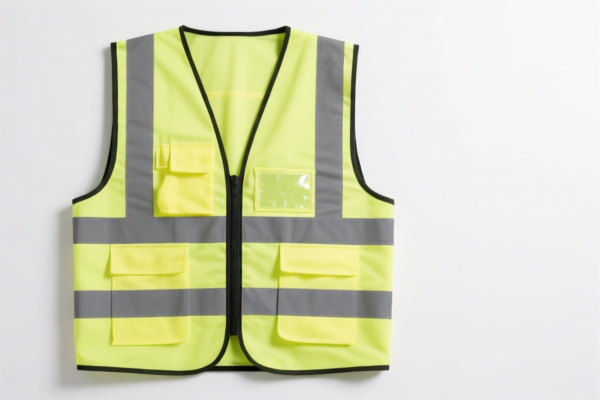
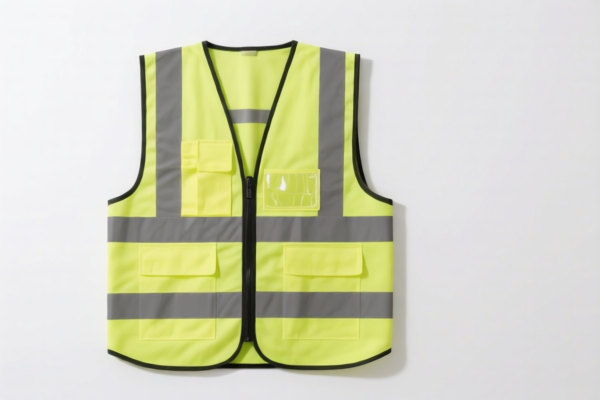
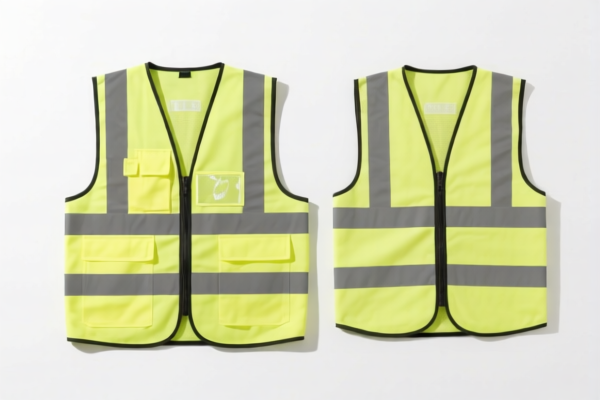

AI Analysis
🚗 Car Reflective Vest (Automotive Safety Vests)
🌐 HS Code Reference & Customs Clearance Guide | 2026 Latest Tariff Analysis | Professional Compliance Strategy
📌 1. Product Definition & Classification: Do You Really Understand "Car Reflective Vest"?
A Car Reflective Vest is a critical safety device designed for high-visibility in low-light conditions, primarily used by drivers, passengers, and roadside assistance personnel. In international trade, these items are classified based on their material composition, knitting/weaving structure, and functional form as "accessories" or "parts" of clothing, rather than complete garments.
Key Classification Logic: * Not a "Garment": Unlike shirts or pants, vests used for safety often fall under "accessories" or "parts" because they may lack sleeves, collars, or full body coverage. * Material Matters: Most are made from polyester (synthetic fibers), which determines the subheading (usually Chapter 61 for knitted or Chapter 62 for woven). * Function: The reflective strips are integral to the product, meaning the vest is classified as a whole unit, not just "reflective tape."
⚠️ Critical Distinction:
- If the vest is knitted (stretchy, mesh-like) → Usually falls under 6117 (Made-up clothing accessories).
- If the vest is woven (stiff, durable polyester fabric) → Usually falls under 6217 (Made-up clothing accessories/parts).
- Note: Regardless of knit or weave, the tax burden described in the data is identical due to US trade policies.
📦 2. HS Code Classification Details (2026 Latest Tariff Authority)
Based on the provided data, here are the four specific HS Codes applicable to Car Reflective Vests, covering different material and structural interpretations:
| HS Code | Product Description | Material/Structure Interpretation | Classification Logic |
|---|---|---|---|
6117.80.95.10 |
Children's/General Reflective Vest, Knitted/Hooked | Knitted or Crocheted accessory | Falls under "Other made-up clothing accessories," knitted. |
6117.80.95.40 |
Children's/General Reflective Vest, Synthetic Fiber | Artificial Fiber (Polyester/Nylon) | Specifically classifies as "Other" synthetic fiber accessories. |
6217.90.90.45 |
Car Reflective Vest, Woven/Polyester | Woven component/auxiliary part | Classified as a "part/accessory" of apparel, woven type. |
6217.90.90.95 |
Car Reflective Vest, Formed Accessory | Finished Form, Synthetic/Polyester | Broad "Other" category for formed accessories made of synthetic fibers. |
🔍 Key Insight:
- All four codes point to "Accessories/Parts" rather than "Garments."
- Whether Knitted (6117) or Woven (6217), the final Total Tax Rate is identical in this specific dataset.
- The difference lies in the physical structure of the fabric (knit vs. woven) and specific synthetic fiber sub-classifications.
💰 3. 2026 Latest Tariff Rate Breakdown (Detailed Tax Clause Explanation)
✅ Applicable Country: United States (US)
✅ Origin: China (CN) (Implied by the specific tax components)
✅ Total Tax Rate: 32.1%
✅ Validity: Current as per the provided dataset
🎯 Unified Tax Structure for All Listed HS Codes
| HS Code | Base Tariff | Section 301 (Add'l Tariff) | Section 122 Tariff | Total Effective Rate |
|---|---|---|---|---|
6117.80.95.10 |
14.6% | 7.5% | 10.0% | 32.1% |
6117.80.95.40 |
14.6% | 7.5% | 10.0% | 32.1% |
6217.90.90.45 |
14.6% | 7.5% | 10.0% | 32.1% |
6217.90.90.95 |
14.6% | 7.5% | 10.0% | 32.1% |
📌 Detailed Tax Clause Explanation
-
Base Tariff (14.6%):
- This is the standard Most Favored Nation (MFN) rate for "Other made-up clothing accessories" under Chapters 61 and 62.
- Legal Basis: US Harmonized Tariff Schedule (HTSUS) general rates for textile accessories.
-
Section 301 Add'l Tariff (7.5%):
- This is the US-China Trade War tariff. It applies to specific categories of Chinese imports.
- Context: Many textile accessories fall into "List 3" or "List 4B" exclusions or partial inclusions. Here, it is applied at 7.5%.
- Warning: This rate can fluctuate based on US Trade Representative (USTR) exclusions. If no exclusion applies, the full 7.5% is charged.
-
Section 122 Tariff (10%):
- ⚠️ Critical Note: Section 122 of the Trade Act of 1974 allows the President to adjust tariff rates for national security purposes.
- Application: A 10% rate is applied here, likely referencing specific national security or emergency measures affecting textiles/apparel.
- Impact: This is a non-negotiable additional duty on top of the base and 301 tariffs for this dataset.
-
Total Calculation:
- Formula: $CIF \times (14.6\% + 7.5\% + 10.0\%) = CIF \times 32.1\%$
- Example: For a $1,000 shipment of Car Reflective Vests, the total tax paid is $321.
📌 Interpretation:
- No De Minimis Exemption: These tariffs apply to all shipments, regardless of value. Small packages (under $800) DO NOT escape this 32.1% tax if the HS code is properly assessed.
- Cumulative Burden: The combination of Base + 301 + 122 creates a high barrier to entry. Profit margins must account for this ~1/3 tax cost.
🛠️ 4. Customs Clearance Practical Advice (Avoid Pitfalls)
✅ 1. Required Documentation Checklist
| Document | Mandatory? | Purpose |
|---|---|---|
| ✅ Product Specification Sheet | ✔️ | Detail fabric type (Knitted/Woven), material % (e.g., 100% Polyester), and reflective material type (e.g., 3M Scotchlite). |
| ✅ Technical Diagram | ✔️ | Show how reflective strips are attached (sewn vs. heat-bonded) to justify "Accessory" vs. "Garment" classification. |
| ✅ Commercial Invoice | ✔️ | Must clearly state: "Reflective Safety Vest, Made in China, Material: 100% Polyester, HS Code: [Insert Correct Code]". |
| ✅ Labeling/Marking | ✔️ | Ensure each vest is marked "Made in China" to avoid Country of Origin penalties. |
| ✅ Fiber Content Label | ✔️ | US Customs requires accurate fiber content disclosure (e.g., "100% Polyester"). |
✅ 2. Classification Strategy (Key Tips)
🔥 "Know Your Fabric: Knit is 6117, Woven is 6217"
| Scenario | Recommended HS Code | Reason |
|---|---|---|
| Stretchy, Mesh Vest | 6117.80.95.10 or 6117.80.95.40 |
If the fabric is knitted (loops), it falls under Chapter 61. Choose .40 for synthetic focus, .10 for general accessory. |
| Stiff, Woven Polyester Vest | 6217.90.90.45 or 6217.90.90.95 |
If the fabric is woven (threaded), it falls under Chapter 62. Use .95 for broader "other" category if .45 doesn't fit exact specs. |
| Children-Specific Vest | 6117.80.95.10 |
Explicitly stated in data as "Children's," which may help if marketing is child-focused. |
| Unisex/Adult Vest | Any of the above | The data shows all codes result in 32.1%, so classification precision is less critical for tax, but accuracy is critical for compliance. |
📌 Pro Tip:
- Do NOT try to classify as a "Garment" (e.g., 6109/6211) to avoid the 7.5% 301 tariff. This is risky. Customs may reject it if it lacks full body coverage (sleeves/collar).
- Stick to "Accessory" (6117/6217) as it accurately describes the product and has a predictable 32.1% rate.
✅ 3. Special Considerations
| Situation | Action |
|---|---|
| Mixed Container | If shipping vests with other non-taxable items, ensure separate invoicing for vests to avoid over-tariffing the entire container. |
| Exclusion Requests | Check if the 7.5% Section 301 tariff is eligible for exclusion (USTR Exclusion List). If excluded, total tax drops to 24.6%. |
| Section 122 Validity | Confirm the 10% Section 122 rate is still active. This rate can be subject to policy changes. Consult a customs broker for real-time status. |
🌍 5. Global Market Comparison (Contextual)
| Market | Recommended HS Code | Estimated Total Tax | Notes |
|---|---|---|---|
| 🇺🇸 USA | 6117.80.95.10 / 6217.90.90.95 |
32.1% | High due to 301 + 122 tariffs. |
| 🇪🇺 EU | 6217.90.90 |
~4-6% | No 301 tariffs. CE marking required. |
| 🇨🇳 China | 6117.80.95 |
0-5% | Low import duty. Focus on domestic sales. |
| 🇬🇧 UK | 6117.80.95 |
~4-6% | Post-Brexit tariff, no US 301. |
📌 Conclusion:
The US market is significantly more expensive due to political tariffs. For profit maximization, consider market diversification or supply chain adjustments (e.g., sourcing from non-China countries if possible) to mitigate the 32.1% burden.
📌 6. Common Mistakes & Pitfalls (Learn from Others)
❌ Mistake 1: Classifying as "Safety Equipment" (Chapter 39 or 90)
👉 Result: Rejected by Customs. Reflective vests are textile products, not equipment.
👉 Consequence: Delay, fines, re-classification.
❌ Mistake 2: Ignoring the 10% Section 122 Tariff
👉 Result: Underpaying duties by 10%.
👉 Consequence: Back taxes + Interest + Penalties upon audit.
❌ Mistake 3: Assuming "De Minimis" ($800) applies
👉 Result: Small shipments still taxed at 32.1%.
👉 Consequence: Unexpected costs for e-commerce sellers.
❌ Mistake 4: Mixing Knit and Woven in one HS Code
👉 Result: Incorrect classification.
👉 Consequence: Audit risk. Always specify fabric structure.
✅ Correct Practice:
"Car Reflective Safety Vest, 100% Polyester, Woven Fabric, with Reflective Strips, Model X, HS Code 6217.90.90.95, Made in China"
🎯 7. Conclusion: Professional Compliance, Cost Control!
🎯 Key Takeaways:
🔹 "Knit = 6117, Woven = 6217"
🔹 "Total Tax = 32.1% (14.6% Base + 7.5% 301 + 10% 122)"
🔹 "No De Minimis Exemption – All Shipments Taxed!"
🔹 "Verify Section 122 Status – Rates Can Change!"💡 Strategic Advice:
- For US Imports: Factor in 32.1% as a fixed cost.
- For E-commerce Sellers: Ensure accurate HS Code on Amazon/Walmart to avoid account suspension.
- For Importers: Seek USTR Exclusions for the 7.5% 301 tariff if eligible to reduce cost to 24.6%.
📌 Final Tip:
📞 Consult a Licensed Customs Broker to confirm the current status of Section 122 tariffs and USTR Exclusions before shipping.
🚀 Accuracy in Classification Saves Money – Don't Guess!
✨ Clear Classification. Smooth Clearance. Maximized Profit.
💼 Your Supply Chain Depends on Precision!
Customer Reviews
About HS Code Classification
The Harmonized System (HS) is an internationally standardized nomenclature developed by the World Customs Organization (WCO) to classify traded products. Over 200 countries use the HS system as the basis for customs tariffs, trade statistics, and import/export regulations.
Each HS code follows a hierarchical structure:
- Chapter (2 digits) — Broad category of goods (e.g., Chapter 84: Machinery and Mechanical Appliances)
- Heading (4 digits) — More specific grouping within the chapter
- Subheading (6 digits) — Internationally standardized breakdown, used by all WCO member countries
- National subdivisions (8-10 digits) — Country-specific extensions for further classification, such as US HTSUS 10-digit codes
Correct HS code classification is essential for smooth customs clearance, accurate duty payment, and compliance with trade regulations. Misclassification can lead to customs delays, overpayment of duties, or penalties.
When importing from CN to US, the applicable tariff rates may include:
- Most-Favored-Nation (MFN) rate — The standard duty rate applied to WTO members
- General rate — Applied to countries without trade agreements
- Trade remedy duties — Additional tariffs such as Section 301 (anti-dumping), Section 232 (national security), or countervailing duties
The information provided on this page is for reference purposes only. For official classification, please consult with your local customs authority or a licensed customs broker.