Car Tires
CN → US| HS编码 | 关税税率 | 原产国 | 目的国 | 文档 |
|---|---|---|---|---|
| 4012118000 | 38.4% | CN | US | 官方文档 |
| 4012124035 | 39.0% | CN | US | 官方文档 |
| 4011201015 | 39.0% | CN | US | 官方文档 |
| 4011205010 | 38.4% | CN | US | 官方文档 |
| 4012124035 | 39.0% | CN | US | 官方文档 |
商品图片
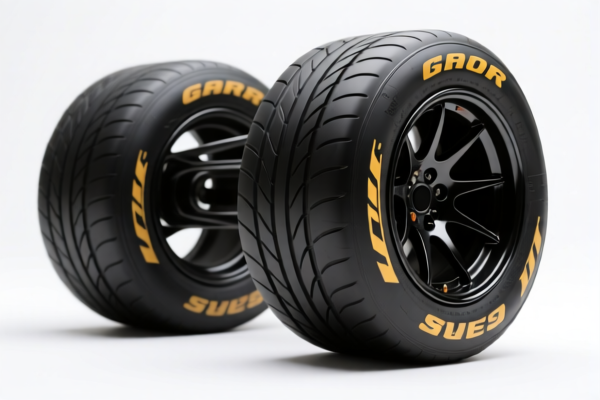
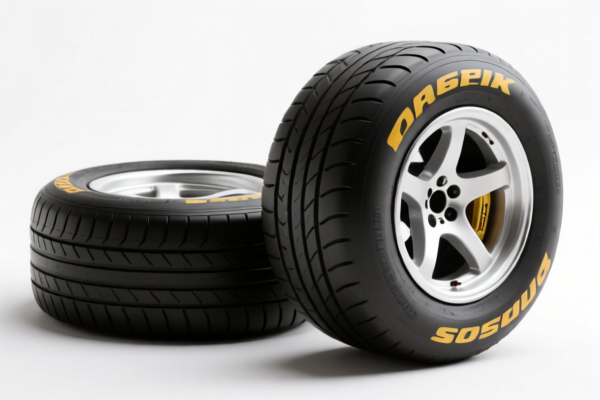
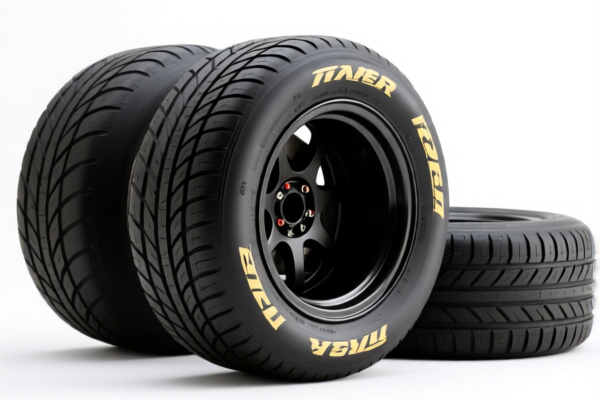
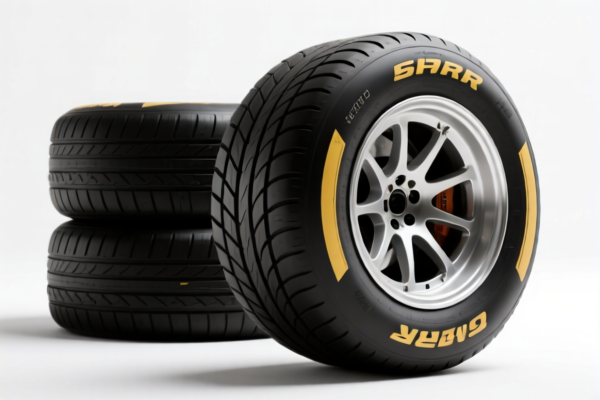
AI分析
🚗 Car Tires (Automotive Rubber Tires)
🌐 HS Code Reference & Customs Clearance Guide | 2026 Latest Tariff Analysis | Professional Entry Strategy
📌 I. Product Definition & Classification: Do You Really Understand "Car Tires"?
In international trade, "Car Tires" are not a single entity. They are strictly categorized by Vehicle Type (Passenger vs. Commercial) and Material Composition (Rubber). The classification hinges on whether the tire is for a passenger vehicle (cars, SUVs, vans) or a commercial vehicle (buses, trucks).
⚠️ Key Distinction Points:
- Passenger Car Tires: Fall under Heading 4011.20 or 4012.12 (depending on specific sub-category nuances in the provided data).
- Commercial Vehicle Tires (Bus/Truck): Often fall under 4011.20 or 4012.12 with specific sub-headings.
- Retreads/New Types: The provided data implies a mix of new rubber tires classified under 4012 (Other pneumatic tyres of rubber) and 4011 (Pneumatic tyres of rubber, of a kind used on motor cars or other motor vehicles).
📦 II. HS Code Classification Details (Based on Provided Data)
The following HS Codes are derived directly from the <DATA> section, covering various scenarios for car tires (passenger and commercial).
| HS Code | Product Description | Applicability | Conflict Check |
|---|---|---|---|
4012.11.80.00 |
Tyres: Rubber-made, fitting the morphology of car tires. | Passenger cars; General car tire applications. | ✅ No conflict with rubber material or car usage. |
4012.12.40.35 |
Other Tyres: Rubber material, tire morphology. Classified under other categories. | General rubber tires; Specific sub-category "40.35". | ✅ No material or morphological conflict. |
4011.20.10.15 |
Pneumatic Tyres: Specifically for Commercial Vehicles (Buses or Trucks). | Buses, Trucks, Heavy-duty vehicles. | ✅ Matches rubber material & commercial vehicle usage. |
4012.12.40.35 |
Commercial Car Tyres: For buses or trucks. Morphology and rubber material are consistent. | Buses, Trucks. | ✅ Consistent with commercial use and rubber. |
4011.20.50.10 |
Pneumatic Tyres: Rubber tires for commercial vehicles. Fallback category logic. | Buses, Trucks (General commercial). | ✅ No conflict in weight/classification logic. |
🔍 Important Note:
- The data shows a split between 4011 (Specifically for motor cars/other motor vehicles) and 4012 (Other pneumatic tyres).
- 4011.20 is typically for "Tires of a kind used on motor cars" but the data maps it to Commercial (Bus/Truck) in some entries.
- 4012 entries are broader ("Other"), but specific codes like4012.12are used for both passenger and commercial contexts in this dataset.
- Crucial: Always verify if the tire is for a Passenger Car or Commercial Vehicle, as this dictates the base code (4011vs4012nuances) and duty rate.
💰 III. 2026 Latest Tariff Rate Breakdown (Including Additional Taxes)
✅ Applicable Country: United States (US)
✅ Origin: China (CN) (Implied by "Section 122" and typical US-China tariff context)
✅ Effective Date: Current policies applicable for imports.
🎯 1. Passenger Car Tires (e.g., 4012.11.80.00, 4011.20.50.10)
| Item | Content |
|---|---|
| Base Duty Rate | 3.4% (Ad Valorem) |
| Section 301 Additional Duty | +25.0% |
| Section 122 Additional Duty | +10.0% |
| Total Effective Duty | 38.4% |
| Tax Calculation | CIF Value × 38.4% |
| De Minimis Eligibility | ❌ Not Eligible (Tires are explicitly excluded from de minimis thresholds under Section 321 in many cases, especially with high duties). |
📌 Explanation:
- Base Rate (3.4%): Standard MFN rate for rubber tires.
- Section 301 (25%): Retaliatory tariffs on Chinese goods.
- Section 122 (10%): Trade remedy tariffs or specific national security/emergency measures affecting rubber products.
- Total (38.4%): This is a high-duty classification. Accurate declaration is critical to avoid underpayment penalties.
🎯 2. Commercial Vehicle Tires (Bus/Truck) (4012.12.40.35, 4011.20.10.15)
| Item | Content |
|---|---|
| Base Duty Rate | 4.0% (Ad Valorem) |
| Section 301 Additional Duty | +25.0% |
| Section 122 Additional Duty | +10.0% |
| Total Effective Duty | 39.0% |
| Tax Calculation | CIF Value × 39.0% |
| De Minimis Eligibility | ❌ Not Eligible |
📌 Explanation:
- Base Rate (4.0%): Slightly higher base rate for commercial/heavier-duty tires compared to passenger tires.
- Same Additional Duties: The 25% (Section 301) and 10% (Section 122) apply uniformly to these rubber products from China.
- Total (39.0%): Commercial tires carry a higher total duty than passenger tires due to the higher base rate.
🛠️ IV. Customs Clearance Practical Advice (Real-World Pitfall Guide)
✅ 1. Required Documentation Checklist (Non-Negotiable)
| Document | Mandatory? | Description |
|---|---|---|
| ✅ Commercial Invoice | ✔️ | Must clearly state "Rubber Pneumatic Tyres" and specify vehicle type (Passenger/Commercial). |
| ✅ Packing List | ✔️ | Include dimensions, weight, and quantity. Ensure consistency with invoice. |
| ✅ Product Specifications | ✔️ | Size (e.g., P205/55R16), Load Index, Speed Rating, Tread Pattern, Tubeless/Tube Type. |
| ✅ Origin Certificate | ✔️ | Proof of Chinese origin triggers Section 301/122 duties. If shipped from Vietnam/Malaysia, provide COO. |
| ✅ Certification | ✔️ | DOT markings (for US market), ECE markings (if applicable), TREAD Act compliance info. |
| ✅ HS Code Declaration | ✔️ | Explicitly state the 10-digit HS Code and justify the classification (Passenger vs. Commercial). |
✅ 2. Declaration Techniques (Key Mnemonics)
🔥 "Passenger vs. Commercial, Base Rate 3.4% or 4.0%, Don't Split the Shipment, Avoid Double Duty!"
| Scenario | Correct Declaration | Incorrect Practice |
|---|---|---|
| Passenger Car Tires | Use 4012.11.80.00 or 4011.20.50.10 (38.4% duty) |
Misclassifying as "Auto Parts" → Lower base rate but wrong HS code → Penalty. |
| Truck/Bus Tires | Use 4011.20.10.15 or 4012.12.40.35 (39.0% duty) |
Grouping with passenger tires → Underpayment of 0.6% per unit → Audit risk. |
| Mixed Containers | Separate Line Items | Mixing passenger and commercial tires on one line → Customs may apply the higher rate (39.0%) to the entire container. |
| Retreaded Tires | Different HS Code (not in provided data) | Declaring new tires as retreads or vice versa → Severe penalty + seizure. |
✅ 3. Special Situation Handling
| Situation | Handling Advice |
|---|---|
| Section 122 Exemptions | Check if your specific tire model or supplier qualifies for any exclusions under Section 122. If not, the 10% is mandatory. |
| Re-routing Through Third Countries | Warning: Transshipment from Vietnam/Malaysia without substantial transformation does not waive Section 301/122. Customs checks the Country of Origin, not the shipping port. |
| DOT Labeling | Ensure every tire has a DOT (Department of Transportation) serial number. Lack of DOT marking leads to refusal of entry. |
| Anti-Dumping Duties (ADD) | While not in the provided data, Rubber Tires from China have historically faced ADD/CVD. Verify if AD/CVD cases are active for your specific HS Code. If yes, additional taxes apply on top of the 38.4%/39.0%. |
🌍 V. Global Market Comparison (2026 Outlook)
| Country/Region | Recommended HS Code | Tariff (China Origin) | Key Requirements | Notes |
|---|---|---|---|---|
| 🇺🇸 USA | 4012.11.80.00 / 4012.12.40.35 |
38.4% - 39.0% | DOT Label, IEEPA/Section 301/122 Compliance | Highest Barriers. High duties + strict labeling. |
| 🇨🇳 China | 4011.20.10.00 / 4011.90.90.00 |
5% - 10% | CCC Certification (for some auto parts) | Import duties are lower; exports from China are common. |
| 🇪🇺 EU | 4011.20 / 4011.92 |
0% - 4.5% | ECE Marking, REACH Compliance | No Section 301/122 equivalent, but Carbon Border Adjustment Mechanism (CBAM) may apply in future. |
| 🇲🇽 Mexico | 4011.20 / 4011.92 |
5% - 15% | NOM Certification | USMCA benefits if manufactured in North America. |
| 🇬🇧 UK | 4011.20 / 4011.92 |
0% - 4.5% | UKCA Marking | Post-Brexit rules apply; check for new trade agreements. |
📌 Conclusion:
- USA is the most difficult market for Chinese rubber tires due to the 38.4%-39.0% effective duty rate.
- EU and UK are more favorable in terms of base tariffs, but compliance (ECE/UKCA) is strict.
- Strategic Advice: Consider sourcing from non-China origins (e.g., Vietnam, Thailand, Malaysia) to potentially bypass Section 301/122 duties, but ensure substantial transformation occurs there.
📌 VI. Common Errors & Pitfalls (Lessons Learned)
❌ Error 1: Misclassifying Commercial Tires as Passenger Tires
👉 Consequence: Underpaying 0.6% duty per tire. Customs audits will recover the difference + interest + penalties.
✅ Fix: Double-check the vehicle type on the invoice and product specs.
❌ Error 2: Ignoring DOT Marking Requirements
👉 Consequence: Goods refused entry or destroyed at US border.
✅ Fix: Ensure every tire has a legible DOT serial number.
❌ Error 3: Assuming Transshipment Waives Tariffs
👉 Consequence: Goods seized for fraud if origin is still China.
✅ Fix: Obtain valid Certificate of Origin from the manufacturing country. If shipped from Vietnam, prove substantial transformation.
❌ Error 4: Mixing Passenger and Commercial Tires on One Line Item
👉 Consequence: Customs may apply the higher duty rate (39.0%) to the entire shipment.
✅ Fix: Separate line items for Passenger (38.4%) and Commercial (39.0%) tires.
🎯 VII. Conclusion: Professional Declaration Saves Money!
🎯 Remember the Mnemonic:
🔹 "Passenger 38.4%, Commercial 39.0%, DOT is Mandatory, Origin is Key!"
🔹 "Split your lines, label your tires, avoid the 301/122 trap!"
📌 Pro Tip:
- If your tires are not made in China, ensure you have a valid Certificate of Origin from the manufacturing country (e.g., Vietnam, Thailand) to potentially reduce or eliminate Section 301/122 duties.
- Always apply for a Pre-Ruling from US Customs and Border Protection (CBP) if you are uncertain about the classification, especially for mixed containers.
📣 Immediate Action:
📞 Contact a licensed customs broker + Provide Product Specs + Verify Origin + Check for AD/CVD cases.
🚀 Ensure smooth clearance, avoid penalties, and maximize profit margins!
✨ Professional clearance starts with accurate classification!
💼 Every percentage point in duty affects your bottom line!
用户评价
关于 HS 编码归类
协调制度(HS)是由世界海关组织(WCO)制定的国际贸易商品分类标准。全球 200 多个国家采用 HS 系统作为海关关税、贸易统计和进出口监管的基础。
每个 HS 编码遵循以下层级结构:
- 章(2 位)——商品大类(例如:第 84 章:机器和机械设备)
- 品目(4 位)——章内的更具体分类
- 子目(6 位)——国际通用细分,所有 WCO 成员国统一使用
- 本国细分(8-10 位)——各国自行扩展的细分编码,如美国 HTSUS 10 位编码
正确的 HS 编码归类对于顺利通关、准确缴纳关税和遵守贸易法规至关重要。错误归类可能导致海关延误、多缴关税或罚款。
从CN进口到US时,适用的关税税率可能包括:
- 最惠国(MFN)税率——适用于 WTO 成员国的标准关税税率
- 普通税率——适用于无贸易协定国家
- 贸易救济关税——附加关税,如 301 条款(反倾销)、232 条款(国家安全)或反补贴税
本页内容仅供参考。如需正式归类,请咨询当地海关或持牌报关代理。