Car Vanity Mirror
CN → US商品图片
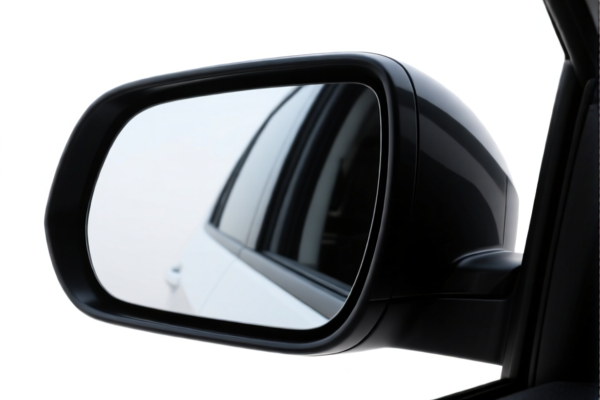
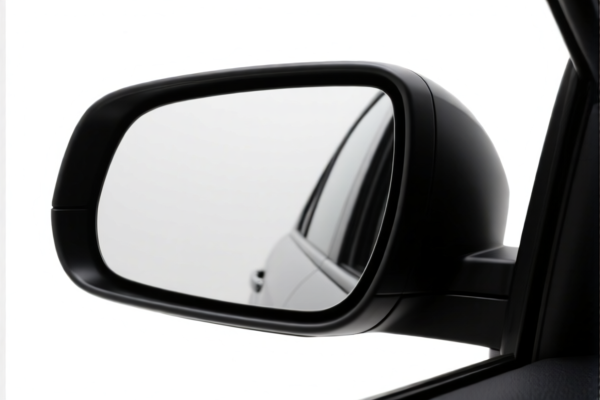
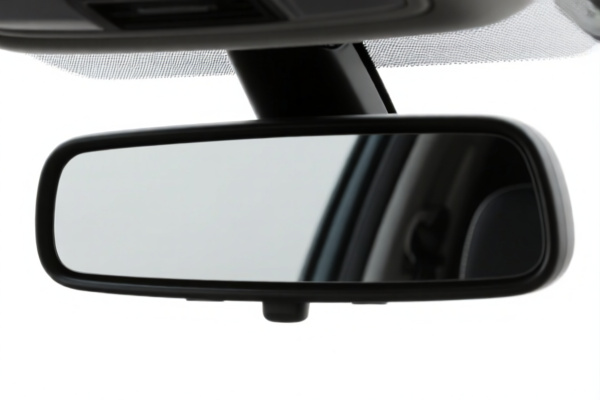

AI分析
🪞 Car Vanity Mirror (Automotive Interior Accessory)
🌐 HS Code Reference & Customs Clearance Guide | 2026 Latest Tariff Analysis | Professional Entry Strategies
📌 1. Product Definition & Classification: Do You Really Understand a "Car Vanity Mirror"?
A Car Vanity Mirror is primarily an interior accessory designed for vehicle occupants to check their appearance. In international trade, its classification depends heavily on whether it is integrated into the vehicle structure or is a detachable/standalone accessory.
Category A: Integrated Interior Rearview Mirrors
Mirrors fixed to the windshield or pillar, often containing electronic components (auto-dimming, GPS, dashcams).
Category B: Standalone Vanity Mirrors
Small mirrors clipped to the sun visor or portable mirrors, often with illumination.
⚠️ Key Distinction Point:
- If it is an integrated rearview mirror (even with vanity cover) → Usually 8708.29 or 8531.80.
- If it is a detachable/clip-on accessory not integral to the vehicle’s operation → 8306.10.00.00.
- If it contains active lighting/electronics beyond a simple bulb → May shift to 8513.10 (Portable electric lamps).
📦 2. HS Code Classification Details (2026 Latest Tariff Authority对照)
| HS Code | Product Description | Application Scenario | Integral to Vehicle? |
|---|---|---|---|
8306.10.00.00 |
Pictures, frames, mirrors and similar articles, of base metal | Standalone vanity mirrors clipped to sun visors, portable makeup mirrors | ❌ No (Accessory) |
8708.29.00.00 |
Parts and accessories of motor vehicles: Other mirrors (rear-view, etc.) | Integrated rearview mirrors with vanity cover, auto-dimming mirrors | ✅ Yes (Part of Vehicle) |
8531.80.00.00 |
Signplates, nameplates, plates, buttons and similar indicators of a kind used in electrical apparatus | Mirrors with electronic components (LED lights, sensors) not merely as a light source | ✅ Yes (Electronic Component) |
8513.10.00.00 |
Portable electric lamps designed to function by their own source of energy | Mirrors with built-in rechargeable batteries or complex lighting systems | ❓ Partially |
🔍 Key Reminder:
- Most common scenario: Simple metal/plastic mirrors clipped to the visor are classified under 8306.10.00.00.
- Integrated mirrors: If the mirror is part of the main rearview assembly, use 8708.29.00.00.
- Avoid Misclassification: Do not classify a simple mirror as "Glassware" (7009) if it is a finished accessory of base metal/plastic; do not classify it as a "Part of Vehicle" (8708) if it is clearly a detachable aftermarket accessory.
💰 3. 2026 Latest Tariff Rate Details (US Market Focus)
✅ Applicable Country: United States (US)
✅ Origin: China (CN)
✅ Effective Date: Post-2025 November 10 (Current Trade Policy)
🎯 1. 8306.10.00.00 —— Mirrors of Base Metal (Standalone Vanity Mirrors)
| Item | Content |
|---|---|
| Base Tariff | 0% (ad valorem) |
| USITC Additional Tariff (Section 301) | +25% (Footnote 9903.88.01) |
| IEEPA Additional Tariff | +10% (China/HK products, effective Nov 2025) |
| Total Tariff Rate | 35% |
| Tax Calculation | CIF Value × 35% |
| De Minimis Exemption? | ❌ No (Not eligible for 8042/8982 exceptions) |
| Legal Path | IEEPA:9903.01.25 → USITC:8306.10.00.00 → FOOTNOTE:9903.88.01 |
📌 Explanation:
- Even though the base rate is 0%, the Section 301 tariffs significantly increase the cost.
- "Base metal" includes aluminum, steel, and plated plastics treated as metal in trade statistics.
- Total burden: 35%. This is a moderate-high barrier for low-cost accessories.
🎯 2. 8708.29.00.00 —— Parts of Motor Vehicles (Integrated Mirrors)
| Item | Content |
|---|---|
| Base Tariff | 2.5% |
| USITC Additional Tariff (Section 301) | +25% |
| IEEPA Additional Tariff | +10% |
| Total Tariff Rate | 37.5% |
| Tax Calculation | CIF Value × 37.5% |
| De Minimis Exemption? | ❌ No |
| Legal Path | IEEPA:9903.01.24 → USITC:8708.29.00.00 |
📌 Note:
- If your product is an OEM part or designed to replace a factory-integrated mirror, use this code.
- The tax rate is slightly higher due to the base 2.5% rate, but the 35% additional tariff applies similarly.
🛠️ 4. Customs Clearance Practical Advice (Battle-Tested Pitfall Avoidance)
✅ 1. Required Document Checklist (Non-Negotiable)
| Document | Required? | Description |
|---|---|---|
| ✅ Product Specification | ✔️ | Material (Aluminum/Plastic/Glass), Dimensions, Weight |
| ✅ Photos (Clear) | ✔️ | Show if it’s clip-on, integrated, or has lights |
| ✅ Declaration Statement | ✔️ | Clearly state: "Standalone Vanity Mirror, Base Metal, Non-Electronic" OR "Integrated Rearview Mirror Part" |
| ✅ Commercial Invoice | ✔️ | Accurate description matching HS Code |
| ✅ Packing List | ✔️ | Unit weight and gross weight |
✅ 2. Declaration Tips (Key Mantra)
🔥 “Accessory is 8306, Part is 8708, Electronics change the game!”
| Scenario | Correct HS Code | Wrong Practice |
|---|---|---|
| Clip-on sun visor mirror (Simple, no light/light only passive) | 8306.10.00.00 |
Misclassified as 7009 (Glass) → Risk of delay |
| Integrated rearview mirror (Factory style) | 8708.29.00.00 |
Misclassified as 8306 → "Part of vehicle" claim fails |
| Mirror with LED bulbs (Simple circuit, no battery) | 8306.10.00.00 or 8531.80 |
Must declare if electrical. If simple bulb, still often 8306 if metal body |
| Mirror with Battery/USB Rechargeable | 8513.10 or 8531.80 |
If complex, 8306 is rejected |
✅ 3. Special Case Handling
| Scenario | Handling Advice |
|---|---|
| Material Composition | If the mirror housing is plastic but considered "Base Metal" due to plating/coating, use 8306. If purely plastic without metal coating, it may fall under 3926.90 (Other plastic articles), which has different tariffs (Check current IEEPA status for plastics). |
| With Lighting | If the mirror has active lighting (LEDs powered by vehicle or battery), it may be classified as an electrical appliance. This can shift the HS Code to 8531 or 8513. Verify with a ruling if unsure. |
| Set with Makeup Brush | If sold as a kit, classify based on essential character. Usually, the mirror dominates, so still 8306. |
🌍 5. Global Market Comparison (2026 Latest)
| Country/Region | Recommended HS Code | Tariff (China Origin) | Certification Required | Notes |
|---|---|---|---|---|
| 🇺🇸 USA | 8306.10.00.00 |
35% (301 + IEEPA) | None specific | High tariff barrier |
| 🇨🇳 China | 8306.10.00.00 |
5% | None | Low entry barrier |
| 🇪🇺 EU | 8306.10.00.00 |
4% (Most Favored Nation) | CE (if electrical) | No Section 301 equivalent |
| 🇦🇺 Australia | 8306.10.00.00 |
5% | RCM (if electrical) | Free Trade Agreement benefits |
| 🇯🇵 Japan | 8306.10.00.00 |
0-3% | PSE (if electrical) | Low tariffs |
📌 Conclusion:
- USA is the most expensive market due to cumulative Section 301 and IEEPA tariffs.
- EU/Australia/Japan are far more favorable. Consider supply chain diversification (e.g., assemble in Vietnam or Mexico) to mitigate US tariffs if possible.
- Plastic vs. Metal: Check if your product can be classified as plastic (3926.90). Some plastic accessories face lower additional tariffs than metal ones. Consult a trade specialist to verify material classification.
📌 6. Common Mistakes & Pitfalls (Lessons Learned)
❌ Mistake 1: Classifying a plastic vanity mirror as Metal (8306)
👉 Consequence: Incorrect tariff application. If it’s purely plastic, it might be 3926.90, which could have different tax rates (potentially lower).
❌ Mistake 2: Ignoring electrical components
👉 Consequence: If the mirror has an LED light, customs may reclassify it as an electrical apparatus (8531 or 8513), leading to penalties for misdeclaration.
❌ Mistake 3: Declaring as "Glass Mirror" (7009)
👉 Consequence: Customs will reject this because the mirror is an article of base metal/plastic, not just raw glass. The glass is merely a component.
✅ Correct Practice:
"Vanity Mirror, Plastic Housing, Clip-on Type, No Electronic Components, Model XYZ"
OR
"Rearview Mirror Assembly, Integrated, Part of Motor Vehicle, Model ABC"
🎯 7. Conclusion: Precision Classification, Cost Efficiency!
🎯 Remember the Mantra:
🔹 "Accessory is 8306, Part is 8708, Plastic may be 3926!"
🔹 "35% Tax in USA, Think Twice, Supply Chain Wise!"
🔹 "Electronics Change the Code, Don’t Ignore the Light!"
📌 Pro Tip:
If your mirror is plastic (not base metal), investigate classification under 3926.90.00.00.
- Base Metal (8306): 35% Total Tariff (US).
- Plastic (3926): May have different IEEPA rates (Check current footnotes for plastics).
- Action: Request an Advance Ruling from CBP if your product is plastic-based to confirm if it’s treated as plastic or metal.
📣 Immediate Action:
📞 Contact your freight forwarder with material samples (Metal vs. Plastic).
📄 Ensure your invoice clearly states "Material: [Aluminum/Plastic/Glass]".
🚀 Optimize your HS Code to save up to 10-15% in duties!
✨ Professional Clearance Starts with Precise Classification!
💼 Every cent saved in duties is pure profit!
用户评价
关于 HS 编码归类
协调制度(HS)是由世界海关组织(WCO)制定的国际贸易商品分类标准。全球 200 多个国家采用 HS 系统作为海关关税、贸易统计和进出口监管的基础。
每个 HS 编码遵循以下层级结构:
- 章(2 位)——商品大类(例如:第 84 章:机器和机械设备)
- 品目(4 位)——章内的更具体分类
- 子目(6 位)——国际通用细分,所有 WCO 成员国统一使用
- 本国细分(8-10 位)——各国自行扩展的细分编码,如美国 HTSUS 10 位编码
正确的 HS 编码归类对于顺利通关、准确缴纳关税和遵守贸易法规至关重要。错误归类可能导致海关延误、多缴关税或罚款。
从CN进口到US时,适用的关税税率可能包括:
- 最惠国(MFN)税率——适用于 WTO 成员国的标准关税税率
- 普通税率——适用于无贸易协定国家
- 贸易救济关税——附加关税,如 301 条款(反倾销)、232 条款(国家安全)或反补贴税
本页内容仅供参考。如需正式归类,请咨询当地海关或持牌报关代理。