Car Vanity Mirror
CN → USProduct Images
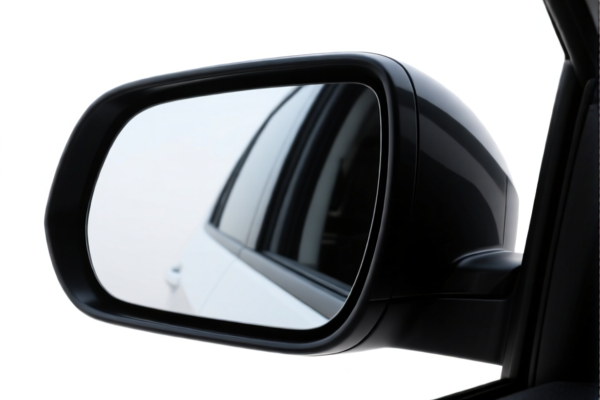
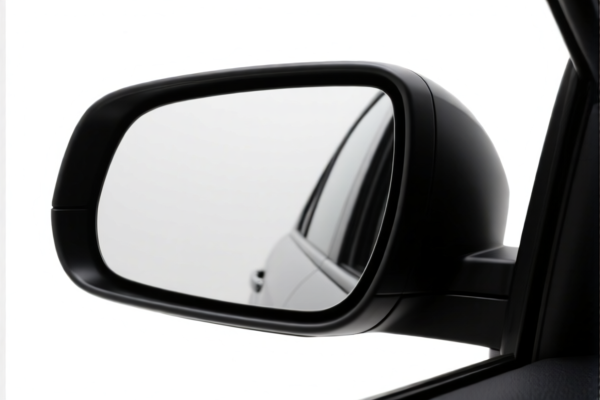
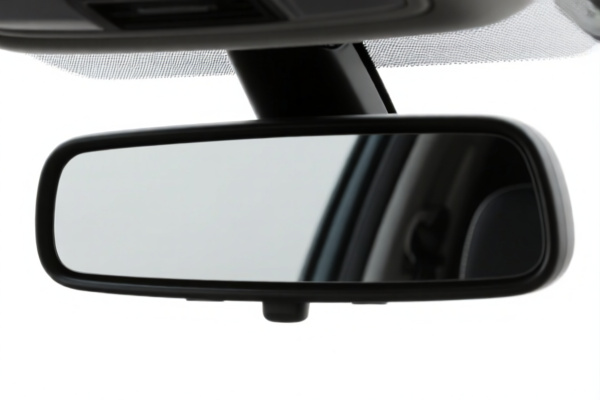

AI Analysis
🪞 Car Vanity Mirror (Automotive Interior Accessory)
🌐 HS Code Reference & Customs Clearance Guide | 2026 Latest Tariff Analysis | Professional Entry Strategies
📌 1. Product Definition & Classification: Do You Really Understand a "Car Vanity Mirror"?
A Car Vanity Mirror is primarily an interior accessory designed for vehicle occupants to check their appearance. In international trade, its classification depends heavily on whether it is integrated into the vehicle structure or is a detachable/standalone accessory.
Category A: Integrated Interior Rearview Mirrors
Mirrors fixed to the windshield or pillar, often containing electronic components (auto-dimming, GPS, dashcams).
Category B: Standalone Vanity Mirrors
Small mirrors clipped to the sun visor or portable mirrors, often with illumination.
⚠️ Key Distinction Point:
- If it is an integrated rearview mirror (even with vanity cover) → Usually 8708.29 or 8531.80.
- If it is a detachable/clip-on accessory not integral to the vehicle’s operation → 8306.10.00.00.
- If it contains active lighting/electronics beyond a simple bulb → May shift to 8513.10 (Portable electric lamps).
📦 2. HS Code Classification Details (2026 Latest Tariff Authority对照)
| HS Code | Product Description | Application Scenario | Integral to Vehicle? |
|---|---|---|---|
8306.10.00.00 |
Pictures, frames, mirrors and similar articles, of base metal | Standalone vanity mirrors clipped to sun visors, portable makeup mirrors | ❌ No (Accessory) |
8708.29.00.00 |
Parts and accessories of motor vehicles: Other mirrors (rear-view, etc.) | Integrated rearview mirrors with vanity cover, auto-dimming mirrors | ✅ Yes (Part of Vehicle) |
8531.80.00.00 |
Signplates, nameplates, plates, buttons and similar indicators of a kind used in electrical apparatus | Mirrors with electronic components (LED lights, sensors) not merely as a light source | ✅ Yes (Electronic Component) |
8513.10.00.00 |
Portable electric lamps designed to function by their own source of energy | Mirrors with built-in rechargeable batteries or complex lighting systems | ❓ Partially |
🔍 Key Reminder:
- Most common scenario: Simple metal/plastic mirrors clipped to the visor are classified under 8306.10.00.00.
- Integrated mirrors: If the mirror is part of the main rearview assembly, use 8708.29.00.00.
- Avoid Misclassification: Do not classify a simple mirror as "Glassware" (7009) if it is a finished accessory of base metal/plastic; do not classify it as a "Part of Vehicle" (8708) if it is clearly a detachable aftermarket accessory.
💰 3. 2026 Latest Tariff Rate Details (US Market Focus)
✅ Applicable Country: United States (US)
✅ Origin: China (CN)
✅ Effective Date: Post-2025 November 10 (Current Trade Policy)
🎯 1. 8306.10.00.00 —— Mirrors of Base Metal (Standalone Vanity Mirrors)
| Item | Content |
|---|---|
| Base Tariff | 0% (ad valorem) |
| USITC Additional Tariff (Section 301) | +25% (Footnote 9903.88.01) |
| IEEPA Additional Tariff | +10% (China/HK products, effective Nov 2025) |
| Total Tariff Rate | 35% |
| Tax Calculation | CIF Value × 35% |
| De Minimis Exemption? | ❌ No (Not eligible for 8042/8982 exceptions) |
| Legal Path | IEEPA:9903.01.25 → USITC:8306.10.00.00 → FOOTNOTE:9903.88.01 |
📌 Explanation:
- Even though the base rate is 0%, the Section 301 tariffs significantly increase the cost.
- "Base metal" includes aluminum, steel, and plated plastics treated as metal in trade statistics.
- Total burden: 35%. This is a moderate-high barrier for low-cost accessories.
🎯 2. 8708.29.00.00 —— Parts of Motor Vehicles (Integrated Mirrors)
| Item | Content |
|---|---|
| Base Tariff | 2.5% |
| USITC Additional Tariff (Section 301) | +25% |
| IEEPA Additional Tariff | +10% |
| Total Tariff Rate | 37.5% |
| Tax Calculation | CIF Value × 37.5% |
| De Minimis Exemption? | ❌ No |
| Legal Path | IEEPA:9903.01.24 → USITC:8708.29.00.00 |
📌 Note:
- If your product is an OEM part or designed to replace a factory-integrated mirror, use this code.
- The tax rate is slightly higher due to the base 2.5% rate, but the 35% additional tariff applies similarly.
🛠️ 4. Customs Clearance Practical Advice (Battle-Tested Pitfall Avoidance)
✅ 1. Required Document Checklist (Non-Negotiable)
| Document | Required? | Description |
|---|---|---|
| ✅ Product Specification | ✔️ | Material (Aluminum/Plastic/Glass), Dimensions, Weight |
| ✅ Photos (Clear) | ✔️ | Show if it’s clip-on, integrated, or has lights |
| ✅ Declaration Statement | ✔️ | Clearly state: "Standalone Vanity Mirror, Base Metal, Non-Electronic" OR "Integrated Rearview Mirror Part" |
| ✅ Commercial Invoice | ✔️ | Accurate description matching HS Code |
| ✅ Packing List | ✔️ | Unit weight and gross weight |
✅ 2. Declaration Tips (Key Mantra)
🔥 “Accessory is 8306, Part is 8708, Electronics change the game!”
| Scenario | Correct HS Code | Wrong Practice |
|---|---|---|
| Clip-on sun visor mirror (Simple, no light/light only passive) | 8306.10.00.00 |
Misclassified as 7009 (Glass) → Risk of delay |
| Integrated rearview mirror (Factory style) | 8708.29.00.00 |
Misclassified as 8306 → "Part of vehicle" claim fails |
| Mirror with LED bulbs (Simple circuit, no battery) | 8306.10.00.00 or 8531.80 |
Must declare if electrical. If simple bulb, still often 8306 if metal body |
| Mirror with Battery/USB Rechargeable | 8513.10 or 8531.80 |
If complex, 8306 is rejected |
✅ 3. Special Case Handling
| Scenario | Handling Advice |
|---|---|
| Material Composition | If the mirror housing is plastic but considered "Base Metal" due to plating/coating, use 8306. If purely plastic without metal coating, it may fall under 3926.90 (Other plastic articles), which has different tariffs (Check current IEEPA status for plastics). |
| With Lighting | If the mirror has active lighting (LEDs powered by vehicle or battery), it may be classified as an electrical appliance. This can shift the HS Code to 8531 or 8513. Verify with a ruling if unsure. |
| Set with Makeup Brush | If sold as a kit, classify based on essential character. Usually, the mirror dominates, so still 8306. |
🌍 5. Global Market Comparison (2026 Latest)
| Country/Region | Recommended HS Code | Tariff (China Origin) | Certification Required | Notes |
|---|---|---|---|---|
| 🇺🇸 USA | 8306.10.00.00 |
35% (301 + IEEPA) | None specific | High tariff barrier |
| 🇨🇳 China | 8306.10.00.00 |
5% | None | Low entry barrier |
| 🇪🇺 EU | 8306.10.00.00 |
4% (Most Favored Nation) | CE (if electrical) | No Section 301 equivalent |
| 🇦🇺 Australia | 8306.10.00.00 |
5% | RCM (if electrical) | Free Trade Agreement benefits |
| 🇯🇵 Japan | 8306.10.00.00 |
0-3% | PSE (if electrical) | Low tariffs |
📌 Conclusion:
- USA is the most expensive market due to cumulative Section 301 and IEEPA tariffs.
- EU/Australia/Japan are far more favorable. Consider supply chain diversification (e.g., assemble in Vietnam or Mexico) to mitigate US tariffs if possible.
- Plastic vs. Metal: Check if your product can be classified as plastic (3926.90). Some plastic accessories face lower additional tariffs than metal ones. Consult a trade specialist to verify material classification.
📌 6. Common Mistakes & Pitfalls (Lessons Learned)
❌ Mistake 1: Classifying a plastic vanity mirror as Metal (8306)
👉 Consequence: Incorrect tariff application. If it’s purely plastic, it might be 3926.90, which could have different tax rates (potentially lower).
❌ Mistake 2: Ignoring electrical components
👉 Consequence: If the mirror has an LED light, customs may reclassify it as an electrical apparatus (8531 or 8513), leading to penalties for misdeclaration.
❌ Mistake 3: Declaring as "Glass Mirror" (7009)
👉 Consequence: Customs will reject this because the mirror is an article of base metal/plastic, not just raw glass. The glass is merely a component.
✅ Correct Practice:
"Vanity Mirror, Plastic Housing, Clip-on Type, No Electronic Components, Model XYZ"
OR
"Rearview Mirror Assembly, Integrated, Part of Motor Vehicle, Model ABC"
🎯 7. Conclusion: Precision Classification, Cost Efficiency!
🎯 Remember the Mantra:
🔹 "Accessory is 8306, Part is 8708, Plastic may be 3926!"
🔹 "35% Tax in USA, Think Twice, Supply Chain Wise!"
🔹 "Electronics Change the Code, Don’t Ignore the Light!"
📌 Pro Tip:
If your mirror is plastic (not base metal), investigate classification under 3926.90.00.00.
- Base Metal (8306): 35% Total Tariff (US).
- Plastic (3926): May have different IEEPA rates (Check current footnotes for plastics).
- Action: Request an Advance Ruling from CBP if your product is plastic-based to confirm if it’s treated as plastic or metal.
📣 Immediate Action:
📞 Contact your freight forwarder with material samples (Metal vs. Plastic).
📄 Ensure your invoice clearly states "Material: [Aluminum/Plastic/Glass]".
🚀 Optimize your HS Code to save up to 10-15% in duties!
✨ Professional Clearance Starts with Precise Classification!
💼 Every cent saved in duties is pure profit!
Customer Reviews
About HS Code Classification
The Harmonized System (HS) is an internationally standardized nomenclature developed by the World Customs Organization (WCO) to classify traded products. Over 200 countries use the HS system as the basis for customs tariffs, trade statistics, and import/export regulations.
Each HS code follows a hierarchical structure:
- Chapter (2 digits) — Broad category of goods (e.g., Chapter 84: Machinery and Mechanical Appliances)
- Heading (4 digits) — More specific grouping within the chapter
- Subheading (6 digits) — Internationally standardized breakdown, used by all WCO member countries
- National subdivisions (8-10 digits) — Country-specific extensions for further classification, such as US HTSUS 10-digit codes
Correct HS code classification is essential for smooth customs clearance, accurate duty payment, and compliance with trade regulations. Misclassification can lead to customs delays, overpayment of duties, or penalties.
When importing from CN to US, the applicable tariff rates may include:
- Most-Favored-Nation (MFN) rate — The standard duty rate applied to WTO members
- General rate — Applied to countries without trade agreements
- Trade remedy duties — Additional tariffs such as Section 301 (anti-dumping), Section 232 (national security), or countervailing duties
The information provided on this page is for reference purposes only. For official classification, please consult with your local customs authority or a licensed customs broker.