Carbon Paper (Quick Copy)
CN → US| HS编码 | 关税税率 | 原产国 | 目的国 | 文档 |
|---|---|---|---|---|
| 4823901000 | 35.0% | CN | US | 官方文档 |
| 4823902000 | 35.0% | CN | US | 官方文档 |
| 4823908000 | 35.0% | CN | US | 官方文档 |
| 4823901000 | 35.0% | CN | US | 官方文档 |
| 4823908000 | 35.0% | CN | US | 官方文档 |
商品图片
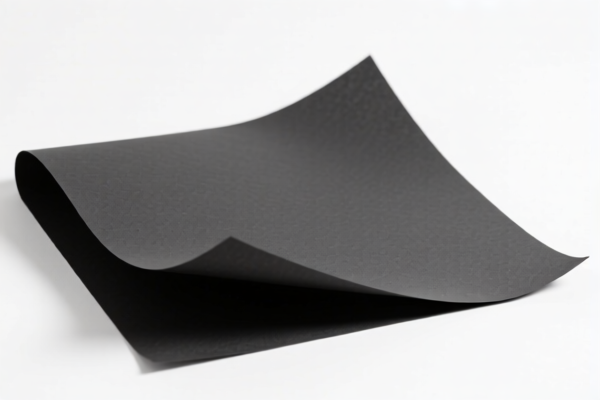
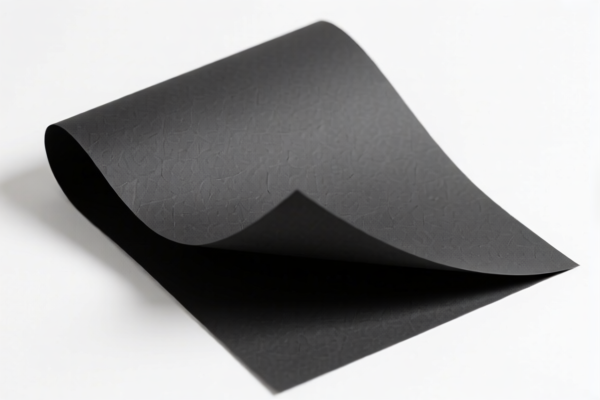


AI分析
📄 Carbon Paper (Quick Copy / NCR Paper)
🌐 HS Code Reference & Customs Clearance Guide | 2026 Latest Tariff Analysis | Professional Entry Strategy
📌 I. Product Definition & Classification: Do You Really Know "Carbon Paper"?
Carbon Paper, often referred to as "Quick Copy" paper in commercial contexts, is a coated sheet used to transfer writing or printing onto an underlying sheet. In modern trade, it is increasingly replaced by NCR (No Carbon Required) paper, but for customs classification, physical carbon-coated papers and certain pre-cut paper sheets fall under Chapter 48 (Paper and Paperboard).
The classification hinges on two main factors: 1. Material Composition: Is it pulp-based? Cellulose-based? Carbon-impregnated? 2. Form & Function: Is it a raw roll, pre-cut for specific uses (like gaskets/seals), or packaged for office use?
⚠️ Key Distinction:
- If the product is strictly "Carbon Paper" for duplication → It falls under 4823.90.
- If it is a specialized industrial paper seal/gasket → It may fall under 4823.90.80.
- Warning: Do not confuse with "Carbonless Copy Paper" (NCR), which might have different sub-headings depending on specific coating technology, but generally remains in 4823 if pre-cut.
📦 II. HS Code Classification Details (2026 Latest Tariff Authority对照)
| HS Code | Product Description | Application Scenario | Material/Form Key |
|---|---|---|---|
4823.90.10.00 |
Carbon Paper (Boxed) or Paper Products Cut to Size, Made of Pulp | Office use, boxed carbon sheets, pre-cut pulp-based copies | ✅ Pulp-based, Boxed/Cut |
4823.90.20.00 |
Carbon Paper (Vertical), Paper Products | Industrial vertical duplication, standard paper classification | ✅ Pulp/Paper Category |
4823.90.80.00 |
Carbon Paper (Boxed/Vertical/Horizontal) or Other Paper Products | Gaskets, Seals, Multi-directional use, Cellulose-based forms | ✅ Cellulose/Paper, Seals/Gaskets |
4823.90.10.00 |
Carbon Paper (Horizontal), Pulp-based, Cut to Size | Horizontal duplication, pre-cut sheets | ✅ Pulp-based, Horizontal Cut |
4823.90.80.00 |
Carbon Paper (Horizontal), Carbon/Cellulose Attributes, Other Shapes | Specialized horizontal copies, non-standard shapes, carbon-impregnated paper | ✅ Carbon/Cellulose, Other Shapes |
🔍 Key Reminder:
- All items listed are classified under Chapter 48, specifically heading 4823 (Other paper, paperboard, cellulose wadding and webs of cellulose fibers, cut to size or shape...).
- The sub-headings (.10,.20,.80) differentiate based on packaging (box vs. roll), orientation (vertical/horizontal), and specific application (seals/gaskets vs. pure copying).
💰 III. 2026 Latest Tariff Rate Breakdown (Including Surtax & Policy Add-ons)
✅ Applicable Country: United States (US)
✅ Origin: China (CN)
✅ Effective Time: 2025/2026 Period (Current Enforcement)
🎯 1. All HS Codes: 4823.90.10.00, 4823.90.20.00, 4823.90.80.00
| Item | Content |
|---|---|
| Base Tariff Rate | 0% (Ad Valorem) |
| Section 301 Surtax | +25% (From USITC Footnote 9903.88.01 / Section 301 List) |
| 122 Clause Tariff | +10% (Specific Section 122/IEEPA related surcharge on Chinese goods) |
| Total Tax Rate | 35% |
| Tax Calculation | CIF Value × 35% |
| De Minimis Exemption | ❌ Not Eligible (Deny De Minimis) |
| Legal Basis Path | Section 301: 9903.88.01 → Section 122/IEEPA: 9903.01.10 → USITC: 4823.xxxx.xx.xx |
📌 Explanation:
- "Base Tariff 0%": Paper products generally have low base MFN rates.
- "Section 301 Surcharge 25%": This is the primary trade war tariff on Chinese paper goods.
- "122 Clause Tariff 10%": Additional surcharge applied under specific executive orders or section 122 provisions targeting Chinese imports.
- Total 35%: This is a high-cost category for Chinese-origin paper imports.📌 Critical Note:
- Even though the base rate is 0%, the 35% effective rate significantly impacts profitability.
- No de minimis exemption: Small packages cannot bypass this tariff.
🛠️ IV. Customs Clearance Practical Advice (Avoid Pitfalls Guide)
✅ 1. Required Documentation Checklist (All Required)
| Document | Must Provide | Description |
|---|---|---|
| ✅ Product Specification Sheet | ✔️ | Must specify: Pulp vs. Cellulose, Coating Type (Carbon/Wax), Dimensions, Package Size |
| ✅ Material Composition Statement | ✔️ | Explicitly state "Pulp-based" or "Cellulose-based" to justify HS Code sub-classification |
| ✅ Product Photos (Clear Label) | ✔️ | Show packaging, "Carbon Paper" or "Quick Copy" label, brand, model |
| ✅ Commercial Invoice | ✔️ | Must clearly state "Carbon Paper" or "Paper Products for Duplication" |
| ✅ Packing List | ✔️ | Detail if boxed, rolled, or loose. Boxed items may fall under .10 |
| ✅ Certificate of Origin (CO) | ✔️ | To confirm Chinese origin (triggers the 35% tariff) |
| ✅ Third-party Test Report (if any) | ✔️ | If claiming specific environmental standards (e.g., FSC), though not required for HS code |
✅ 2. Declaration Tips (Key Mantras)
🔥 “Material Defines Sub-code, Package Defines Box, Origin Defines Tax!”
| Scenario | Correct Declaration | Error to Avoid |
|---|---|---|
| Boxed Carbon Paper for Office | 4823.90.10.00 |
Declaring as generic "Paper" → Risk of misclassification |
| Vertical Roll/Sheet Carbon Paper | 4823.90.20.00 |
Declaring as .10 if not boxed |
| Carbon Paper used as Gasket/Seal | 4823.90.80.00 |
Declaring as .10 if it serves industrial sealing purpose |
| Mixed Package (Boxed + Vertical) | Declare separately or use .80 if mixed |
Mixed declaration → Delays |
| Non-Chinese Origin (e.g., Vietnam) | Same HS Code, 0% Tariff | Assuming 35% applies regardless of origin |
📌 Strategy:
- If your carbon paper is not used for gaskets/seals, avoid.80unless it’s a mixed industrial use.
- For standard office use,.10(Boxed) is safest if packaged in boxes.
- Crucial: Clearly state "Made in China" to confirm origin. If shipped from a third country, provide proper transshipment documents to potentially avoid Section 301 (if eligible, but rare for direct Chinese content).
✅ 3. Special Cases Handling
| Case | Handling Advice |
|---|---|
| NCR (No Carbon Required) Paper | If it’s chemical-coated, it’s still often 4823.90. Confirm with lab test if it’s truly "Carbonless" vs. "Carbon Coated". |
| Carbon Paper Rolls vs. Sheets | Rolls may fall under different sub-headings. Ensure description matches "Cut to Size" for .10/.20. |
| OEM Custom Sizes | Provide custom order details. If non-standard, .80 may be more appropriate. |
| Sample Shipments | Even samples are subject to 35% tariff. No de minimis. |
🌍 V. Global Market Clearance Comparison (2026 Latest)
| Country/Region | Recommended HS Code | Tariff (China Origin) | Certification | Notes |
|---|---|---|---|---|
| 🇺🇸 USA | 4823.90.10.00 / .20 / .80 |
35% (25% + 10%) | None specific | High Tariff! Plan costs accordingly. |
| 🇨🇳 China | 4823.90.10.00 |
5-10% (Import Duty) | None | Low import duty, but high VAT. |
| 🇪🇺 EU | 4823.90.10.00 |
0-6.5% | CE (if applicable) | No Section 301 equivalent. |
| 🇬🇧 UK | 4823.90.10.00 |
0-6.5% | UKCA | Post-Brexit tariffs may vary. |
| 🇦🇺 Australia | 4823.90.10.00 |
5% | GMS | No major surcharges. |
📌 Conclusion:
- USA is the only major market with punitive 35% tariffs on Chinese carbon paper.
- EU, UK, Australia have much lower tariffs (0-6.5%).
- Supply Chain Advice: If targeting the US market, consider sourcing from Vietnam, Thailand, or Mexico to avoid the 35% surcharge. Substantial transformation is required.
📌 VI. Common Errors & Pitfall Guide (Lessons Learned)
❌ Error 1: Declaring "Carbon Paper" as "Office Supplies" with vague description
👉 Consequence: Customs may reclassify, leading to 35% tariff + penalties.
❌ Error 2: Using "NCR Paper" to avoid Section 301
👉 Consequence: If it’s physically coated carbon paper, it’s still 4823.90. Misdeclaration leads to fraud charges.
❌ Error 3: Ignoring the "122 Clause 10%"
👉 Consequence: Underpaying tariff by 10%. Back taxes + interest.
❌ Error 4: Declaring boxed items as "Rolls"
👉 Consequence: Wrong sub-code (.10 vs .20). May cause audit flags.
✅ Correct Practice:
“Carbon Paper, Pulp-based, Pre-cut to Size, Boxed, for Office Duplication, Model XYZ, Made in China”
🎯 VII. Conclusion: Smart Classification, Cost Control!
🎯 Remember the Mantra:
🔹 “35% is the Price, 4823 is the Place, Origin is the Key, Boxed is
.10!”
🔹 “Don’t Split the Tariff, Declare Clearly, Avoid Delays!”
📌 Pro Tip:
If your carbon paper is produced in Vietnam, Malaysia, or Indonesia, you may qualify for 0% Section 301 tariff.
Ensure substantial transformation criteria are met.
Apply for Pre-Ruling (Advance Ruling) if unsure about.10vs.80classification.
📣 Immediate Action:
📞 Contact a professional customs broker
📝 Provide Material Composition (Pulp vs. Cellulose)
🚀 Optimize your supply chain to mitigate the 35% US tariff impact!
✨ Professional Clearance Starts with Precise Classification!
💼 Every Dollar Saved is a Dollar Earned!
用户评价
关于 HS 编码归类
协调制度(HS)是由世界海关组织(WCO)制定的国际贸易商品分类标准。全球 200 多个国家采用 HS 系统作为海关关税、贸易统计和进出口监管的基础。
每个 HS 编码遵循以下层级结构:
- 章(2 位)——商品大类(例如:第 84 章:机器和机械设备)
- 品目(4 位)——章内的更具体分类
- 子目(6 位)——国际通用细分,所有 WCO 成员国统一使用
- 本国细分(8-10 位)——各国自行扩展的细分编码,如美国 HTSUS 10 位编码
正确的 HS 编码归类对于顺利通关、准确缴纳关税和遵守贸易法规至关重要。错误归类可能导致海关延误、多缴关税或罚款。
从CN进口到US时,适用的关税税率可能包括:
- 最惠国(MFN)税率——适用于 WTO 成员国的标准关税税率
- 普通税率——适用于无贸易协定国家
- 贸易救济关税——附加关税,如 301 条款(反倾销)、232 条款(国家安全)或反补贴税
本页内容仅供参考。如需正式归类,请咨询当地海关或持牌报关代理。