Carbon Paper (Quick Copy)
CN → US| HS Code | Tariff Rate | Origin | Destination | Doc |
|---|---|---|---|---|
| 4823901000 | 35.0% | CN | US | Official Doc |
| 4823902000 | 35.0% | CN | US | Official Doc |
| 4823908000 | 35.0% | CN | US | Official Doc |
| 4823901000 | 35.0% | CN | US | Official Doc |
| 4823908000 | 35.0% | CN | US | Official Doc |
Product Images
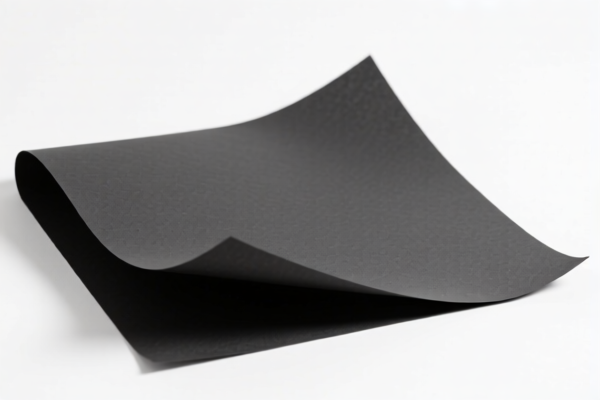
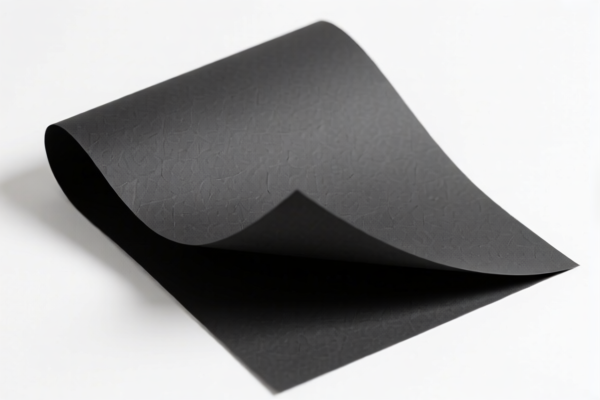


AI Analysis
📄 Carbon Paper (Quick Copy / NCR Paper)
🌐 HS Code Reference & Customs Clearance Guide | 2026 Latest Tariff Analysis | Professional Entry Strategy
📌 I. Product Definition & Classification: Do You Really Know "Carbon Paper"?
Carbon Paper, often referred to as "Quick Copy" paper in commercial contexts, is a coated sheet used to transfer writing or printing onto an underlying sheet. In modern trade, it is increasingly replaced by NCR (No Carbon Required) paper, but for customs classification, physical carbon-coated papers and certain pre-cut paper sheets fall under Chapter 48 (Paper and Paperboard).
The classification hinges on two main factors: 1. Material Composition: Is it pulp-based? Cellulose-based? Carbon-impregnated? 2. Form & Function: Is it a raw roll, pre-cut for specific uses (like gaskets/seals), or packaged for office use?
⚠️ Key Distinction:
- If the product is strictly "Carbon Paper" for duplication → It falls under 4823.90.
- If it is a specialized industrial paper seal/gasket → It may fall under 4823.90.80.
- Warning: Do not confuse with "Carbonless Copy Paper" (NCR), which might have different sub-headings depending on specific coating technology, but generally remains in 4823 if pre-cut.
📦 II. HS Code Classification Details (2026 Latest Tariff Authority对照)
| HS Code | Product Description | Application Scenario | Material/Form Key |
|---|---|---|---|
4823.90.10.00 |
Carbon Paper (Boxed) or Paper Products Cut to Size, Made of Pulp | Office use, boxed carbon sheets, pre-cut pulp-based copies | ✅ Pulp-based, Boxed/Cut |
4823.90.20.00 |
Carbon Paper (Vertical), Paper Products | Industrial vertical duplication, standard paper classification | ✅ Pulp/Paper Category |
4823.90.80.00 |
Carbon Paper (Boxed/Vertical/Horizontal) or Other Paper Products | Gaskets, Seals, Multi-directional use, Cellulose-based forms | ✅ Cellulose/Paper, Seals/Gaskets |
4823.90.10.00 |
Carbon Paper (Horizontal), Pulp-based, Cut to Size | Horizontal duplication, pre-cut sheets | ✅ Pulp-based, Horizontal Cut |
4823.90.80.00 |
Carbon Paper (Horizontal), Carbon/Cellulose Attributes, Other Shapes | Specialized horizontal copies, non-standard shapes, carbon-impregnated paper | ✅ Carbon/Cellulose, Other Shapes |
🔍 Key Reminder:
- All items listed are classified under Chapter 48, specifically heading 4823 (Other paper, paperboard, cellulose wadding and webs of cellulose fibers, cut to size or shape...).
- The sub-headings (.10,.20,.80) differentiate based on packaging (box vs. roll), orientation (vertical/horizontal), and specific application (seals/gaskets vs. pure copying).
💰 III. 2026 Latest Tariff Rate Breakdown (Including Surtax & Policy Add-ons)
✅ Applicable Country: United States (US)
✅ Origin: China (CN)
✅ Effective Time: 2025/2026 Period (Current Enforcement)
🎯 1. All HS Codes: 4823.90.10.00, 4823.90.20.00, 4823.90.80.00
| Item | Content |
|---|---|
| Base Tariff Rate | 0% (Ad Valorem) |
| Section 301 Surtax | +25% (From USITC Footnote 9903.88.01 / Section 301 List) |
| 122 Clause Tariff | +10% (Specific Section 122/IEEPA related surcharge on Chinese goods) |
| Total Tax Rate | 35% |
| Tax Calculation | CIF Value × 35% |
| De Minimis Exemption | ❌ Not Eligible (Deny De Minimis) |
| Legal Basis Path | Section 301: 9903.88.01 → Section 122/IEEPA: 9903.01.10 → USITC: 4823.xxxx.xx.xx |
📌 Explanation:
- "Base Tariff 0%": Paper products generally have low base MFN rates.
- "Section 301 Surcharge 25%": This is the primary trade war tariff on Chinese paper goods.
- "122 Clause Tariff 10%": Additional surcharge applied under specific executive orders or section 122 provisions targeting Chinese imports.
- Total 35%: This is a high-cost category for Chinese-origin paper imports.📌 Critical Note:
- Even though the base rate is 0%, the 35% effective rate significantly impacts profitability.
- No de minimis exemption: Small packages cannot bypass this tariff.
🛠️ IV. Customs Clearance Practical Advice (Avoid Pitfalls Guide)
✅ 1. Required Documentation Checklist (All Required)
| Document | Must Provide | Description |
|---|---|---|
| ✅ Product Specification Sheet | ✔️ | Must specify: Pulp vs. Cellulose, Coating Type (Carbon/Wax), Dimensions, Package Size |
| ✅ Material Composition Statement | ✔️ | Explicitly state "Pulp-based" or "Cellulose-based" to justify HS Code sub-classification |
| ✅ Product Photos (Clear Label) | ✔️ | Show packaging, "Carbon Paper" or "Quick Copy" label, brand, model |
| ✅ Commercial Invoice | ✔️ | Must clearly state "Carbon Paper" or "Paper Products for Duplication" |
| ✅ Packing List | ✔️ | Detail if boxed, rolled, or loose. Boxed items may fall under .10 |
| ✅ Certificate of Origin (CO) | ✔️ | To confirm Chinese origin (triggers the 35% tariff) |
| ✅ Third-party Test Report (if any) | ✔️ | If claiming specific environmental standards (e.g., FSC), though not required for HS code |
✅ 2. Declaration Tips (Key Mantras)
🔥 “Material Defines Sub-code, Package Defines Box, Origin Defines Tax!”
| Scenario | Correct Declaration | Error to Avoid |
|---|---|---|
| Boxed Carbon Paper for Office | 4823.90.10.00 |
Declaring as generic "Paper" → Risk of misclassification |
| Vertical Roll/Sheet Carbon Paper | 4823.90.20.00 |
Declaring as .10 if not boxed |
| Carbon Paper used as Gasket/Seal | 4823.90.80.00 |
Declaring as .10 if it serves industrial sealing purpose |
| Mixed Package (Boxed + Vertical) | Declare separately or use .80 if mixed |
Mixed declaration → Delays |
| Non-Chinese Origin (e.g., Vietnam) | Same HS Code, 0% Tariff | Assuming 35% applies regardless of origin |
📌 Strategy:
- If your carbon paper is not used for gaskets/seals, avoid.80unless it’s a mixed industrial use.
- For standard office use,.10(Boxed) is safest if packaged in boxes.
- Crucial: Clearly state "Made in China" to confirm origin. If shipped from a third country, provide proper transshipment documents to potentially avoid Section 301 (if eligible, but rare for direct Chinese content).
✅ 3. Special Cases Handling
| Case | Handling Advice |
|---|---|
| NCR (No Carbon Required) Paper | If it’s chemical-coated, it’s still often 4823.90. Confirm with lab test if it’s truly "Carbonless" vs. "Carbon Coated". |
| Carbon Paper Rolls vs. Sheets | Rolls may fall under different sub-headings. Ensure description matches "Cut to Size" for .10/.20. |
| OEM Custom Sizes | Provide custom order details. If non-standard, .80 may be more appropriate. |
| Sample Shipments | Even samples are subject to 35% tariff. No de minimis. |
🌍 V. Global Market Clearance Comparison (2026 Latest)
| Country/Region | Recommended HS Code | Tariff (China Origin) | Certification | Notes |
|---|---|---|---|---|
| 🇺🇸 USA | 4823.90.10.00 / .20 / .80 |
35% (25% + 10%) | None specific | High Tariff! Plan costs accordingly. |
| 🇨🇳 China | 4823.90.10.00 |
5-10% (Import Duty) | None | Low import duty, but high VAT. |
| 🇪🇺 EU | 4823.90.10.00 |
0-6.5% | CE (if applicable) | No Section 301 equivalent. |
| 🇬🇧 UK | 4823.90.10.00 |
0-6.5% | UKCA | Post-Brexit tariffs may vary. |
| 🇦🇺 Australia | 4823.90.10.00 |
5% | GMS | No major surcharges. |
📌 Conclusion:
- USA is the only major market with punitive 35% tariffs on Chinese carbon paper.
- EU, UK, Australia have much lower tariffs (0-6.5%).
- Supply Chain Advice: If targeting the US market, consider sourcing from Vietnam, Thailand, or Mexico to avoid the 35% surcharge. Substantial transformation is required.
📌 VI. Common Errors & Pitfall Guide (Lessons Learned)
❌ Error 1: Declaring "Carbon Paper" as "Office Supplies" with vague description
👉 Consequence: Customs may reclassify, leading to 35% tariff + penalties.
❌ Error 2: Using "NCR Paper" to avoid Section 301
👉 Consequence: If it’s physically coated carbon paper, it’s still 4823.90. Misdeclaration leads to fraud charges.
❌ Error 3: Ignoring the "122 Clause 10%"
👉 Consequence: Underpaying tariff by 10%. Back taxes + interest.
❌ Error 4: Declaring boxed items as "Rolls"
👉 Consequence: Wrong sub-code (.10 vs .20). May cause audit flags.
✅ Correct Practice:
“Carbon Paper, Pulp-based, Pre-cut to Size, Boxed, for Office Duplication, Model XYZ, Made in China”
🎯 VII. Conclusion: Smart Classification, Cost Control!
🎯 Remember the Mantra:
🔹 “35% is the Price, 4823 is the Place, Origin is the Key, Boxed is
.10!”
🔹 “Don’t Split the Tariff, Declare Clearly, Avoid Delays!”
📌 Pro Tip:
If your carbon paper is produced in Vietnam, Malaysia, or Indonesia, you may qualify for 0% Section 301 tariff.
Ensure substantial transformation criteria are met.
Apply for Pre-Ruling (Advance Ruling) if unsure about.10vs.80classification.
📣 Immediate Action:
📞 Contact a professional customs broker
📝 Provide Material Composition (Pulp vs. Cellulose)
🚀 Optimize your supply chain to mitigate the 35% US tariff impact!
✨ Professional Clearance Starts with Precise Classification!
💼 Every Dollar Saved is a Dollar Earned!
Customer Reviews
About HS Code Classification
The Harmonized System (HS) is an internationally standardized nomenclature developed by the World Customs Organization (WCO) to classify traded products. Over 200 countries use the HS system as the basis for customs tariffs, trade statistics, and import/export regulations.
Each HS code follows a hierarchical structure:
- Chapter (2 digits) — Broad category of goods (e.g., Chapter 84: Machinery and Mechanical Appliances)
- Heading (4 digits) — More specific grouping within the chapter
- Subheading (6 digits) — Internationally standardized breakdown, used by all WCO member countries
- National subdivisions (8-10 digits) — Country-specific extensions for further classification, such as US HTSUS 10-digit codes
Correct HS code classification is essential for smooth customs clearance, accurate duty payment, and compliance with trade regulations. Misclassification can lead to customs delays, overpayment of duties, or penalties.
When importing from CN to US, the applicable tariff rates may include:
- Most-Favored-Nation (MFN) rate — The standard duty rate applied to WTO members
- General rate — Applied to countries without trade agreements
- Trade remedy duties — Additional tariffs such as Section 301 (anti-dumping), Section 232 (national security), or countervailing duties
The information provided on this page is for reference purposes only. For official classification, please consult with your local customs authority or a licensed customs broker.