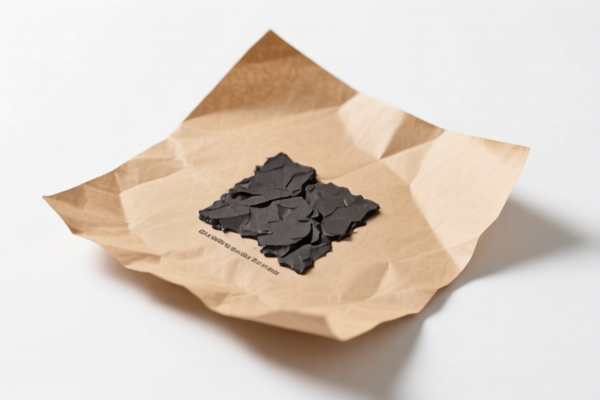
carbon paper quick copy
CN → US| HS Code | Tariff Rate | Origin | Destination | Doc |
|---|---|---|---|---|
| 4809202000 | 35.0% | CN | US | Official Doc |
| 4811493000 | 35.0% | CN | US | Official Doc |
| 4816200000 | 35.0% | CN | US | Official Doc |
| 4816900100 | 35.0% | CN | US | Official Doc |
| 4809204000 | 35.0% | CN | US | Official Doc |
Product Images



AI Analysis
📄 Carbon Paper & Quick Copy Sheets (Self-Copying Paper)
🌐 HS Code Reference & Customs Clearance Guide | 2026 Latest Tariff Analysis | Professional Clearance Strategy
📌 I. Product Definition & Classification: Do You Really Know "Carbon Paper"?
Carbon paper and quick-copy sheets are essential office supplies used for transferring handwriting or printing from an upper sheet to a lower one. In international trade, they fall under Chapter 48 (Paper and Paperboard). The classification hinges on the manufacturing process and usage:
- Carbon Paper (Traditional): Paper coated with ink or wax on one side, used strictly for making copies by pressure.
- Self-Copying Paper (Quick Copy): Multi-ply paper (e.g., NCR paper) that copies itself through pressure without needing a separate carbon sheet.
⚠️ Key Distinction:
- If the product is a separate sheet coated with transfer ink/wax for manual copying → 4809 or 4816.
- If the product is part of a multi-ply system where the paper itself acts as the copying medium (often called "Quick Copy" or "Self-Inking") → 4816.
📦 II. HS Code Classification Details (2026 Latest Tariff Authority Comparison)
Based on the provided data, here are the five most likely HS Code classifications for "Carbon Paper Quick Copy" products. All are subject to the same high tariff structure due to trade policies.
| HS Code | Product Description | Application Scenario | Classification Logic |
|---|---|---|---|
4809.20.20.00 |
Carbon Paper (Replicating Paper) | Traditional carbon sheets for manual copying | Direct Match: Name and usage are identical to the tariff description. |
4811.49.30.00 |
Coated/Decorated Paper (Other) | Carbon paper viewed as a "coated paper" product | Material Attribute: Classified under coated/decorated paper categories if specific carbon headings are ambiguous. |
4816.20.00.00 |
Carbon Paper / Quick Copy Sheets | Modern "Quick Copy" pads or sheets | Direct Match: Specifically covers "Carbon paper and other copying or transfer papers" of this type. |
4816.90.01.00 |
Other Paper Products (Transfer Paper) | General transfer papers not in specific subheadings | General Category: Used if the product is a transfer paper but doesn't fit the specific "carbon paper" definition of 4816.20. |
4809.20.40.00 |
Self-Inking Replicating Paper | Self-copying pads or continuous forms | Usage Match: Specifically for "Self-writing replicating paper" (Self-copying/Quick Copy). |
🔍 Key Reminder:
- All the above HS codes share the same total tax rate in this specific dataset. - Whether it is traditional carbon paper (4809) or modern quick-copy/self-copying paper (4816), the tax liability remains identical. - Choose the HS code that best matches your product form (loose sheets vs. pads vs. continuous forms).
💰 III. 2026 Latest Tariff Rate Breakdown (Including Surcharges & Policy Add-ons)
✅ Applicable Country: United States (US)
✅ Origin: China (CN)
✅ Effective Date: 2025年11月10日起 (Including subsequent imports)
🎯 1. All HS Codes (4809.20.20.00, 4811.49.30.00, 4816.20.00.00, 4816.90.01.00, 4809.20.40.00)
| Item | Content |
|---|---|
| Basic Tariff | 0.0% (Ad Valorem) |
| Section 301 Surcharge | +25.0% (Additional Tariff under Trade Act Section 301) |
| Section 122 Tariff | +10.0% (Additional Tariff under 122 Clause/IEEPA-related provisions) |
| Total Tax Rate | 35.0% |
| Tax Calculation | CIF Value × 35% |
| De Minimis Exemption | ❌ Not Applicable (High tariffs typically exclude de minimis relief for this category) |
| Legal Basis Path | Basic Tariff: 0% → Section 301: +25% → 122 Clause: +10% |
📌 Explanation:
- "Basic Tariff 0%": The standard MFN (Most Favored Nation) duty for these paper products is generally low or zero.
- "Section 301 Surcharge 25%": This is the major trade war tariff applied to a wide range of Chinese imports.
- "122 Clause Tariff 10%": An additional layer of surcharge, likely referencing specific executive orders or emergency powers (IEEPA) targeting Chinese goods.
- Combined 35%: This is a high effective tax rate. Importers must budget for this significantly increased cost.
🛠️ IV. Customs Clearance Practical Advice (Battle-Tested Pitfall Avoidance)
✅ 1. Preparation Checklist (All Documents Required)
| Document | Required | Notes |
|---|---|---|
| ✅ Product Specifications | ✔️ | Specify if it's "Carbon Paper" (coated) or "Self-Copying Paper" (NCR). |
| ✅ Composition Description | ✔️ | Paper weight, coating type (wax/oil/chemical), ply count. |
| ✅ Commercial Invoice | ✔️ | Clearly state "Carbon Paper" or "Quick Copy Sheets" – avoid vague terms like "Office Supplies". |
| ✅ Packing List | ✔️ | Show weight and dimensions accurately. |
| ✅ Origin Certificate | ✔️ | Confirm China origin to avoid unexpected duty disputes. |
| ✅ HS Code Pre-Ruling | ✔️ | Recommended: Apply for Advance Ruling to confirm if 4809 or 4816 is preferred for your specific product form. |
✅ 2. Declaration Tips (Key Mnemonic)
🔥 “Name Precise, Category Clear, Tax 35% is Real!”
| Scenario | Correct Declaration | Wrong Practice |
|---|---|---|
| Traditional loose carbon sheets | 4809.20.20.00 (Carbon Paper) |
Calling it "Paper" → Risk of reclassification + penalties |
| Multi-ply self-copying pads | 4816.20.00.00 or 4809.20.40.00 |
Calling it "Cardboard" or "Coated Paper" only |
| Any of the above | Total Duty: 35% | Assuming 0% basic duty means 0% total tax |
✅ 3. Special Handling
| Situation | Advice |
|---|---|
| NCR Paper (No Carbon Required) | Use 4816.20.00.00 – this is the most common for "Quick Copy" today. |
| Bulk Import | Calculate total landed cost with 35% tax early to maintain margin. |
| Product Testing | Provide a sample to customs broker to verify coating type (chemical vs. wax). |
🌍 V. Global Market Clearance Comparison (2026 Latest)
| Country/Region | Recommended HS Code | Total Tariff (China Origin) | Notes |
|---|---|---|---|
| 🇺🇸 USA | 4816.20.00.00 |
35% | High due to Section 301 + 122 Clause |
| 🇨🇳 China | 4816.20.00.00 |
Low/Standard | No Section 301 |
| 🇪🇺 EU | 4816.20.00.00 |
~6.5% | Standard EU duty, no US-style surcharges |
| 🇦🇺 Australia | 4816.20.00.00 |
~5% | FTA benefits may apply depending on origin |
📌 Conclusion:
- The US market is the most challenging for Chinese-origin carbon/quick-copy paper due to the 35% total tariff.
- EU and Asia-Pacific markets offer much more favorable duty structures.
- Cost Strategy: If targeting the US, consider pricing adjustments or exploring alternative supply chains.
📌 VI. Common Errors & Pitfalls (Lessons Learned)
❌ Error 1: Declaring as "General Paper" (4802)
👉 Consequence: Misclassification → 35% duty may still apply, but risk of fines for inaccurate declaration.
❌ Error 2: Ignoring the "Quick Copy" vs. "Carbon Paper" distinction
👉 Consequence: While tax is the same here, correct description prevents customs delays due to ambiguity.
❌ Error 3: Assuming "Basic 0% Duty" means no tax
👉 Consequence: 35% total tax will shock the importer’s cost accounting. Always calculate landed cost with surcharges.
❌ Error 4: Using "Office Supplies" as a generic name
👉 Consequence: Customs may classify it under the highest possible duty rate for office items → Penalties.
✅ Correct Approach:
“Carbon Paper, Coated, Single-Side, 50 Sheets, Model CP-50”
OR
“Self-Copying Quick Copy Paper, Multi-Ply, NCR Type, 100 Sheets”
🎯 VII. Conclusion: Precision Classification Saves Money!
🎯 Remember the Key Takeaway:
🔹 “US Tariff is 35%: 0% Basic + 25% Sec301 + 10% 122 Clause.”
🔹 “HS Code choice doesn’t change the rate, but correct description ensures smooth clearance.”
📌 Pro Tip:
If your volume is significant, apply for a Binding Tariff Information (BTI) or Advance Ruling from US Customs and Border Protection (CBP) to lock in the classification and avoid unexpected audits.
📣 Immediate Action:
📞 Contact your customs broker today with product samples and specifications.
🚀 Optimize your supply chain to account for the 35% tariff burden.
💼 Protect your margins with accurate clearance strategies!
✨ Professional Clearance Starts with Accurate Classification!
💼 Every Percent Counts in International Trade!
Customer Reviews
About HS Code Classification
The Harmonized System (HS) is an internationally standardized nomenclature developed by the World Customs Organization (WCO) to classify traded products. Over 200 countries use the HS system as the basis for customs tariffs, trade statistics, and import/export regulations.
Each HS code follows a hierarchical structure:
- Chapter (2 digits) — Broad category of goods (e.g., Chapter 84: Machinery and Mechanical Appliances)
- Heading (4 digits) — More specific grouping within the chapter
- Subheading (6 digits) — Internationally standardized breakdown, used by all WCO member countries
- National subdivisions (8-10 digits) — Country-specific extensions for further classification, such as US HTSUS 10-digit codes
Correct HS code classification is essential for smooth customs clearance, accurate duty payment, and compliance with trade regulations. Misclassification can lead to customs delays, overpayment of duties, or penalties.
When importing from CN to US, the applicable tariff rates may include:
- Most-Favored-Nation (MFN) rate — The standard duty rate applied to WTO members
- General rate — Applied to countries without trade agreements
- Trade remedy duties — Additional tariffs such as Section 301 (anti-dumping), Section 232 (national security), or countervailing duties
The information provided on this page is for reference purposes only. For official classification, please consult with your local customs authority or a licensed customs broker.