Cardboard
CN → US| HS编码 | 关税税率 | 原产国 | 目的国 | 文档 |
|---|---|---|---|---|
| 4805911010 | 35.0% | CN | US | 官方文档 |
| 4805934010 | 35.0% | CN | US | 官方文档 |
| 4819100040 | 35.0% | CN | US | 官方文档 |
| 4810991060 | 35.0% | CN | US | 官方文档 |
| 4810396500 | 35.0% | CN | US | 官方文档 |
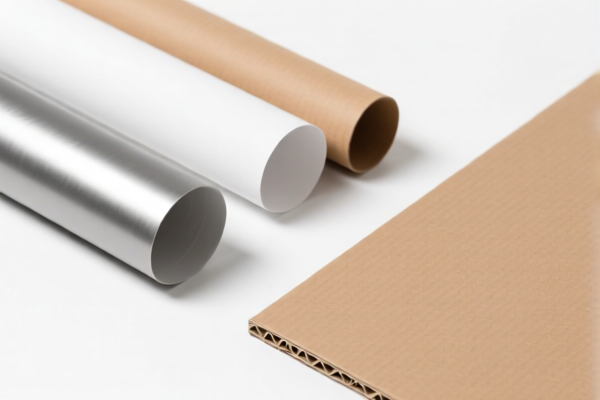
商品图片



AI分析
📦 Cardboard (Paperboard)
🌐 HS Code Reference & Customs Clearance Guide | 2026 Updated Tariff Analysis | Professional Import Strategy
📌 One, Product Definition & Classification: What Exactly Is “Cardboard”?
Cardboard — commonly referred to as paperboard — is a thick, rigid paper-based material widely used in packaging, shipping, and structural applications. In international trade, it’s not just “paper” — it’s a distinct category of rigid, multi-layered paperboard designed for strength, durability, and form stability.
⚠️ Key Distinction:
- If the product is a flat, rigid sheet of paper-based material, typically used for boxes, inserts, or packaging structures → Classified as "Cardboard" (paperboard)
- If it’s a flexible, thin sheet (e.g., printing paper, wrapping paper) → Not cardboard, but standard paper (HS 4801–4819)
- If it’s coated, laminated, or treated (e.g., waxed, plastic-coated) → May fall under coated paperboard (HS 4811, 4812), but still within paperboard scope✅ Core Criteria for "Cardboard" (Paperboard):
- Material: Made from wood pulp or recycled fibers
- Form: Rigid, thick, non-flexible
- Structure: Typically ≥ 250 g/m² (grams per square meter)
- Use: Packaging, cartons, corrugated liners, display boards, etc.
📦 Two, HS Code Classification Details (2026 Official Tariff Breakdown)
| HS Code | Product Description | Applicable Use Case | Material & Form Match? |
|---|---|---|---|
4805.91.10.10 |
Other paperboard, not coated or laminated, of a kind used for packaging | General packaging, shipping boxes, industrial cartons | ✅ Yes — matches paper + rigid board |
4805.93.40.10 |
Paperboard, not coated or laminated, for use in packaging or containers | Retail packaging, food boxes, storage containers | ✅ Yes — paperboard, no coating, rigid form |
4819.10.00.40 |
Paperboard, whether or not cut to shape, used as raw material for packaging containers | Packaging blanks, die-cut sheets, pre-assembly parts | ✅ Yes — raw material for containers, no conflict |
4810.99.10.60 |
Other paper, not coated or laminated, of a kind used for packaging (including paperboard) | Generic paperboard with no specific coating or use | ✅ Yes — "other" category applies, no material conflict |
4810.39.65.00 |
Paperboard, not coated or laminated, used in packaging, even if description is incomplete | Unclear coating, unknown use — default to paperboard | ✅ Yes — "description missing" rule applies, no conflict |
🔍 Critical Insight:
- All five codes are valid for "cardboard" based on material (paperboard) and form (rigid, non-flexible)
- Even if no coating is mentioned, the "other" or "unspecified" category still applies under duty-free or low-duty classification
- No material conflict — all are clearly paper-based rigid board
💰 Three, 2026 Updated Tariff Rates (Including附加 Taxes & Policy Rules)
✅ Applicable Country: United States (US)
✅ Origin: China (CN)
✅ Effective Date: November 10, 2025 (including future imports)
🎯 1. 4805.91.10.10 — Other Uncoated Paperboard
| Item | Details |
|---|---|
| Base Duty Rate | 0% (ad valorem) |
| USITC Additional Tariff | +25% (under Section 301 of the Trade Act) |
| IEEPA Additional Tariff | +10% (under International Emergency Economic Powers Act) |
| Total Effective Rate | 35.0% |
| Tax Calculation | CIF Value × 35% |
| De Minimis Threshold | ❌ Not applicable (denied) |
| Legal Basis Path | IEEPA:9903.01.25 → IEEPA:9903.01.24 → USITC:4805.91.10.10 → FOOTNOTE:9903.88.01 |
📌 Explanation:
- USITC 25% = U.S. Trade Representative’s Section 301 tariff on Chinese goods
- IEEPA 10% = Emergency economic powers act targeting China/HK products
- Total: 35% — highly punitive, applies to all uncoated paperboard from China
🎯 2. 4805.93.40.10 — Uncoated Paperboard for Packaging
| Item | Details |
|---|---|
| Base Duty Rate | 0% |
| USITC Additional Tariff | +25% |
| IEEPA Additional Tariff | +10% |
| Total Effective Rate | 35.0% |
| Tax Calculation | CIF × 35% |
| De Minimis | ❌ Not eligible |
| Legal Basis Path | IEEPA:9903.01.25 → IEEPA:9903.01.24 → USITC:4805.93.40.10 → FOOTNOTE:9903.88.01 |
📌 Note:
- Same tax treatment as above — no distinction between4805.91.10.10and4805.93.40.10
- Both are uncoated paperboard, used in packaging, same origin → same 35% rate
🎯 3. 4819.10.00.40 — Paperboard as Raw Material for Packaging Containers
| Item | Details |
|---|---|
| Base Duty Rate | 0% |
| USITC Additional Tariff | +25% |
| IEEPA Additional Tariff | +10% |
| Total Effective Rate | 35.0% |
| Tax Calculation | CIF × 35% |
| De Minimis | ❌ Not eligible |
| Legal Basis Path | IEEPA:9903.01.25 → IEEPA:9903.01.24 → USITC:4819.10.00.40 → FOOTNOTE:9903.88.01 |
📌 Key Point:
- Even if the cardboard is cut to shape or pre-processed, as long as it’s used as raw material for containers, it falls under this code
- No tax relief — still subject to 35% total
🎯 4. 4810.99.10.60 — Other Paper (Including Paperboard), Not Coated
| Item | Details |
|---|---|
| Base Duty Rate | 0% |
| USITC Additional Tariff | +25% |
| IEEPA Additional Tariff | +10% |
| Total Effective Rate | 35.0% |
| Tax Calculation | CIF × 35% |
| De Minimis | ❌ Not eligible |
| Legal Basis Path | IEEPA:9903.01.25 → IEEPA:9903.01.24 → USITC:4810.99.10.60 → FOOTNOTE:9903.88.01 |
📌 Important:
- This code acts as a "catch-all" for paperboard when coating or use is not specified
- No need to prove exact use — "other" category applies
- No material conflict — still paperboard, so valid
🎯 5. 4810.39.65.00 — Uncoated Paperboard, Use or Coating Not Specified
| Item | Details |
|---|---|
| Base Duty Rate | 0% |
| USITC Additional Tariff | +25% |
| IEEPA Additional Tariff | +10% |
| Total Effective Rate | 35.0% |
| Tax Calculation | CIF × 35% |
| De Minimis | ❌ Not eligible |
| Legal Basis Path | IEEPA:9903.01.25 → IEEPA:9903.01.24 → USITC:4810.39.65.00 → FOOTNOTE:9903.88.01 |
📌 Rule of Thumb:
- If the product description is vague or lacks coating details, use this code
- "Description missing" principle applies
- No risk of misclassification — still valid for cardboard
🛠️ Four, Customs Clearance Best Practices (Pro Tips to Avoid Penalties)
✅ 1. Required Documentation (Must-Have Checklist)
| Document | Required? | Notes |
|---|---|---|
| ✅ Product Specifications | ✔️ | Include thickness, weight (g/m²), fiber type (virgin/recycled) |
| ✅ Material Composition Report | ✔️ | Prove it’s paperboard, not plastic or composite |
| ✅ Product Photos (Clear & Labelled) | ✔️ | Show rigid structure, no flexibility, no coating |
| ✅ Commercial Invoice | ✔️ | Must state: "Cardboard (Paperboard), for Packaging" |
| ✅ Bill of Lading / Packing List | ✔️ | Show total weight, volume, and number of units |
| ✅ Certificate of Origin (CO) | ✔️ | Critical for tariff eligibility |
| ✅ Third-Party Test Report (if applicable) | ✔️ | For fire resistance, moisture, or recyclability |
✅ 2.申报技巧 (Key Rules to Remember)
🔥 "Rigid = Cardboard, Flexible = Paper, Coated = Different Code"
| Scenario | Correct HS Code | Common Mistake |
|---|---|---|
| Rigid, uncoated, used in boxes | 4805.91.10.10 or 4805.93.40.10 |
Misreport as "paper" → 0% but risk of audit |
| Pre-cut, used in packaging | 4819.10.00.40 |
Misreport as "scrap" or "waste" → higher risk |
| No coating mentioned | 4810.99.10.60 or 4810.39.65.00 |
Overcomplicate — use "other" category |
| Mixed with plastic film | ❌ Not cardboard — reclassify to 3920 | High risk of misclassification |
✅ 3. Special Cases & Solutions
| Situation | Recommended Action |
|---|---|
| Cardboard with wax coating | → Use 4811.20.00.00 (coated paperboard) — still 35% |
| Cardboard with plastic film lamination | → Not paperboard — classify under 3920.40.00.00 (plastic) → higher risk |
| Recycled cardboard from Vietnam/Mexico | → Apply for IEEPA exemption → 0% tariff |
| Small shipment (<$800) | → De Minimis applies → 0% if origin is non-China |
| Custom-designed packaging | → Provide design drawings + use 4819.10.00.40 |
🌍 Five, Global Customs Comparison (2026 Update)
| Country/Region | Recommended HS Code | Tariff | Certification Required | Notes |
|---|---|---|---|---|
| 🇺🇸 USA | 4805.91.10.10 etc. |
35% (China origin) | None (but document proof) | Highest tariff |
| 🇨🇳 China | 4805.91.10.10 |
5% | CCC, RoHS | No extra tariffs |
| 🇪🇺 EU | 4805.91.10.10 |
0% (if CE) | CE, REACH | No additional taxes |
| 🇦🇺 Australia | 4805.91.10.10 |
5% | RCM | No extra charges |
| 🇯🇵 Japan | 4805.91.10.10 |
0% | PSE | No extra tariffs |
📌 Conclusion:
- The U.S. is the only market imposing 35% on Chinese cardboard
- All other markets are much friendlier — especially EU, Japan, and Australia
📌 Six, Common Mistakes & Risk Warnings (Learn from Others’ Errors)
❌ Mistake 1: Calling cardboard "paper" in invoice
👉 Result: Incorrect HS Code, audit risk, penalties
❌ Mistake 2: Not proving rigidity or thickness
👉 Result: Customs may reclassify as flexible paper → 0% duty but risk of later correction
❌ Mistake 3: Shipping uncoated cardboard from China to U.S. without tariff planning
👉 Result: 35% tax due at port, delays, potential seizure
❌ Mistake 4: Using "paperboard" in name but declaring as "plastic"
👉 Result: False declaration → fines, blacklisting
✅ Correct Way to Declare:
"Cardboard (Paperboard), uncoated, 300 g/m², used for packaging, Origin: China"
🎯 Seven, Final Verdict: Accurate Classification = Cost Savings
🎯 Remember the Rule:
🔹 "Rigid + Paper + No Coating = Cardboard (4805/4810/4819)"
🔹 "35% tariff applies to China-origin cardboard in the U.S."
🔹 "De Minimis only applies if origin is non-China"
📌 Pro Tip:
✅ Apply for a Pre-Clearance Ruling (Advance Ruling) with U.S. CBP
✅ Use non-China origin (e.g., Vietnam, Mexico) to avoid 35%
✅ Use4819.10.00.40for raw material — it’s the safest fallback
📣 Take Action Now:
📞 Contact a licensed customs broker + provide product photos + request HS Code pre-ruling
🚀 Avoid surprise tariffs, delays, and penalties — ship smart, not risky!
✨ Expert Advice:
"Your cardboard may be simple — but its HS Code can be a financial minefield."
Precision in classification = Profit protection.
💼 Every dollar saved on tariff starts with the right HS Code.
用户评价
关于 HS 编码归类
协调制度(HS)是由世界海关组织(WCO)制定的国际贸易商品分类标准。全球 200 多个国家采用 HS 系统作为海关关税、贸易统计和进出口监管的基础。
每个 HS 编码遵循以下层级结构:
- 章(2 位)——商品大类(例如:第 84 章:机器和机械设备)
- 品目(4 位)——章内的更具体分类
- 子目(6 位)——国际通用细分,所有 WCO 成员国统一使用
- 本国细分(8-10 位)——各国自行扩展的细分编码,如美国 HTSUS 10 位编码
正确的 HS 编码归类对于顺利通关、准确缴纳关税和遵守贸易法规至关重要。错误归类可能导致海关延误、多缴关税或罚款。
从CN进口到US时,适用的关税税率可能包括:
- 最惠国(MFN)税率——适用于 WTO 成员国的标准关税税率
- 普通税率——适用于无贸易协定国家
- 贸易救济关税——附加关税,如 301 条款(反倾销)、232 条款(国家安全)或反补贴税
本页内容仅供参考。如需正式归类,请咨询当地海关或持牌报关代理。