Cardboard
CN → US| HS Code | Tariff Rate | Origin | Destination | Doc |
|---|---|---|---|---|
| 4805911010 | 35.0% | CN | US | Official Doc |
| 4805934010 | 35.0% | CN | US | Official Doc |
| 4819100040 | 35.0% | CN | US | Official Doc |
| 4810991060 | 35.0% | CN | US | Official Doc |
| 4810396500 | 35.0% | CN | US | Official Doc |
Product Images
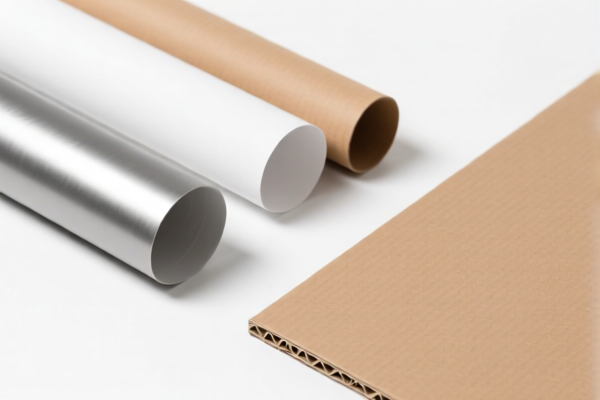



AI Analysis
📦 Cardboard (Paperboard)
🌐 HS Code Reference & Customs Clearance Guide | 2026 Updated Tariff Analysis | Professional Import Strategy
📌 One, Product Definition & Classification: What Exactly Is “Cardboard”?
Cardboard — commonly referred to as paperboard — is a thick, rigid paper-based material widely used in packaging, shipping, and structural applications. In international trade, it’s not just “paper” — it’s a distinct category of rigid, multi-layered paperboard designed for strength, durability, and form stability.
⚠️ Key Distinction:
- If the product is a flat, rigid sheet of paper-based material, typically used for boxes, inserts, or packaging structures → Classified as "Cardboard" (paperboard)
- If it’s a flexible, thin sheet (e.g., printing paper, wrapping paper) → Not cardboard, but standard paper (HS 4801–4819)
- If it’s coated, laminated, or treated (e.g., waxed, plastic-coated) → May fall under coated paperboard (HS 4811, 4812), but still within paperboard scope✅ Core Criteria for "Cardboard" (Paperboard):
- Material: Made from wood pulp or recycled fibers
- Form: Rigid, thick, non-flexible
- Structure: Typically ≥ 250 g/m² (grams per square meter)
- Use: Packaging, cartons, corrugated liners, display boards, etc.
📦 Two, HS Code Classification Details (2026 Official Tariff Breakdown)
| HS Code | Product Description | Applicable Use Case | Material & Form Match? |
|---|---|---|---|
4805.91.10.10 |
Other paperboard, not coated or laminated, of a kind used for packaging | General packaging, shipping boxes, industrial cartons | ✅ Yes — matches paper + rigid board |
4805.93.40.10 |
Paperboard, not coated or laminated, for use in packaging or containers | Retail packaging, food boxes, storage containers | ✅ Yes — paperboard, no coating, rigid form |
4819.10.00.40 |
Paperboard, whether or not cut to shape, used as raw material for packaging containers | Packaging blanks, die-cut sheets, pre-assembly parts | ✅ Yes — raw material for containers, no conflict |
4810.99.10.60 |
Other paper, not coated or laminated, of a kind used for packaging (including paperboard) | Generic paperboard with no specific coating or use | ✅ Yes — "other" category applies, no material conflict |
4810.39.65.00 |
Paperboard, not coated or laminated, used in packaging, even if description is incomplete | Unclear coating, unknown use — default to paperboard | ✅ Yes — "description missing" rule applies, no conflict |
🔍 Critical Insight:
- All five codes are valid for "cardboard" based on material (paperboard) and form (rigid, non-flexible)
- Even if no coating is mentioned, the "other" or "unspecified" category still applies under duty-free or low-duty classification
- No material conflict — all are clearly paper-based rigid board
💰 Three, 2026 Updated Tariff Rates (Including附加 Taxes & Policy Rules)
✅ Applicable Country: United States (US)
✅ Origin: China (CN)
✅ Effective Date: November 10, 2025 (including future imports)
🎯 1. 4805.91.10.10 — Other Uncoated Paperboard
| Item | Details |
|---|---|
| Base Duty Rate | 0% (ad valorem) |
| USITC Additional Tariff | +25% (under Section 301 of the Trade Act) |
| IEEPA Additional Tariff | +10% (under International Emergency Economic Powers Act) |
| Total Effective Rate | 35.0% |
| Tax Calculation | CIF Value × 35% |
| De Minimis Threshold | ❌ Not applicable (denied) |
| Legal Basis Path | IEEPA:9903.01.25 → IEEPA:9903.01.24 → USITC:4805.91.10.10 → FOOTNOTE:9903.88.01 |
📌 Explanation:
- USITC 25% = U.S. Trade Representative’s Section 301 tariff on Chinese goods
- IEEPA 10% = Emergency economic powers act targeting China/HK products
- Total: 35% — highly punitive, applies to all uncoated paperboard from China
🎯 2. 4805.93.40.10 — Uncoated Paperboard for Packaging
| Item | Details |
|---|---|
| Base Duty Rate | 0% |
| USITC Additional Tariff | +25% |
| IEEPA Additional Tariff | +10% |
| Total Effective Rate | 35.0% |
| Tax Calculation | CIF × 35% |
| De Minimis | ❌ Not eligible |
| Legal Basis Path | IEEPA:9903.01.25 → IEEPA:9903.01.24 → USITC:4805.93.40.10 → FOOTNOTE:9903.88.01 |
📌 Note:
- Same tax treatment as above — no distinction between4805.91.10.10and4805.93.40.10
- Both are uncoated paperboard, used in packaging, same origin → same 35% rate
🎯 3. 4819.10.00.40 — Paperboard as Raw Material for Packaging Containers
| Item | Details |
|---|---|
| Base Duty Rate | 0% |
| USITC Additional Tariff | +25% |
| IEEPA Additional Tariff | +10% |
| Total Effective Rate | 35.0% |
| Tax Calculation | CIF × 35% |
| De Minimis | ❌ Not eligible |
| Legal Basis Path | IEEPA:9903.01.25 → IEEPA:9903.01.24 → USITC:4819.10.00.40 → FOOTNOTE:9903.88.01 |
📌 Key Point:
- Even if the cardboard is cut to shape or pre-processed, as long as it’s used as raw material for containers, it falls under this code
- No tax relief — still subject to 35% total
🎯 4. 4810.99.10.60 — Other Paper (Including Paperboard), Not Coated
| Item | Details |
|---|---|
| Base Duty Rate | 0% |
| USITC Additional Tariff | +25% |
| IEEPA Additional Tariff | +10% |
| Total Effective Rate | 35.0% |
| Tax Calculation | CIF × 35% |
| De Minimis | ❌ Not eligible |
| Legal Basis Path | IEEPA:9903.01.25 → IEEPA:9903.01.24 → USITC:4810.99.10.60 → FOOTNOTE:9903.88.01 |
📌 Important:
- This code acts as a "catch-all" for paperboard when coating or use is not specified
- No need to prove exact use — "other" category applies
- No material conflict — still paperboard, so valid
🎯 5. 4810.39.65.00 — Uncoated Paperboard, Use or Coating Not Specified
| Item | Details |
|---|---|
| Base Duty Rate | 0% |
| USITC Additional Tariff | +25% |
| IEEPA Additional Tariff | +10% |
| Total Effective Rate | 35.0% |
| Tax Calculation | CIF × 35% |
| De Minimis | ❌ Not eligible |
| Legal Basis Path | IEEPA:9903.01.25 → IEEPA:9903.01.24 → USITC:4810.39.65.00 → FOOTNOTE:9903.88.01 |
📌 Rule of Thumb:
- If the product description is vague or lacks coating details, use this code
- "Description missing" principle applies
- No risk of misclassification — still valid for cardboard
🛠️ Four, Customs Clearance Best Practices (Pro Tips to Avoid Penalties)
✅ 1. Required Documentation (Must-Have Checklist)
| Document | Required? | Notes |
|---|---|---|
| ✅ Product Specifications | ✔️ | Include thickness, weight (g/m²), fiber type (virgin/recycled) |
| ✅ Material Composition Report | ✔️ | Prove it’s paperboard, not plastic or composite |
| ✅ Product Photos (Clear & Labelled) | ✔️ | Show rigid structure, no flexibility, no coating |
| ✅ Commercial Invoice | ✔️ | Must state: "Cardboard (Paperboard), for Packaging" |
| ✅ Bill of Lading / Packing List | ✔️ | Show total weight, volume, and number of units |
| ✅ Certificate of Origin (CO) | ✔️ | Critical for tariff eligibility |
| ✅ Third-Party Test Report (if applicable) | ✔️ | For fire resistance, moisture, or recyclability |
✅ 2.申报技巧 (Key Rules to Remember)
🔥 "Rigid = Cardboard, Flexible = Paper, Coated = Different Code"
| Scenario | Correct HS Code | Common Mistake |
|---|---|---|
| Rigid, uncoated, used in boxes | 4805.91.10.10 or 4805.93.40.10 |
Misreport as "paper" → 0% but risk of audit |
| Pre-cut, used in packaging | 4819.10.00.40 |
Misreport as "scrap" or "waste" → higher risk |
| No coating mentioned | 4810.99.10.60 or 4810.39.65.00 |
Overcomplicate — use "other" category |
| Mixed with plastic film | ❌ Not cardboard — reclassify to 3920 | High risk of misclassification |
✅ 3. Special Cases & Solutions
| Situation | Recommended Action |
|---|---|
| Cardboard with wax coating | → Use 4811.20.00.00 (coated paperboard) — still 35% |
| Cardboard with plastic film lamination | → Not paperboard — classify under 3920.40.00.00 (plastic) → higher risk |
| Recycled cardboard from Vietnam/Mexico | → Apply for IEEPA exemption → 0% tariff |
| Small shipment (<$800) | → De Minimis applies → 0% if origin is non-China |
| Custom-designed packaging | → Provide design drawings + use 4819.10.00.40 |
🌍 Five, Global Customs Comparison (2026 Update)
| Country/Region | Recommended HS Code | Tariff | Certification Required | Notes |
|---|---|---|---|---|
| 🇺🇸 USA | 4805.91.10.10 etc. |
35% (China origin) | None (but document proof) | Highest tariff |
| 🇨🇳 China | 4805.91.10.10 |
5% | CCC, RoHS | No extra tariffs |
| 🇪🇺 EU | 4805.91.10.10 |
0% (if CE) | CE, REACH | No additional taxes |
| 🇦🇺 Australia | 4805.91.10.10 |
5% | RCM | No extra charges |
| 🇯🇵 Japan | 4805.91.10.10 |
0% | PSE | No extra tariffs |
📌 Conclusion:
- The U.S. is the only market imposing 35% on Chinese cardboard
- All other markets are much friendlier — especially EU, Japan, and Australia
📌 Six, Common Mistakes & Risk Warnings (Learn from Others’ Errors)
❌ Mistake 1: Calling cardboard "paper" in invoice
👉 Result: Incorrect HS Code, audit risk, penalties
❌ Mistake 2: Not proving rigidity or thickness
👉 Result: Customs may reclassify as flexible paper → 0% duty but risk of later correction
❌ Mistake 3: Shipping uncoated cardboard from China to U.S. without tariff planning
👉 Result: 35% tax due at port, delays, potential seizure
❌ Mistake 4: Using "paperboard" in name but declaring as "plastic"
👉 Result: False declaration → fines, blacklisting
✅ Correct Way to Declare:
"Cardboard (Paperboard), uncoated, 300 g/m², used for packaging, Origin: China"
🎯 Seven, Final Verdict: Accurate Classification = Cost Savings
🎯 Remember the Rule:
🔹 "Rigid + Paper + No Coating = Cardboard (4805/4810/4819)"
🔹 "35% tariff applies to China-origin cardboard in the U.S."
🔹 "De Minimis only applies if origin is non-China"
📌 Pro Tip:
✅ Apply for a Pre-Clearance Ruling (Advance Ruling) with U.S. CBP
✅ Use non-China origin (e.g., Vietnam, Mexico) to avoid 35%
✅ Use4819.10.00.40for raw material — it’s the safest fallback
📣 Take Action Now:
📞 Contact a licensed customs broker + provide product photos + request HS Code pre-ruling
🚀 Avoid surprise tariffs, delays, and penalties — ship smart, not risky!
✨ Expert Advice:
"Your cardboard may be simple — but its HS Code can be a financial minefield."
Precision in classification = Profit protection.
💼 Every dollar saved on tariff starts with the right HS Code.
Customer Reviews
About HS Code Classification
The Harmonized System (HS) is an internationally standardized nomenclature developed by the World Customs Organization (WCO) to classify traded products. Over 200 countries use the HS system as the basis for customs tariffs, trade statistics, and import/export regulations.
Each HS code follows a hierarchical structure:
- Chapter (2 digits) — Broad category of goods (e.g., Chapter 84: Machinery and Mechanical Appliances)
- Heading (4 digits) — More specific grouping within the chapter
- Subheading (6 digits) — Internationally standardized breakdown, used by all WCO member countries
- National subdivisions (8-10 digits) — Country-specific extensions for further classification, such as US HTSUS 10-digit codes
Correct HS code classification is essential for smooth customs clearance, accurate duty payment, and compliance with trade regulations. Misclassification can lead to customs delays, overpayment of duties, or penalties.
When importing from CN to US, the applicable tariff rates may include:
- Most-Favored-Nation (MFN) rate — The standard duty rate applied to WTO members
- General rate — Applied to countries without trade agreements
- Trade remedy duties — Additional tariffs such as Section 301 (anti-dumping), Section 232 (national security), or countervailing duties
The information provided on this page is for reference purposes only. For official classification, please consult with your local customs authority or a licensed customs broker.