Cardboard Roll (Perforated)
CN → US| HS编码 | 关税税率 | 原产国 | 目的国 | 文档 |
|---|---|---|---|---|
| 4819100020 | 35.0% | CN | US | 官方文档 |
| 4819100040 | 35.0% | CN | US | 官方文档 |
| 4823903100 | 35.0% | CN | US | 官方文档 |
| 4823908000 | 35.0% | CN | US | 官方文档 |
| 4819100020 | 35.0% | CN | US | 官方文档 |
商品图片
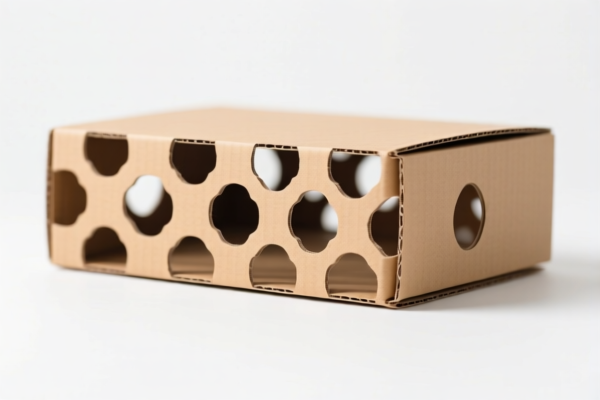
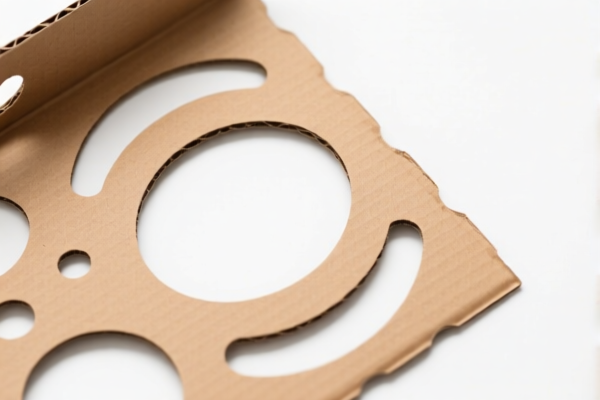
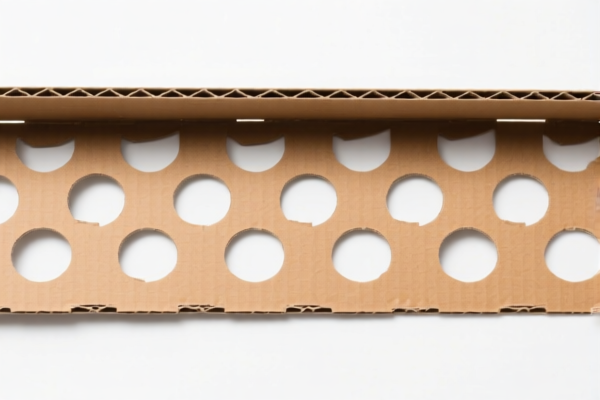
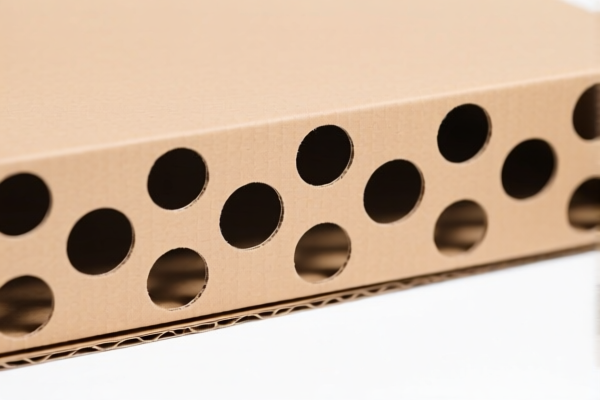
AI分析
📦 Cardboard Roll (Perforated) – Ultimate HS Code & Tax Guide
🌐 HS Code Reference & Customs Clearance Guide | 2026 Latest Tariff Analysis | Professional Entry Strategy
📌 1. Product Definition & Classification: Do You Really Understand "Cardboard Roll (Perforated)"?
Cardboard Roll (Perforated) refers to cylindrical packaging materials made from recycled paper/cardboard, specifically engineered with pre-punched holes or slits. This design facilitates easier tearing, wrapping, and dispensing in industrial, retail, or logistical settings.
In international trade, the classification depends heavily on two factors: 1. Material State: Is it a raw roll or a finished, perforated product? 2. Form: Is it wound on a core (roll) or cut into sheets?
⚠️ Key Distinction:
- If the cardboard is in roll form (even if perforated), it is generally classified under 4819.10.
- If the cardboard is perforated for safety purposes (e.g., breakaway strips, safety packaging), it may fall under 4823.90.
- Recycled Material: All items in the provided data are made from recycled material, which does not change the HS code but confirms the nature of the goods.
📦 2. HS Code Classification Details (2026 Latest Tariff Authority Comparison)
Based on the provided data, here are the relevant HS Codes for Cardboard Roll (Perforated) and related products:
| HS Code | Product Description | Application Scenario | Key Feature |
|---|---|---|---|
4819.10.00.20 |
Cardboard Roll (Recycled Material) | General packaging, wrapping rolls | ✅ Roll form, Recycled |
4819.10.00.40 |
Cardboard Roll (Recycled Material) | Industrial wrapping, bulk packaging | ✅ Roll form, Recycled |
4819.10.00.20 |
Cardboard Roll (Perforated) | Dispensing systems, easy-tear packaging | ✅ Perforated + Roll form |
4823.90.31.00 |
Perforated Safety Cardboard | Safety packaging, breakaway boxes | ✅ Perforated, Specific Safety Use |
4823.90.80.00 |
Perforated Safety Cardboard | General perforated cardboard products | ✅ Perforated, General Use |
🔍 Important Note:
- The entry "Cardboard Roll (Perforated)" explicitly references4819.10.00.20in the data. This is the most direct classification for a roll of cardboard that is perforated.
- The entries for4823.90.31.00and4823.90.80.00are for "Perforated Safety Cardboard," which may apply if the perforation is primarily for safety features (e.g., child-resistant openings) rather than just dispensing ease.
- Do not mix up: A "roll" (4819) is different from a "sheet" or "finished article" (4823). If it is still on a roll, 4819 is the primary candidate.
💰 3. 2026 Latest Tariff Rate Breakdown (Including Additional Taxes & Policy Surcharges)
✅ Applicable Country: United States (US)
✅ Origin: China (CN)
✅ Effective Date: Current as of 2026 data provided
🎯 1. HS Code 4819.10.00.20 – Cardboard Roll (Perforated / Recycled)
| Item | Content |
|---|---|
| Base Tariff | 0.0% (Ad Valorem) |
| Section 301 Additional Tariff | +25.0% |
| Section 122 Tariff | +10.0% |
| Total Tax Rate | 35.0% |
| Tax Calculation | CIF Value × 35% |
| De Minimis Eligibility | ❌ Not Eligible (High tariff burden) |
| Legal Basis Path | USITC:4819.10.00.20 → Section 301: 25% → Section 122: 10% |
📌 Explanation:
- Base Tariff (0%): Standard MFN rate for cardboard rolls is often zero.
- Section 301 (25%): Additional tariff imposed on Chinese goods under Trade Act of 1974, Section 301.
- Section 122 (10%): Additional tariff under Section 122 of the Trade Act of 1962 (national security/economic interest grounds).
- Total 35%: This is a high-cost entry. Importers must factor this into landed cost calculations.
🎯 2. HS Code 4819.10.00.40 – Cardboard Roll (Recycled Material)
| Item | Content |
|---|---|
| Base Tariff | 0.0% |
| Section 301 Additional Tariff | +25.0% |
| Section 122 Tariff | +10.0% |
| Total Tax Rate | 35.0% |
| Tax Calculation | CIF Value × 35% |
| De Minimis Eligibility | ❌ Not Eligible |
| Legal Basis Path | USITC:4819.10.00.40 → Section 301: 25% → Section 122: 10% |
📌 Note:
- Same tariff structure as4819.10.00.20. The sub-code40vs20may indicate minor differences in thickness, density, or specific recycled content, but the tax impact is identical.
🎯 3. HS Code 4823.90.31.00 & 4823.90.80.00 – Perforated Safety Cardboard
| Item | Content |
|---|---|
| Base Tariff | 0.0% |
| Section 301 Additional Tariff | +25.0% |
| Section 122 Tariff | +10.0% |
| Total Tax Rate | 35.0% |
| Tax Calculation | CIF Value × 35% |
| De Minimis Eligibility | ❌ Not Eligible |
| Legal Basis Path | USITC:4823.90.31.00 / 4823.90.80.00 → Section 301: 25% → Section 122: 10% |
📌 Note:
- Even if classified under 4823 (due to specific safety perforation features), the tax burden remains 35%.
- This highlights that tariff rates are consistent across these cardboard subheadings for Chinese origin goods under current policies.
🛠️ 4. Customs Clearance Practical Advice (Real-World Pitfall Avoidance)
✅ 1. Documentation Checklist (All Required)
| Document | Must Provide | Description |
|---|---|---|
| ✅ Product Specification Sheet | ✔️ | Details on cardboard type, recycled content %, perforation pattern, roll dimensions (diameter, length, core size). |
| ✅ Commercial Invoice | ✔️ | Must clearly state "Cardboard Roll (Perforated)" and HS Code. |
| ✅ Packing List | ✔️ | Include weight, dimensions, and number of rolls per pallet. |
| ✅ Certificate of Origin (CO) | ✔️ | To prove Chinese origin (triggers the 35% tax). |
| ✅ Photos of Product | ✔️ | Clear shots of the perforated pattern and roll ends. |
| ✅ Third-Party Test Report (Optional) | ✔️ | If claiming "Safety Cardboard," provide durability or breakaway strength tests. |
✅ 2. Declaration Tips (Key Mnemonic)
🔥 "Roll First, Safety Second; Name Precise, Tax Clear!"
| Scenario | Correct Declaration | Wrong Practice |
|---|---|---|
| Perforated Roll for Dispensing | 4819.10.00.20 (Cardboard Roll) |
Calling it "Safety Cardboard" → Misclassification Risk |
| Perforated for Safety/Child-Resistant | 4823.90.31.00 (Perforated Safety Cardboard) |
Calling it "Cardboard Roll" → May be questioned if not on a roll |
| Non-Perforated Recycled Roll | 4819.10.00.40 |
Over-declaring as "Perforated" → No benefit, potential audit flag |
| Cut Sheets (Not Rolls) | 4823.90.80.00 |
Declaring as "Roll" → Physical inspection mismatch |
📌 Critical Advice:
- If the product is still on a roll, even if perforated,4819.10.00.20is the safest and most accurate classification.
- Only use4823.90if the product is not in roll form (e.g., sheets, blanks, or finished safety packaging articles) OR if the perforation is a safety feature (e.g., easy-tear safety strips) and not just for dispensing.
✅ 3. Special Case Handling
| Scenario | Handling Advice |
|---|---|
| OEM Custom Perforation | Provide design files showing perforation pattern. Clarify if it’s for "dispensing ease" (4819) or "safety" (4823). |
| Mixed Shipment (Rolls + Sheets) | Split Declaration: Rolls under 4819, Sheets under 4823. Do not lump them together. |
| Recycled Content Claim | Ensure invoice states "100% Recycled" or specific percentage. Some buyers seek this for sustainability goals. |
| Section 122 & 301 Burden | With 35% tax, consider duty drawback if re-exporting, or explore FTA origins (e.g., if sourced from Vietnam/Mexico instead of China). |
🌍 5. Global Market Comparison (2026 Latest)
| Country/Region | Recommended HS Code | Tariff (China Origin) | Certification | Notes |
|---|---|---|---|---|
| 🇺🇸 USA | 4819.10.00.20 |
35% | None Specific | High tariff due to Sec 301 + 122 |
| 🇨🇳 China | 4819.10.00.20 |
~5-10% | ISO 9001 | Lower domestic tax |
| 🇪🇺 EU | 4819.10 |
~0-6.5% | FSC/PEFC (Sustainability) | No Section 301/122 equivalents |
| 🇬🇧 UK | 4819.10 |
~0-6.5% | FSC/PEFC | Post-Brexit tariff alignment |
📌 Conclusion:
- The USA is the only market with the 35% combined tariff (0% Base + 25% Sec 301 + 10% Sec 122).
- For other markets, the tariff is significantly lower, but sustainability certifications (FSC/PEFC) may be required.
📌 6. Common Errors & Pitfall Guide (Lessons Learned)
❌ Error 1: Declaring "Perforated Cardboard" under 4823.90.80.00 when it is actually a roll.
👉 Consequence: Customs may reclassify under 4819.10.00.20, leading to delays and potential penalties for misdeclaration.
✅ Fix: If it’s on a roll, use 4819.
❌ Error 2: Ignoring Section 122 (10%) in cost calculations.
👉 Consequence: Underestimating landed cost by 10%, leading to profit margin erosion.
✅ Fix: Always include Sec 122 in your FOB-to-Landed Cost model for China-origin goods to the US.
❌ Error 3: Using vague descriptions like "Paper Roll" on the invoice.
👉 Consequence: Customs may assign a generic HS code with higher duties or require additional documentation.
✅ Fix: Use precise terms: "Cardboard Roll, Perforated, Recycled Material, Diameter X, Length Y."
🎯 7. Conclusion: Professional Declaration, Cost Optimization!
🎯 Key Takeaway:
🔹 "Roll Form = 4819.10.00.20"
🔹 "Safety Feature + Non-Roll = 4823.90.31.00"
🔹 "Total Tax = 35% (0% Base + 25% Sec 301 + 10% Sec 122)"
📌 Pro Tip:
If your business volume is high, consider pre-classification rulings from US Customs and Border Protection (CBP) to confirm whether your specific perforated product falls under 4819 or 4823. This can prevent costly reclassifications and delays.
📣 Immediate Action:
📞 Contact your freight forwarder + Provide product photos + Verify HS Code
4819.10.00.20
🚀 Ensure Smooth Customs Clearance, Avoid 35% Surprises, and Protect Your Margins!
✨ Professional Clearance Starts with Accurate Classification!
💼 Every Percent Counts – Get Your Tariffs Right!
用户评价
关于 HS 编码归类
协调制度(HS)是由世界海关组织(WCO)制定的国际贸易商品分类标准。全球 200 多个国家采用 HS 系统作为海关关税、贸易统计和进出口监管的基础。
每个 HS 编码遵循以下层级结构:
- 章(2 位)——商品大类(例如:第 84 章:机器和机械设备)
- 品目(4 位)——章内的更具体分类
- 子目(6 位)——国际通用细分,所有 WCO 成员国统一使用
- 本国细分(8-10 位)——各国自行扩展的细分编码,如美国 HTSUS 10 位编码
正确的 HS 编码归类对于顺利通关、准确缴纳关税和遵守贸易法规至关重要。错误归类可能导致海关延误、多缴关税或罚款。
从CN进口到US时,适用的关税税率可能包括:
- 最惠国(MFN)税率——适用于 WTO 成员国的标准关税税率
- 普通税率——适用于无贸易协定国家
- 贸易救济关税——附加关税,如 301 条款(反倾销)、232 条款(国家安全)或反补贴税
本页内容仅供参考。如需正式归类,请咨询当地海关或持牌报关代理。