Cardboard Roll (Perforated)
CN → US| HS Code | Tariff Rate | Origin | Destination | Doc |
|---|---|---|---|---|
| 4819100020 | 35.0% | CN | US | Official Doc |
| 4819100040 | 35.0% | CN | US | Official Doc |
| 4823903100 | 35.0% | CN | US | Official Doc |
| 4823908000 | 35.0% | CN | US | Official Doc |
| 4819100020 | 35.0% | CN | US | Official Doc |
Product Images
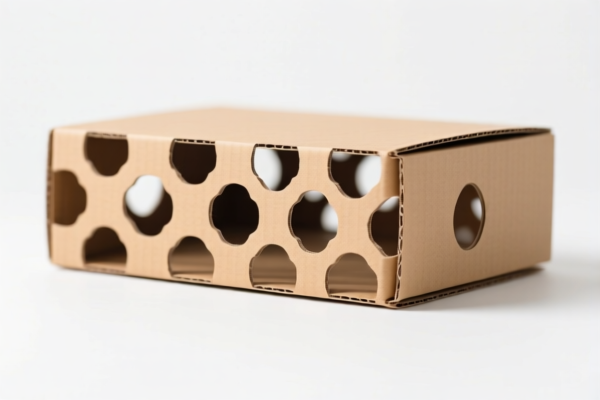

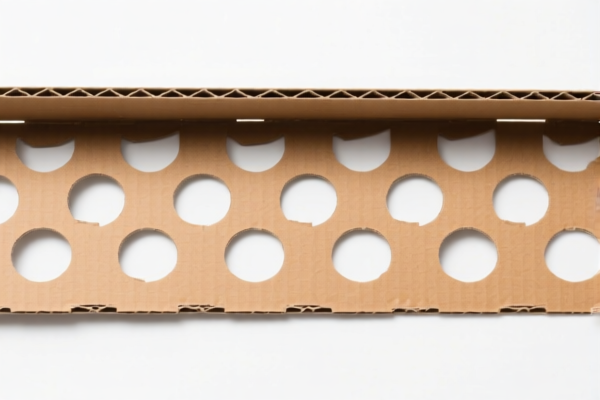
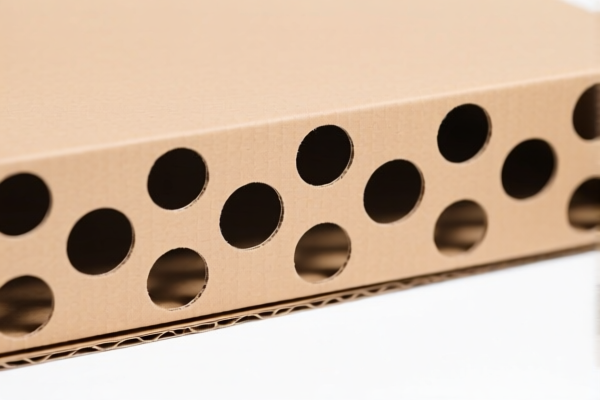
AI Analysis
📦 Cardboard Roll (Perforated) – Ultimate HS Code & Tax Guide
🌐 HS Code Reference & Customs Clearance Guide | 2026 Latest Tariff Analysis | Professional Entry Strategy
📌 1. Product Definition & Classification: Do You Really Understand "Cardboard Roll (Perforated)"?
Cardboard Roll (Perforated) refers to cylindrical packaging materials made from recycled paper/cardboard, specifically engineered with pre-punched holes or slits. This design facilitates easier tearing, wrapping, and dispensing in industrial, retail, or logistical settings.
In international trade, the classification depends heavily on two factors: 1. Material State: Is it a raw roll or a finished, perforated product? 2. Form: Is it wound on a core (roll) or cut into sheets?
⚠️ Key Distinction:
- If the cardboard is in roll form (even if perforated), it is generally classified under 4819.10.
- If the cardboard is perforated for safety purposes (e.g., breakaway strips, safety packaging), it may fall under 4823.90.
- Recycled Material: All items in the provided data are made from recycled material, which does not change the HS code but confirms the nature of the goods.
📦 2. HS Code Classification Details (2026 Latest Tariff Authority Comparison)
Based on the provided data, here are the relevant HS Codes for Cardboard Roll (Perforated) and related products:
| HS Code | Product Description | Application Scenario | Key Feature |
|---|---|---|---|
4819.10.00.20 |
Cardboard Roll (Recycled Material) | General packaging, wrapping rolls | ✅ Roll form, Recycled |
4819.10.00.40 |
Cardboard Roll (Recycled Material) | Industrial wrapping, bulk packaging | ✅ Roll form, Recycled |
4819.10.00.20 |
Cardboard Roll (Perforated) | Dispensing systems, easy-tear packaging | ✅ Perforated + Roll form |
4823.90.31.00 |
Perforated Safety Cardboard | Safety packaging, breakaway boxes | ✅ Perforated, Specific Safety Use |
4823.90.80.00 |
Perforated Safety Cardboard | General perforated cardboard products | ✅ Perforated, General Use |
🔍 Important Note:
- The entry "Cardboard Roll (Perforated)" explicitly references4819.10.00.20in the data. This is the most direct classification for a roll of cardboard that is perforated.
- The entries for4823.90.31.00and4823.90.80.00are for "Perforated Safety Cardboard," which may apply if the perforation is primarily for safety features (e.g., child-resistant openings) rather than just dispensing ease.
- Do not mix up: A "roll" (4819) is different from a "sheet" or "finished article" (4823). If it is still on a roll, 4819 is the primary candidate.
💰 3. 2026 Latest Tariff Rate Breakdown (Including Additional Taxes & Policy Surcharges)
✅ Applicable Country: United States (US)
✅ Origin: China (CN)
✅ Effective Date: Current as of 2026 data provided
🎯 1. HS Code 4819.10.00.20 – Cardboard Roll (Perforated / Recycled)
| Item | Content |
|---|---|
| Base Tariff | 0.0% (Ad Valorem) |
| Section 301 Additional Tariff | +25.0% |
| Section 122 Tariff | +10.0% |
| Total Tax Rate | 35.0% |
| Tax Calculation | CIF Value × 35% |
| De Minimis Eligibility | ❌ Not Eligible (High tariff burden) |
| Legal Basis Path | USITC:4819.10.00.20 → Section 301: 25% → Section 122: 10% |
📌 Explanation:
- Base Tariff (0%): Standard MFN rate for cardboard rolls is often zero.
- Section 301 (25%): Additional tariff imposed on Chinese goods under Trade Act of 1974, Section 301.
- Section 122 (10%): Additional tariff under Section 122 of the Trade Act of 1962 (national security/economic interest grounds).
- Total 35%: This is a high-cost entry. Importers must factor this into landed cost calculations.
🎯 2. HS Code 4819.10.00.40 – Cardboard Roll (Recycled Material)
| Item | Content |
|---|---|
| Base Tariff | 0.0% |
| Section 301 Additional Tariff | +25.0% |
| Section 122 Tariff | +10.0% |
| Total Tax Rate | 35.0% |
| Tax Calculation | CIF Value × 35% |
| De Minimis Eligibility | ❌ Not Eligible |
| Legal Basis Path | USITC:4819.10.00.40 → Section 301: 25% → Section 122: 10% |
📌 Note:
- Same tariff structure as4819.10.00.20. The sub-code40vs20may indicate minor differences in thickness, density, or specific recycled content, but the tax impact is identical.
🎯 3. HS Code 4823.90.31.00 & 4823.90.80.00 – Perforated Safety Cardboard
| Item | Content |
|---|---|
| Base Tariff | 0.0% |
| Section 301 Additional Tariff | +25.0% |
| Section 122 Tariff | +10.0% |
| Total Tax Rate | 35.0% |
| Tax Calculation | CIF Value × 35% |
| De Minimis Eligibility | ❌ Not Eligible |
| Legal Basis Path | USITC:4823.90.31.00 / 4823.90.80.00 → Section 301: 25% → Section 122: 10% |
📌 Note:
- Even if classified under 4823 (due to specific safety perforation features), the tax burden remains 35%.
- This highlights that tariff rates are consistent across these cardboard subheadings for Chinese origin goods under current policies.
🛠️ 4. Customs Clearance Practical Advice (Real-World Pitfall Avoidance)
✅ 1. Documentation Checklist (All Required)
| Document | Must Provide | Description |
|---|---|---|
| ✅ Product Specification Sheet | ✔️ | Details on cardboard type, recycled content %, perforation pattern, roll dimensions (diameter, length, core size). |
| ✅ Commercial Invoice | ✔️ | Must clearly state "Cardboard Roll (Perforated)" and HS Code. |
| ✅ Packing List | ✔️ | Include weight, dimensions, and number of rolls per pallet. |
| ✅ Certificate of Origin (CO) | ✔️ | To prove Chinese origin (triggers the 35% tax). |
| ✅ Photos of Product | ✔️ | Clear shots of the perforated pattern and roll ends. |
| ✅ Third-Party Test Report (Optional) | ✔️ | If claiming "Safety Cardboard," provide durability or breakaway strength tests. |
✅ 2. Declaration Tips (Key Mnemonic)
🔥 "Roll First, Safety Second; Name Precise, Tax Clear!"
| Scenario | Correct Declaration | Wrong Practice |
|---|---|---|
| Perforated Roll for Dispensing | 4819.10.00.20 (Cardboard Roll) |
Calling it "Safety Cardboard" → Misclassification Risk |
| Perforated for Safety/Child-Resistant | 4823.90.31.00 (Perforated Safety Cardboard) |
Calling it "Cardboard Roll" → May be questioned if not on a roll |
| Non-Perforated Recycled Roll | 4819.10.00.40 |
Over-declaring as "Perforated" → No benefit, potential audit flag |
| Cut Sheets (Not Rolls) | 4823.90.80.00 |
Declaring as "Roll" → Physical inspection mismatch |
📌 Critical Advice:
- If the product is still on a roll, even if perforated,4819.10.00.20is the safest and most accurate classification.
- Only use4823.90if the product is not in roll form (e.g., sheets, blanks, or finished safety packaging articles) OR if the perforation is a safety feature (e.g., easy-tear safety strips) and not just for dispensing.
✅ 3. Special Case Handling
| Scenario | Handling Advice |
|---|---|
| OEM Custom Perforation | Provide design files showing perforation pattern. Clarify if it’s for "dispensing ease" (4819) or "safety" (4823). |
| Mixed Shipment (Rolls + Sheets) | Split Declaration: Rolls under 4819, Sheets under 4823. Do not lump them together. |
| Recycled Content Claim | Ensure invoice states "100% Recycled" or specific percentage. Some buyers seek this for sustainability goals. |
| Section 122 & 301 Burden | With 35% tax, consider duty drawback if re-exporting, or explore FTA origins (e.g., if sourced from Vietnam/Mexico instead of China). |
🌍 5. Global Market Comparison (2026 Latest)
| Country/Region | Recommended HS Code | Tariff (China Origin) | Certification | Notes |
|---|---|---|---|---|
| 🇺🇸 USA | 4819.10.00.20 |
35% | None Specific | High tariff due to Sec 301 + 122 |
| 🇨🇳 China | 4819.10.00.20 |
~5-10% | ISO 9001 | Lower domestic tax |
| 🇪🇺 EU | 4819.10 |
~0-6.5% | FSC/PEFC (Sustainability) | No Section 301/122 equivalents |
| 🇬🇧 UK | 4819.10 |
~0-6.5% | FSC/PEFC | Post-Brexit tariff alignment |
📌 Conclusion:
- The USA is the only market with the 35% combined tariff (0% Base + 25% Sec 301 + 10% Sec 122).
- For other markets, the tariff is significantly lower, but sustainability certifications (FSC/PEFC) may be required.
📌 6. Common Errors & Pitfall Guide (Lessons Learned)
❌ Error 1: Declaring "Perforated Cardboard" under 4823.90.80.00 when it is actually a roll.
👉 Consequence: Customs may reclassify under 4819.10.00.20, leading to delays and potential penalties for misdeclaration.
✅ Fix: If it’s on a roll, use 4819.
❌ Error 2: Ignoring Section 122 (10%) in cost calculations.
👉 Consequence: Underestimating landed cost by 10%, leading to profit margin erosion.
✅ Fix: Always include Sec 122 in your FOB-to-Landed Cost model for China-origin goods to the US.
❌ Error 3: Using vague descriptions like "Paper Roll" on the invoice.
👉 Consequence: Customs may assign a generic HS code with higher duties or require additional documentation.
✅ Fix: Use precise terms: "Cardboard Roll, Perforated, Recycled Material, Diameter X, Length Y."
🎯 7. Conclusion: Professional Declaration, Cost Optimization!
🎯 Key Takeaway:
🔹 "Roll Form = 4819.10.00.20"
🔹 "Safety Feature + Non-Roll = 4823.90.31.00"
🔹 "Total Tax = 35% (0% Base + 25% Sec 301 + 10% Sec 122)"
📌 Pro Tip:
If your business volume is high, consider pre-classification rulings from US Customs and Border Protection (CBP) to confirm whether your specific perforated product falls under 4819 or 4823. This can prevent costly reclassifications and delays.
📣 Immediate Action:
📞 Contact your freight forwarder + Provide product photos + Verify HS Code
4819.10.00.20
🚀 Ensure Smooth Customs Clearance, Avoid 35% Surprises, and Protect Your Margins!
✨ Professional Clearance Starts with Accurate Classification!
💼 Every Percent Counts – Get Your Tariffs Right!
Customer Reviews
About HS Code Classification
The Harmonized System (HS) is an internationally standardized nomenclature developed by the World Customs Organization (WCO) to classify traded products. Over 200 countries use the HS system as the basis for customs tariffs, trade statistics, and import/export regulations.
Each HS code follows a hierarchical structure:
- Chapter (2 digits) — Broad category of goods (e.g., Chapter 84: Machinery and Mechanical Appliances)
- Heading (4 digits) — More specific grouping within the chapter
- Subheading (6 digits) — Internationally standardized breakdown, used by all WCO member countries
- National subdivisions (8-10 digits) — Country-specific extensions for further classification, such as US HTSUS 10-digit codes
Correct HS code classification is essential for smooth customs clearance, accurate duty payment, and compliance with trade regulations. Misclassification can lead to customs delays, overpayment of duties, or penalties.
When importing from CN to US, the applicable tariff rates may include:
- Most-Favored-Nation (MFN) rate — The standard duty rate applied to WTO members
- General rate — Applied to countries without trade agreements
- Trade remedy duties — Additional tariffs such as Section 301 (anti-dumping), Section 232 (national security), or countervailing duties
The information provided on this page is for reference purposes only. For official classification, please consult with your local customs authority or a licensed customs broker.