Cardboard Spool (Perforated)
CN → US| HS编码 | 关税税率 | 原产国 | 目的国 | 文档 |
|---|---|---|---|---|
| 4823906700 | 35.0% | CN | US | 官方文档 |
| 4823908680 | 35.0% | CN | US | 官方文档 |
| 4819504020 | 35.0% | CN | US | 官方文档 |
| 4823902000 | 35.0% | CN | US | 官方文档 |
| 4823908000 | 35.0% | CN | US | 官方文档 |
商品图片

AI分析
📦 Cardboard Spool (Perforated) – Global HS Code Classification & US Tariff Analysis (2026)
🌐 HS Code Reference & Customs Clearance Guide | 2026 Latest Tariff Full Resolution | Professional Customs Strategy
📌 I. Product Definition & Classification: Do You Really Understand "Cardboard Spool"?
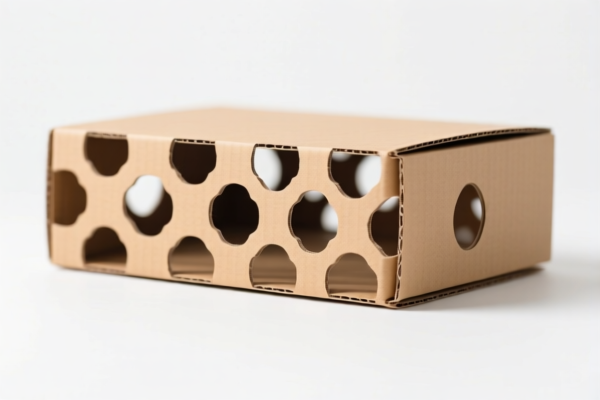
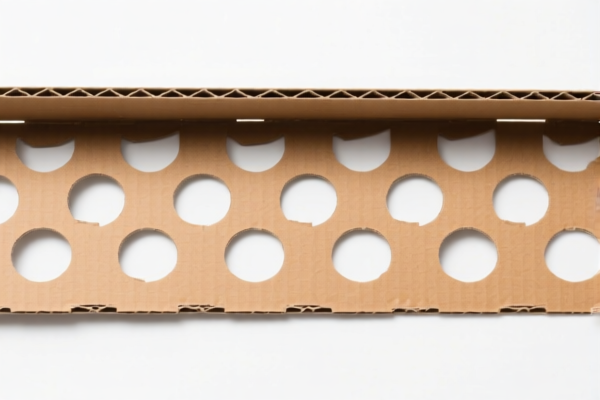
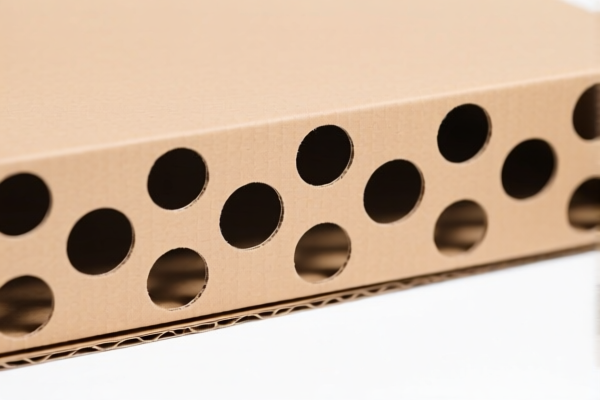
A Cardboard Spool (Perforated) is a cylindrical tube made of paperboard/cardboard, often featuring perforations (holes or slots) for ventilation, labeling, or mechanical interlocking. It is widely used in textile, wire, cable, film, and adhesive tape industries to wind and store materials.
In international trade, classification depends on: 1. Material: Paperboard (thick paper, ≥220 g/m² or similar). 2. Structure: Hollow, cylindrical, with or without perforations. 3. Function: Container, support, or packaging component.
⚠️ Key Classification Criteria:
- If it’s a plain cardboard tube/spool → Falls under Chapter 48 (Paper and Paperboard)
- If it’s part of a machine or electrical equipment → May fall under different chapters (not applicable here)
- Perforations do not change the fundamental nature of the product; it remains a paperboard article.
📦 II. HS Code Classification Details (2026 Latest Official Tariff Comparison)
Based on the provided data, here are the applicable HS codes for Cardboard Spool (Perforated) made of paperboard, along with explanations:
| HS Code | Product Description | Classification Rationale | Total Tax Rate (US, China Origin) |
|--------|--------------------------|----------------------------------------|
| 4823.90.67.00 | Other articles of paperboard, in卷轴 (spool/roll) form | Classified as "other coated/processed paperboard articles"; perforations considered a processing feature | 35.0% |
| 4823.90.86.80 | Other paperboard articles,纸质卷轴 (paper spool) form | Falls under "other paper products"; perforated cardboard spools are explicitly included as "paper spools" | 35.0% |
| 4819.50.40.20 | Paperboard containers, such as rolls, tubes, drums, similar containers | Specifically covers cylindrical paperboard containers; spools are recognized as "tubes/rolls" for winding | 35.0% |
| 4823.90.20.00 | Other paper products, classified as spools | General "other paper products" clause; applies when no more specific subheading fits | 35.0% |
| 4823.90.80.00 | Other paperboard articles, spools/core types | Broad category for paperboard spools/core tubes; includes perforated variants | 35.0% |
🔍 Key Insight:
- All 5 HS codes result in the same total tax rate of 35% due to identical tariff components.
- Choice of HS Code depends on customs documentation accuracy, product description consistency, and risk of audit.
-4819.50.40.20is the most specific if the spool is used as a container for winding materials (e.g., tape, film, wire).
-4823.90.67.00or4823.90.86.80are safer if the spool is sold as a packaging component rather than a functional container.
💰 III. 2026 Latest Tariff Rate Breakdown (Including Surcharge, Policy Surcharges)
✅ Applicable Country: United States (US)
✅ Country of Origin: China (CN)
✅ Effective Date: November 10, 2025 onwards
🎯 All HS Codes: 4823.90.67.00, 4823.90.86.80, 4819.50.40.20, 4823.90.20.00, 4823.90.80.00
| Component | Rate | Legal Basis | Explanation |
|---|---|---|---|
| Base Tariff | 0.0% | HTSUS General Rate | Paperboard articles often have 0% base duty |
| Section 301 Tariff | 25.0% | USITC Footnote 9903.88.01 | Added under U.S.-China Trade War (List 3/4A) |
| IEEPA Surcharge | 10.0% | IEEPA: 9903.01.24 | "122 Clause" surcharge on Chinese-origin goods |
| Total Tax Rate | 35.0% | — | CIF Value × 35% |
| De Minimis Exemption | ❌ Not Applicable | Deny De Minimis | Cannot use $800 de minimis for Chinese goods under 301/IEEPA |
| Legal Citation Path | IEEPA:9903.01.24 → USITC:4823.xxxx.xxxx → FOOTNOTE:9903.88.01 |
— | Full legal chain for audit trails |
📌 Critical Note:
- No base tariff → 0%
- 301 Tariff: 25% → Applies to all Chinese-origin paperboard articles in this category
- IEEPA 10%: Additional surcharge on Chinese goods → Total 35%
- High Risk: Customs may scrutinize HS code selection; consistent documentation is key
🛠️ IV. Customs Clearance Practical Advice (Avoiding Pitfalls)
✅ 1. Required Documentation Checklist
| Document | Required | Notes |
|---|---|---|
| Commercial Invoice | ✔️ Must state: "Cardboard Spool, Perforated, Paperboard, HS Code [Correct Code]" | Avoid vague terms like "packaging" |
| Packing List | ✔️ Specify quantity, weight, dimensions per spool | Include perforation details if relevant |
| Product Specification Sheet | ✔️ Material thickness, diameter, height, perforation pattern | Helps justify HS code selection |
| Photos of Product | ✔️ Show perforations, cylindrical shape, label | Proves it’s not a machine part |
| Certificate of Origin | ✔️ If applicable, for potential tariff relief (rare for CN) | Not helpful for US-CN trade currently |
| FCC/CE/RoHS Certificates | ❌ Not required | Paperboard spools are non-electrical |
✅ 2. Declaration Strategy (Key Tips)
🔥 Golden Rule:
"Be Specific, Be Consistent, Be Proactive!"
| Scenario | Correct Declaration | Incorrect Declaration | Consequence |
|---|---|---|---|
| Perforated Cardboard Spool for Tape | 4819.50.40.20 – "Paperboard tube for winding adhesive tape" |
"Cardboard tube" | May trigger audit; wrong code = penalty |
| Plain Cardboard Spool (No Perforations) | 4823.90.67.00 – "Other paperboard articles" |
"Spool" without material | Customs may downgrade to higher duty |
| Spool with Label/Print | Same as above | "Printed paper product" | May shift to different chapter (e.g., 4911) |
| Bulk Shipment | List each line item with HS code | Aggregate "paper products" | High risk of seizure or delay |
✅ 3. Special Cases & Handling
| Situation | Recommendation |
|---|---|
| OEM Custom Spools | Provide customer design specs + perforation diagram |
| Spools with Adhesive | Declare as "adhesive-coated paperboard" → May change HS code |
| Mixed Shipments (Spools + Plastic Core) | Split lines: paperboard → 4823/4819; plastic → 3923/3926 |
| Small Sample Shipments | Still subject to 35% tariff; de minimis does not apply |
🌍 V. Global Market Comparison (2026)
| Country/Region | Recommended HS Code | Tariff (China Origin) | Certification | Notes |
|---|---|---|---|---|
| 🇺🇸 USA | 4819.50.40.20 |
35% | None | High tariff due to 301 + IEEPA |
| 🇨🇳 China | 4819.50.40.20 |
5% | None | Low import duty |
| 🇪🇺 EU | 4819.50.40 |
0% | CE (if applicable) | No surcharges |
| 🇬🇧 UK | 4819.50.40 |
0% | UKCA (if applicable) | Post-Brexit alignment with EU |
| 🇯🇵 Japan | 4819.50.40 |
0% | PSE (if electrical) | No surcharges |
| 🇮🇳 India | 4819.50.40 |
7.5% | BIS (if applicable) | Moderate tariff |
📌 Conclusion:
- USA is the most expensive market for cardboard spools from China (35%).
- EU, Japan, India have no surcharges, making them more competitive for re-export.
- Consider supply chain diversification (e.g., Vietnam, Mexico) to mitigate US tariffs.
📌 VI. Common Mistakes & Pitfalls (Lessons Learned)
❌ Mistake 1: Declaring as "Packaging Material"
👉 Result: Customs may reclassify to 4823.90.80.00 → Same 35%, but audit risk increases.
❌ Mistake 2: Using "Roll" instead of "Spool"
👉 Result: Ambiguity → Delay in clearance → Demurrage charges.
❌ Mistake 3: Ignoring Perforations
👉 Result: If perforations are critical for function, failing to declare may lead to misclassification.
❌ Mistake 4: Assuming De Minimis Applies
👉 Result: $800 exemption does NOT apply to Chinese goods under 301/IEEPA → Full 35% tariff charged.
✅ Correct Practice:
"Perforated Cardboard Spool, Paperboard, Ø100mm × H200mm, for Winding Adhesive Tape, HS 4819.50.40.20, Made in China"
🎯 VII. Conclusion: Professional Declaration Saves Time & Money!
🎯 Remember the Golden Rules:
🔹 "Be Specific: Material + Function + Structure"
🔹 "HS Code Determines Duty: 35% in US, 0% in EU"
🔹 "Documentation is Key: Photos, Specs, Invoices"
📌 Pro Tip:
If your spools are manufactured in Vietnam, Malaysia, or Mexico, you may avoid the 35% US tariff (0–5% duty). Consider supply chain optimization to reduce costs.
📣 Immediate Action Steps:
📞 Engage a licensed customs broker
📄 Prepare detailed product specs + photos
🔍 Apply for Advance Ruling from US CBP for certainty
🚀 Ensure Smooth Clearance, Reduce Costs, Maximize Profit!
✨ Professional Customs Clearance Starts with Accurate Classification!
💼 Every Penny Saved is a Penny Earned!
用户评价
关于 HS 编码归类
协调制度(HS)是由世界海关组织(WCO)制定的国际贸易商品分类标准。全球 200 多个国家采用 HS 系统作为海关关税、贸易统计和进出口监管的基础。
每个 HS 编码遵循以下层级结构:
- 章(2 位)——商品大类(例如:第 84 章:机器和机械设备)
- 品目(4 位)——章内的更具体分类
- 子目(6 位)——国际通用细分,所有 WCO 成员国统一使用
- 本国细分(8-10 位)——各国自行扩展的细分编码,如美国 HTSUS 10 位编码
正确的 HS 编码归类对于顺利通关、准确缴纳关税和遵守贸易法规至关重要。错误归类可能导致海关延误、多缴关税或罚款。
从CN进口到US时,适用的关税税率可能包括:
- 最惠国(MFN)税率——适用于 WTO 成员国的标准关税税率
- 普通税率——适用于无贸易协定国家
- 贸易救济关税——附加关税,如 301 条款(反倾销)、232 条款(国家安全)或反补贴税
本页内容仅供参考。如需正式归类,请咨询当地海关或持牌报关代理。