Cardboard Spool (Perforated)
CN → US| HS Code | Tariff Rate | Origin | Destination | Doc |
|---|---|---|---|---|
| 4823906700 | 35.0% | CN | US | Official Doc |
| 4823908680 | 35.0% | CN | US | Official Doc |
| 4819504020 | 35.0% | CN | US | Official Doc |
| 4823902000 | 35.0% | CN | US | Official Doc |
| 4823908000 | 35.0% | CN | US | Official Doc |
Product Images
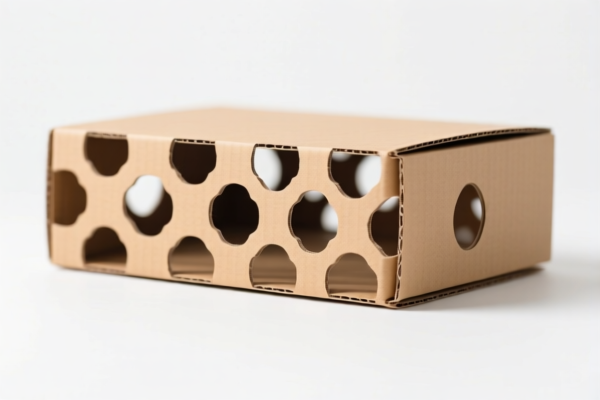

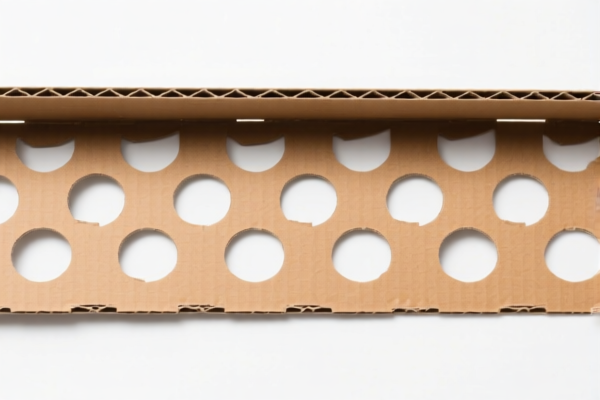
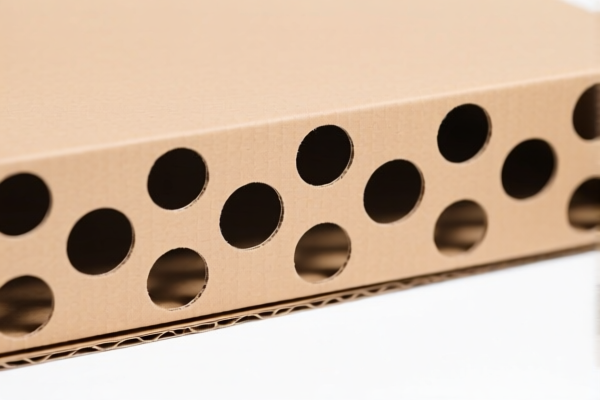
AI Analysis
📦 Cardboard Spool (Perforated) – Global HS Code Classification & US Tariff Analysis (2026)
🌐 HS Code Reference & Customs Clearance Guide | 2026 Latest Tariff Full Resolution | Professional Customs Strategy
📌 I. Product Definition & Classification: Do You Really Understand "Cardboard Spool"?
A Cardboard Spool (Perforated) is a cylindrical tube made of paperboard/cardboard, often featuring perforations (holes or slots) for ventilation, labeling, or mechanical interlocking. It is widely used in textile, wire, cable, film, and adhesive tape industries to wind and store materials.
In international trade, classification depends on: 1. Material: Paperboard (thick paper, ≥220 g/m² or similar). 2. Structure: Hollow, cylindrical, with or without perforations. 3. Function: Container, support, or packaging component.
⚠️ Key Classification Criteria:
- If it’s a plain cardboard tube/spool → Falls under Chapter 48 (Paper and Paperboard)
- If it’s part of a machine or electrical equipment → May fall under different chapters (not applicable here)
- Perforations do not change the fundamental nature of the product; it remains a paperboard article.
📦 II. HS Code Classification Details (2026 Latest Official Tariff Comparison)
Based on the provided data, here are the applicable HS codes for Cardboard Spool (Perforated) made of paperboard, along with explanations:
| HS Code | Product Description | Classification Rationale | Total Tax Rate (US, China Origin) |
|--------|--------------------------|----------------------------------------|
| 4823.90.67.00 | Other articles of paperboard, in卷轴 (spool/roll) form | Classified as "other coated/processed paperboard articles"; perforations considered a processing feature | 35.0% |
| 4823.90.86.80 | Other paperboard articles,纸质卷轴 (paper spool) form | Falls under "other paper products"; perforated cardboard spools are explicitly included as "paper spools" | 35.0% |
| 4819.50.40.20 | Paperboard containers, such as rolls, tubes, drums, similar containers | Specifically covers cylindrical paperboard containers; spools are recognized as "tubes/rolls" for winding | 35.0% |
| 4823.90.20.00 | Other paper products, classified as spools | General "other paper products" clause; applies when no more specific subheading fits | 35.0% |
| 4823.90.80.00 | Other paperboard articles, spools/core types | Broad category for paperboard spools/core tubes; includes perforated variants | 35.0% |
🔍 Key Insight:
- All 5 HS codes result in the same total tax rate of 35% due to identical tariff components.
- Choice of HS Code depends on customs documentation accuracy, product description consistency, and risk of audit.
-4819.50.40.20is the most specific if the spool is used as a container for winding materials (e.g., tape, film, wire).
-4823.90.67.00or4823.90.86.80are safer if the spool is sold as a packaging component rather than a functional container.
💰 III. 2026 Latest Tariff Rate Breakdown (Including Surcharge, Policy Surcharges)
✅ Applicable Country: United States (US)
✅ Country of Origin: China (CN)
✅ Effective Date: November 10, 2025 onwards
🎯 All HS Codes: 4823.90.67.00, 4823.90.86.80, 4819.50.40.20, 4823.90.20.00, 4823.90.80.00
| Component | Rate | Legal Basis | Explanation |
|---|---|---|---|
| Base Tariff | 0.0% | HTSUS General Rate | Paperboard articles often have 0% base duty |
| Section 301 Tariff | 25.0% | USITC Footnote 9903.88.01 | Added under U.S.-China Trade War (List 3/4A) |
| IEEPA Surcharge | 10.0% | IEEPA: 9903.01.24 | "122 Clause" surcharge on Chinese-origin goods |
| Total Tax Rate | 35.0% | — | CIF Value × 35% |
| De Minimis Exemption | ❌ Not Applicable | Deny De Minimis | Cannot use $800 de minimis for Chinese goods under 301/IEEPA |
| Legal Citation Path | IEEPA:9903.01.24 → USITC:4823.xxxx.xxxx → FOOTNOTE:9903.88.01 |
— | Full legal chain for audit trails |
📌 Critical Note:
- No base tariff → 0%
- 301 Tariff: 25% → Applies to all Chinese-origin paperboard articles in this category
- IEEPA 10%: Additional surcharge on Chinese goods → Total 35%
- High Risk: Customs may scrutinize HS code selection; consistent documentation is key
🛠️ IV. Customs Clearance Practical Advice (Avoiding Pitfalls)
✅ 1. Required Documentation Checklist
| Document | Required | Notes |
|---|---|---|
| Commercial Invoice | ✔️ Must state: "Cardboard Spool, Perforated, Paperboard, HS Code [Correct Code]" | Avoid vague terms like "packaging" |
| Packing List | ✔️ Specify quantity, weight, dimensions per spool | Include perforation details if relevant |
| Product Specification Sheet | ✔️ Material thickness, diameter, height, perforation pattern | Helps justify HS code selection |
| Photos of Product | ✔️ Show perforations, cylindrical shape, label | Proves it’s not a machine part |
| Certificate of Origin | ✔️ If applicable, for potential tariff relief (rare for CN) | Not helpful for US-CN trade currently |
| FCC/CE/RoHS Certificates | ❌ Not required | Paperboard spools are non-electrical |
✅ 2. Declaration Strategy (Key Tips)
🔥 Golden Rule:
"Be Specific, Be Consistent, Be Proactive!"
| Scenario | Correct Declaration | Incorrect Declaration | Consequence |
|---|---|---|---|
| Perforated Cardboard Spool for Tape | 4819.50.40.20 – "Paperboard tube for winding adhesive tape" |
"Cardboard tube" | May trigger audit; wrong code = penalty |
| Plain Cardboard Spool (No Perforations) | 4823.90.67.00 – "Other paperboard articles" |
"Spool" without material | Customs may downgrade to higher duty |
| Spool with Label/Print | Same as above | "Printed paper product" | May shift to different chapter (e.g., 4911) |
| Bulk Shipment | List each line item with HS code | Aggregate "paper products" | High risk of seizure or delay |
✅ 3. Special Cases & Handling
| Situation | Recommendation |
|---|---|
| OEM Custom Spools | Provide customer design specs + perforation diagram |
| Spools with Adhesive | Declare as "adhesive-coated paperboard" → May change HS code |
| Mixed Shipments (Spools + Plastic Core) | Split lines: paperboard → 4823/4819; plastic → 3923/3926 |
| Small Sample Shipments | Still subject to 35% tariff; de minimis does not apply |
🌍 V. Global Market Comparison (2026)
| Country/Region | Recommended HS Code | Tariff (China Origin) | Certification | Notes |
|---|---|---|---|---|
| 🇺🇸 USA | 4819.50.40.20 |
35% | None | High tariff due to 301 + IEEPA |
| 🇨🇳 China | 4819.50.40.20 |
5% | None | Low import duty |
| 🇪🇺 EU | 4819.50.40 |
0% | CE (if applicable) | No surcharges |
| 🇬🇧 UK | 4819.50.40 |
0% | UKCA (if applicable) | Post-Brexit alignment with EU |
| 🇯🇵 Japan | 4819.50.40 |
0% | PSE (if electrical) | No surcharges |
| 🇮🇳 India | 4819.50.40 |
7.5% | BIS (if applicable) | Moderate tariff |
📌 Conclusion:
- USA is the most expensive market for cardboard spools from China (35%).
- EU, Japan, India have no surcharges, making them more competitive for re-export.
- Consider supply chain diversification (e.g., Vietnam, Mexico) to mitigate US tariffs.
📌 VI. Common Mistakes & Pitfalls (Lessons Learned)
❌ Mistake 1: Declaring as "Packaging Material"
👉 Result: Customs may reclassify to 4823.90.80.00 → Same 35%, but audit risk increases.
❌ Mistake 2: Using "Roll" instead of "Spool"
👉 Result: Ambiguity → Delay in clearance → Demurrage charges.
❌ Mistake 3: Ignoring Perforations
👉 Result: If perforations are critical for function, failing to declare may lead to misclassification.
❌ Mistake 4: Assuming De Minimis Applies
👉 Result: $800 exemption does NOT apply to Chinese goods under 301/IEEPA → Full 35% tariff charged.
✅ Correct Practice:
"Perforated Cardboard Spool, Paperboard, Ø100mm × H200mm, for Winding Adhesive Tape, HS 4819.50.40.20, Made in China"
🎯 VII. Conclusion: Professional Declaration Saves Time & Money!
🎯 Remember the Golden Rules:
🔹 "Be Specific: Material + Function + Structure"
🔹 "HS Code Determines Duty: 35% in US, 0% in EU"
🔹 "Documentation is Key: Photos, Specs, Invoices"
📌 Pro Tip:
If your spools are manufactured in Vietnam, Malaysia, or Mexico, you may avoid the 35% US tariff (0–5% duty). Consider supply chain optimization to reduce costs.
📣 Immediate Action Steps:
📞 Engage a licensed customs broker
📄 Prepare detailed product specs + photos
🔍 Apply for Advance Ruling from US CBP for certainty
🚀 Ensure Smooth Clearance, Reduce Costs, Maximize Profit!
✨ Professional Customs Clearance Starts with Accurate Classification!
💼 Every Penny Saved is a Penny Earned!
Customer Reviews
About HS Code Classification
The Harmonized System (HS) is an internationally standardized nomenclature developed by the World Customs Organization (WCO) to classify traded products. Over 200 countries use the HS system as the basis for customs tariffs, trade statistics, and import/export regulations.
Each HS code follows a hierarchical structure:
- Chapter (2 digits) — Broad category of goods (e.g., Chapter 84: Machinery and Mechanical Appliances)
- Heading (4 digits) — More specific grouping within the chapter
- Subheading (6 digits) — Internationally standardized breakdown, used by all WCO member countries
- National subdivisions (8-10 digits) — Country-specific extensions for further classification, such as US HTSUS 10-digit codes
Correct HS code classification is essential for smooth customs clearance, accurate duty payment, and compliance with trade regulations. Misclassification can lead to customs delays, overpayment of duties, or penalties.
When importing from CN to US, the applicable tariff rates may include:
- Most-Favored-Nation (MFN) rate — The standard duty rate applied to WTO members
- General rate — Applied to countries without trade agreements
- Trade remedy duties — Additional tariffs such as Section 301 (anti-dumping), Section 232 (national security), or countervailing duties
The information provided on this page is for reference purposes only. For official classification, please consult with your local customs authority or a licensed customs broker.