cardboard spool perforated
CN → US| HS Code | Tariff Rate | Origin | Destination | Doc |
|---|---|---|---|---|
| 4823908000 | 35.0% | CN | US | Official Doc |
| 4823902000 | 35.0% | CN | US | Official Doc |
Product Images
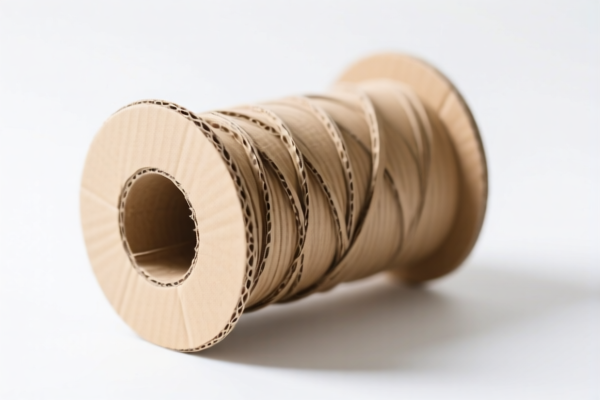
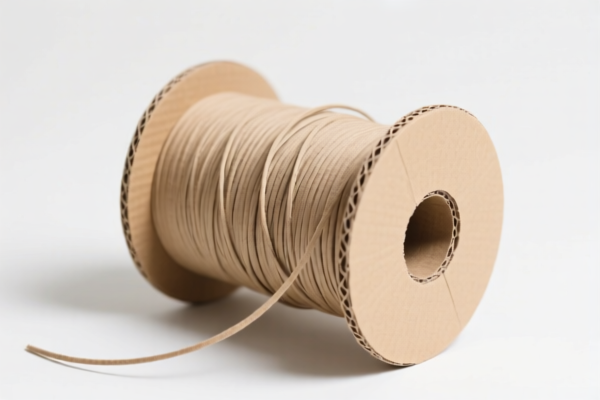
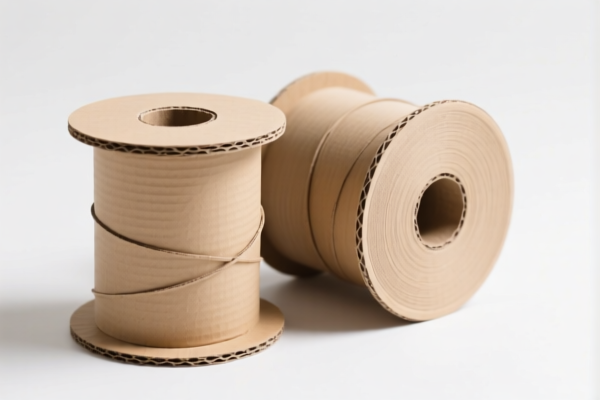
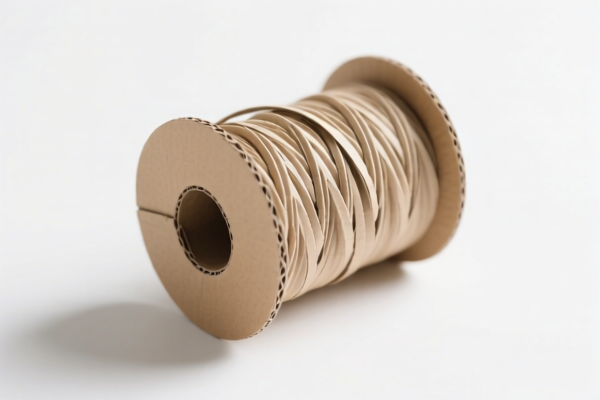
AI Analysis
📦 Cardboard Spool (Perforated) | Paper-Based Articles
🌐 HS Code Reference & Customs Clearance Guide | 2026 Latest Tariff Analysis | Professional Clearance Strategy
📌 I. Product Definition & Classification: Do You Really Know What a "Perforated Cardboard Spool" Is?
A cardboard spool (perforated) is a cylindrical or tubular core made of paper pulp, paperboard, cellulose wadding, or webs of cellulose fibers. The term "perforated" indicates that the material has been pierced with holes, but it remains a single article of paper-based product. It is typically used for winding textile yarns, ribbons, tapes, or wires.
In international trade, this item is strictly classified under Chapter 48: Paper and Paperboard; Articles of Paper Pulp, of Paper or of Paperboard.
⚠️ Key Classification Point:
- Even if the spool is "perforated," it is not considered a "machine part" or "tool" if its primary function is simply to hold the wound material.
- It is considered an "Other article of paper pulp, paper, paperboard..." because it is cut to size/shape and does not fall into specific sub-categories like "gaskets" or "papier-mâché."
📦 II. HS Code Classification Details (2026 Latest Tariff Authority Comparison)
Based on the provided <DATA>, there are two possible HS Codes for this product, depending on its specific material composition and whether it qualifies as "other seals."
| HS Code | Product Description | Applicable Scenario | Material Composition |
|---|---|---|---|
4823.90.80.00 |
Other articles of paper pulp, paper, paperboard, cellulose wadding or webs of cellulose fibers: Other: Gaskets, washers and other seals | Primary Classification for most standard perforated spools if they are considered "seals" or general paper articles not otherwise specified. Note: In many contexts, simple spools fall here as "Other". | Paper, Paperboard, Cellulose Wadding |
4823.90.20.00 |
Other articles... Of papier-mâché | Secondary Classification ONLY if the spool is specifically made of papier-mâché (paper pulp molded/hardened with glue). | Papier-mâché |
🔍 Critical Distinction:
- Most Standard Cardboard Spools: Are typically made of kraft paper or layered paperboard. They are NOT papier-mâché. Therefore, they should be classified under4823.90.80.00.
- Specialty Milled Spools: If the spool is made by molding loose paper pulp with adhesive into a hard shape, it might be papier-mâché (4823.90.20.00), but this is rare for industrial "cardboard spools."
- "Perforated" Aspect: Perforation does not change the fundamental nature of the paper article. It is still an "article of paperboard/cellulose fibers."
💰 III. 2026 Latest Tariff Rate Details (Including Surtaxes & Policy Add-ons)
✅ Applicable Country: United States (US)
✅ Country of Origin: China (CN)
✅ Effective Date: 2025 November 10 onwards (including subsequent imports)
🎯 1. 4823.90.80.00 – Other Paper Articles (Standard Cardboard Spools)
| Item | Content |
|---|---|
| Base Tariff Rate | 0.0% (ad valorem) |
| Section 301 Surcharge | +25.0% (USITC Footnote 9903.88.01 / HTSUS 4823.90.80.00) |
| Total Tariff Rate | 25.0% |
| Tax Calculation | CIF Value × 25% |
| De Minimis Exemption | ❌ Not Eligible (deny_de_minimis applies to Section 301 goods) |
| Legal Authority Path | USITC:4823.90.80.00 → FOOTNOTE:301 → Total: 25% |
📌 Explanation:
- The 0% base rate is the standard Most Favored Nation (MFN) duty for many paper articles.
- However, Section 301 tariffs add 25% for goods originating from China.
- Total Cost Impact: You will pay 25% on the declared value (CIF).
- No De Minimis: Under current US policy, Section 301 goods are not eligible for the $800 de minimis exemption (Section 321). Even small shipments are subject to duty.
🎯 2. 4823.90.20.00 – Papier-Mâché Articles
| Item | Content |
|---|---|
| Base Tariff Rate | 0.0% |
| Section 301 Surcharge | +25.0% |
| Total Tariff Rate | 25.0% |
| Tax Calculation | CIF Value × 25% |
| De Minimis Exemption | ❌ Not Eligible |
| Legal Authority Path | USITC:4823.90.20.00 → FOOTNOTE:301 → Total: 25% |
📌 Note:
- If your product is genuinely papier-mâché, it falls under4823.90.20.00, but the tax rate is identical (25%).
- Most "cardboard spools" are not papier-mâché, so4823.90.80.00is the safer and more accurate classification.
🛠️ IV. Customs Clearance Practical Advice (Pitfall Avoidance Guide)
✅ 1. Required Documentation Checklist (No Exceptions)
| Document | Mandatory? | Description |
|---|---|---|
| ✅ Commercial Invoice | ✔️ | Must clearly state: "Cardboard Spool, Perforated, Made of Paperboard" |
| ✅ Packing List | ✔️ | Detail weight, dimensions, and quantity of spools |
| ✅ Product Photos | ✔️ | Show the spool, the perforations, and the material texture (to prove it’s paperboard, not plastic) |
| ✅ Material Declaration | ✔️ | Explicitly state: "100% Paperboard, Perforated for Textile Winding" |
| ✅ Country of Origin | ✔️ | If made in China, origin is CN. If made in Vietnam/Malaysia, provide proof to avoid Section 301. |
✅ 2. Declaration Tips (Key Mnemonic)
🔥 "Paperboard Core, Not Plastic, Not Tool, 25% Duty Due!"
| Scenario | Correct Declaration | Wrong Approach |
|---|---|---|
| Perforated Cardboard Spool | 4823.90.80.00 - "Paperboard Spool" |
Calling it "Plastic Reel" → Incorrect Chapter 39, higher scrutiny |
| Spool with Metal Insert | Still 4823.90.80.00 if paper is primary |
Splitting declaration → Risk of "Parts" classification errors |
| Plastic Spool | NOT Covered in DATA → Likely 3926.90 | Misclassifying plastic as paper → 100% Penalty Risk |
| Wooden Spool | NOT Covered in DATA → Likely 4421.99 | Misclassifying wood as paper → Customs Delay |
✅ 3. Special Circumstances Handling
| Situation | Handling Advice |
|---|---|
| OEM Custom Spools | Provide design drawings showing perforation pattern. Customization does not change HS Code if material is paper. |
| Mixed Shipments (Paper + Plastic) | Declare separately. Paper spools under 4823.90.80.00; Plastic reels under 3926.90. Do not mix. |
| Origin Tracing | If spools are made in China but shipped from Vietnam, you must provide the Certificate of Origin from China. US Customs will still apply 25% unless substantial transformation occurred (rare for simple spools). |
| Sample Shipments | Even samples are subject to 25% duty. Do not use "gift" or "no value" declarations to evade. |
🌍 V. Global Market Comparison (2026 Latest)
| Country/Region | Recommended HS Code | Tariff (China Origin) | Certification | Notes |
|---|---|---|---|---|
| 🇺🇸 USA | 4823.90.80.00 |
25% | No special cert needed | Section 301 applies. No de minimis. |
| 🇨🇳 China | 4823.90.80.00 |
0% | None | Import duty-free for paper articles. |
| 🇪🇺 EU | 4823.90.80 |
6.5% | CE (if related products) | No Section 301 equivalent. |
| 🇦🇺 Australia | 4823.90.80 |
5.0% | None | Lower tariff than US. |
| 🇯🇵 Japan | 4823.90.80 |
0% | None | Free trade agreement potential. |
📌 Conclusion:
- The USA is the most expensive market for cardboard spools due to the 25% Section 301 tariff.
- China, EU, Australia, Japan have lower or zero tariffs. Consider supply chain diversification if shipping to the US.
📌 VI. Common Mistakes & Pitfall Guide (Blood & Tears Lessons)
❌ Mistake 1: Classifying cardboard spools as plastic (3926.90) to avoid paper scrutiny
👉 Consequence: If customs inspect and find paper, you face fraud penalties + back duties.
❌ Mistake 2: Assuming "perforated" makes it a part of a machine
👉 Consequence: Misclassification leads to 100% penalty if deemed "machine part" incorrectly. Spools are articles, not parts.
❌ Mistake 3: Using "Spool" without specifying material
👉 Consequence: Customs may assign highest duty rate or reject the entry for lack of clarity.
❌ Mistake 4: Trying to use De Minimis ($800) for Section 301 goods
👉 Consequence: Seizure or forced return. Section 301 goods are explicitly excluded from 800 exemption.
✅ Correct Practice:
"Perforated Cardboard Spool, 100% Paperboard, Kraft Paper, for Yarn Winding, Origin: China"
🎯 VII. Conclusion: Professional Classification Saves Money!
🎯 Remember the Mantra:
🔹 "Paper Spool, Perforated Still Paper, 25% Tax, No Loophole!"
🔹 "Origin is Key, Section 301 Hits Hard, Declare Correct or Face the Card!"
📌 Tips:
- If your spools are made from recycled paperboard, you can still use
4823.90.80.00.- For US shipments, calculate the 25% duty into your cost structure.
- Consider pre-ruling from US CBP if you are shipping large volumes to ensure no surprises.
📣 Immediate Action:
📞 Contact a Licensed Customs Broker + Provide Material Spec Sheet + File Entry with Correct HS Code
4823.90.80.00
🚀 Ensure Smooth Clearance, Avoid Delays, Protect Your Margins!
✨ Professional Clearance Starts with Accurate Classification!
💼 Every Dollar Saved is a Dollar Earned in the Age of High Tariffs!
Customer Reviews
About HS Code Classification
The Harmonized System (HS) is an internationally standardized nomenclature developed by the World Customs Organization (WCO) to classify traded products. Over 200 countries use the HS system as the basis for customs tariffs, trade statistics, and import/export regulations.
Each HS code follows a hierarchical structure:
- Chapter (2 digits) — Broad category of goods (e.g., Chapter 84: Machinery and Mechanical Appliances)
- Heading (4 digits) — More specific grouping within the chapter
- Subheading (6 digits) — Internationally standardized breakdown, used by all WCO member countries
- National subdivisions (8-10 digits) — Country-specific extensions for further classification, such as US HTSUS 10-digit codes
Correct HS code classification is essential for smooth customs clearance, accurate duty payment, and compliance with trade regulations. Misclassification can lead to customs delays, overpayment of duties, or penalties.
When importing from CN to US, the applicable tariff rates may include:
- Most-Favored-Nation (MFN) rate — The standard duty rate applied to WTO members
- General rate — Applied to countries without trade agreements
- Trade remedy duties — Additional tariffs such as Section 301 (anti-dumping), Section 232 (national security), or countervailing duties
The information provided on this page is for reference purposes only. For official classification, please consult with your local customs authority or a licensed customs broker.