Cast Iron Pipe and Fittings
CN → US商品图片
AI分析
🏗️ Cast Iron Pipe and Fittings
🌐 HS Code Reference & Clearance Guide | 2026 Latest Tariff Analysis | Professional Customs Strategy
📌 I. Product Definition and Classification: Do You Really Understand "Cast Iron"?
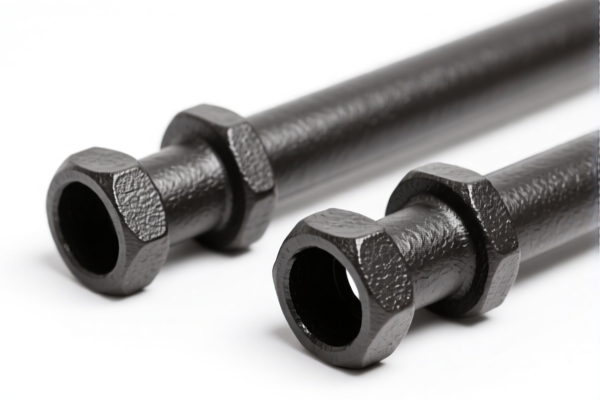
Cast iron pipes and fittings are critical components in municipal water supply, sewage systems, fire protection, and industrial fluid transport. In international trade, they are primarily classified based on their manufacturing process and application.
Key Distinction:
- Grey Cast Iron Pipes (Traditional): Made from grey iron, primarily used for drainage and sewage. These fall under Chapter 73 (Articles of Iron or Steel), not Chapter 72 (Iron/Steel materials).
- Ductile Iron Pipes (Modern): Made from ductile (nodular) iron, used for high-pressure water/gas transmission. These also fall under Chapter 73.
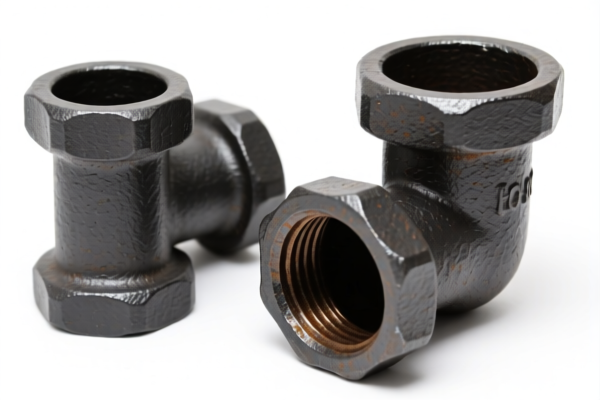
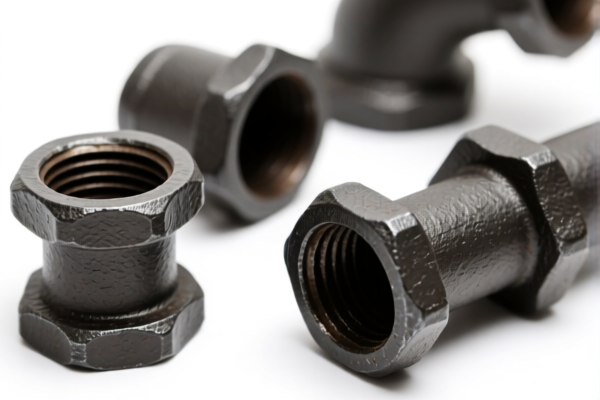
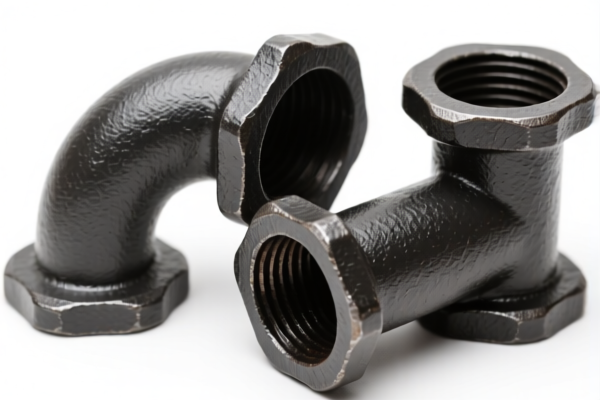
- Fittings (Elbows, Tees, Flanges): Accessories used to connect, branch, or terminate pipes.
⚠️ Critical Classification Point:
- If the product is finished pipes/fittings (even if uncoated) → Chapter 73
- If the product is raw cast iron material (ingots, scrap, powder) → Chapter 72
- Mistake Alert: Many importers incorrectly classify cast iron pipes under Chapter 72 (raw materials). This leads to duty misclassification and penalties.
📦 II. HS Code Classification Details (2026 Latest Tariff Authority Comparison)
| HS Code | Product Description | Application Scenario | Key Features |
|---|---|---|---|
7302.40.00.00 |
Cast iron pipes, tubes, and hollow profiles | Water supply, sewage, industrial piping | Grey or ductile iron, seamless or welded |
7307.11.00.00 |
Cast iron pipe fittings (flanges, elbows, tees) | Connecting pipes, changing direction | Malleable or non-malleable cast iron |
7307.19.00.00 |
Other cast iron pipe fittings (e.g., couplings, reducers) | Specialized connections | Includes grooved couplings, clamp fittings |
7307.93.00.00 |
Cast iron parts of general use (e.g., manhole covers) | Municipal infrastructure | Not strictly "pipe fittings" but related |
7203.10.00.00 |
Pig iron or spiegeleisen (Raw Material) | Raw input for casting | Not pipes or fittings – avoid misclassification |
🔍 Key Reminder:
- All finished cast iron pipes and fittings belong to Chapter 73 (Articles of Iron or Steel).
- Ductile iron is still classified under 7302/7307, not as a separate material class.
- Coatings (cement lining, epoxy, bitumen) do not change the HS code if they are secondary treatments.
💰 III. 2026 Latest Tariff Rate Breakdown (Including Surtaxes & Policy Add-ons)
✅ Applicable Country: United States (US)
✅ Country of Origin: China (CN)
✅ Effective Date: Post-2025 (including subsequent imports)
🎯 1. 7302.40.00.00 – Cast Iron Pipes
| Item | Content |
|---|---|
| Base Tariff Rate | 2.5% (ad valorem) |
| USITC Surcharge | +25% (Section 301 Footnote 9903.88.01) |
| IEEPA Surcharge | +10% (China/HK products, effective Nov 10, 2025) |
| Total Tariff Rate | 42.5% |
| Tax Calculation | CIF Value × 42.5% |
| De Minimis Eligibility | ❌ No (deny_de_minimis) |
| Legal Basis Path | IEEPA:9903.01.25 → IEEPA:9903.01.24 → USITC:7302.40.00.00 → FOOTNOTE:9903.88.01 |
📌 Explanation:
- Cast iron pipes are considered "steel articles" under USITC rules.
- The 42.5% total rate is very high, significantly impacting cost for water/seage projects.
- No de minimis exemption applies, even for small shipments.
🎯 2. 7307.11.00.00 – Cast Iron Pipe Fittings (Flanges, Elbows, Tees)
| Item | Content |
|---|---|
| Base Tariff Rate | 2.7% (ad valorem) |
| USITC Surcharge | +25% |
| IEEPA Surcharge | +10% |
| Total Tariff Rate | 42.7% |
| Tax Calculation | CIF Value × 42.7% |
| De Minimis Eligibility | ❌ No |
| Legal Basis Path | IEEPA:9901.25 → IEEPA:9903.01.24 → USITC:7307.11.00.00 → FOOTNOTE:9903.88.01 |
📌 Note:
- Fittings are taxed similarly to pipes due to their integral role in piping systems.
- Even small quantities of fittings face the same high surcharge.
🎯 3. 7307.19.00.00 – Other Cast Iron Fittings
| Item | Content |
|---|---|
| Base Tariff Rate | 2.7% |
| USITC Surcharge | +25% |
| IEEPA Surcharge | +10% |
| Total Tariff Rate | 42.7% |
| Tax Calculation | CIF Value × 42.7% |
| De Minimis Eligibility | ❌ No |
📌 Note:
- Includes grooved couplings, clamp fittings, and special connectors.
- Same high tariff applies; no distinction is made for "special" fittings in most cases.
🛠️ IV. Customs Clearance Practical Advice (Pitfall Avoidance Guide)
✅ 1. Required Documentation Checklist (Missing = Delay)
| Document | Required | Notes |
|---|---|---|
| ✅ Product Specification Sheet | ✔️ | Material grade (e.g., ASTM A53, A536), diameter, pressure rating |
| ✅ Manufacturing Certificate | ✔️ | Proof of ductile/grey iron type |
| ✅ Coating/Lining Description | ✔️ | Cement mortar, epoxy, bitumen – affects inspection but not HS code |
| ✅ Commercial Invoice | ✔️ | Must state "Cast Iron Pipes/Fittings" clearly |
| ✅ Packing List | ✔️ | Separate pipes and fittings if possible for clarity |
| ✅ Country of Origin Certificate | ✔️ | Required for tariff calculation |
| ✅ FCC/CE/RoHS (if applicable) | ❌ | Not typically required for cast iron, but check for additives |
✅ 2. Declaration Tips (Key Mnemonic)
🔥 "Iron is Iron, Chapter 73 Rule; Don’t misclassify, else penalty due!"
| Scenario | Correct Declaration | Wrong Practice |
|---|---|---|
| Cast iron pipe (grey) | 7302.40.00.00 |
Misclassifying as 7203.10.00.00 (raw pig iron) → Penalty + Back Tax |
| Ductile iron pipe | 7302.40.00.00 |
Same code as grey iron – correct |
| Cast iron flanges | 7307.11.00.00 |
Misclassifying as 7307.99.00.00 (other steel articles) → Potential Audit |
| Piping systems (pre-assembled) | 7302.40.00.00 + 7307.11.00.00 |
Declaring as one item → Confusion at Customs |
✅ 3. Special Cases Handling
| Scenario | Handling Advice |
|---|---|
| Cement-Lined Pipes | Still 7302.40.00.00. Cement is secondary. Declare as "Cast Iron Pipe, Cement Lined". |
| Epoxy-Coated Pipes | Same HS code. Provide coating thickness report for inspection. |
| OEM Custom Fittings | Provide design drawings to prove they are "fittings" not "general parts". |
| Fittings with Gaskets | Declare gaskets separately if they are rubber/plastic (4016.93.00.00), but main item is still 7307. |
🌍 V. Global Market Comparison (2026 Latest)
| Country/Region | Recommended HS Code | Tariff (China Origin) | Certification | Notes |
|---|---|---|---|---|
| 🇺🇸 USA | 7302.40.00.00 / 7307.11.00.00 |
42.5% - 42.7% | N/A | High surcharge; no de minimis |
| 🇨🇳 China | 7302.40.00.00 / 7307.11.00.00 |
5% | GB Standard | No additional surcharges |
| 🇪🇺 EU | 7302.40.00.00 / 7307.11.00.00 |
2.7% - 3.5% | CE (if pressure equipment) | No Section 301 equivalent |
| 🇦🇺 Australia | 7302.40.00.00 / 7307.11.00.00 |
5% | RCM | Moderate duty |
| 🇯🇵 Japan | 7302.40.00.00 / 7307.11.00.00 |
1.5% - 2.5% | JIS | Low duty |
📌 Conclusion:
- USA imposes the highest barrier due to Section 301 + IEEPA surcharges.
- EU, Japan, Australia offer significantly better tariff conditions.
- Consider supply chain diversification (e.g., Vietnam, Thailand) for US-bound shipments to avoid 42.5%+ tariffs.
📌 VI. Common Mistakes & Pitfall Guide (Lessons Learned)
❌ Mistake 1: Classifying cast iron pipes under Chapter 72 (raw materials)
👉 Consequence: Customs rejects declaration, demands reclassification + penalty. HS Code 7302 is correct.
❌ Mistake 2: Not distinguishing between "pipes" and "fittings" in invoice
👉 Consequence: Ambiguity leads to delayed clearance. List separately.
❌ Mistake 3: Assuming de minimis applies to small batches of fittings
👉 Consequence: No de minimis for cast iron articles from China. Always declare fully.
❌ Mistake 4: Ignoring coating/lining declarations
👉 Consequence: Inspection delays if not declared. Declare "Cement Lined" or "Epoxy Coated" explicitly.
✅ Correct Declaration Example:
"Ductile Iron Pipe, ASTM A536, 12-inch Diameter, Cement Lined Inside, Bitumen Coated Outside, Length 6m, Country of Origin: China"
🎯 VII. Conclusion: Precision in Classification Saves Costs!
🎯 Remember the Mnemonic:
🔹 "Pipes & Fittings: Chapter 73 King; Raw Iron is Ch72, Don’t Mix Them Up!"
🔹 "US Tariff 42.5%, De Minimis Denied; Plan Ahead or Pay the Price!"
📌 Pro Tip:
If your cast iron products are originally from Vietnam, Mexico, or Malaysia, you may qualify for IEEPA exemptions or lower tariffs.
Recommendation:
📞 Contact a licensed customs broker + Provide product specs + Apply for Advance Ruling
🚀 Ensure smooth clearance, avoid delays, and protect your profit margins!
📣 Take Action Now:
🔍 Verify your HS Code:
7302.40.00.00(Pipes) /7307.11.00.00(Fittings)
💰 Calculate landed cost: CIF × 42.5% (for US imports from China)
🚀 Choose the right supplier and documentation for hassle-free customs clearance!
✨ Professional clearance starts with accurate classification!
💼 Every percentage point of tariff matters – get it right!
用户评价
关于 HS 编码归类
协调制度(HS)是由世界海关组织(WCO)制定的国际贸易商品分类标准。全球 200 多个国家采用 HS 系统作为海关关税、贸易统计和进出口监管的基础。
每个 HS 编码遵循以下层级结构:
- 章(2 位)——商品大类(例如:第 84 章:机器和机械设备)
- 品目(4 位)——章内的更具体分类
- 子目(6 位)——国际通用细分,所有 WCO 成员国统一使用
- 本国细分(8-10 位)——各国自行扩展的细分编码,如美国 HTSUS 10 位编码
正确的 HS 编码归类对于顺利通关、准确缴纳关税和遵守贸易法规至关重要。错误归类可能导致海关延误、多缴关税或罚款。
从CN进口到US时,适用的关税税率可能包括:
- 最惠国(MFN)税率——适用于 WTO 成员国的标准关税税率
- 普通税率——适用于无贸易协定国家
- 贸易救济关税——附加关税,如 301 条款(反倾销)、232 条款(国家安全)或反补贴税
本页内容仅供参考。如需正式归类,请咨询当地海关或持牌报关代理。