Cast Iron Pipe and Fittings
CN → USProduct Images
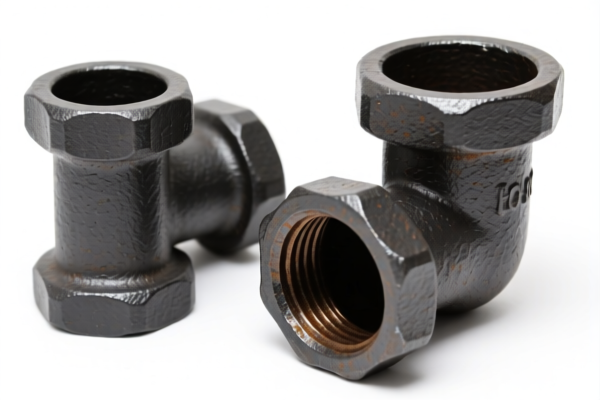
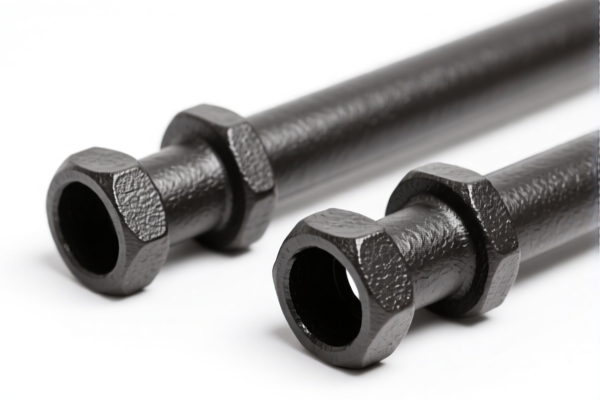
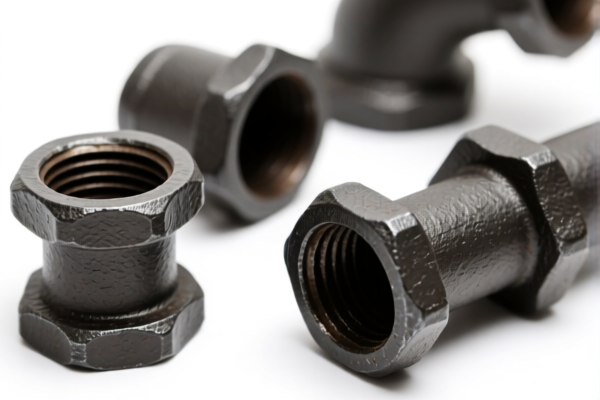
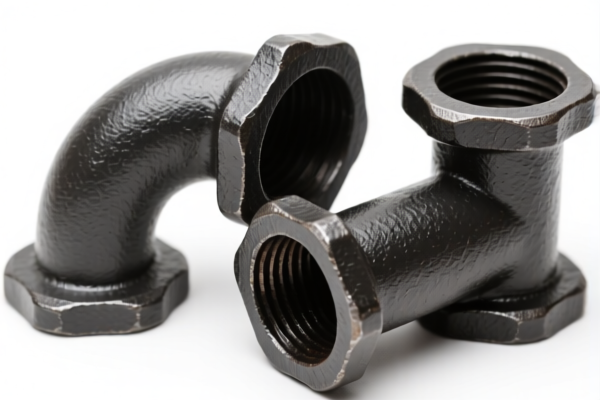
AI Analysis
🏗️ Cast Iron Pipe and Fittings
🌐 HS Code Reference & Clearance Guide | 2026 Latest Tariff Analysis | Professional Customs Strategy
📌 I. Product Definition and Classification: Do You Really Understand "Cast Iron"?
Cast iron pipes and fittings are critical components in municipal water supply, sewage systems, fire protection, and industrial fluid transport. In international trade, they are primarily classified based on their manufacturing process and application.
Key Distinction:
- Grey Cast Iron Pipes (Traditional): Made from grey iron, primarily used for drainage and sewage. These fall under Chapter 73 (Articles of Iron or Steel), not Chapter 72 (Iron/Steel materials).
- Ductile Iron Pipes (Modern): Made from ductile (nodular) iron, used for high-pressure water/gas transmission. These also fall under Chapter 73.
- Fittings (Elbows, Tees, Flanges): Accessories used to connect, branch, or terminate pipes.
⚠️ Critical Classification Point:
- If the product is finished pipes/fittings (even if uncoated) → Chapter 73
- If the product is raw cast iron material (ingots, scrap, powder) → Chapter 72
- Mistake Alert: Many importers incorrectly classify cast iron pipes under Chapter 72 (raw materials). This leads to duty misclassification and penalties.
📦 II. HS Code Classification Details (2026 Latest Tariff Authority Comparison)
| HS Code | Product Description | Application Scenario | Key Features |
|---|---|---|---|
7302.40.00.00 |
Cast iron pipes, tubes, and hollow profiles | Water supply, sewage, industrial piping | Grey or ductile iron, seamless or welded |
7307.11.00.00 |
Cast iron pipe fittings (flanges, elbows, tees) | Connecting pipes, changing direction | Malleable or non-malleable cast iron |
7307.19.00.00 |
Other cast iron pipe fittings (e.g., couplings, reducers) | Specialized connections | Includes grooved couplings, clamp fittings |
7307.93.00.00 |
Cast iron parts of general use (e.g., manhole covers) | Municipal infrastructure | Not strictly "pipe fittings" but related |
7203.10.00.00 |
Pig iron or spiegeleisen (Raw Material) | Raw input for casting | Not pipes or fittings – avoid misclassification |
🔍 Key Reminder:
- All finished cast iron pipes and fittings belong to Chapter 73 (Articles of Iron or Steel).
- Ductile iron is still classified under 7302/7307, not as a separate material class.
- Coatings (cement lining, epoxy, bitumen) do not change the HS code if they are secondary treatments.
💰 III. 2026 Latest Tariff Rate Breakdown (Including Surtaxes & Policy Add-ons)
✅ Applicable Country: United States (US)
✅ Country of Origin: China (CN)
✅ Effective Date: Post-2025 (including subsequent imports)
🎯 1. 7302.40.00.00 – Cast Iron Pipes
| Item | Content |
|---|---|
| Base Tariff Rate | 2.5% (ad valorem) |
| USITC Surcharge | +25% (Section 301 Footnote 9903.88.01) |
| IEEPA Surcharge | +10% (China/HK products, effective Nov 10, 2025) |
| Total Tariff Rate | 42.5% |
| Tax Calculation | CIF Value × 42.5% |
| De Minimis Eligibility | ❌ No (deny_de_minimis) |
| Legal Basis Path | IEEPA:9903.01.25 → IEEPA:9903.01.24 → USITC:7302.40.00.00 → FOOTNOTE:9903.88.01 |
📌 Explanation:
- Cast iron pipes are considered "steel articles" under USITC rules.
- The 42.5% total rate is very high, significantly impacting cost for water/seage projects.
- No de minimis exemption applies, even for small shipments.
🎯 2. 7307.11.00.00 – Cast Iron Pipe Fittings (Flanges, Elbows, Tees)
| Item | Content |
|---|---|
| Base Tariff Rate | 2.7% (ad valorem) |
| USITC Surcharge | +25% |
| IEEPA Surcharge | +10% |
| Total Tariff Rate | 42.7% |
| Tax Calculation | CIF Value × 42.7% |
| De Minimis Eligibility | ❌ No |
| Legal Basis Path | IEEPA:9901.25 → IEEPA:9903.01.24 → USITC:7307.11.00.00 → FOOTNOTE:9903.88.01 |
📌 Note:
- Fittings are taxed similarly to pipes due to their integral role in piping systems.
- Even small quantities of fittings face the same high surcharge.
🎯 3. 7307.19.00.00 – Other Cast Iron Fittings
| Item | Content |
|---|---|
| Base Tariff Rate | 2.7% |
| USITC Surcharge | +25% |
| IEEPA Surcharge | +10% |
| Total Tariff Rate | 42.7% |
| Tax Calculation | CIF Value × 42.7% |
| De Minimis Eligibility | ❌ No |
📌 Note:
- Includes grooved couplings, clamp fittings, and special connectors.
- Same high tariff applies; no distinction is made for "special" fittings in most cases.
🛠️ IV. Customs Clearance Practical Advice (Pitfall Avoidance Guide)
✅ 1. Required Documentation Checklist (Missing = Delay)
| Document | Required | Notes |
|---|---|---|
| ✅ Product Specification Sheet | ✔️ | Material grade (e.g., ASTM A53, A536), diameter, pressure rating |
| ✅ Manufacturing Certificate | ✔️ | Proof of ductile/grey iron type |
| ✅ Coating/Lining Description | ✔️ | Cement mortar, epoxy, bitumen – affects inspection but not HS code |
| ✅ Commercial Invoice | ✔️ | Must state "Cast Iron Pipes/Fittings" clearly |
| ✅ Packing List | ✔️ | Separate pipes and fittings if possible for clarity |
| ✅ Country of Origin Certificate | ✔️ | Required for tariff calculation |
| ✅ FCC/CE/RoHS (if applicable) | ❌ | Not typically required for cast iron, but check for additives |
✅ 2. Declaration Tips (Key Mnemonic)
🔥 "Iron is Iron, Chapter 73 Rule; Don’t misclassify, else penalty due!"
| Scenario | Correct Declaration | Wrong Practice |
|---|---|---|
| Cast iron pipe (grey) | 7302.40.00.00 |
Misclassifying as 7203.10.00.00 (raw pig iron) → Penalty + Back Tax |
| Ductile iron pipe | 7302.40.00.00 |
Same code as grey iron – correct |
| Cast iron flanges | 7307.11.00.00 |
Misclassifying as 7307.99.00.00 (other steel articles) → Potential Audit |
| Piping systems (pre-assembled) | 7302.40.00.00 + 7307.11.00.00 |
Declaring as one item → Confusion at Customs |
✅ 3. Special Cases Handling
| Scenario | Handling Advice |
|---|---|
| Cement-Lined Pipes | Still 7302.40.00.00. Cement is secondary. Declare as "Cast Iron Pipe, Cement Lined". |
| Epoxy-Coated Pipes | Same HS code. Provide coating thickness report for inspection. |
| OEM Custom Fittings | Provide design drawings to prove they are "fittings" not "general parts". |
| Fittings with Gaskets | Declare gaskets separately if they are rubber/plastic (4016.93.00.00), but main item is still 7307. |
🌍 V. Global Market Comparison (2026 Latest)
| Country/Region | Recommended HS Code | Tariff (China Origin) | Certification | Notes |
|---|---|---|---|---|
| 🇺🇸 USA | 7302.40.00.00 / 7307.11.00.00 |
42.5% - 42.7% | N/A | High surcharge; no de minimis |
| 🇨🇳 China | 7302.40.00.00 / 7307.11.00.00 |
5% | GB Standard | No additional surcharges |
| 🇪🇺 EU | 7302.40.00.00 / 7307.11.00.00 |
2.7% - 3.5% | CE (if pressure equipment) | No Section 301 equivalent |
| 🇦🇺 Australia | 7302.40.00.00 / 7307.11.00.00 |
5% | RCM | Moderate duty |
| 🇯🇵 Japan | 7302.40.00.00 / 7307.11.00.00 |
1.5% - 2.5% | JIS | Low duty |
📌 Conclusion:
- USA imposes the highest barrier due to Section 301 + IEEPA surcharges.
- EU, Japan, Australia offer significantly better tariff conditions.
- Consider supply chain diversification (e.g., Vietnam, Thailand) for US-bound shipments to avoid 42.5%+ tariffs.
📌 VI. Common Mistakes & Pitfall Guide (Lessons Learned)
❌ Mistake 1: Classifying cast iron pipes under Chapter 72 (raw materials)
👉 Consequence: Customs rejects declaration, demands reclassification + penalty. HS Code 7302 is correct.
❌ Mistake 2: Not distinguishing between "pipes" and "fittings" in invoice
👉 Consequence: Ambiguity leads to delayed clearance. List separately.
❌ Mistake 3: Assuming de minimis applies to small batches of fittings
👉 Consequence: No de minimis for cast iron articles from China. Always declare fully.
❌ Mistake 4: Ignoring coating/lining declarations
👉 Consequence: Inspection delays if not declared. Declare "Cement Lined" or "Epoxy Coated" explicitly.
✅ Correct Declaration Example:
"Ductile Iron Pipe, ASTM A536, 12-inch Diameter, Cement Lined Inside, Bitumen Coated Outside, Length 6m, Country of Origin: China"
🎯 VII. Conclusion: Precision in Classification Saves Costs!
🎯 Remember the Mnemonic:
🔹 "Pipes & Fittings: Chapter 73 King; Raw Iron is Ch72, Don’t Mix Them Up!"
🔹 "US Tariff 42.5%, De Minimis Denied; Plan Ahead or Pay the Price!"
📌 Pro Tip:
If your cast iron products are originally from Vietnam, Mexico, or Malaysia, you may qualify for IEEPA exemptions or lower tariffs.
Recommendation:
📞 Contact a licensed customs broker + Provide product specs + Apply for Advance Ruling
🚀 Ensure smooth clearance, avoid delays, and protect your profit margins!
📣 Take Action Now:
🔍 Verify your HS Code:
7302.40.00.00(Pipes) /7307.11.00.00(Fittings)
💰 Calculate landed cost: CIF × 42.5% (for US imports from China)
🚀 Choose the right supplier and documentation for hassle-free customs clearance!
✨ Professional clearance starts with accurate classification!
💼 Every percentage point of tariff matters – get it right!
Customer Reviews
About HS Code Classification
The Harmonized System (HS) is an internationally standardized nomenclature developed by the World Customs Organization (WCO) to classify traded products. Over 200 countries use the HS system as the basis for customs tariffs, trade statistics, and import/export regulations.
Each HS code follows a hierarchical structure:
- Chapter (2 digits) — Broad category of goods (e.g., Chapter 84: Machinery and Mechanical Appliances)
- Heading (4 digits) — More specific grouping within the chapter
- Subheading (6 digits) — Internationally standardized breakdown, used by all WCO member countries
- National subdivisions (8-10 digits) — Country-specific extensions for further classification, such as US HTSUS 10-digit codes
Correct HS code classification is essential for smooth customs clearance, accurate duty payment, and compliance with trade regulations. Misclassification can lead to customs delays, overpayment of duties, or penalties.
When importing from CN to US, the applicable tariff rates may include:
- Most-Favored-Nation (MFN) rate — The standard duty rate applied to WTO members
- General rate — Applied to countries without trade agreements
- Trade remedy duties — Additional tariffs such as Section 301 (anti-dumping), Section 232 (national security), or countervailing duties
The information provided on this page is for reference purposes only. For official classification, please consult with your local customs authority or a licensed customs broker.