Cathode Ray Tube (CRT)
CN → US商品图片
AI分析
🖥️ Cathode Ray Tube (CRT)
🌐 HS Code Reference & Customs Clearance Guide | 2026 Latest Tariff Analysis | Professional Clearance Strategy
📌 I. Product Definition & Classification: What Exactly is a "CRT"?
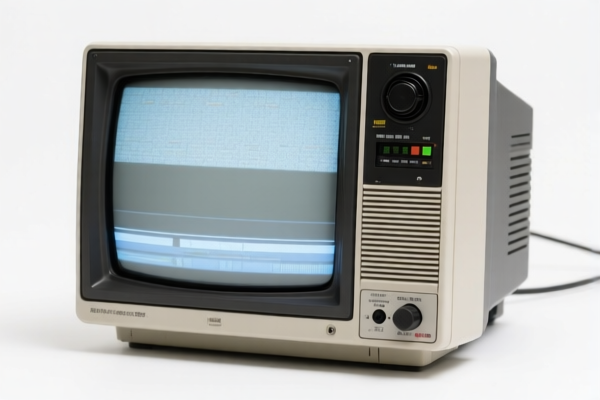
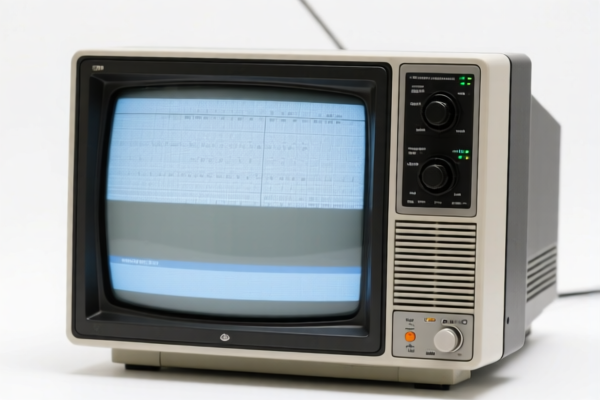
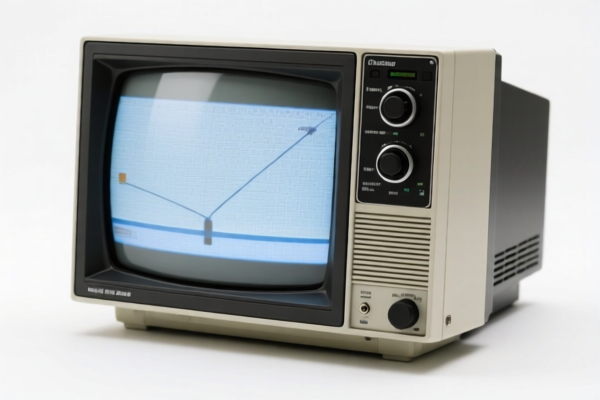
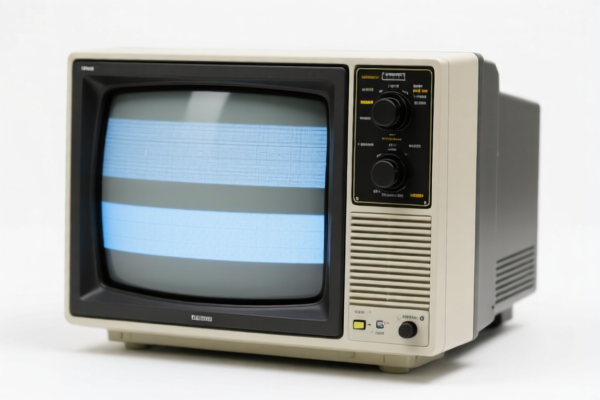
The Cathode Ray Tube (CRT) is an image-display device containing one or more electron guns and a phosphor-used in oscilloscopes, image tubes, and video displays. Once the dominant technology for televisions and computer monitors, CRTs are now largely replaced by LCD/LED/Plasma technologies but remain in specific niche markets (vintage audio/video, specialized industrial equipment, and retro-gaming).
In international trade, CRTs are categorized based on their function and integration:
- Raw Tubes (Unassembled): Glass envelopes containing the electron gun and phosphor coating, without integrated deflection yokes, circuits, or housings.
- Complete Display Units (CRT TVs/Monitors): CRT tubes integrated into a chassis with power supplies, tuners, control boards, and speakers.
⚠️ Key Distinction: - If it is just the glass tube component → Classified under Chapter 8524 (Parts of picture storage tubes). - If it is a complete TV or Monitor using a CRT → Classified under Chapter 8528 (Monitors/Projectors) or 8529 (Parts of TVs). - CRITICAL WARNING: CRTs often contain Lead (Pb) in the glass. Ensure compliance with RoHS (EU), EPA (US), and WEEE directives for hazardous waste handling.
📦 II. HS Code Classification Details (2026 Latest Tariff Authority)
| HS Code | Product Description | Application Scenario | Integrated Circuits/Housing? |
|---|---|---|---|
8524.11.00.00 |
Liquid Crystal Display (LCD) Modules | Not applicable to CRT | N/A |
8524.91.00.00 |
Other Picture Storage Tubes (CRTs) | Raw CRT tubes for repair or industrial use | ❌ No (Components only) |
8528.41.00.00 |
Color CRT Monitors (for automatic data processing) | Legacy PC monitors, industrial control screens | ✅ Yes (Full unit) |
8528.52.00.00 |
Other Monitors (LCD/LED) | Standard modern monitors | ✅ Yes |
8529.90.40.00 |
Parts of Television Receivers | Deflection yokes, neck boards for CRT TVs | ❌ No (Spare parts) |
🔍 Important Note: - Raw CRT Tubes fall under 8524.91.00.00 ("Other picture storage tubes"). - Complete CRT TVs usually fall under 8528.51 or 8528.52 depending on whether they are for data processing or general TV reception. - Spare CRT Tubes for repair must be declared clearly as "Parts," not "Consumer Electronics," to avoid incorrect classification penalties.
💰 III. 2026 Latest Tariff Rate Breakdown (Including Surcharges & Policy Add-ons)
✅ Applicable Country: United States (US) ✅ Origin: China (CN) ✅ Effective Date: Post-2025 tariff adjustments (Section 301 + IEEPA)
🎯 1. 8524.91.00.00 — Picture Storage Tubes (Raw CRT Tubes)
| Item | Details |
|---|---|
| Base Duty Rate | 0% (General) |
| USITC Add-on Duty | +25% (Under Section 301 List 4B) |
| IEEPA Surcharge | +10% (Targeting Chinese-origin goods, effective Nov 2025) |
| Total Effective Rate | 35% |
| Tax Calculation | CIF Value × 35% |
| De Minimis Exemption | ❌ Denied (High-risk category) |
| Legal Path | IEEPA:9903.01.24 → USITC:8524.91.00.00 → FOOTNOTE:301.99 |
📌 Explanation: - Raw CRT tubes are considered "components" of electronic display equipment. - They are subject to the 25% Section 301 tariff due to their classification under specific HS codes related to display components. - The 10% IEEPA surcharge applies specifically to Chinese-origin goods post-2025. - Total 35% is a significant cost driver. Importers must calculate if remanufacturing or sourcing from non-China origins (e.g., Vietnam, Mexico) can reduce this burden.
🎯 2. 8528.41.00.00 — Color Monitors Using CRT (Complete Units)
| Item | Details |
|---|---|
| Base Duty Rate | 0% |
| USITC Add-on Duty | +25% (List 4B) |
| IEEPA Surcharge | +10% |
| Total Effective Rate | 35% |
| Tax Calculation | CIF Value × 35% |
| De Minimis Exemption | ❌ Denied |
📌 Note: - Complete CRT monitors are increasingly rare. However, if imported (e.g., for museum pieces or retro-tech), they bear the same tariff structure as the tubes themselves. - Environmental Hazard: Importers must declare hazardous waste handling compliance. Failure to do so may result in border rejection or fines beyond tariffs.
🛠️ IV. Customs Clearance Practical Advice (Real-World Pitfall Guide)
✅ 1. Documentation Checklist (Mandatory)
| Document | Required | Explanation |
|---|---|---|
| ✅ Product Specification Sheet | ✔️ | Must specify: Tube diameter, voltage, phosphor type, lead content percentage. |
| ✅ Circuit Diagram | ✔️ | To prove if it is a "raw tube" (8524) or "integrated monitor" (8528). |
| ✅ Hazardous Material Declaration | ✔️ | CRITICAL: CRT glass contains Lead (Pb). Must declare under Hazmat regulations. |
| ✅ RoHS/REACH Compliance Report | ✔️ | Proof of lead content limits for EU/US markets. |
| ✅ Commercial Invoice | ✔️ | Clearly state "Cathode Ray Tube (Unassembled)" or "CRT Monitor." |
| ✅ Packing List | ✔️ | Detail protective packaging (CRTs are fragile and heavy). |
✅ 2. Declaration Tips (Key Mnemonics)
🔥 "Declare Lead, Specify Raw, Avoid 'TV' Mistakes!"
| Scenario | Correct Declaration | Incorrect Action |
|---|---|---|
| Raw CRT Tube | "CRT Glass Tube, No Circuits, Lead Content: X%" | Calling it "TV Part" vaguely |
| Complete CRT Monitor | "Color CRT Monitor for Industrial Use, Model XYZ" | Calling it "LCD Monitor" |
| Spare Tube for Repair | "Replacement Picture Storage Tube, HS 8524.91" | Declaring as "Consumer TV" |
| Mixed Shipment (CRT + LCD) | Split Declaration | Bundling under one HS Code → Audit Risk |
✅ 3. Special Handling Situations
| Situation | Handling Advice |
|---|---|
| Retro Gaming Consoles | If CRTs are built into vintage consoles, declare as "Parts of Video Game Consoles" or "Used Goods." Check used goods restrictions. |
| Industrial CRTs | For medical or aviation CRTs, provide End-User Certificate to justify non-commercial use, potentially reducing inspection frequency. |
| Broken/Damaged CRTs | Must be declared as Hazardous Waste. Requires EPA Permit for import. Do NOT declare as "spare parts." |
| OEM Custom CRTs | Provide design specs to prove non-standard nature, avoiding generic classification errors. |
🌍 V. Global Market Clearance Comparison (2026 Latest)
| Country/Region | Recommended HS Code | Tariff (China Origin) | Certification Requirements | Notes |
|---|---|---|---|---|
| 🇺🇸 USA | 8524.91.00.00 |
35% (25% + 10%) | FCC, Hazmat Declaration | High environmental scrutiny. |
| 🇨🇳 China | 8524.91.00.00 |
0% | CCC (if applicable) | Import restrictions on used electronics. |
| 🇪🇺 EU | 8524.91.00.00 |
0% (if RoHS compliant) | CE, RoHS, WEEE | Strict lead limits. Heavy recycling fees. |
| 🇦🇺 Australia | 8524.91.00.00 |
5% | RCM, Hazardous Goods | Import permit for leaded glass. |
| 🇯🇵 Japan | 8524.91.00.00 |
0% | PSE, JIS | Strict waste disposal laws. |
📌 Conclusion: - USA imposes the highest effective tariff (35%) due to trade tensions. - EU and Japan focus on environmental compliance (RoHS/WEEE) rather than high tariffs. - CRTs are declining. Ensure your supply chain is prepared for increasing regulatory scrutiny on hazardous materials.
📌 VI. Common Errors & Pitfall Guide (Lessons Learned)
❌ Error 1: Declaring CRTs as "LCD Panels" to avoid 25% tariff. 👉 Consequence: Customs inspection reveals physical differences → 25% penalty + Back Taxes.
❌ Error 2: Failing to declare Lead Content. 👉 Consequence: Border Rejection or Detention under EPA/Hazmat regulations. No tariff issue, but huge logistical delay.
❌ Error 3: Mixing CRTs with modern LCDs in one shipment without proper segregation. 👉 Consequence: Customs may audit the entire shipment under the highest-risk HS code.
❌ Error 4: Using "Monitor" as a generic description for a raw tube. 👉 Consequence: Misclassification → Delay in Clearance.
✅ Correct Practice:
"Cathode Ray Tube (CRT), Unassembled, Glass Envelope, Lead Content 24%, For Industrial Use, Model XYZ, RoHS Compliant."
🎯 VII. Conclusion: Professional Clearance, Risk Minimization, Cost Optimization!
🎯 Remember These Mantras:
🔹 "Lead Must Be Declared, Tariff Is 35%, Hazmat Is Key!" 🔹 "HS Code Determines Duty, Compliance Determines Clearance!"
📌 Pro Tip:
If your CRTs are intended for non-commercial/educational use, provide a Letter of End-User to potentially reduce inspection intensity. For new shipments, consider Advance Ruling from US Customs to confirm HS Code classification before shipping.
📣 Immediate Action:
📞 Contact a Hazmat-Specialized Customs Broker. 🚀 Ensure RoHS/REACH Certificates are valid and lead content is accurately documented. 💼 Clear CRT shipments are not just about tariffs—it's about safety compliance.
✨ Professional Customs Clearance Starts with Accurate Classification! 💼 Your Cost Savings Are Calculated in Every Line Item!
用户评价
关于 HS 编码归类
协调制度(HS)是由世界海关组织(WCO)制定的国际贸易商品分类标准。全球 200 多个国家采用 HS 系统作为海关关税、贸易统计和进出口监管的基础。
每个 HS 编码遵循以下层级结构:
- 章(2 位)——商品大类(例如:第 84 章:机器和机械设备)
- 品目(4 位)——章内的更具体分类
- 子目(6 位)——国际通用细分,所有 WCO 成员国统一使用
- 本国细分(8-10 位)——各国自行扩展的细分编码,如美国 HTSUS 10 位编码
正确的 HS 编码归类对于顺利通关、准确缴纳关税和遵守贸易法规至关重要。错误归类可能导致海关延误、多缴关税或罚款。
从CN进口到US时,适用的关税税率可能包括:
- 最惠国(MFN)税率——适用于 WTO 成员国的标准关税税率
- 普通税率——适用于无贸易协定国家
- 贸易救济关税——附加关税,如 301 条款(反倾销)、232 条款(国家安全)或反补贴税
本页内容仅供参考。如需正式归类,请咨询当地海关或持牌报关代理。