Cathode Ray Tube (CRT)
CN → USProduct Images
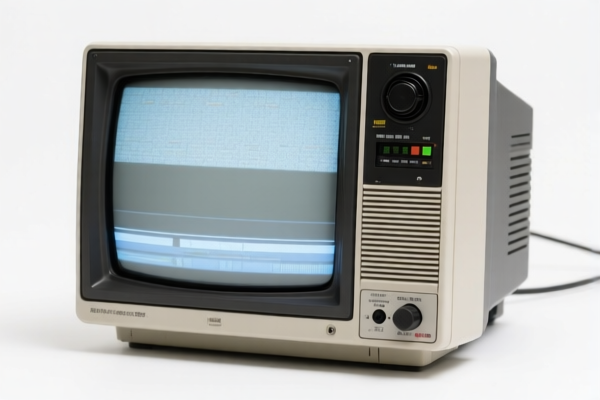
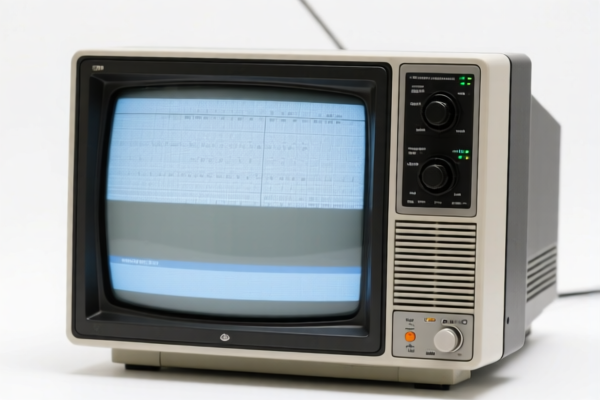
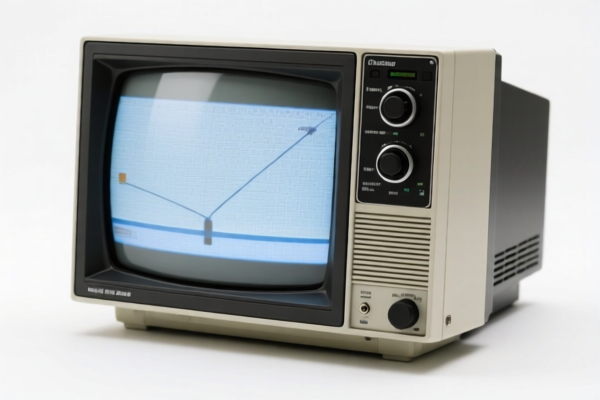
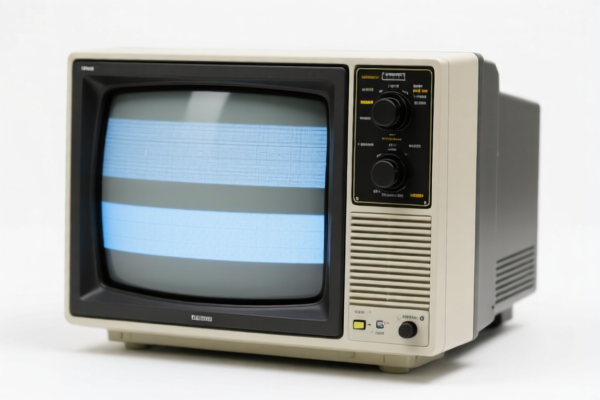
AI Analysis
🖥️ Cathode Ray Tube (CRT)
🌐 HS Code Reference & Customs Clearance Guide | 2026 Latest Tariff Analysis | Professional Clearance Strategy
📌 I. Product Definition & Classification: What Exactly is a "CRT"?
The Cathode Ray Tube (CRT) is an image-display device containing one or more electron guns and a phosphor-used in oscilloscopes, image tubes, and video displays. Once the dominant technology for televisions and computer monitors, CRTs are now largely replaced by LCD/LED/Plasma technologies but remain in specific niche markets (vintage audio/video, specialized industrial equipment, and retro-gaming).
In international trade, CRTs are categorized based on their function and integration:
- Raw Tubes (Unassembled): Glass envelopes containing the electron gun and phosphor coating, without integrated deflection yokes, circuits, or housings.
- Complete Display Units (CRT TVs/Monitors): CRT tubes integrated into a chassis with power supplies, tuners, control boards, and speakers.
⚠️ Key Distinction: - If it is just the glass tube component → Classified under Chapter 8524 (Parts of picture storage tubes). - If it is a complete TV or Monitor using a CRT → Classified under Chapter 8528 (Monitors/Projectors) or 8529 (Parts of TVs). - CRITICAL WARNING: CRTs often contain Lead (Pb) in the glass. Ensure compliance with RoHS (EU), EPA (US), and WEEE directives for hazardous waste handling.
📦 II. HS Code Classification Details (2026 Latest Tariff Authority)
| HS Code | Product Description | Application Scenario | Integrated Circuits/Housing? |
|---|---|---|---|
8524.11.00.00 |
Liquid Crystal Display (LCD) Modules | Not applicable to CRT | N/A |
8524.91.00.00 |
Other Picture Storage Tubes (CRTs) | Raw CRT tubes for repair or industrial use | ❌ No (Components only) |
8528.41.00.00 |
Color CRT Monitors (for automatic data processing) | Legacy PC monitors, industrial control screens | ✅ Yes (Full unit) |
8528.52.00.00 |
Other Monitors (LCD/LED) | Standard modern monitors | ✅ Yes |
8529.90.40.00 |
Parts of Television Receivers | Deflection yokes, neck boards for CRT TVs | ❌ No (Spare parts) |
🔍 Important Note: - Raw CRT Tubes fall under 8524.91.00.00 ("Other picture storage tubes"). - Complete CRT TVs usually fall under 8528.51 or 8528.52 depending on whether they are for data processing or general TV reception. - Spare CRT Tubes for repair must be declared clearly as "Parts," not "Consumer Electronics," to avoid incorrect classification penalties.
💰 III. 2026 Latest Tariff Rate Breakdown (Including Surcharges & Policy Add-ons)
✅ Applicable Country: United States (US) ✅ Origin: China (CN) ✅ Effective Date: Post-2025 tariff adjustments (Section 301 + IEEPA)
🎯 1. 8524.91.00.00 — Picture Storage Tubes (Raw CRT Tubes)
| Item | Details |
|---|---|
| Base Duty Rate | 0% (General) |
| USITC Add-on Duty | +25% (Under Section 301 List 4B) |
| IEEPA Surcharge | +10% (Targeting Chinese-origin goods, effective Nov 2025) |
| Total Effective Rate | 35% |
| Tax Calculation | CIF Value × 35% |
| De Minimis Exemption | ❌ Denied (High-risk category) |
| Legal Path | IEEPA:9903.01.24 → USITC:8524.91.00.00 → FOOTNOTE:301.99 |
📌 Explanation: - Raw CRT tubes are considered "components" of electronic display equipment. - They are subject to the 25% Section 301 tariff due to their classification under specific HS codes related to display components. - The 10% IEEPA surcharge applies specifically to Chinese-origin goods post-2025. - Total 35% is a significant cost driver. Importers must calculate if remanufacturing or sourcing from non-China origins (e.g., Vietnam, Mexico) can reduce this burden.
🎯 2. 8528.41.00.00 — Color Monitors Using CRT (Complete Units)
| Item | Details |
|---|---|
| Base Duty Rate | 0% |
| USITC Add-on Duty | +25% (List 4B) |
| IEEPA Surcharge | +10% |
| Total Effective Rate | 35% |
| Tax Calculation | CIF Value × 35% |
| De Minimis Exemption | ❌ Denied |
📌 Note: - Complete CRT monitors are increasingly rare. However, if imported (e.g., for museum pieces or retro-tech), they bear the same tariff structure as the tubes themselves. - Environmental Hazard: Importers must declare hazardous waste handling compliance. Failure to do so may result in border rejection or fines beyond tariffs.
🛠️ IV. Customs Clearance Practical Advice (Real-World Pitfall Guide)
✅ 1. Documentation Checklist (Mandatory)
| Document | Required | Explanation |
|---|---|---|
| ✅ Product Specification Sheet | ✔️ | Must specify: Tube diameter, voltage, phosphor type, lead content percentage. |
| ✅ Circuit Diagram | ✔️ | To prove if it is a "raw tube" (8524) or "integrated monitor" (8528). |
| ✅ Hazardous Material Declaration | ✔️ | CRITICAL: CRT glass contains Lead (Pb). Must declare under Hazmat regulations. |
| ✅ RoHS/REACH Compliance Report | ✔️ | Proof of lead content limits for EU/US markets. |
| ✅ Commercial Invoice | ✔️ | Clearly state "Cathode Ray Tube (Unassembled)" or "CRT Monitor." |
| ✅ Packing List | ✔️ | Detail protective packaging (CRTs are fragile and heavy). |
✅ 2. Declaration Tips (Key Mnemonics)
🔥 "Declare Lead, Specify Raw, Avoid 'TV' Mistakes!"
| Scenario | Correct Declaration | Incorrect Action |
|---|---|---|
| Raw CRT Tube | "CRT Glass Tube, No Circuits, Lead Content: X%" | Calling it "TV Part" vaguely |
| Complete CRT Monitor | "Color CRT Monitor for Industrial Use, Model XYZ" | Calling it "LCD Monitor" |
| Spare Tube for Repair | "Replacement Picture Storage Tube, HS 8524.91" | Declaring as "Consumer TV" |
| Mixed Shipment (CRT + LCD) | Split Declaration | Bundling under one HS Code → Audit Risk |
✅ 3. Special Handling Situations
| Situation | Handling Advice |
|---|---|
| Retro Gaming Consoles | If CRTs are built into vintage consoles, declare as "Parts of Video Game Consoles" or "Used Goods." Check used goods restrictions. |
| Industrial CRTs | For medical or aviation CRTs, provide End-User Certificate to justify non-commercial use, potentially reducing inspection frequency. |
| Broken/Damaged CRTs | Must be declared as Hazardous Waste. Requires EPA Permit for import. Do NOT declare as "spare parts." |
| OEM Custom CRTs | Provide design specs to prove non-standard nature, avoiding generic classification errors. |
🌍 V. Global Market Clearance Comparison (2026 Latest)
| Country/Region | Recommended HS Code | Tariff (China Origin) | Certification Requirements | Notes |
|---|---|---|---|---|
| 🇺🇸 USA | 8524.91.00.00 |
35% (25% + 10%) | FCC, Hazmat Declaration | High environmental scrutiny. |
| 🇨🇳 China | 8524.91.00.00 |
0% | CCC (if applicable) | Import restrictions on used electronics. |
| 🇪🇺 EU | 8524.91.00.00 |
0% (if RoHS compliant) | CE, RoHS, WEEE | Strict lead limits. Heavy recycling fees. |
| 🇦🇺 Australia | 8524.91.00.00 |
5% | RCM, Hazardous Goods | Import permit for leaded glass. |
| 🇯🇵 Japan | 8524.91.00.00 |
0% | PSE, JIS | Strict waste disposal laws. |
📌 Conclusion: - USA imposes the highest effective tariff (35%) due to trade tensions. - EU and Japan focus on environmental compliance (RoHS/WEEE) rather than high tariffs. - CRTs are declining. Ensure your supply chain is prepared for increasing regulatory scrutiny on hazardous materials.
📌 VI. Common Errors & Pitfall Guide (Lessons Learned)
❌ Error 1: Declaring CRTs as "LCD Panels" to avoid 25% tariff. 👉 Consequence: Customs inspection reveals physical differences → 25% penalty + Back Taxes.
❌ Error 2: Failing to declare Lead Content. 👉 Consequence: Border Rejection or Detention under EPA/Hazmat regulations. No tariff issue, but huge logistical delay.
❌ Error 3: Mixing CRTs with modern LCDs in one shipment without proper segregation. 👉 Consequence: Customs may audit the entire shipment under the highest-risk HS code.
❌ Error 4: Using "Monitor" as a generic description for a raw tube. 👉 Consequence: Misclassification → Delay in Clearance.
✅ Correct Practice:
"Cathode Ray Tube (CRT), Unassembled, Glass Envelope, Lead Content 24%, For Industrial Use, Model XYZ, RoHS Compliant."
🎯 VII. Conclusion: Professional Clearance, Risk Minimization, Cost Optimization!
🎯 Remember These Mantras:
🔹 "Lead Must Be Declared, Tariff Is 35%, Hazmat Is Key!" 🔹 "HS Code Determines Duty, Compliance Determines Clearance!"
📌 Pro Tip:
If your CRTs are intended for non-commercial/educational use, provide a Letter of End-User to potentially reduce inspection intensity. For new shipments, consider Advance Ruling from US Customs to confirm HS Code classification before shipping.
📣 Immediate Action:
📞 Contact a Hazmat-Specialized Customs Broker. 🚀 Ensure RoHS/REACH Certificates are valid and lead content is accurately documented. 💼 Clear CRT shipments are not just about tariffs—it's about safety compliance.
✨ Professional Customs Clearance Starts with Accurate Classification! 💼 Your Cost Savings Are Calculated in Every Line Item!
Customer Reviews
About HS Code Classification
The Harmonized System (HS) is an internationally standardized nomenclature developed by the World Customs Organization (WCO) to classify traded products. Over 200 countries use the HS system as the basis for customs tariffs, trade statistics, and import/export regulations.
Each HS code follows a hierarchical structure:
- Chapter (2 digits) — Broad category of goods (e.g., Chapter 84: Machinery and Mechanical Appliances)
- Heading (4 digits) — More specific grouping within the chapter
- Subheading (6 digits) — Internationally standardized breakdown, used by all WCO member countries
- National subdivisions (8-10 digits) — Country-specific extensions for further classification, such as US HTSUS 10-digit codes
Correct HS code classification is essential for smooth customs clearance, accurate duty payment, and compliance with trade regulations. Misclassification can lead to customs delays, overpayment of duties, or penalties.
When importing from CN to US, the applicable tariff rates may include:
- Most-Favored-Nation (MFN) rate — The standard duty rate applied to WTO members
- General rate — Applied to countries without trade agreements
- Trade remedy duties — Additional tariffs such as Section 301 (anti-dumping), Section 232 (national security), or countervailing duties
The information provided on this page is for reference purposes only. For official classification, please consult with your local customs authority or a licensed customs broker.