Cellulose Acetate Anti static Board
CN → US| HS编码 | 关税税率 | 原产国 | 目的国 | 文档 |
|---|---|---|---|---|
| 3912120000 | 40.6% | CN | US | 官方文档 |
| 3912110000 | 40.6% | CN | US | 官方文档 |
| 3926909910 | 22.8% | CN | US | 官方文档 |
| 3920730000 | 37.9% | CN | US | 官方文档 |
| 3920795000 | 38.7% | CN | US | 官方文档 |
商品图片
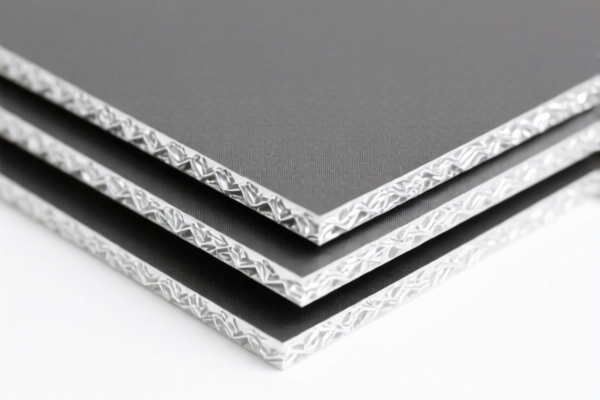
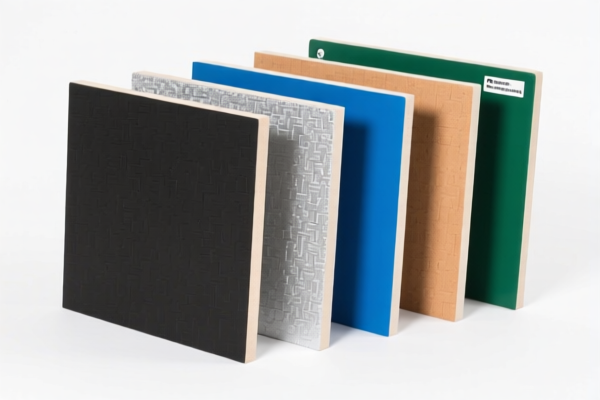
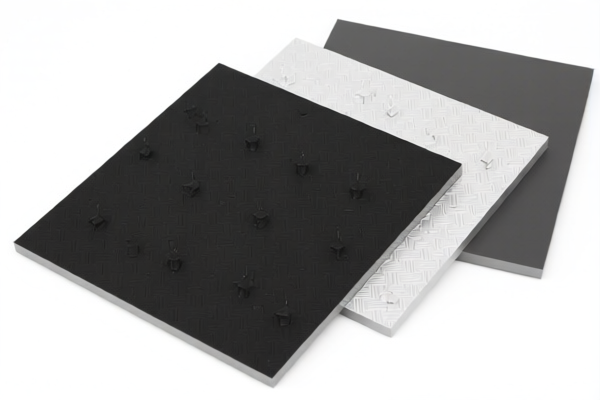
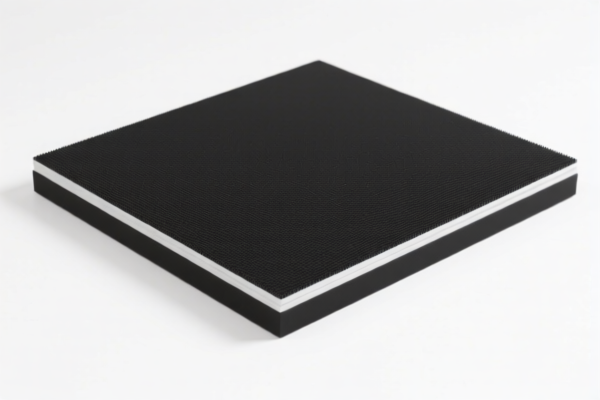
AI分析
🧪 Cellulose Acetate Anti-static Board
🌐 HS Code Reference & Customs Clearance Guide | 2026 Latest Tariff Analysis | Professional Clearance Strategy
📌 Part 1: Product Definition & Classification: What Exactly is this Product?
Cellulose Acetate Anti-static Board is a specialized plastic sheet made from cellulose esters (specifically cellulose acetate). In international trade, its classification depends heavily on its physical form (sheet/plate vs. molded part) and its chemical nature (ester vs. derivative).
⚠️ Key Classification Divergence:
- If viewed as a Cellulose Ester (Plastic) in sheet form → Likely falls under 3920 series.
- If viewed as a Cellulose Derivative/Ester generally → Might fall under 3912 series.
- If viewed as a General Plastic Article → Might fall under 3926 series.
The anti-static property is a functional characteristic that does not automatically change the HS code but must be declared to ensure proper inspection and tariff assessment.
📦 Part 2: Detailed HS Code Classification Matrix (2026 Data)
Based on the provided data, here are the potential HS Codes with their specific rationales and tax implications.
| HS Code | Summary Description | Taxable Rate | Tax Breakdown (China to US) |
|---|---|---|---|
| 3912.12.00.00 | Cellulose esters; conforms to plasticized morphology (sheet form) | 40.6% | Base: 5.6% + USITC (Sec 301): 25.0% + IEEPA (Sec 122): 10.0% |
| 3912.11.00.00 | Cellulose derivatives; static board in sheet form (primary form) | 40.6% | Base: 5.6% + USITC (Sec 301): 25.0% + IEEPA (Sec 122): 10.0% |
| 3926.90.99.10 | Other plastic articles; static board as a finished plastic product | 22.8% | Base: 5.3% + USITC (Sec 301): 7.5% + IEEPA (Sec 122): 10.0% |
| 3920.73.00.00 | Plates, sheets, film, foil, band, strip (of cellulose acetates) | 37.9% | Base: 2.9% + USITC (Sec 301): 25.0% + IEEPA (Sec 122): 10.0% |
| 3920.79.50.00 | Other plates, sheets, film, etc. (Cellulose esters/derivatives) | 38.7% | Base: 3.7% + USITC (Sec 301): 25.0% + IEEPA (Sec 122): 10.0% |
💰 Part 3: Tariff Rate Analysis & Legal Basis
✅ Applicable Country: United States (US)
✅ Origin: China (CN)
✅ Effective Date: November 10, 2025 (and subsequent imports)
🎯 1. High-Tax Category: 3912.11.00.00 & 3912.12.00.00
Total Tax Rate: 40.6%
| Item | Detail |
|---|---|
| Base Tariff | 5.6% |
| USITC (301 Clause) | +25.0% |
| IEEPA (122 Clause) | +10.0% |
| Total | 40.6% |
| De Minimis Exemption? | ❌ NO (High risk of seizure if under $800) |
📌 Explanation:
- These codes classify the material as a Cellulose Ester or Derivative in its basic form.
- The 25% USITC tariff is the standard Section 301 penalty for Chinese plastics.
- The 10% IEEPA tariff is an additional penalty under Section 122.
- Risk: High cost. Ensure you don't use these codes if a lower-rate alternative (like 3926) is more appropriate for finished goods.
🎯 2. Medium-High Tax Category: 3920.73.00.00 & 3920.79.50.00
Total Tax Rates: 37.9% – 38.7%
| Item | Detail |
|---|---|
| Base Tariff | 2.9% – 3.7% |
| USITC (301 Clause) | +25.0% |
| IEEPA (122 Clause) | +10.0% |
| Total | 37.9% – 38.7% |
| De Minimis Exemption? | ❌ NO |
📌 Explanation:
- 3920.73.00.00: Specifically for Cellulose Acetates in plate/sheet form. This is often the most accurate description if the product is strictly cellulose acetate sheets.
- 3920.79.50.00: A "Other" category for cellulose esters/derivatives in sheet form. Use if 3920.73 doesn't perfectly match the chemical composition.
- Savings: Slightly cheaper than the 3912 series due to lower base tariffs (2.9% vs 5.6%).
🎯 3. Lowest Tax Category: 3926.90.99.10
Total Tax Rate: 22.8%
| Item | Detail |
|---|---|
| Base Tariff | 5.3% |
| USITC (301 Clause) | +7.5% |
| IEEPA (122 Clause) | +10.0% |
| Total | 22.8% |
| De Minimis Exemption? | ❌ NO (But significantly lower base) |
📌 Explanation:
- This code classifies the product as an "Other Plastic Article" rather than a raw sheet or ester.
- Why is it cheaper? The USITC tariff for this subheading is only 7.5% (vs 25% for most plastics).
- Critical Condition: This classification is only valid if the product is considered a "finished article" or a specific type of plastic good not covered elsewhere. If Customs views it as a raw sheet, they will downgrade it to 3920 or 3912, increasing your tax to ~38-40%.
- Strategy: Use this code only if you have strong justification that it is a "finished plastic article" (e.g., pre-cut, treated, or designed for a specific non-sheet application).
🛠️ Part 4: Customs Clearance Practical Advice (Avoid Pitfalls)
✅ 1. Documentation Checklist (Essential)
| Document | Required? | Notes |
|---|---|---|
| ✅ Product Specification | ✔️ | Must state: "Cellulose Acetate," "Anti-static," "Sheet/Board Form." |
| ✅ Material Safety Data Sheet (MSDS) | ✔️ | Proves chemical composition (Cellulose Acetate). |
| ✅ Photos | ✔️ | Show the board, thickness, and any anti-static markings. |
| ✅ Invoice & Packing List | ✔️ | Clearly describe as "Cellulose Acetate Anti-static Board." |
| ✅ Certificate of Origin | ✔️ | Required for US-China trade; check for any exclusions (rare for plastics). |
✅ 2. Classification Strategy & Warnings
🔥 "Know Your Form: Sheet vs. Article"
| Scenario | Recommended HS Code | Reason |
|---|---|---|
| Raw Sheets/Rolls | 3920.73.00.00 or 3920.79.50.00 |
Most accurate for plastic sheets. |
| Chemical Raw Material | 3912.11.00.00 / 3912.12.00.00 |
If processed as a derivative/ester. |
| Finished/Custom Cut Parts | 3926.90.99.10 |
Attempt this for savings! But risk of audit. |
📌 Critical Warning:
- Do NOT rely on De Minimis ($800) for this product. The tax rates are high (22-40%), and CBP is aggressively auditing cell phone packages containing Chinese plastics.
- Anti-static feature: Do not over-emphasize "anti-static" as a functional claim that changes the HS code. It is a surface treatment. The base material (Cellulose Acetate) dictates the code.
- Pre-Ruling: Consider applying for an Advance Ruling with US CBP to lock in a favorable code (like 3926.90.99.10) if you believe your product qualifies as a "finished article."
✅ 3. Common Mistakes
❌ Mistake 1: Using 3926.90.99.10 for raw rolls of cellulose acetate.
👉 Consequence: CBP will reclassify to 3920 or 3912, leading to back taxes + penalties (tax difference ~15-18%).
❌ Mistake 2: Assuming "Plastic" means low tax.
👉 Consequence: Chinese plastics are heavily taxed due to Section 301 and IEEPA 122. Total tax is rarely below 22%.
❌ Mistake 3: Incorrectly declaring "Cellulose Nitrate" vs "Cellulose Acetate."
👉 Consequence: Different HS codes. Cellulose Acetate is generally 3920.7x. Cellulose Nitrate is 3912.11/12. Mislabeling leads to audits.
🌍 Part 5: Global Market Comparison (Quick Reference)
| Region | Likely HS Code | Est. Tax (China Origin) | Notes |
|---|---|---|---|
| 🇺🇸 USA | 3920.73.00.00 or 3926.90.99.10 |
22.8% – 37.9% | High due to 301 & IEEPA. |
| 🇨🇳 China | 3920.73.00.00 |
~5-7% | No anti-dumping on this specific item. |
| 🇪🇺 EU | 3920.73.00.00 |
~3-6% | No Section 301 equivalent. |
| 🇬🇧 UK | 3920.73.00.00 |
~3-6% | Post-Brexit tariffs similar to EU. |
📌 Conclusion:
- The USA is the most expensive market due to geopolitical tariffs.
- Strategy: If shipping to the US, optimize your HS code selection. Attempt3926.90.99.10if the product can be justified as a "finished article," but be prepared to defend it. If it is a raw sheet, stick to3920.73.00.00as it is the most accurate and has a moderate base rate.
📌 Part 6: Final Recommendations & Action Plan
🎯 Immediate Actions:
- Confirm Physical Form: Is it a roll, a cut sheet, or a molded board?
- Rolls/Sheets →
3920.73.00.00 - Molded/Fit-to-purpose → Try
3926.90.99.10 - Calculate Landed Cost:
- Use the 37.9% – 40.6% rate for accurate costing if using 3920/3912.
- Use 22.8% only if you have a strong case for 3926.
- Documentation: Ensure your commercial invoice clearly states:
"Cellulose Acetate Anti-static Board, Sheet Form, HS Code 3920.73.00.00"
(Or whichever code you choose, with justification).
⚠️ Risk Alert:
- CBP Scrutiny: US Customs is highly scrutinizing Chinese plastic imports.
- Audit Trail: Keep samples and technical datasheets handy. If audited, you must prove whether it is a "sheet" (3920) or an "article" (3926).
📣 Final Thought:
"Correct Classification Saves Thousands!"
The difference between 22.8% and 40.6% is significant. Don't guess. Document. Declare.
For Cellulose Acetate Sheets, 3920.73.00.00 is the safest, most accurate choice. For specialized finished parts, 3926.90.99.10 offers savings but carries higher audit risk.
✨ Professional Clearance, Starting with Precise Classification!
💼 Your Bottom Line Depends on the Digits!
用户评价
关于 HS 编码归类
协调制度(HS)是由世界海关组织(WCO)制定的国际贸易商品分类标准。全球 200 多个国家采用 HS 系统作为海关关税、贸易统计和进出口监管的基础。
每个 HS 编码遵循以下层级结构:
- 章(2 位)——商品大类(例如:第 84 章:机器和机械设备)
- 品目(4 位)——章内的更具体分类
- 子目(6 位)——国际通用细分,所有 WCO 成员国统一使用
- 本国细分(8-10 位)——各国自行扩展的细分编码,如美国 HTSUS 10 位编码
正确的 HS 编码归类对于顺利通关、准确缴纳关税和遵守贸易法规至关重要。错误归类可能导致海关延误、多缴关税或罚款。
从CN进口到US时,适用的关税税率可能包括:
- 最惠国(MFN)税率——适用于 WTO 成员国的标准关税税率
- 普通税率——适用于无贸易协定国家
- 贸易救济关税——附加关税,如 301 条款(反倾销)、232 条款(国家安全)或反补贴税
本页内容仅供参考。如需正式归类,请咨询当地海关或持牌报关代理。