Cellulose Acetate Anti static Board
CN → US| HS Code | Tariff Rate | Origin | Destination | Doc |
|---|---|---|---|---|
| 3912120000 | 40.6% | CN | US | Official Doc |
| 3912110000 | 40.6% | CN | US | Official Doc |
| 3926909910 | 22.8% | CN | US | Official Doc |
| 3920730000 | 37.9% | CN | US | Official Doc |
| 3920795000 | 38.7% | CN | US | Official Doc |
Product Images
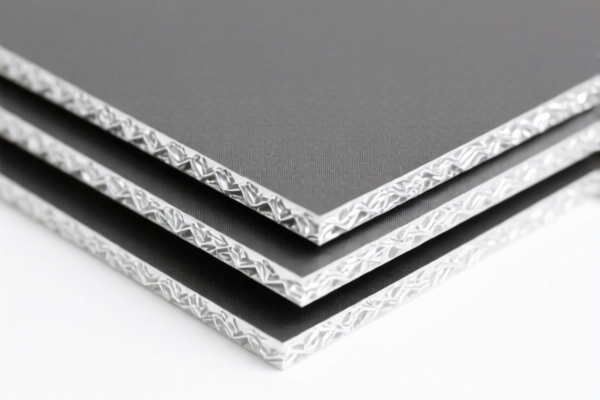
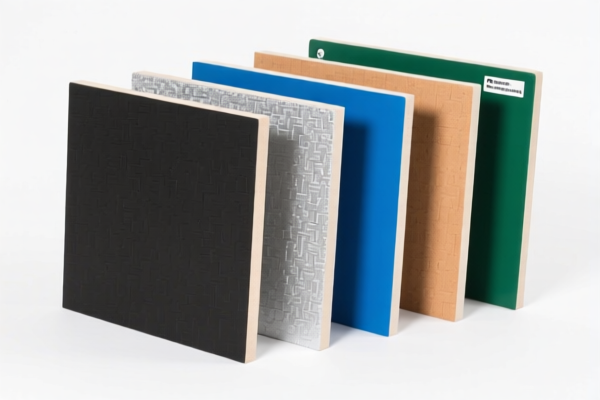
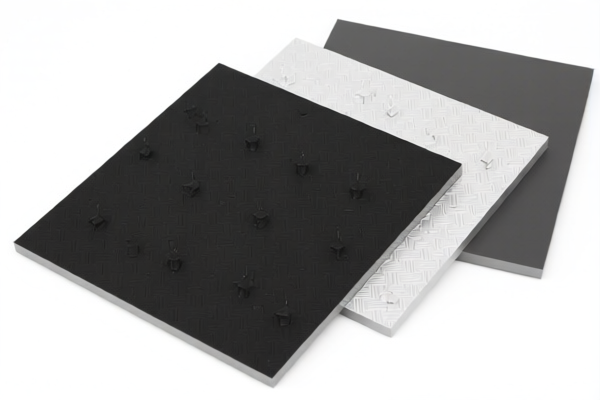
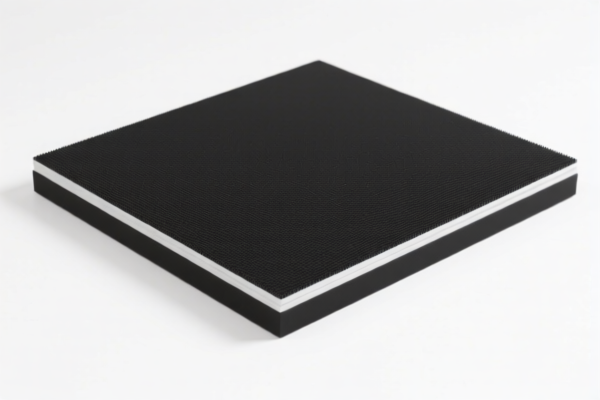
AI Analysis
🧪 Cellulose Acetate Anti-static Board
🌐 HS Code Reference & Customs Clearance Guide | 2026 Latest Tariff Analysis | Professional Clearance Strategy
📌 Part 1: Product Definition & Classification: What Exactly is this Product?
Cellulose Acetate Anti-static Board is a specialized plastic sheet made from cellulose esters (specifically cellulose acetate). In international trade, its classification depends heavily on its physical form (sheet/plate vs. molded part) and its chemical nature (ester vs. derivative).
⚠️ Key Classification Divergence:
- If viewed as a Cellulose Ester (Plastic) in sheet form → Likely falls under 3920 series.
- If viewed as a Cellulose Derivative/Ester generally → Might fall under 3912 series.
- If viewed as a General Plastic Article → Might fall under 3926 series.
The anti-static property is a functional characteristic that does not automatically change the HS code but must be declared to ensure proper inspection and tariff assessment.
📦 Part 2: Detailed HS Code Classification Matrix (2026 Data)
Based on the provided data, here are the potential HS Codes with their specific rationales and tax implications.
| HS Code | Summary Description | Taxable Rate | Tax Breakdown (China to US) |
|---|---|---|---|
| 3912.12.00.00 | Cellulose esters; conforms to plasticized morphology (sheet form) | 40.6% | Base: 5.6% + USITC (Sec 301): 25.0% + IEEPA (Sec 122): 10.0% |
| 3912.11.00.00 | Cellulose derivatives; static board in sheet form (primary form) | 40.6% | Base: 5.6% + USITC (Sec 301): 25.0% + IEEPA (Sec 122): 10.0% |
| 3926.90.99.10 | Other plastic articles; static board as a finished plastic product | 22.8% | Base: 5.3% + USITC (Sec 301): 7.5% + IEEPA (Sec 122): 10.0% |
| 3920.73.00.00 | Plates, sheets, film, foil, band, strip (of cellulose acetates) | 37.9% | Base: 2.9% + USITC (Sec 301): 25.0% + IEEPA (Sec 122): 10.0% |
| 3920.79.50.00 | Other plates, sheets, film, etc. (Cellulose esters/derivatives) | 38.7% | Base: 3.7% + USITC (Sec 301): 25.0% + IEEPA (Sec 122): 10.0% |
💰 Part 3: Tariff Rate Analysis & Legal Basis
✅ Applicable Country: United States (US)
✅ Origin: China (CN)
✅ Effective Date: November 10, 2025 (and subsequent imports)
🎯 1. High-Tax Category: 3912.11.00.00 & 3912.12.00.00
Total Tax Rate: 40.6%
| Item | Detail |
|---|---|
| Base Tariff | 5.6% |
| USITC (301 Clause) | +25.0% |
| IEEPA (122 Clause) | +10.0% |
| Total | 40.6% |
| De Minimis Exemption? | ❌ NO (High risk of seizure if under $800) |
📌 Explanation:
- These codes classify the material as a Cellulose Ester or Derivative in its basic form.
- The 25% USITC tariff is the standard Section 301 penalty for Chinese plastics.
- The 10% IEEPA tariff is an additional penalty under Section 122.
- Risk: High cost. Ensure you don't use these codes if a lower-rate alternative (like 3926) is more appropriate for finished goods.
🎯 2. Medium-High Tax Category: 3920.73.00.00 & 3920.79.50.00
Total Tax Rates: 37.9% – 38.7%
| Item | Detail |
|---|---|
| Base Tariff | 2.9% – 3.7% |
| USITC (301 Clause) | +25.0% |
| IEEPA (122 Clause) | +10.0% |
| Total | 37.9% – 38.7% |
| De Minimis Exemption? | ❌ NO |
📌 Explanation:
- 3920.73.00.00: Specifically for Cellulose Acetates in plate/sheet form. This is often the most accurate description if the product is strictly cellulose acetate sheets.
- 3920.79.50.00: A "Other" category for cellulose esters/derivatives in sheet form. Use if 3920.73 doesn't perfectly match the chemical composition.
- Savings: Slightly cheaper than the 3912 series due to lower base tariffs (2.9% vs 5.6%).
🎯 3. Lowest Tax Category: 3926.90.99.10
Total Tax Rate: 22.8%
| Item | Detail |
|---|---|
| Base Tariff | 5.3% |
| USITC (301 Clause) | +7.5% |
| IEEPA (122 Clause) | +10.0% |
| Total | 22.8% |
| De Minimis Exemption? | ❌ NO (But significantly lower base) |
📌 Explanation:
- This code classifies the product as an "Other Plastic Article" rather than a raw sheet or ester.
- Why is it cheaper? The USITC tariff for this subheading is only 7.5% (vs 25% for most plastics).
- Critical Condition: This classification is only valid if the product is considered a "finished article" or a specific type of plastic good not covered elsewhere. If Customs views it as a raw sheet, they will downgrade it to 3920 or 3912, increasing your tax to ~38-40%.
- Strategy: Use this code only if you have strong justification that it is a "finished plastic article" (e.g., pre-cut, treated, or designed for a specific non-sheet application).
🛠️ Part 4: Customs Clearance Practical Advice (Avoid Pitfalls)
✅ 1. Documentation Checklist (Essential)
| Document | Required? | Notes |
|---|---|---|
| ✅ Product Specification | ✔️ | Must state: "Cellulose Acetate," "Anti-static," "Sheet/Board Form." |
| ✅ Material Safety Data Sheet (MSDS) | ✔️ | Proves chemical composition (Cellulose Acetate). |
| ✅ Photos | ✔️ | Show the board, thickness, and any anti-static markings. |
| ✅ Invoice & Packing List | ✔️ | Clearly describe as "Cellulose Acetate Anti-static Board." |
| ✅ Certificate of Origin | ✔️ | Required for US-China trade; check for any exclusions (rare for plastics). |
✅ 2. Classification Strategy & Warnings
🔥 "Know Your Form: Sheet vs. Article"
| Scenario | Recommended HS Code | Reason |
|---|---|---|
| Raw Sheets/Rolls | 3920.73.00.00 or 3920.79.50.00 |
Most accurate for plastic sheets. |
| Chemical Raw Material | 3912.11.00.00 / 3912.12.00.00 |
If processed as a derivative/ester. |
| Finished/Custom Cut Parts | 3926.90.99.10 |
Attempt this for savings! But risk of audit. |
📌 Critical Warning:
- Do NOT rely on De Minimis ($800) for this product. The tax rates are high (22-40%), and CBP is aggressively auditing cell phone packages containing Chinese plastics.
- Anti-static feature: Do not over-emphasize "anti-static" as a functional claim that changes the HS code. It is a surface treatment. The base material (Cellulose Acetate) dictates the code.
- Pre-Ruling: Consider applying for an Advance Ruling with US CBP to lock in a favorable code (like 3926.90.99.10) if you believe your product qualifies as a "finished article."
✅ 3. Common Mistakes
❌ Mistake 1: Using 3926.90.99.10 for raw rolls of cellulose acetate.
👉 Consequence: CBP will reclassify to 3920 or 3912, leading to back taxes + penalties (tax difference ~15-18%).
❌ Mistake 2: Assuming "Plastic" means low tax.
👉 Consequence: Chinese plastics are heavily taxed due to Section 301 and IEEPA 122. Total tax is rarely below 22%.
❌ Mistake 3: Incorrectly declaring "Cellulose Nitrate" vs "Cellulose Acetate."
👉 Consequence: Different HS codes. Cellulose Acetate is generally 3920.7x. Cellulose Nitrate is 3912.11/12. Mislabeling leads to audits.
🌍 Part 5: Global Market Comparison (Quick Reference)
| Region | Likely HS Code | Est. Tax (China Origin) | Notes |
|---|---|---|---|
| 🇺🇸 USA | 3920.73.00.00 or 3926.90.99.10 |
22.8% – 37.9% | High due to 301 & IEEPA. |
| 🇨🇳 China | 3920.73.00.00 |
~5-7% | No anti-dumping on this specific item. |
| 🇪🇺 EU | 3920.73.00.00 |
~3-6% | No Section 301 equivalent. |
| 🇬🇧 UK | 3920.73.00.00 |
~3-6% | Post-Brexit tariffs similar to EU. |
📌 Conclusion:
- The USA is the most expensive market due to geopolitical tariffs.
- Strategy: If shipping to the US, optimize your HS code selection. Attempt3926.90.99.10if the product can be justified as a "finished article," but be prepared to defend it. If it is a raw sheet, stick to3920.73.00.00as it is the most accurate and has a moderate base rate.
📌 Part 6: Final Recommendations & Action Plan
🎯 Immediate Actions:
- Confirm Physical Form: Is it a roll, a cut sheet, or a molded board?
- Rolls/Sheets →
3920.73.00.00 - Molded/Fit-to-purpose → Try
3926.90.99.10 - Calculate Landed Cost:
- Use the 37.9% – 40.6% rate for accurate costing if using 3920/3912.
- Use 22.8% only if you have a strong case for 3926.
- Documentation: Ensure your commercial invoice clearly states:
"Cellulose Acetate Anti-static Board, Sheet Form, HS Code 3920.73.00.00"
(Or whichever code you choose, with justification).
⚠️ Risk Alert:
- CBP Scrutiny: US Customs is highly scrutinizing Chinese plastic imports.
- Audit Trail: Keep samples and technical datasheets handy. If audited, you must prove whether it is a "sheet" (3920) or an "article" (3926).
📣 Final Thought:
"Correct Classification Saves Thousands!"
The difference between 22.8% and 40.6% is significant. Don't guess. Document. Declare.
For Cellulose Acetate Sheets, 3920.73.00.00 is the safest, most accurate choice. For specialized finished parts, 3926.90.99.10 offers savings but carries higher audit risk.
✨ Professional Clearance, Starting with Precise Classification!
💼 Your Bottom Line Depends on the Digits!
Customer Reviews
About HS Code Classification
The Harmonized System (HS) is an internationally standardized nomenclature developed by the World Customs Organization (WCO) to classify traded products. Over 200 countries use the HS system as the basis for customs tariffs, trade statistics, and import/export regulations.
Each HS code follows a hierarchical structure:
- Chapter (2 digits) — Broad category of goods (e.g., Chapter 84: Machinery and Mechanical Appliances)
- Heading (4 digits) — More specific grouping within the chapter
- Subheading (6 digits) — Internationally standardized breakdown, used by all WCO member countries
- National subdivisions (8-10 digits) — Country-specific extensions for further classification, such as US HTSUS 10-digit codes
Correct HS code classification is essential for smooth customs clearance, accurate duty payment, and compliance with trade regulations. Misclassification can lead to customs delays, overpayment of duties, or penalties.
When importing from CN to US, the applicable tariff rates may include:
- Most-Favored-Nation (MFN) rate — The standard duty rate applied to WTO members
- General rate — Applied to countries without trade agreements
- Trade remedy duties — Additional tariffs such as Section 301 (anti-dumping), Section 232 (national security), or countervailing duties
The information provided on this page is for reference purposes only. For official classification, please consult with your local customs authority or a licensed customs broker.