Cellulose Acetate Propionate Capacitor Film
CN → US| HS编码 | 关税税率 | 原产国 | 目的国 | 文档 |
|---|---|---|---|---|
| 3912110000 | 40.6% | CN | US | 官方文档 |
| 3912120000 | 40.6% | CN | US | 官方文档 |
| 3920730000 | 37.9% | CN | US | 官方文档 |
| 3920791000 | 41.2% | CN | US | 官方文档 |
| 3921140000 | 41.5% | CN | US | 官方文档 |
商品图片

AI分析
🧪 Cellulose Acetate Propionate (CAP) Capacitor Film
🌐 HS Code Reference & Customs Clearance Guide | 2026 Latest Tariff Breakdown | Professional Clearance Strategy 📌 I. Product Definition & Classification: What Exactly is "Cellulose Acetate Propionate" Film?
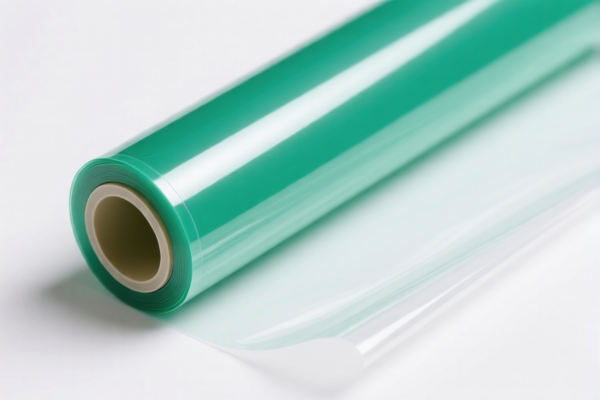
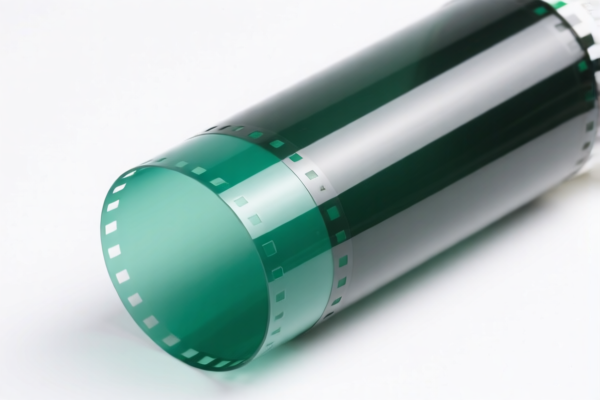
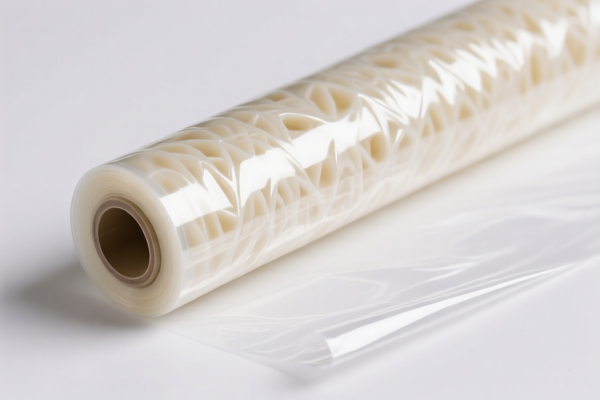
Cellulose Acetate Propionate (CAP) is a thermoplastic polymer derived from cellulose. In the context of international trade and electronics, CAP film is primarily used as a dielectric material in capacitors due to its excellent electrical insulation properties, flexibility, and moisture resistance.
However, from a customs classification perspective, CAP film is often scrutinized. It is a cellulose derivative. Depending on its form (film vs. sheet) and thickness, it may be classified under: 1. Heading 3912: "Cellulose and its chemical derivatives, in primary forms." (If considered a basic cellulose derivative). 2. Heading 3920/3921: "Other plates, sheets, film, foil, and strip" (If considered a manufactured plastic product/film).
⚠️ Key Distinction Point:
- If the product is declared simply as "Cellulose Acetate Propionate" in raw film form without specific capacitor assembly, it falls under Heading 3912 (Derivatives).
- If it is strictly a manufactured film for industrial use, customs may push for Heading 3920/3921 (Plastic Films).
- Crucial Note: The data provided indicates that CAP film is frequently classified under 3912 (Cellulose Derivatives) or 3920/3921 (Plastic Films), with significant tariff implications.
📦 II. HS Code Classification Details (2026 Latest Tariff Authority对照)
Based on the provided dataset, here are the specific HS Codes and their corresponding tax details for Cellulose Acetate Propionate Film.
| HS Code | Product Description | Key Characteristics | Tax Rate (Total) |
|---|---|---|---|
3912.11.00.00 |
Cellulose Acetate Film | Material: Cellulose Acetate; Form: Film; Basic primary form. | 40.6% |
3912.12.00.00 |
Cellulose Acetate Film | Material: Cellulose Acetate; Form: Film; Common derivative form. | 40.6% |
3920.73.00.00 |
Cellulose Acetate Film | Material: Cellulose Acetate; Form: Film; Classified as plate/sheet/film/foil. | 37.9% |
3920.79.10.00 |
Cellulose Derivative Film | Material: Cellulose Derivative; Form: Film; Thickness ≤ 0.076 mm. | 41.2% |
3921.14.00.00 |
Regenerated Cellulose Film | Material: Regenerated Cellulose; Form: Film. | 41.5% |
🔍 Critical Analysis:
- 3912 Codes treat CAP as a cellulose derivative (raw/primary form).
- 3920/3921 Codes treat CAP as a manufactured plastic film.
- The classification depends on whether customs views the CAP film as a "derivative" (3912) or a "plastic product" (3920/3921).
- Thickness Matters: Code3920.79.10.00specifically targets films ≤ 0.076 mm thick.
💰 III. 2026 Latest Tariff Rate Breakdown (Including Surtaxes & Policy Add-ons)
✅ Applicable Country: United States (US)
✅ Origin: China (CN)
✅ Effective Date: 2025/2026 (Post-trade war adjustments)
🎯 1. 3912.11.00.00 & 3912.12.00.00 —— Cellulose Acetate Film (Derivatives)
| Item | Content |
|---|---|
| Base Tariff | 5.6% (ad valorem) |
| Section 301 Surtax | +25.0% (USITC Footnote 9903.88.01) |
| Section 122 Tariff | +10.0% (Specific add-on for certain categories) |
| Total Tariff Rate | 40.6% |
| Tax Calculation | CIF Value × 40.6% |
| De Minimis Exemption | ❌ Not Eligible (deny_de_minimis) |
| Legal Basis Path | Base Rate → Section 301: +25% → Section 122: +10% |
📌 Explanation:
- These codes classify CAP as a cellulose derivative.
- The 40.6% rate is a combination of standard import duty (5.6%) plus two layers of punitive tariffs (25% + 10%).
- High Cost Alert: This is a significant burden for electronics supply chains using CAP film.
🎯 2. 3920.73.00.00 —— Cellulose Acetate Film (Plate/Sheet/Film)
| Item | Content |
|---|---|
| Base Tariff | 2.9% (ad valorem) |
| Section 301 Surtax | +25.0% |
| Section 122 Tariff | +10.0% |
| Total Tariff Rate | 37.9% |
| Tax Calculation | CIF Value × 37.9% |
| De Minimis Exemption | ❌ Not Eligible |
| Legal Basis Path | Base Rate → Section 301: +25% → Section 122: +10% |
📌 Note:
- Slightly lower base tariff (2.9%) than 3912, but still subject to the same surtaxes.
- Total rate 37.9% is the lowest among the provided options.
🎯 3. 3920.79.10.00 & 3921.14.00.00 —— Other Cellulose Derivative/Regenerated Films
| Item | Content |
|---|---|
| Base Tariff | 6.2% (3920) / 6.5% (3921) |
| Section 301 Surtax | +25.0% |
| Section 122 Tariff | +10.0% |
| Total Tariff Rate | 41.2% (3920) / 41.5% (3921) |
| Tax Calculation | CIF Value × [Rate] |
| De Minimis Exemption | ❌ Not Eligible |
📌 Note:
-3920.79.10.00applies to films ≤ 0.076 mm thick.
-3921.14.00.00applies to regenerated cellulose films.
- These have higher base tariffs, leading to the highest total rates (~41-41.5%).
🛠️ IV. Customs Clearance Practical Advice (Pitfall Avoidance Guide)
✅ 1. Documentation Checklist (Non-negotiable)
| Document | Required | Description |
|---|---|---|
| ✅ Product Specification Sheet | ✔️ | Must specify material composition (Cellulose Acetate Propionate), thickness, width, and application (Capacitor Dielectric). |
| ✅ Chemical Formula/Composition Report | ✔️ | To prove it is a cellulose derivative, not a generic plastic. |
| ✅ Product Photos | ✔️ | Clear images of the film roll, labels, and any packaging. |
| ✅ Commercial Invoice | ✔️ | Must clearly state "Cellulose Acetate Propionate Film for Capacitors." |
| ✅ Certificate of Origin (CO) | ✔️ | Critical for verifying origin to apply correct surtaxes. |
| ✅ Packing List | ✔️ | Details weight, dimensions, and number of rolls. |
✅ 2. Classification Strategy (Key Mantra)
🔥 "Material First, Form Second, Thickness Matters, Surtax Avoidance Impossible!"
| Scenario | Correct Classification | Incorrect Action | Consequence |
|---|---|---|---|
| Standard CAP Film | 3920.73.00.00 |
Declaring as generic "Plastic Film" | Risk of misclassification penalty; rate 37.9% is best if eligible. |
| Thin CAP Film (≤0.076mm) | 3920.79.10.00 |
Not declaring thickness | Rate jumps to 41.2% due to higher base duty. |
| Raw Derivative | 3912.11.00.00 |
Declaring as "Capacitor Component" | If not assembled, must declare as film/derivative. |
| Regenerated Cellulose | 3921.14.00.00 |
Confusing with CAP | Rate 41.5%; ensure correct material ID. |
✅ 3. Special Handling Tips
| Situation | Recommendation |
|---|---|
| Optimizing Tariff | Aim for 3920.73.00.00 if possible. It has the lowest total rate (37.9%). Ensure the film is not too thin (<0.076mm) if you want to avoid 3920.79.10.00. |
| Origin Marking | Ensure all film rolls and packaging are clearly marked "Made in China" to avoid customs delays or misinterpretation of origin. |
| Pre-Ruling | Consider applying for an Advance Ruling from US CBP. Given the high tariffs (37-41%), a pre-ruling can provide certainty and avoid post-import audits. |
| Material Identification | Be prepared to provide a Technical Data Sheet proving the material is Cellulose Acetate Propionate. Customs may challenge it as "Other Plastic" (higher base rate) if not clearly defined. |
🌍 V. Global Market Comparison (2026 Latest)
| Country/Region | Recommended HS Code | Tariff (US Origin) | Key Notes |
|---|---|---|---|
| 🇺🇸 United States | 3920.73.00.00 |
37.9% | Highest cost due to Section 301 + Section 122. |
| 🇨🇳 China | 3920.73.00.00 |
~6.5% | Standard import duty; no Section 301. |
| 🇪🇺 EU | 3920.73.00.00 |
~6.5% | Standard EU tariff; no punitive surtaxes. |
| 🇯🇵 Japan | 3920.73.00.00 |
~5.5% | Low base rate; no punitive surtaxes. |
📌 Conclusion:
- The US market is the most challenging due to the 37.9% - 41.5% total tariff burden.
- No other major market applies these punitive surtaxes.
- Supply Chain Advice: If targeting the US, consider sourcing CAP film from non-Chinese origins (e.g., Japan, South Korea, or EU) to avoid Section 301/122 tariffs, if feasible.
📌 VI. Common Errors & Pitfalls (Lessons Learned)
❌ Error 1: Declaring as "Capacitor Part" instead of "Film"
👉 Consequence: If the film is not yet assembled into a capacitor, it must be declared as a raw material/film. Misclassification leads to audits and back-taxes.
❌ Error 2: Ignoring Thickness
👉 Consequence: If the film is ≤ 0.076mm but declared under general film codes (3920.73), customs may reclassify it to 3920.79.10.00 (41.2%), increasing costs.
❌ Error 3: Confusing CAP with Cellulose Acetate (CA)
👉 Consequence: While similar, they may fall under different sub-headings. Ensure the Chemical Composition Report matches the declared HS Code.
❌ Error 4: Assuming De Minimis Exemption (Section 321)
👉 Consequence: None of these codes qualify for the $800 de minimis exemption. All shipments are subject to full duties and surtaxes.
✅ Correct Practice:
"Cellulose Acetate Propionate (CAP) Film, for Capacitor Dielectric, Width: 100mm, Thickness: 0.1mm, Material: Cellulose Derivative, Model: CAP-100, Origin: China"
🎯 VII. Conclusion: Professional Classification, Cost Efficiency
🎯 Key Takeaways:
🔹 "Lowest Rate is 37.9%": Target
3920.73.00.00if thickness allows.
🔹 "Thickness is Critical": ≤ 0.076mm pushes you to a higher tax bracket (41.2%).
🔹 "No Loopholes": Section 301 and 122 tariffs are unavoidable for Chinese-origin CAP film.
🔹 "Document Everything": Chemical composition and thickness must be explicitly stated.
📌 Pro Tip:
Given the ~40% tariff burden, consider:
1. Negotiating Price Adjustments with suppliers to share the tariff cost.
2. Exploring Alternative Materials (e.g., Polypropylene Film) if they fall under lower-tariff HS codes (check PP film rates separately).
3. Applying for an Advance Ruling to lock in the HS Code and avoid post-import disputes.
📣 Immediate Action:
📞 Consult a licensed customs broker to verify the thickness and material composition against
3920.73.00.00.
🚀 Optimize your supply chain to mitigate the ~40% US tariff impact!
✨ Precision in Classification, Protection of Margins!
💼 Every percentage point of tariff is a direct hit to your profit margin!
用户评价
关于 HS 编码归类
协调制度(HS)是由世界海关组织(WCO)制定的国际贸易商品分类标准。全球 200 多个国家采用 HS 系统作为海关关税、贸易统计和进出口监管的基础。
每个 HS 编码遵循以下层级结构:
- 章(2 位)——商品大类(例如:第 84 章:机器和机械设备)
- 品目(4 位)——章内的更具体分类
- 子目(6 位)——国际通用细分,所有 WCO 成员国统一使用
- 本国细分(8-10 位)——各国自行扩展的细分编码,如美国 HTSUS 10 位编码
正确的 HS 编码归类对于顺利通关、准确缴纳关税和遵守贸易法规至关重要。错误归类可能导致海关延误、多缴关税或罚款。
从CN进口到US时,适用的关税税率可能包括:
- 最惠国(MFN)税率——适用于 WTO 成员国的标准关税税率
- 普通税率——适用于无贸易协定国家
- 贸易救济关税——附加关税,如 301 条款(反倾销)、232 条款(国家安全)或反补贴税
本页内容仅供参考。如需正式归类,请咨询当地海关或持牌报关代理。