Cellulose Acetate Propionate Capacitor Film
CN → US| HS Code | Tariff Rate | Origin | Destination | Doc |
|---|---|---|---|---|
| 3912110000 | 40.6% | CN | US | Official Doc |
| 3912120000 | 40.6% | CN | US | Official Doc |
| 3920730000 | 37.9% | CN | US | Official Doc |
| 3920791000 | 41.2% | CN | US | Official Doc |
| 3921140000 | 41.5% | CN | US | Official Doc |
Product Images

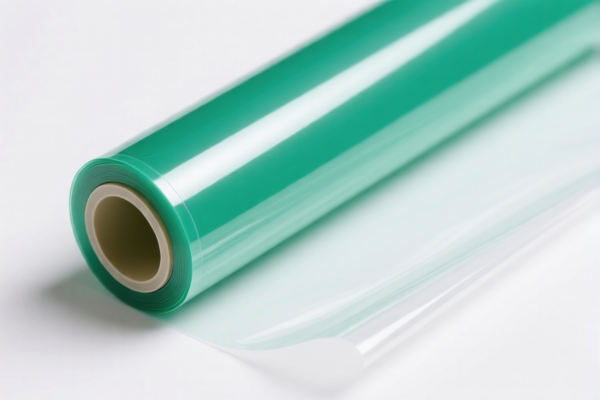
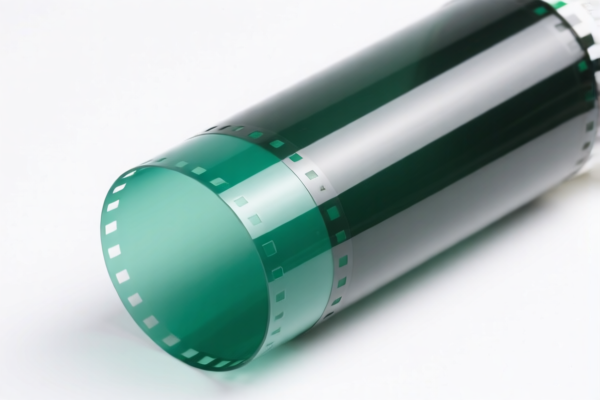
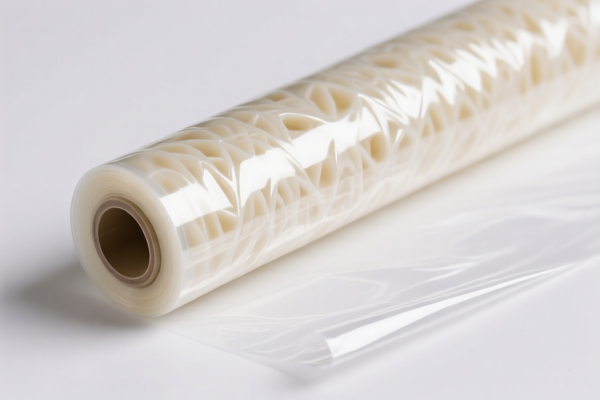
AI Analysis
🧪 Cellulose Acetate Propionate (CAP) Capacitor Film
🌐 HS Code Reference & Customs Clearance Guide | 2026 Latest Tariff Breakdown | Professional Clearance Strategy 📌 I. Product Definition & Classification: What Exactly is "Cellulose Acetate Propionate" Film?
Cellulose Acetate Propionate (CAP) is a thermoplastic polymer derived from cellulose. In the context of international trade and electronics, CAP film is primarily used as a dielectric material in capacitors due to its excellent electrical insulation properties, flexibility, and moisture resistance.
However, from a customs classification perspective, CAP film is often scrutinized. It is a cellulose derivative. Depending on its form (film vs. sheet) and thickness, it may be classified under: 1. Heading 3912: "Cellulose and its chemical derivatives, in primary forms." (If considered a basic cellulose derivative). 2. Heading 3920/3921: "Other plates, sheets, film, foil, and strip" (If considered a manufactured plastic product/film).
⚠️ Key Distinction Point:
- If the product is declared simply as "Cellulose Acetate Propionate" in raw film form without specific capacitor assembly, it falls under Heading 3912 (Derivatives).
- If it is strictly a manufactured film for industrial use, customs may push for Heading 3920/3921 (Plastic Films).
- Crucial Note: The data provided indicates that CAP film is frequently classified under 3912 (Cellulose Derivatives) or 3920/3921 (Plastic Films), with significant tariff implications.
📦 II. HS Code Classification Details (2026 Latest Tariff Authority对照)
Based on the provided dataset, here are the specific HS Codes and their corresponding tax details for Cellulose Acetate Propionate Film.
| HS Code | Product Description | Key Characteristics | Tax Rate (Total) |
|---|---|---|---|
3912.11.00.00 |
Cellulose Acetate Film | Material: Cellulose Acetate; Form: Film; Basic primary form. | 40.6% |
3912.12.00.00 |
Cellulose Acetate Film | Material: Cellulose Acetate; Form: Film; Common derivative form. | 40.6% |
3920.73.00.00 |
Cellulose Acetate Film | Material: Cellulose Acetate; Form: Film; Classified as plate/sheet/film/foil. | 37.9% |
3920.79.10.00 |
Cellulose Derivative Film | Material: Cellulose Derivative; Form: Film; Thickness ≤ 0.076 mm. | 41.2% |
3921.14.00.00 |
Regenerated Cellulose Film | Material: Regenerated Cellulose; Form: Film. | 41.5% |
🔍 Critical Analysis:
- 3912 Codes treat CAP as a cellulose derivative (raw/primary form).
- 3920/3921 Codes treat CAP as a manufactured plastic film.
- The classification depends on whether customs views the CAP film as a "derivative" (3912) or a "plastic product" (3920/3921).
- Thickness Matters: Code3920.79.10.00specifically targets films ≤ 0.076 mm thick.
💰 III. 2026 Latest Tariff Rate Breakdown (Including Surtaxes & Policy Add-ons)
✅ Applicable Country: United States (US)
✅ Origin: China (CN)
✅ Effective Date: 2025/2026 (Post-trade war adjustments)
🎯 1. 3912.11.00.00 & 3912.12.00.00 —— Cellulose Acetate Film (Derivatives)
| Item | Content |
|---|---|
| Base Tariff | 5.6% (ad valorem) |
| Section 301 Surtax | +25.0% (USITC Footnote 9903.88.01) |
| Section 122 Tariff | +10.0% (Specific add-on for certain categories) |
| Total Tariff Rate | 40.6% |
| Tax Calculation | CIF Value × 40.6% |
| De Minimis Exemption | ❌ Not Eligible (deny_de_minimis) |
| Legal Basis Path | Base Rate → Section 301: +25% → Section 122: +10% |
📌 Explanation:
- These codes classify CAP as a cellulose derivative.
- The 40.6% rate is a combination of standard import duty (5.6%) plus two layers of punitive tariffs (25% + 10%).
- High Cost Alert: This is a significant burden for electronics supply chains using CAP film.
🎯 2. 3920.73.00.00 —— Cellulose Acetate Film (Plate/Sheet/Film)
| Item | Content |
|---|---|
| Base Tariff | 2.9% (ad valorem) |
| Section 301 Surtax | +25.0% |
| Section 122 Tariff | +10.0% |
| Total Tariff Rate | 37.9% |
| Tax Calculation | CIF Value × 37.9% |
| De Minimis Exemption | ❌ Not Eligible |
| Legal Basis Path | Base Rate → Section 301: +25% → Section 122: +10% |
📌 Note:
- Slightly lower base tariff (2.9%) than 3912, but still subject to the same surtaxes.
- Total rate 37.9% is the lowest among the provided options.
🎯 3. 3920.79.10.00 & 3921.14.00.00 —— Other Cellulose Derivative/Regenerated Films
| Item | Content |
|---|---|
| Base Tariff | 6.2% (3920) / 6.5% (3921) |
| Section 301 Surtax | +25.0% |
| Section 122 Tariff | +10.0% |
| Total Tariff Rate | 41.2% (3920) / 41.5% (3921) |
| Tax Calculation | CIF Value × [Rate] |
| De Minimis Exemption | ❌ Not Eligible |
📌 Note:
-3920.79.10.00applies to films ≤ 0.076 mm thick.
-3921.14.00.00applies to regenerated cellulose films.
- These have higher base tariffs, leading to the highest total rates (~41-41.5%).
🛠️ IV. Customs Clearance Practical Advice (Pitfall Avoidance Guide)
✅ 1. Documentation Checklist (Non-negotiable)
| Document | Required | Description |
|---|---|---|
| ✅ Product Specification Sheet | ✔️ | Must specify material composition (Cellulose Acetate Propionate), thickness, width, and application (Capacitor Dielectric). |
| ✅ Chemical Formula/Composition Report | ✔️ | To prove it is a cellulose derivative, not a generic plastic. |
| ✅ Product Photos | ✔️ | Clear images of the film roll, labels, and any packaging. |
| ✅ Commercial Invoice | ✔️ | Must clearly state "Cellulose Acetate Propionate Film for Capacitors." |
| ✅ Certificate of Origin (CO) | ✔️ | Critical for verifying origin to apply correct surtaxes. |
| ✅ Packing List | ✔️ | Details weight, dimensions, and number of rolls. |
✅ 2. Classification Strategy (Key Mantra)
🔥 "Material First, Form Second, Thickness Matters, Surtax Avoidance Impossible!"
| Scenario | Correct Classification | Incorrect Action | Consequence |
|---|---|---|---|
| Standard CAP Film | 3920.73.00.00 |
Declaring as generic "Plastic Film" | Risk of misclassification penalty; rate 37.9% is best if eligible. |
| Thin CAP Film (≤0.076mm) | 3920.79.10.00 |
Not declaring thickness | Rate jumps to 41.2% due to higher base duty. |
| Raw Derivative | 3912.11.00.00 |
Declaring as "Capacitor Component" | If not assembled, must declare as film/derivative. |
| Regenerated Cellulose | 3921.14.00.00 |
Confusing with CAP | Rate 41.5%; ensure correct material ID. |
✅ 3. Special Handling Tips
| Situation | Recommendation |
|---|---|
| Optimizing Tariff | Aim for 3920.73.00.00 if possible. It has the lowest total rate (37.9%). Ensure the film is not too thin (<0.076mm) if you want to avoid 3920.79.10.00. |
| Origin Marking | Ensure all film rolls and packaging are clearly marked "Made in China" to avoid customs delays or misinterpretation of origin. |
| Pre-Ruling | Consider applying for an Advance Ruling from US CBP. Given the high tariffs (37-41%), a pre-ruling can provide certainty and avoid post-import audits. |
| Material Identification | Be prepared to provide a Technical Data Sheet proving the material is Cellulose Acetate Propionate. Customs may challenge it as "Other Plastic" (higher base rate) if not clearly defined. |
🌍 V. Global Market Comparison (2026 Latest)
| Country/Region | Recommended HS Code | Tariff (US Origin) | Key Notes |
|---|---|---|---|
| 🇺🇸 United States | 3920.73.00.00 |
37.9% | Highest cost due to Section 301 + Section 122. |
| 🇨🇳 China | 3920.73.00.00 |
~6.5% | Standard import duty; no Section 301. |
| 🇪🇺 EU | 3920.73.00.00 |
~6.5% | Standard EU tariff; no punitive surtaxes. |
| 🇯🇵 Japan | 3920.73.00.00 |
~5.5% | Low base rate; no punitive surtaxes. |
📌 Conclusion:
- The US market is the most challenging due to the 37.9% - 41.5% total tariff burden.
- No other major market applies these punitive surtaxes.
- Supply Chain Advice: If targeting the US, consider sourcing CAP film from non-Chinese origins (e.g., Japan, South Korea, or EU) to avoid Section 301/122 tariffs, if feasible.
📌 VI. Common Errors & Pitfalls (Lessons Learned)
❌ Error 1: Declaring as "Capacitor Part" instead of "Film"
👉 Consequence: If the film is not yet assembled into a capacitor, it must be declared as a raw material/film. Misclassification leads to audits and back-taxes.
❌ Error 2: Ignoring Thickness
👉 Consequence: If the film is ≤ 0.076mm but declared under general film codes (3920.73), customs may reclassify it to 3920.79.10.00 (41.2%), increasing costs.
❌ Error 3: Confusing CAP with Cellulose Acetate (CA)
👉 Consequence: While similar, they may fall under different sub-headings. Ensure the Chemical Composition Report matches the declared HS Code.
❌ Error 4: Assuming De Minimis Exemption (Section 321)
👉 Consequence: None of these codes qualify for the $800 de minimis exemption. All shipments are subject to full duties and surtaxes.
✅ Correct Practice:
"Cellulose Acetate Propionate (CAP) Film, for Capacitor Dielectric, Width: 100mm, Thickness: 0.1mm, Material: Cellulose Derivative, Model: CAP-100, Origin: China"
🎯 VII. Conclusion: Professional Classification, Cost Efficiency
🎯 Key Takeaways:
🔹 "Lowest Rate is 37.9%": Target
3920.73.00.00if thickness allows.
🔹 "Thickness is Critical": ≤ 0.076mm pushes you to a higher tax bracket (41.2%).
🔹 "No Loopholes": Section 301 and 122 tariffs are unavoidable for Chinese-origin CAP film.
🔹 "Document Everything": Chemical composition and thickness must be explicitly stated.
📌 Pro Tip:
Given the ~40% tariff burden, consider:
1. Negotiating Price Adjustments with suppliers to share the tariff cost.
2. Exploring Alternative Materials (e.g., Polypropylene Film) if they fall under lower-tariff HS codes (check PP film rates separately).
3. Applying for an Advance Ruling to lock in the HS Code and avoid post-import disputes.
📣 Immediate Action:
📞 Consult a licensed customs broker to verify the thickness and material composition against
3920.73.00.00.
🚀 Optimize your supply chain to mitigate the ~40% US tariff impact!
✨ Precision in Classification, Protection of Margins!
💼 Every percentage point of tariff is a direct hit to your profit margin!
Customer Reviews
About HS Code Classification
The Harmonized System (HS) is an internationally standardized nomenclature developed by the World Customs Organization (WCO) to classify traded products. Over 200 countries use the HS system as the basis for customs tariffs, trade statistics, and import/export regulations.
Each HS code follows a hierarchical structure:
- Chapter (2 digits) — Broad category of goods (e.g., Chapter 84: Machinery and Mechanical Appliances)
- Heading (4 digits) — More specific grouping within the chapter
- Subheading (6 digits) — Internationally standardized breakdown, used by all WCO member countries
- National subdivisions (8-10 digits) — Country-specific extensions for further classification, such as US HTSUS 10-digit codes
Correct HS code classification is essential for smooth customs clearance, accurate duty payment, and compliance with trade regulations. Misclassification can lead to customs delays, overpayment of duties, or penalties.
When importing from CN to US, the applicable tariff rates may include:
- Most-Favored-Nation (MFN) rate — The standard duty rate applied to WTO members
- General rate — Applied to countries without trade agreements
- Trade remedy duties — Additional tariffs such as Section 301 (anti-dumping), Section 232 (national security), or countervailing duties
The information provided on this page is for reference purposes only. For official classification, please consult with your local customs authority or a licensed customs broker.