Cellulose Particle Detergent
CN → US| HS编码 | 关税税率 | 原产国 | 目的国 | 文档 |
|---|---|---|---|---|
| 3402905010 | 38.7% | CN | US | 官方文档 |
| 3402905030 | 38.7% | CN | US | 官方文档 |
| 4706920100 | 35.0% | CN | US | 官方文档 |
| 4706200000 | 35.0% | CN | US | 官方文档 |
| 3913905000 | 41.5% | CN | US | 官方文档 |
商品图片
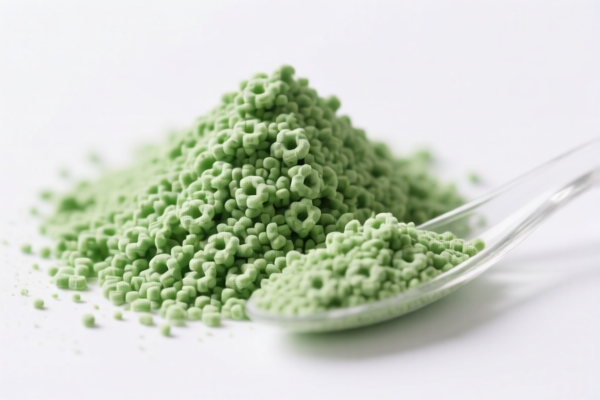
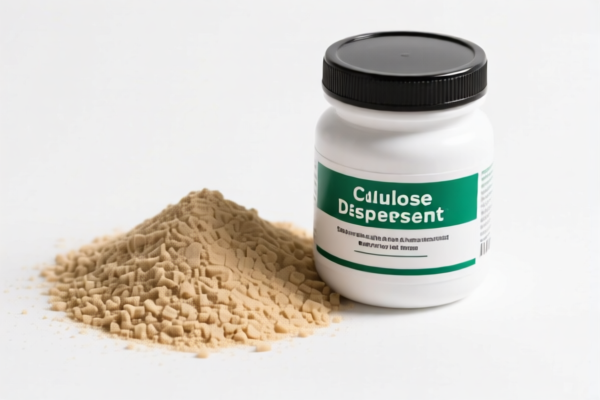
AI分析
🧪 Cellulose Particle Detergent & Raw Materials
🌐 HS Code Classification & Customs Clearance Guide | 2026 Tariff Analysis for US-China Trade
📌 I. Product Definition & Classification: What Exactly Are You Shipping?
"Cellulose Particle Detergent" is a broad term that can refer to two distinct types of goods in international trade: 1. Finished Detergent Agents: Chemical preparations where cellulose acts as a builder, carrier, or active ingredient. These fall under Chapter 34 (Soap, Organic Surface-Active Agents, Washing Preparations). 2. Raw Material (Primary Form): Pure cellulose particles used as a substrate or intermediate good. These fall under Chapter 47 (Pulp of Wood or of Other Fibrous Vegetable Material) or Chapter 39 (Plastics and Articles Thereof) if modified.
⚠️ Critical Distinction:
- If the product is formulated as a detergent (contains surfactants, enzymes, or cleaning additives) → Chapter 34.
- If the product is pure cellulose (used as a raw material for making detergents or other goods) → Chapter 47 or 39.
- Misclassification Risk: Declaring raw cellulose as a finished detergent (or vice versa) can lead to severe penalties, as the tax burdens differ significantly.
📦 II. HS Code Classification Details (2026 Latest Tariff Schedule)
Based on the provided data, here are the precise classifications for "Cellulose Particle" related goods:
| HS Code | Product Description | Category | State of Processing |
|---|---|---|---|
3402.90.50.10 |
Cellulose Particle Detergent | Washing Preparations | Granular Form |
3402.90.50.30 |
Cellulose Particle Detergent | Washing Preparations | Primary Form (Granular) |
4706.92.01.00 |
Cellulose Particles | Chemical Pulp / Pulp | Primary Form (Granular) |
4706.20.00.00 |
Cellulose Particles | Chemical Pulp / Pulp | Primary Form (Granular) |
3913.90.50.00 |
Cellulose Powder | Natural Polymers | Powder Form (Primary) |
🔍 Key Insight:
- HS 3402: For finished cleaning products. Even if cellulose is the main component, if it's sold as a "detergent," it goes here.
- HS 4706/3913: For raw materials. Only use these if the cellulose is unblended with detergents and is in its primary industrial form.
- Note on Form: Granular (3402,4706) vs. Powder (3913) matters for physical identification but not always for tax rate in this specific dataset.
💰 III. 2026 US Tariff Rate Breakdown (China Origin)
✅ Applicable Country: United States (US)
✅ Origin: China (CN)
✅ Effective Date: Rates include Section 301 & IEEPA tariffs.
🎯 1. 3402.90.50.10 & 3402.90.50.30 — Cellulose Particle Detergent
| Item | Content |
|---|---|
| Base Tariff | 3.7% (Standard MFN) |
| Section 301 Tariff | +25.0% (Additional Duty on Chinese Goods) |
| IEEPA Tariff (Sec. 122) | +10.0% (Specific 122 Clause Surcharge) |
| Total Effective Rate | 38.7% |
| Tax Calculation | CIF Value × 38.7% |
| De Minimis Exemption? | ❌ NO (High tariff rates exclude it from the $800 de minimis exemption for most carriers) |
| Legal Basis | HTSUS:3402.90.50 → USITC Footnote 301 → IEEPA Sec. 122 |
📌 Explanation:
- The 3.7% is the standard import duty for washing preparations.
- The 25% is the heavy penalty under Section 301 for Chinese chemical/detergent goods.
- The 10% is an additional surcharge under specific trade enforcement clauses (122).
- Total Cost Impact: Nearly 40% of the value is tax alone. This significantly reduces profit margins.
🎯 2. 4706.92.01.00 & 4706.20.00.00 — Cellulose Particles (Raw Material)
| Item | Content |
|---|---|
| Base Tariff | 0.0% (Duty-Free for Chemical Pulp) |
| Section 301 Tariff | +25.0% |
| IEEPA Tariff (Sec. 122) | +10.0% |
| Total Effective Rate | 35.0% |
| Tax Calculation | CIF Value × 35.0% |
| De Minimis Exemption? | ❌ NO |
| Legal Basis | HTSUS:4706.20 → USITC Footnote 301 → IEEPA Sec. 122 |
📌 Explanation:
- While the base duty is 0%, the Section 301 and IEEPA tariffs still apply, bringing the total to 35%.
- This is 3.7% lower than the detergent classification (3402), but still very high.
🎯 3. 3913.90.50.00 — Cellulose Powder
| Item | Content |
|---|---|
| Base Tariff | 6.5% |
| Section 301 Tariff | +25.0% |
| IEEPA Tariff (Sec. 122) | +10.0% |
| Total Effective Rate | 41.5% |
| Tax Calculation | CIF Value × 41.5% |
| De Minimis Exemption? | ❌ NO |
| Legal Basis | HTSUS:3913.90 → USITC Footnote 301 → IEEPA Sec. 122 |
📌 Explanation:
- This is the highest tariff bracket (41.5%).
- Do NOT use this code for granular detergents or raw pulp. It is strictly for powdered natural polymers not elsewhere specified. Misusing this code can lead to audits.
🛠️ IV. Customs Clearance Practical Advice (Avoiding Pitfalls)
✅ 1. Documentation Checklist (Mandatory)
| Document | Required? | Notes |
|---|---|---|
| ✅ Commercial Invoice | ✔️ | Must clearly state: "Cellulose Particle Detergent" OR "Cellulose Particles (Raw Material)". Do not use vague terms like "Chemical Stuff." |
| ✅ Product Specification Sheet | ✔️ | Must detail: Composition (% cellulose, % surfactants), Form (Granule/Powder), HS Code justification. |
| ✅ Certificate of Origin (CO) | ✔️ | To prove China origin (triggers tariffs). |
| ✅ Safety Data Sheet (SDS) | ✔️ | Required for chemical/detergent classification. |
| ✅ Packing List | ✔️ | Net/Gross weight, number of bags/boxes. |
✅ 2. Declaration Strategy (Key Mantra)
🔥 "True Form, True Function, Correct Chapter!"
| Scenario | Correct HS Code | Incorrect HS Code | Consequence of Error |
|---|---|---|---|
| Selling as a cleaning agent | 3402.90.50.10/30 |
4706.92.01.00 |
Under-declaration: Heavy penalty, back-tariff + 25% Sec 301. |
| Selling raw cellulose | 4706.92.01.00 |
3402.90.50.10 |
Over-declaration: Paying 38.7% instead of 35%. Unnecessary cost. |
| Selling cellulose powder | 3913.90.50.00 |
3402.90.50.10 |
Misclassification: Risk of audit for chemical safety compliance. |
📌 Critical Tip:
- If your product is a mixture (e.g., cellulose + enzymes + surfactants), it MUST be classified under 3402 as a washing preparation.
- If it is 100% cellulose used for further manufacturing, classify under 4706.
- Do not split shipments to avoid tariffs; CBP uses data analytics to detect this.
✅ 3. Special Considerations
| Situation | Handling Advice |
|---|---|
| OEM/Private Label | Ensure the invoice lists the chemical composition, not just the brand name. |
| Mixed Containers | If shipping detergents (3402) and raw pulp (4706) together, separate bills of lading are recommended to avoid complex valuation issues. |
| Section 301 Exclusions | Check if your specific product has a 301 exclusion number. If yes, the 25% tariff may be waived (saving you $100s per container). |
🌍 V. Global Market Comparison (2026 Outlook)
| Region | Recommended HS Code | Estimated Total Tax (China Origin) | Key Requirement |
|---|---|---|---|
| 🇺🇸 USA | 3402.90.50.10 |
38.7% | Strict SDS, 301 Tariff, IEEPA 122 |
| 🇪🇺 EU | 3402.90.90 |
~12-15% | REACH Registration (Critical!) |
| 🇨🇳 China | 3402.90.50 |
~13% | Standard Import Duty |
| 🇬🇧 UK | 3402.90.90 |
~12-15% | UK REACH Registration |
📌 Conclusion:
- The US market is the most expensive due to the combination of base duties and political tariffs (301 + 122).
- EU/UK requires heavy compliance effort (REACH) but lower tariffs.
- China has moderate duties but no extra political surcharges.
📌 VI. Common Mistakes & How to Avoid Them (Blood Lessons)
❌ Mistake 1: Calling "Cellulose Detergent" just "Chemical Powder"
👉 Result: Customs seizes the goods for misdeclaration. You may face fines and delay.
❌ Mistake 2: Using 4706 for a detergent product to save 3.7%
👉 Result: CBP will assess the 3.7% base duty + 38.7% total + penalties. You lose money and time.
❌ Mistake 3: Ignoring the 122 Clause Tariff (10%)
👉 Result: Your cost model is off by 10%. This is not optional; it is mandatory for many Chinese chemical imports.
❌ Mistake 4: Assuming De Minimis ($800) applies
👉 Result: With taxes over 25%, your shipment value will likely exceed the de minimis threshold if not structured carefully, and even then, high-duty goods are often excluded.
✅ Correct Practice:
"Granular Cellulose-Based Detergent, HS 3402.90.50.10, Sec 301 Applicable, SDS Provided, REACH Not Required (US Only)"
🎯 VII. Conclusion: Professional Declaration, Cost Control
🎯 Remember the Formula:
🔹 "Form Determines Chapter, Composition Determines Code."
🔹 "3402 = Detergent (38.7%), 4706 = Raw Material (35.0%), 3913 = Powder (41.5%)."
🔹 "301 + 122 = Pain. Avoid misclassification to avoid double penalties."
📌 Pro Tip:
If you are importing large volumes, consider applying for a Section 301 Exclusion if your specific cellulose detergent formulation qualifies. This can save you 25% of the value per shipment.
📣 Immediate Action:
📞 Engage a Licensed Customs Broker to verify your HS Code.
📄 Prepare Detailed SDS and Ingredient Lists.
🚀 Accurate Classification is the First Step to Profitable Trade.
✨ Smart Customs Clearance = Lower Costs = Higher Margins!
💼 Don't let 38.7% tax catch you off guard.
用户评价
关于 HS 编码归类
协调制度(HS)是由世界海关组织(WCO)制定的国际贸易商品分类标准。全球 200 多个国家采用 HS 系统作为海关关税、贸易统计和进出口监管的基础。
每个 HS 编码遵循以下层级结构:
- 章(2 位)——商品大类(例如:第 84 章:机器和机械设备)
- 品目(4 位)——章内的更具体分类
- 子目(6 位)——国际通用细分,所有 WCO 成员国统一使用
- 本国细分(8-10 位)——各国自行扩展的细分编码,如美国 HTSUS 10 位编码
正确的 HS 编码归类对于顺利通关、准确缴纳关税和遵守贸易法规至关重要。错误归类可能导致海关延误、多缴关税或罚款。
从CN进口到US时,适用的关税税率可能包括:
- 最惠国(MFN)税率——适用于 WTO 成员国的标准关税税率
- 普通税率——适用于无贸易协定国家
- 贸易救济关税——附加关税,如 301 条款(反倾销)、232 条款(国家安全)或反补贴税
本页内容仅供参考。如需正式归类,请咨询当地海关或持牌报关代理。