Cellulose Particle Detergent
CN → US| HS Code | Tariff Rate | Origin | Destination | Doc |
|---|---|---|---|---|
| 3402905010 | 38.7% | CN | US | Official Doc |
| 3402905030 | 38.7% | CN | US | Official Doc |
| 4706920100 | 35.0% | CN | US | Official Doc |
| 4706200000 | 35.0% | CN | US | Official Doc |
| 3913905000 | 41.5% | CN | US | Official Doc |
Product Images
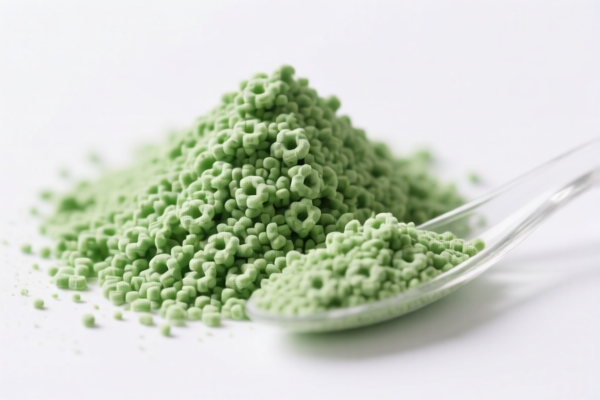
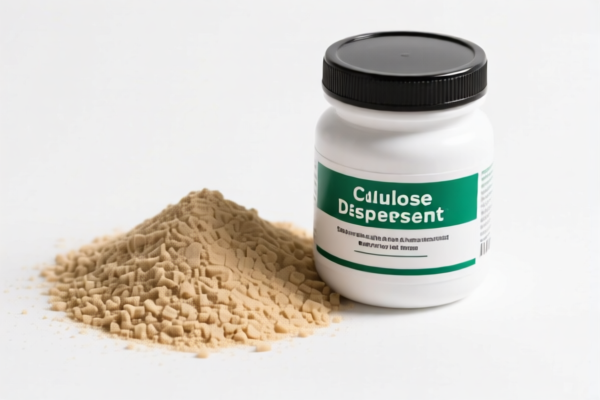
AI Analysis
🧪 Cellulose Particle Detergent & Raw Materials
🌐 HS Code Classification & Customs Clearance Guide | 2026 Tariff Analysis for US-China Trade
📌 I. Product Definition & Classification: What Exactly Are You Shipping?
"Cellulose Particle Detergent" is a broad term that can refer to two distinct types of goods in international trade: 1. Finished Detergent Agents: Chemical preparations where cellulose acts as a builder, carrier, or active ingredient. These fall under Chapter 34 (Soap, Organic Surface-Active Agents, Washing Preparations). 2. Raw Material (Primary Form): Pure cellulose particles used as a substrate or intermediate good. These fall under Chapter 47 (Pulp of Wood or of Other Fibrous Vegetable Material) or Chapter 39 (Plastics and Articles Thereof) if modified.
⚠️ Critical Distinction:
- If the product is formulated as a detergent (contains surfactants, enzymes, or cleaning additives) → Chapter 34.
- If the product is pure cellulose (used as a raw material for making detergents or other goods) → Chapter 47 or 39.
- Misclassification Risk: Declaring raw cellulose as a finished detergent (or vice versa) can lead to severe penalties, as the tax burdens differ significantly.
📦 II. HS Code Classification Details (2026 Latest Tariff Schedule)
Based on the provided data, here are the precise classifications for "Cellulose Particle" related goods:
| HS Code | Product Description | Category | State of Processing |
|---|---|---|---|
3402.90.50.10 |
Cellulose Particle Detergent | Washing Preparations | Granular Form |
3402.90.50.30 |
Cellulose Particle Detergent | Washing Preparations | Primary Form (Granular) |
4706.92.01.00 |
Cellulose Particles | Chemical Pulp / Pulp | Primary Form (Granular) |
4706.20.00.00 |
Cellulose Particles | Chemical Pulp / Pulp | Primary Form (Granular) |
3913.90.50.00 |
Cellulose Powder | Natural Polymers | Powder Form (Primary) |
🔍 Key Insight:
- HS 3402: For finished cleaning products. Even if cellulose is the main component, if it's sold as a "detergent," it goes here.
- HS 4706/3913: For raw materials. Only use these if the cellulose is unblended with detergents and is in its primary industrial form.
- Note on Form: Granular (3402,4706) vs. Powder (3913) matters for physical identification but not always for tax rate in this specific dataset.
💰 III. 2026 US Tariff Rate Breakdown (China Origin)
✅ Applicable Country: United States (US)
✅ Origin: China (CN)
✅ Effective Date: Rates include Section 301 & IEEPA tariffs.
🎯 1. 3402.90.50.10 & 3402.90.50.30 — Cellulose Particle Detergent
| Item | Content |
|---|---|
| Base Tariff | 3.7% (Standard MFN) |
| Section 301 Tariff | +25.0% (Additional Duty on Chinese Goods) |
| IEEPA Tariff (Sec. 122) | +10.0% (Specific 122 Clause Surcharge) |
| Total Effective Rate | 38.7% |
| Tax Calculation | CIF Value × 38.7% |
| De Minimis Exemption? | ❌ NO (High tariff rates exclude it from the $800 de minimis exemption for most carriers) |
| Legal Basis | HTSUS:3402.90.50 → USITC Footnote 301 → IEEPA Sec. 122 |
📌 Explanation:
- The 3.7% is the standard import duty for washing preparations.
- The 25% is the heavy penalty under Section 301 for Chinese chemical/detergent goods.
- The 10% is an additional surcharge under specific trade enforcement clauses (122).
- Total Cost Impact: Nearly 40% of the value is tax alone. This significantly reduces profit margins.
🎯 2. 4706.92.01.00 & 4706.20.00.00 — Cellulose Particles (Raw Material)
| Item | Content |
|---|---|
| Base Tariff | 0.0% (Duty-Free for Chemical Pulp) |
| Section 301 Tariff | +25.0% |
| IEEPA Tariff (Sec. 122) | +10.0% |
| Total Effective Rate | 35.0% |
| Tax Calculation | CIF Value × 35.0% |
| De Minimis Exemption? | ❌ NO |
| Legal Basis | HTSUS:4706.20 → USITC Footnote 301 → IEEPA Sec. 122 |
📌 Explanation:
- While the base duty is 0%, the Section 301 and IEEPA tariffs still apply, bringing the total to 35%.
- This is 3.7% lower than the detergent classification (3402), but still very high.
🎯 3. 3913.90.50.00 — Cellulose Powder
| Item | Content |
|---|---|
| Base Tariff | 6.5% |
| Section 301 Tariff | +25.0% |
| IEEPA Tariff (Sec. 122) | +10.0% |
| Total Effective Rate | 41.5% |
| Tax Calculation | CIF Value × 41.5% |
| De Minimis Exemption? | ❌ NO |
| Legal Basis | HTSUS:3913.90 → USITC Footnote 301 → IEEPA Sec. 122 |
📌 Explanation:
- This is the highest tariff bracket (41.5%).
- Do NOT use this code for granular detergents or raw pulp. It is strictly for powdered natural polymers not elsewhere specified. Misusing this code can lead to audits.
🛠️ IV. Customs Clearance Practical Advice (Avoiding Pitfalls)
✅ 1. Documentation Checklist (Mandatory)
| Document | Required? | Notes |
|---|---|---|
| ✅ Commercial Invoice | ✔️ | Must clearly state: "Cellulose Particle Detergent" OR "Cellulose Particles (Raw Material)". Do not use vague terms like "Chemical Stuff." |
| ✅ Product Specification Sheet | ✔️ | Must detail: Composition (% cellulose, % surfactants), Form (Granule/Powder), HS Code justification. |
| ✅ Certificate of Origin (CO) | ✔️ | To prove China origin (triggers tariffs). |
| ✅ Safety Data Sheet (SDS) | ✔️ | Required for chemical/detergent classification. |
| ✅ Packing List | ✔️ | Net/Gross weight, number of bags/boxes. |
✅ 2. Declaration Strategy (Key Mantra)
🔥 "True Form, True Function, Correct Chapter!"
| Scenario | Correct HS Code | Incorrect HS Code | Consequence of Error |
|---|---|---|---|
| Selling as a cleaning agent | 3402.90.50.10/30 |
4706.92.01.00 |
Under-declaration: Heavy penalty, back-tariff + 25% Sec 301. |
| Selling raw cellulose | 4706.92.01.00 |
3402.90.50.10 |
Over-declaration: Paying 38.7% instead of 35%. Unnecessary cost. |
| Selling cellulose powder | 3913.90.50.00 |
3402.90.50.10 |
Misclassification: Risk of audit for chemical safety compliance. |
📌 Critical Tip:
- If your product is a mixture (e.g., cellulose + enzymes + surfactants), it MUST be classified under 3402 as a washing preparation.
- If it is 100% cellulose used for further manufacturing, classify under 4706.
- Do not split shipments to avoid tariffs; CBP uses data analytics to detect this.
✅ 3. Special Considerations
| Situation | Handling Advice |
|---|---|
| OEM/Private Label | Ensure the invoice lists the chemical composition, not just the brand name. |
| Mixed Containers | If shipping detergents (3402) and raw pulp (4706) together, separate bills of lading are recommended to avoid complex valuation issues. |
| Section 301 Exclusions | Check if your specific product has a 301 exclusion number. If yes, the 25% tariff may be waived (saving you $100s per container). |
🌍 V. Global Market Comparison (2026 Outlook)
| Region | Recommended HS Code | Estimated Total Tax (China Origin) | Key Requirement |
|---|---|---|---|
| 🇺🇸 USA | 3402.90.50.10 |
38.7% | Strict SDS, 301 Tariff, IEEPA 122 |
| 🇪🇺 EU | 3402.90.90 |
~12-15% | REACH Registration (Critical!) |
| 🇨🇳 China | 3402.90.50 |
~13% | Standard Import Duty |
| 🇬🇧 UK | 3402.90.90 |
~12-15% | UK REACH Registration |
📌 Conclusion:
- The US market is the most expensive due to the combination of base duties and political tariffs (301 + 122).
- EU/UK requires heavy compliance effort (REACH) but lower tariffs.
- China has moderate duties but no extra political surcharges.
📌 VI. Common Mistakes & How to Avoid Them (Blood Lessons)
❌ Mistake 1: Calling "Cellulose Detergent" just "Chemical Powder"
👉 Result: Customs seizes the goods for misdeclaration. You may face fines and delay.
❌ Mistake 2: Using 4706 for a detergent product to save 3.7%
👉 Result: CBP will assess the 3.7% base duty + 38.7% total + penalties. You lose money and time.
❌ Mistake 3: Ignoring the 122 Clause Tariff (10%)
👉 Result: Your cost model is off by 10%. This is not optional; it is mandatory for many Chinese chemical imports.
❌ Mistake 4: Assuming De Minimis ($800) applies
👉 Result: With taxes over 25%, your shipment value will likely exceed the de minimis threshold if not structured carefully, and even then, high-duty goods are often excluded.
✅ Correct Practice:
"Granular Cellulose-Based Detergent, HS 3402.90.50.10, Sec 301 Applicable, SDS Provided, REACH Not Required (US Only)"
🎯 VII. Conclusion: Professional Declaration, Cost Control
🎯 Remember the Formula:
🔹 "Form Determines Chapter, Composition Determines Code."
🔹 "3402 = Detergent (38.7%), 4706 = Raw Material (35.0%), 3913 = Powder (41.5%)."
🔹 "301 + 122 = Pain. Avoid misclassification to avoid double penalties."
📌 Pro Tip:
If you are importing large volumes, consider applying for a Section 301 Exclusion if your specific cellulose detergent formulation qualifies. This can save you 25% of the value per shipment.
📣 Immediate Action:
📞 Engage a Licensed Customs Broker to verify your HS Code.
📄 Prepare Detailed SDS and Ingredient Lists.
🚀 Accurate Classification is the First Step to Profitable Trade.
✨ Smart Customs Clearance = Lower Costs = Higher Margins!
💼 Don't let 38.7% tax catch you off guard.
Customer Reviews
About HS Code Classification
The Harmonized System (HS) is an internationally standardized nomenclature developed by the World Customs Organization (WCO) to classify traded products. Over 200 countries use the HS system as the basis for customs tariffs, trade statistics, and import/export regulations.
Each HS code follows a hierarchical structure:
- Chapter (2 digits) — Broad category of goods (e.g., Chapter 84: Machinery and Mechanical Appliances)
- Heading (4 digits) — More specific grouping within the chapter
- Subheading (6 digits) — Internationally standardized breakdown, used by all WCO member countries
- National subdivisions (8-10 digits) — Country-specific extensions for further classification, such as US HTSUS 10-digit codes
Correct HS code classification is essential for smooth customs clearance, accurate duty payment, and compliance with trade regulations. Misclassification can lead to customs delays, overpayment of duties, or penalties.
When importing from CN to US, the applicable tariff rates may include:
- Most-Favored-Nation (MFN) rate — The standard duty rate applied to WTO members
- General rate — Applied to countries without trade agreements
- Trade remedy duties — Additional tariffs such as Section 301 (anti-dumping), Section 232 (national security), or countervailing duties
The information provided on this page is for reference purposes only. For official classification, please consult with your local customs authority or a licensed customs broker.