Centrifuge
CN → US| HS编码 | 关税税率 | 原产国 | 目的国 | 文档 |
|---|---|---|---|---|
| 8421190000 | 36.3% | CN | US | 官方文档 |
| 8419899585 | 39.2% | CN | US | 官方文档 |
| 8419899540 | 39.2% | CN | US | 官方文档 |
| 8421110000 | 35.0% | CN | US | 官方文档 |
| 8421916000 | 35.0% | CN | US | 官方文档 |
商品图片
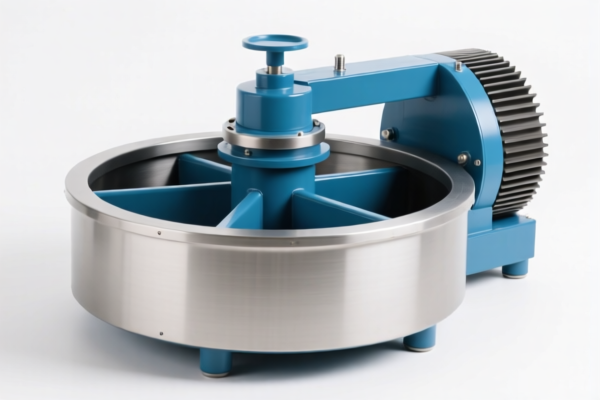
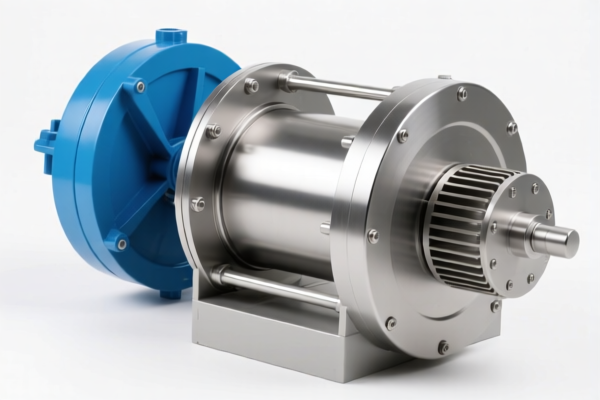
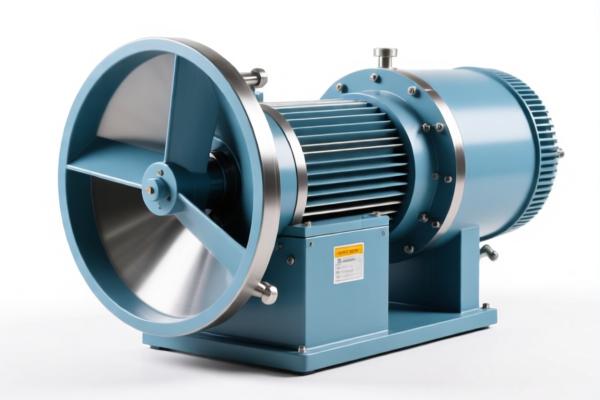
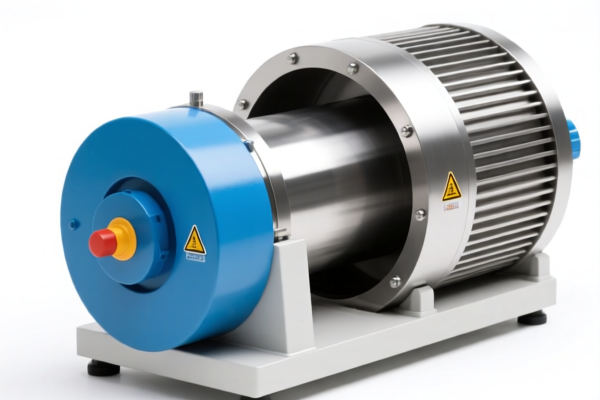
AI分析
🌀 Centrifuge (Industrial & Laboratory Separation Equipment)
🌐 HS Code Reference & Customs Clearance Guide | 2026 Latest Tariff Analysis | Professional Clearance Strategy
📌 I. Product Definition & Classification: Do You Truly Understand "Centrifuges"?
A Centrifuge is a mechanical device employed to separate components of a mixture based on density differences using centrifugal force. In international trade, they are primarily categorized into:
Laboratory/Analytical Centrifuges: Small-scale, high-precision devices used for medical, chemical, or biological analysis.
Industrial Centrifuges: Large-scale machinery used for continuous separation in manufacturing, wastewater treatment, or food processing.
⚠️ Key Distinction:
- If the device is explicitly for laboratory analysis (e.g., blood, DNA, chemical samples) → It falls under 8421.11 or 8421.91.
- If the device is for general industrial separation (e.g., separating solids from liquids in bulk production) → It may fall under 8421.19 or potentially 8419.89 if it involves thermal processing as a secondary function.
📦 II. HS Code Classification Details (2026 Latest Tariff Authority Comparison)
Based on the provided data, here are the four most relevant HS Codes for "Centrifuge" products:
| HS Code | Product Description | Summary/Logic from Data | Applicable Scenario |
|---|---|---|---|
8421.11.00.00 |
Centrifuges; Liquid Extractors | Exact Match: The product name "Centrifuge" perfectly matches the core category "Centrifuge" in the classification explanation. | General laboratory/analytical centrifuges |
8421.19.00.00 |
Other Centrifuges; Parts | Core Purpose Match: The product name "Centrifuge" is completely consistent with the core use "Centrifuge" in the classification explanation. | Other centrifuges not specified in 8421.11 |
8421.91.60.00 |
Parts of Centrifuges | Category Match: The product name "Lab Centrifuge" belongs to centrifuge equipment, fitting the "Centrifuges and their parts" category. | Specific parts or dedicated lab centrifuge units |
8419.89.95.85 / .40 |
Other Mechanical Appliances | Fallback Category: Centrifuges are mechanical equipment involving physical separation. No obvious material conflict with "other materials" processing. | Industrial centrifuges where separation is the primary mechanical action, potentially classified under "Other Mechanical Appliances" if not fitting 8421 strictly |
🔍 Key Note:
- 8421.11 and 8421.19 are the primary categories for centrifuges themselves.
- 8419.89 codes are considered "fallback" or "other mechanical appliances" if the centrifuge does not fit the specific definitions in 8421, or if it is integrated into a thermal processing system.
💰 III. 2026 Latest Tariff Rate Breakdown (Including Additional Taxes & Policy Surcharges)
✅ Applicable Country: United States (US)
✅ Origin: China (CN)
✅ Effective Time: 2025/2026 (Current Trade War Context)
🎯 1. 8421.11.00.00 —— Centrifuges (General)
| Item | Content |
|---|---|
| Base Tariff | 0.0% |
| Section 301 Additional Tariff | +25.0% |
| Section 122 Tariff | +10.0% |
| Total Tax Rate | 35.0% |
| Tax Calculation | CIF Value × 35.0% |
| De Minimis Exemption | ❌ Not Eligible (Deny De Minimis) |
| Legal Basis Path | Base Tariff: 0% → Section 301: 25% → Section 122: 10% |
📌 Explanation:
- This code has a 0% base tariff, making it attractive before surcharges.
- However, the 25% Section 301 tariff (US trade remedy against China) and 10% Section 122 tariff (national security/import equity tax) push the total to 35%.
- Crucial: Even with a low base rate, the added taxes make this a high-cost entry.
🎯 2. 8421.19.00.00 —— Other Centrifuges & Parts
| Item | Content |
|---|---|
| Base Tariff | 1.3% |
| Section 301 Additional Tariff | +25.0% |
| Section 122 Tariff | +10.0% |
| Total Tax Rate | 36.3% |
| Tax Calculation | CIF Value × 36.3% |
| De Minimis Exemption | ❌ Not Eligible |
| Legal Basis Path | Base Tariff: 1.3% → Section 301: 25% → Section 122: 10% |
📌 Explanation:
- Slightly higher base rate (1.3%) compared to 8421.11.
- Total effective rate is 36.3%, which is 1.3% higher than 8421.11.00.00.
- Verify if your product strictly fits "Other Centrifuges" to avoid misclassification.
🎯 3. 8421.91.60.00 —— Lab Centrifuges / Specific Parts
| Item | Content |
|---|---|
| Base Tariff | 0.0% |
| Section 301 Additional Tariff | +25.0% |
| Section 122 Tariff | +10.0% |
| Total Tax Rate | 35.0% |
| Tax Calculation | CIF Value × 35.0% |
| De Minimis Exemption | ❌ Not Eligible |
| Legal Basis Path | Base Tariff: 0% → Section 301: 25% → Section 122: 10% |
📌 Explanation:
- Matches the rate of8421.11.00.00.
- Specifically noted for "Lab Centrifuges" in the provided data summary.
- Ideal for declaring specific laboratory equipment or components if they don't fit the general "Centrifuge" definition in 8421.11.
🎯 4. 8419.89.95.85 & 8419.89.95.40 —— Other Mechanical Appliances
| Item | Content |
|---|---|
| Base Tariff | 4.2% |
| Section 301 Additional Tariff | +25.0% |
| Section 122 Tariff | +10.0% |
| Total Tax Rate | 39.2% |
| Tax Calculation | CIF Value × 39.2% |
| De Minimis Exemption | ❌ Not Eligible |
| Legal Basis Path | Base Tariff: 4.2% → Section 301: 25% → Section 122: 10% |
📌 Explanation:
- Highest effective rate (39.2%) among the options.
- Used as a "fallback" category for mechanical equipment where separation is physical.
-8419.89.95.40is noted for "Temperature Processing Equipment" logic, suggesting these centrifuges might be part of a thermal system.
- Avoid this code unless the centrifuge is integrated into a larger thermal processing unit and cannot be classified under 8421.
🛠️ IV. Customs Clearance Practical Advice (Combat Pitfall Guide)
✅ 1. Preparation Checklist (Missing items cause delays)
| Document | Required | Description |
|---|---|---|
| ✅ Product Specification Sheet | ✔️ | Must detail: Rotation speed (RPM), Max capacity, Power, Application (Lab vs. Industrial). |
| ✅ Product Photos (Nameplate) | ✔️ | Clear view of Model No., Brand, Input/Output specs. |
| ✅ Circuit/Structure Diagram | ✔️ | Essential to distinguish between "Lab Centrifuge" (8421.11) and "Industrial Mechanical Appliance" (8419). |
| ✅ Commercial Invoice | ✔️ | Must accurately describe as "Centrifuge" or "Lab Centrifuge" – avoid vague terms like "Separator" without context. |
| ✅ Certificate of Origin (CO) | ✔️ | Confirm China origin to apply correct Section 301 & 122 tariffs. |
✅ 2. Declaration Strategy (Key Mantra)
🔥 "Classify by Core Function: Lab = 8421.11/91, Industrial = 8421.19 or 8419.89."
| Scenario | Correct HS Code | Risk of Wrong Code |
|---|---|---|
| Lab Centrifuge (Blood, DNA, Chemical Analysis) | 8421.11.00.00 or 8421.91.60.00 |
Misclassifying as 8419 → Higher tax (39.2% vs 35%) |
| Industrial Centrifuge (Bulk Separation) | 8421.19.00.00 |
Misclassifying as 8421.11 → Possible penalty if not for lab use |
| Integrated Thermal Separator | 8419.89.95.40 |
Misclassifying as 8421.19 → Over/Under payment, audit risk |
| Generic "Separator" | DO NOT USE | Ambiguous declaration leads to customs delay & re-inspection |
✅ 3. Special Handling Cases
| Situation | Handling Advice |
|---|---|
| Lab Centrifuge with Thermal Function | If heating is a core part of the separation process, consider 8419.89.95.40. If separation is primary, stick to 8421. |
| Parts vs. Whole Machine | Ensure you declare the correct level. 8421.91 is for parts; 8421.11/19 is for whole machines. Don't split a whole machine into parts to lower value if it's actually one unit. |
| Dual-Use (Lab & Industrial) | Declare based on the primary intended use as stated in the commercial invoice. Provide user manual showing primary application. |
🌍 V. Global Market Comparison (2026)
| Country/Region | Recommended HS Code | Tariff Rate (China Origin) | Notes |
|---|---|---|---|
| 🇺🇸 USA | 8421.11.00.00 |
35.0% | High surcharges (301 + 122) |
| 🇨🇳 China | 8421.11.00.00 |
~0-20% | Varies by specific subheading; generally lower than US |
| 🇪🇺 EU | 8421.19.00 |
0% | Generally zero duty, no Section 301/122 |
| 🇬🇧 UK | 8421.19.00 |
0% | Post-Brexit tariff structure often favors mechanical goods |
📌 Conclusion:
- USA is the most expensive market for centrifuges due to the 35-39.2% effective tariff.
- EU and UK are favorable with 0% base duty.
- Supply Chain Strategy: For US-bound centrifuges, consider assembly in third countries (e.g., Vietnam, Mexico) if possible to mitigate Section 301 tariffs, but Section 122 may still apply depending on final origin rules.
📌 VI. Common Errors & Pitfall Guide (Blood & Tears Lessons)
❌ Error 1: Declaring a "Lab Centrifuge" as "Industrial Equipment" (8419)
👉 Consequence: Higher tax rate (39.2% vs 35%).
👉 Fix: Prove primary use is laboratory analysis via specs and manual.
❌ Error 2: Using vague terms like "Separation Machine"
👉 Consequence: Customs delays, potential re-classification penalties.
👉 Fix: Always use "Centrifuge" and specify "Lab" or "Industrial".
❌ Error 3: Ignoring Section 122 Tariff
👉 Consequence: Unexpected 10% charge at customs, cash flow issues.
👉 Fix: Build 10% into your cost model for US imports from China.
❌ Error 4: Misclassifying Parts as Whole Machines
👉 Consequence: Incorrect duty calculation, possible fraud allegations.
👉 Fix: Clearly separate "Centrifuge Unit" from "Centrifuge Rotor/Tube".
✅ Correct Declaration Example:
"LABORATORY CENTRIFUGE, 15,000 RPM, 4x500ml Capacity, For Blood Analysis, Model XYZ, FCC Certified"
HS Code:8421.11.00.00
Total Duty: 35%
🎯 VII. Conclusion: Precise Classification Saves Money!
🎯 Remember the Mantra:
🔹 "Lab Centrifuge = 35%, Industrial = 36.3%, Fallback = 39.2%."
🔹 "Base Tariff is Low, But Surcharge is High! 35% is the Floor, Not the Ceiling."
🔹 "Declare Core Function, Avoid Vague Names, Stay Compliant."
📌 Pro Tip:
If your centrifuges are not originally from China (e.g., assembled in Malaysia or Germany), they may be eligible for lower tariffs or exemptions from Section 301 and 122.
Action Step:
📞 Consult a Customs Broker immediately.
📄 Prepare Product Specs & Intended Use Documentation.
🚀 Apply for Advance Ruling if the classification is ambiguous between 8421 and 8419.
✨ Professional Clearance Starts with Accurate Classification!
💼 Every Percent Matters in Global Trade!
用户评价
关于 HS 编码归类
协调制度(HS)是由世界海关组织(WCO)制定的国际贸易商品分类标准。全球 200 多个国家采用 HS 系统作为海关关税、贸易统计和进出口监管的基础。
每个 HS 编码遵循以下层级结构:
- 章(2 位)——商品大类(例如:第 84 章:机器和机械设备)
- 品目(4 位)——章内的更具体分类
- 子目(6 位)——国际通用细分,所有 WCO 成员国统一使用
- 本国细分(8-10 位)——各国自行扩展的细分编码,如美国 HTSUS 10 位编码
正确的 HS 编码归类对于顺利通关、准确缴纳关税和遵守贸易法规至关重要。错误归类可能导致海关延误、多缴关税或罚款。
从CN进口到US时,适用的关税税率可能包括:
- 最惠国(MFN)税率——适用于 WTO 成员国的标准关税税率
- 普通税率——适用于无贸易协定国家
- 贸易救济关税——附加关税,如 301 条款(反倾销)、232 条款(国家安全)或反补贴税
本页内容仅供参考。如需正式归类,请咨询当地海关或持牌报关代理。