Charcoal or Charcoal from Plant Sources
CN → US| HS编码 | 关税税率 | 原产国 | 目的国 | 文档 |
|---|---|---|---|---|
| 4402200000 | 35.0% | CN | US | 官方文档 |
| 4402900100 | 35.0% | CN | US | 官方文档 |
| 4402200000 | 35.0% | CN | US | 官方文档 |
| 4402900100 | 35.0% | CN | US | 官方文档 |
商品图片
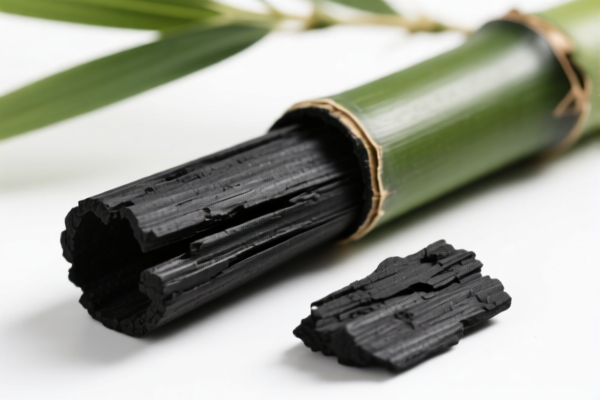
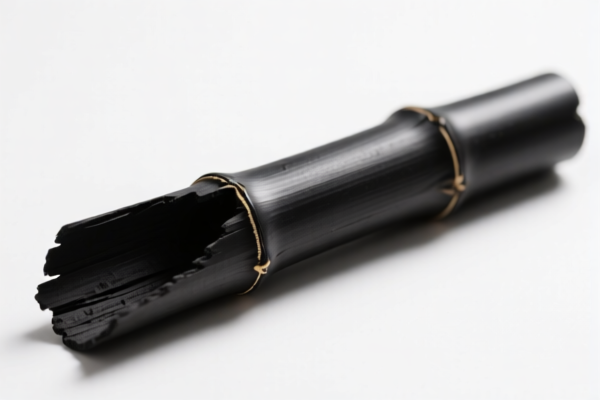
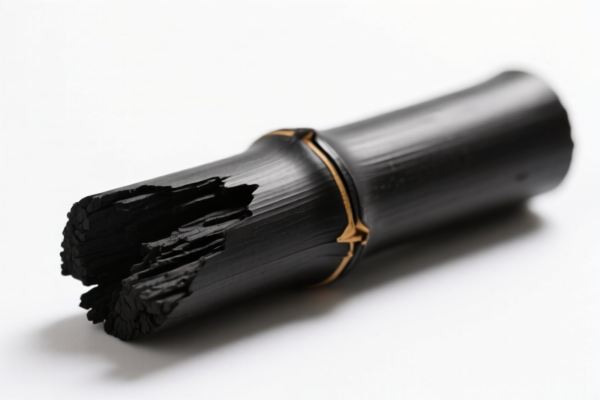
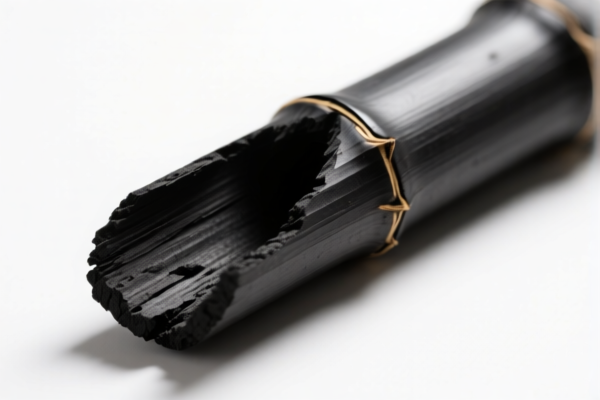
AI分析
🔥 Charcoal & Plant-Based Charcoal (Biomass Charcoal)
🌐 HS Code Reference & Customs Clearance Guide | 2026 Latest Tariff Analysis | Professional Entry Strategy
📌 I. Product Definition & Classification: Do You Really Understand "Charcoal"?
Charcoal, derived from the incomplete combustion or carbonization of plant materials (wood, shells, nuts), is a versatile fuel and industrial raw material. In international trade, the classification hinges on two critical factors: Raw Material Source and Physical Form.
Shell or Nut Charcoal (壳炭/核炭): Produced from coconut shells, olive pits, apricot stones, etc. Other Plant-Based Charcoal (其他植物来源木炭): Produced from wood, bamboo, or other biomass not falling into the shell/nut category.
⚠️ Key Distinction Point:
- If the raw material is explicitly shells or nuts (e.g., coconut shells) → Classify under 4402.20.00.00
- If the raw material is wood or other unspecified plant sources (even if described broadly as "plant-based") → Classify under 4402.90.01.00
📦 II. HS Code Classification Details (2026 Latest Tariff Authority对照)
| HS Code | Product Description | Applicable Scenario | Raw Material Logic |
|---|---|---|---|
4402.20.00.00 |
Charcoal (including charcoal from shells or nuts), whether or not agglomerated; of shell material or nut material. | Coconut shell charcoal, olive pit charcoal, apricot stone charcoal. | ✅ Matches "Shell/Nut" material explicitly. |
4402.90.01.00 |
Other charcoal, whether or not agglomerated; of wood or other vegetable material. | Wood charcoal, bamboo charcoal, generic "plant-based charcoal" not specified as shells/nuts. | ✅ Matches general "Plant Source" logic when not specific to shells/nuts. |
🔍 Key Reminder:
- The term "Charcoal from Plant Sources" is broad. If the product description does not specify "shell" or "nut," it defaults to the general category 4402.90.01.00. - Even if the summary says "Charcoal from Plant Sources," if the material logic aligns with "shell/nut" (e.g., explicitly coconut shells), it must go to 4402.20.00.00. - Agglomerated charcoal (briquettes) made from these materials still follows the same HS codes based on raw material.
💰 III. 2026 Latest Tariff Rate Breakdown (Including Surtaxes & Policy Add-ons)
✅ Applicable Country: United States (US)
✅ Country of Origin: China (CN)
✅ Effective Date: From November 10, 2025 (including subsequent imports)
🎯 1. 4402.20.00.00 —— Charcoal of Shell or Nut Material
| Item | Content |
|---|---|
| Base Tariff Rate | 0.0% (ad valorem) |
| Section 301 Surtax | +25.0% (Additional Duties under US Trade Law Section 301) |
| Section 122 Tariff | +10.0% (Targeted additional tariff for specific Chinese-origin goods) |
| Total Tariff Rate | 35.0% |
| Tax Calculation | CIF Value × 35% |
| De Minimis Exemption? | ❌ Not Eligible (deny_de_minimis) |
| Legal Basis Path | 301:4402.20.00.00 → 122:4402.20.00.00 |
📌 Explanation:
- "Base Tariff 0%": The standard MFN duty for charcoal is generally zero. - "Section 301 +25%": This is the primary additional duty on Chinese goods under Section 301 of the Trade Act. - "Section 122 +10%": An additional targeted tariff applied to specific categories of Chinese imports. - Total 35%: This is a significant cost. Importers must pre-calculate this into their landed cost.
🎯 2. 4402.90.01.00 —— Other Charcoal (Wood/Other Plant-Based)
| Item | Content |
|---|---|
| Base Tariff Rate | 0.0% (ad valorem) |
| Section 301 Surtax | +25.0% (Additional Duties under US Trade Law Section 301) |
| Section 122 Tariff | +10.0% (Targeted additional tariff for specific Chinese-origin goods) |
| Total Tariff Rate | 35.0% |
| Tax Calculation | CIF Value × 35% |
| De Minimis Exemption? | ❌ Not Eligible (deny_de_minimis) |
| Legal Basis Path | 301:4402.90.01.00 → 122:4402.90.01.00 |
📌 Explanation:
- Despite being "other" charcoal, it falls under the same Section 301 and Section 122 tariff schedules as shell/nut charcoal. - Whether it is wood charcoal or generic plant-based charcoal, the tariff burden remains 35%. - Material Logic: If your product is "Plant-Based Charcoal" but not specifically "Shell/Nut," it uses this code. The tax outcome is identical to4402.20.00.00.
🛠️ IV. Customs Clearance Practical Advice (Pitfall Avoidance Guide)
✅ 1. Required Documentation Checklist (None Can Be Missing)
| Document | Required | Explanation |
|---|---|---|
| ✅ Product Specification Sheet | ✔️ | Must specify raw material (e.g., "100% Coconut Shell" vs. "Wood Charcoal") |
| ✅ Product Photos | ✔️ | Clear images of packaging, labeling, and the charcoal itself (pellets, lump, powder) |
| ✅ Commercial Invoice | ✔️ | Must accurately describe the product, e.g., "Coconut Shell Charcoal, Lump Form" |
| ✅ Packing List | ✔️ | Details gross/net weight, number of packages |
| ✅ Certificate of Origin (CO) | ✔️ | Critical for proving Chinese origin to apply the correct tariffs |
| ✅ MSDS (Material Safety Data Sheet) | ✔️ | Charcoal may be classified as hazardous or non-hazardous depending on processing |
| ✅ Fumigation Certificate | ✔️ | If wood-based, may require ISPM 15 compliance proof |
✅ 2. Declaration Tips (Key Mantra)
🔥 "Raw Material Defines Code, Section 301 is Mandatory, 35% is the Bottom Line!"
| Scenario | Correct Declaration | Wrong Practice |
|---|---|---|
| Coconut Shell Charcoal | 4402.20.00.00 + Detail "Coconut Shell" |
Misdeclare as "Wood Charcoal" → Risk of penalties for false classification |
| Wood Charcoal | 4402.90.01.00 + Detail "Wood Charcoal" |
Underdeclare value or omit origin → 35% duty + fines |
| Generic "Plant-Based Charcoal" | 4402.90.01.00 |
Vague description → Customs may reclassify or delay clearance |
| Agglomerated Charcoal (Briquettes) | Same HS Code as raw material | Don't try to classify as "fuel" (2711) or "paper" (4801) |
✅ 3. Special Circumstances Handling
| Situation | Handling Advice |
|---|---|
| OEM Private Label | Provide brand authorization and contract to avoid IP disputes at customs |
| Charcoal for Grilling | Ensure packaging is suitable for retail; label must comply with US labeling laws |
| Industrial Charcoal | May require additional safety data if used in specific industrial processes |
| Origin Shifting | If charcoal is processed in a third country (e.g., Vietnam), ensure substantial transformation occurred to change origin; otherwise, Chinese tariffs still apply |
🌍 V. Global Market Comparison (2026 Latest)
| Country/Region | Recommended HS Code | Tariff | Certification | Notes |
|---|---|---|---|---|
| 🇺🇸 USA | 4402.20.00.00 / 4402.90.01.00 |
35% (China Origin) | No special cert | High tariff due to Sec 301 & 122 |
| 🇨🇳 China | 4402.20.00.00 / 4402.90.01.00 |
0% - 5% | CCC (if applicable) | Low duty for export |
| 🇪🇺 EU | 4402.20.00 / 4402.90 |
0% - 2.5% | FSC/PEFC (Sustainability) | No Section 301 equivalent |
| 🇦🇺 Australia | 4402.20.00 / 4402.90 |
5% | None specific | Moderate duty |
| 🇯🇵 Japan | 4402.20.00 / 4402.90 |
0% - 5% | None specific | Low duty |
📌 Conclusion:
- The US is the only major market imposing the 35% surtax on Chinese charcoal. - EU, Japan, and Australia have significantly lower tariffs, making them potentially more cost-effective destinations for Chinese charcoal exporters. - Sustainability Certifications (FSC, PEFC) are increasingly important in EU and premium US markets.
📌 VI. Common Errors & Pitfall Guide (Lessons Learned)
❌ Error 1: Using vague descriptions like "Charcoal" or "BBQ Charcoal" without specifying raw material.
👉 Consequence: Customs may question the HS code, causing delays or audits.
❌ Error 2: Assuming "Plant-Based Charcoal" qualifies for a lower duty rate.
👉 Consequence: Still subject to 35% total duty under Sec 301 & 122.
❌ Error 3: Ignoring Section 122 Tariff.
👉 Consequence: Underpayment of 10%, leading to back taxes, interest, and penalties.
❌ Error 4: Misclassifying agglomerated charcoal as "Fuel" (2711).
👉 Consequence: Wrong HS code, potential fraud allegations, and seizure of goods.
✅ Correct Practice:
"Coconut Shell Charcoal, Lump Form, 100% Natural, No Additives, Model XYZ, Packaged in 20kg Bags"
🎯 VII. Conclusion: Precision in Classification, Savings in Cost!
🎯 Remember the Mantra:
🔹 "Shell or Nut? Go to 4402.20. Other Plant? Go to 4402.90. Either Way, 35% is the Price!"
🔹 "HS Code Determines Tax, Section 301 is Non-Negotiable, 35% Total Duty Must Be Budgeted!"
📌 Pro Tip:
If your charcoal is sourced from non-Chinese origins (e.g., Indonesia, Brazil, Vietnam), you may exempt from Section 301 and Section 122 tariffs, reducing the duty to 0% - 5%.
Recommend pre-arranging Advance Rulings with CBP for large shipments to ensure compliance.
📣 Immediate Action:
📞 Contact a professional customs broker + Provide product specs + Verify origin
🚀 Ensure your charcoal clears customs smoothly, avoids delays, and maximizes profit margins!
✨ Professional Clearance Starts with Accurate Classification!
💼 Every Cent of Tariff is Worth Calculating Precisely!
用户评价
关于 HS 编码归类
协调制度(HS)是由世界海关组织(WCO)制定的国际贸易商品分类标准。全球 200 多个国家采用 HS 系统作为海关关税、贸易统计和进出口监管的基础。
每个 HS 编码遵循以下层级结构:
- 章(2 位)——商品大类(例如:第 84 章:机器和机械设备)
- 品目(4 位)——章内的更具体分类
- 子目(6 位)——国际通用细分,所有 WCO 成员国统一使用
- 本国细分(8-10 位)——各国自行扩展的细分编码,如美国 HTSUS 10 位编码
正确的 HS 编码归类对于顺利通关、准确缴纳关税和遵守贸易法规至关重要。错误归类可能导致海关延误、多缴关税或罚款。
从CN进口到US时,适用的关税税率可能包括:
- 最惠国(MFN)税率——适用于 WTO 成员国的标准关税税率
- 普通税率——适用于无贸易协定国家
- 贸易救济关税——附加关税,如 301 条款(反倾销)、232 条款(国家安全)或反补贴税
本页内容仅供参考。如需正式归类,请咨询当地海关或持牌报关代理。