Charcoal or Charcoal from Plant Sources
CN → US| HS Code | Tariff Rate | Origin | Destination | Doc |
|---|---|---|---|---|
| 4402200000 | 35.0% | CN | US | Official Doc |
| 4402900100 | 35.0% | CN | US | Official Doc |
| 4402200000 | 35.0% | CN | US | Official Doc |
| 4402900100 | 35.0% | CN | US | Official Doc |
Product Images
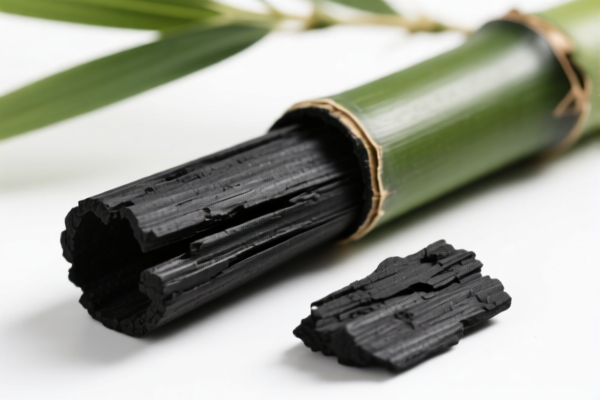
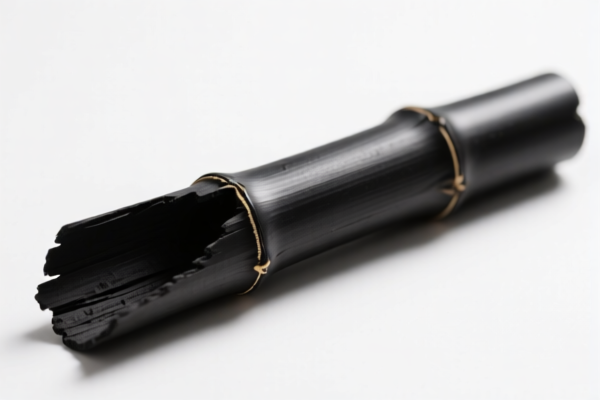
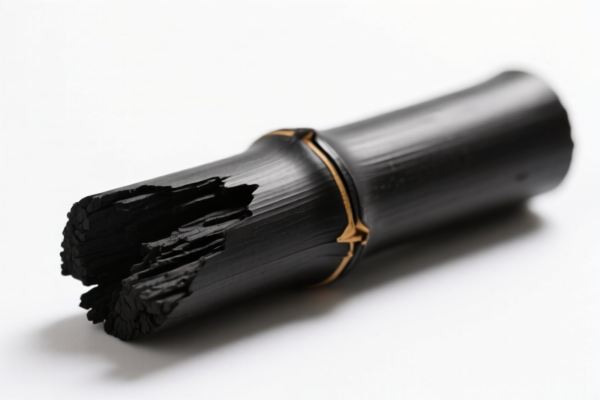
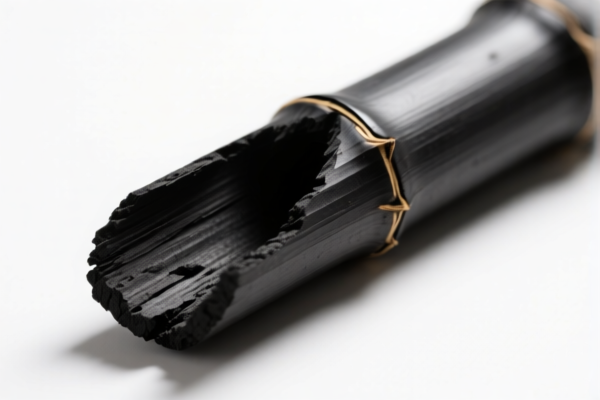
AI Analysis
🔥 Charcoal & Plant-Based Charcoal (Biomass Charcoal)
🌐 HS Code Reference & Customs Clearance Guide | 2026 Latest Tariff Analysis | Professional Entry Strategy
📌 I. Product Definition & Classification: Do You Really Understand "Charcoal"?
Charcoal, derived from the incomplete combustion or carbonization of plant materials (wood, shells, nuts), is a versatile fuel and industrial raw material. In international trade, the classification hinges on two critical factors: Raw Material Source and Physical Form.
Shell or Nut Charcoal (壳炭/核炭): Produced from coconut shells, olive pits, apricot stones, etc. Other Plant-Based Charcoal (其他植物来源木炭): Produced from wood, bamboo, or other biomass not falling into the shell/nut category.
⚠️ Key Distinction Point:
- If the raw material is explicitly shells or nuts (e.g., coconut shells) → Classify under 4402.20.00.00
- If the raw material is wood or other unspecified plant sources (even if described broadly as "plant-based") → Classify under 4402.90.01.00
📦 II. HS Code Classification Details (2026 Latest Tariff Authority对照)
| HS Code | Product Description | Applicable Scenario | Raw Material Logic |
|---|---|---|---|
4402.20.00.00 |
Charcoal (including charcoal from shells or nuts), whether or not agglomerated; of shell material or nut material. | Coconut shell charcoal, olive pit charcoal, apricot stone charcoal. | ✅ Matches "Shell/Nut" material explicitly. |
4402.90.01.00 |
Other charcoal, whether or not agglomerated; of wood or other vegetable material. | Wood charcoal, bamboo charcoal, generic "plant-based charcoal" not specified as shells/nuts. | ✅ Matches general "Plant Source" logic when not specific to shells/nuts. |
🔍 Key Reminder:
- The term "Charcoal from Plant Sources" is broad. If the product description does not specify "shell" or "nut," it defaults to the general category 4402.90.01.00. - Even if the summary says "Charcoal from Plant Sources," if the material logic aligns with "shell/nut" (e.g., explicitly coconut shells), it must go to 4402.20.00.00. - Agglomerated charcoal (briquettes) made from these materials still follows the same HS codes based on raw material.
💰 III. 2026 Latest Tariff Rate Breakdown (Including Surtaxes & Policy Add-ons)
✅ Applicable Country: United States (US)
✅ Country of Origin: China (CN)
✅ Effective Date: From November 10, 2025 (including subsequent imports)
🎯 1. 4402.20.00.00 —— Charcoal of Shell or Nut Material
| Item | Content |
|---|---|
| Base Tariff Rate | 0.0% (ad valorem) |
| Section 301 Surtax | +25.0% (Additional Duties under US Trade Law Section 301) |
| Section 122 Tariff | +10.0% (Targeted additional tariff for specific Chinese-origin goods) |
| Total Tariff Rate | 35.0% |
| Tax Calculation | CIF Value × 35% |
| De Minimis Exemption? | ❌ Not Eligible (deny_de_minimis) |
| Legal Basis Path | 301:4402.20.00.00 → 122:4402.20.00.00 |
📌 Explanation:
- "Base Tariff 0%": The standard MFN duty for charcoal is generally zero. - "Section 301 +25%": This is the primary additional duty on Chinese goods under Section 301 of the Trade Act. - "Section 122 +10%": An additional targeted tariff applied to specific categories of Chinese imports. - Total 35%: This is a significant cost. Importers must pre-calculate this into their landed cost.
🎯 2. 4402.90.01.00 —— Other Charcoal (Wood/Other Plant-Based)
| Item | Content |
|---|---|
| Base Tariff Rate | 0.0% (ad valorem) |
| Section 301 Surtax | +25.0% (Additional Duties under US Trade Law Section 301) |
| Section 122 Tariff | +10.0% (Targeted additional tariff for specific Chinese-origin goods) |
| Total Tariff Rate | 35.0% |
| Tax Calculation | CIF Value × 35% |
| De Minimis Exemption? | ❌ Not Eligible (deny_de_minimis) |
| Legal Basis Path | 301:4402.90.01.00 → 122:4402.90.01.00 |
📌 Explanation:
- Despite being "other" charcoal, it falls under the same Section 301 and Section 122 tariff schedules as shell/nut charcoal. - Whether it is wood charcoal or generic plant-based charcoal, the tariff burden remains 35%. - Material Logic: If your product is "Plant-Based Charcoal" but not specifically "Shell/Nut," it uses this code. The tax outcome is identical to4402.20.00.00.
🛠️ IV. Customs Clearance Practical Advice (Pitfall Avoidance Guide)
✅ 1. Required Documentation Checklist (None Can Be Missing)
| Document | Required | Explanation |
|---|---|---|
| ✅ Product Specification Sheet | ✔️ | Must specify raw material (e.g., "100% Coconut Shell" vs. "Wood Charcoal") |
| ✅ Product Photos | ✔️ | Clear images of packaging, labeling, and the charcoal itself (pellets, lump, powder) |
| ✅ Commercial Invoice | ✔️ | Must accurately describe the product, e.g., "Coconut Shell Charcoal, Lump Form" |
| ✅ Packing List | ✔️ | Details gross/net weight, number of packages |
| ✅ Certificate of Origin (CO) | ✔️ | Critical for proving Chinese origin to apply the correct tariffs |
| ✅ MSDS (Material Safety Data Sheet) | ✔️ | Charcoal may be classified as hazardous or non-hazardous depending on processing |
| ✅ Fumigation Certificate | ✔️ | If wood-based, may require ISPM 15 compliance proof |
✅ 2. Declaration Tips (Key Mantra)
🔥 "Raw Material Defines Code, Section 301 is Mandatory, 35% is the Bottom Line!"
| Scenario | Correct Declaration | Wrong Practice |
|---|---|---|
| Coconut Shell Charcoal | 4402.20.00.00 + Detail "Coconut Shell" |
Misdeclare as "Wood Charcoal" → Risk of penalties for false classification |
| Wood Charcoal | 4402.90.01.00 + Detail "Wood Charcoal" |
Underdeclare value or omit origin → 35% duty + fines |
| Generic "Plant-Based Charcoal" | 4402.90.01.00 |
Vague description → Customs may reclassify or delay clearance |
| Agglomerated Charcoal (Briquettes) | Same HS Code as raw material | Don't try to classify as "fuel" (2711) or "paper" (4801) |
✅ 3. Special Circumstances Handling
| Situation | Handling Advice |
|---|---|
| OEM Private Label | Provide brand authorization and contract to avoid IP disputes at customs |
| Charcoal for Grilling | Ensure packaging is suitable for retail; label must comply with US labeling laws |
| Industrial Charcoal | May require additional safety data if used in specific industrial processes |
| Origin Shifting | If charcoal is processed in a third country (e.g., Vietnam), ensure substantial transformation occurred to change origin; otherwise, Chinese tariffs still apply |
🌍 V. Global Market Comparison (2026 Latest)
| Country/Region | Recommended HS Code | Tariff | Certification | Notes |
|---|---|---|---|---|
| 🇺🇸 USA | 4402.20.00.00 / 4402.90.01.00 |
35% (China Origin) | No special cert | High tariff due to Sec 301 & 122 |
| 🇨🇳 China | 4402.20.00.00 / 4402.90.01.00 |
0% - 5% | CCC (if applicable) | Low duty for export |
| 🇪🇺 EU | 4402.20.00 / 4402.90 |
0% - 2.5% | FSC/PEFC (Sustainability) | No Section 301 equivalent |
| 🇦🇺 Australia | 4402.20.00 / 4402.90 |
5% | None specific | Moderate duty |
| 🇯🇵 Japan | 4402.20.00 / 4402.90 |
0% - 5% | None specific | Low duty |
📌 Conclusion:
- The US is the only major market imposing the 35% surtax on Chinese charcoal. - EU, Japan, and Australia have significantly lower tariffs, making them potentially more cost-effective destinations for Chinese charcoal exporters. - Sustainability Certifications (FSC, PEFC) are increasingly important in EU and premium US markets.
📌 VI. Common Errors & Pitfall Guide (Lessons Learned)
❌ Error 1: Using vague descriptions like "Charcoal" or "BBQ Charcoal" without specifying raw material.
👉 Consequence: Customs may question the HS code, causing delays or audits.
❌ Error 2: Assuming "Plant-Based Charcoal" qualifies for a lower duty rate.
👉 Consequence: Still subject to 35% total duty under Sec 301 & 122.
❌ Error 3: Ignoring Section 122 Tariff.
👉 Consequence: Underpayment of 10%, leading to back taxes, interest, and penalties.
❌ Error 4: Misclassifying agglomerated charcoal as "Fuel" (2711).
👉 Consequence: Wrong HS code, potential fraud allegations, and seizure of goods.
✅ Correct Practice:
"Coconut Shell Charcoal, Lump Form, 100% Natural, No Additives, Model XYZ, Packaged in 20kg Bags"
🎯 VII. Conclusion: Precision in Classification, Savings in Cost!
🎯 Remember the Mantra:
🔹 "Shell or Nut? Go to 4402.20. Other Plant? Go to 4402.90. Either Way, 35% is the Price!"
🔹 "HS Code Determines Tax, Section 301 is Non-Negotiable, 35% Total Duty Must Be Budgeted!"
📌 Pro Tip:
If your charcoal is sourced from non-Chinese origins (e.g., Indonesia, Brazil, Vietnam), you may exempt from Section 301 and Section 122 tariffs, reducing the duty to 0% - 5%.
Recommend pre-arranging Advance Rulings with CBP for large shipments to ensure compliance.
📣 Immediate Action:
📞 Contact a professional customs broker + Provide product specs + Verify origin
🚀 Ensure your charcoal clears customs smoothly, avoids delays, and maximizes profit margins!
✨ Professional Clearance Starts with Accurate Classification!
💼 Every Cent of Tariff is Worth Calculating Precisely!
Customer Reviews
About HS Code Classification
The Harmonized System (HS) is an internationally standardized nomenclature developed by the World Customs Organization (WCO) to classify traded products. Over 200 countries use the HS system as the basis for customs tariffs, trade statistics, and import/export regulations.
Each HS code follows a hierarchical structure:
- Chapter (2 digits) — Broad category of goods (e.g., Chapter 84: Machinery and Mechanical Appliances)
- Heading (4 digits) — More specific grouping within the chapter
- Subheading (6 digits) — Internationally standardized breakdown, used by all WCO member countries
- National subdivisions (8-10 digits) — Country-specific extensions for further classification, such as US HTSUS 10-digit codes
Correct HS code classification is essential for smooth customs clearance, accurate duty payment, and compliance with trade regulations. Misclassification can lead to customs delays, overpayment of duties, or penalties.
When importing from CN to US, the applicable tariff rates may include:
- Most-Favored-Nation (MFN) rate — The standard duty rate applied to WTO members
- General rate — Applied to countries without trade agreements
- Trade remedy duties — Additional tariffs such as Section 301 (anti-dumping), Section 232 (national security), or countervailing duties
The information provided on this page is for reference purposes only. For official classification, please consult with your local customs authority or a licensed customs broker.