Charging Cable
CN → US| HS编码 | 关税税率 | 原产国 | 目的国 | 文档 |
|---|---|---|---|---|
| 8544429010 | 87.6% | CN | US | 官方文档 |
| 8544429090 | 87.6% | CN | US | 官方文档 |
| 8544422000 | 85.0% | CN | US | 官方文档 |
| 3926909989 | 22.8% | CN | US | 官方文档 |
| 8536904000 | 35.0% | CN | US | 官方文档 |
商品图片
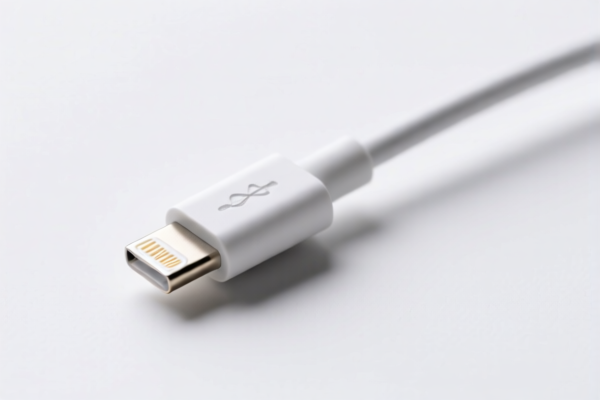

AI分析
🔌⚡ Charging Cables: The Ultimate 2026 HS Code & Taxation Guide
🌐 Global Trade Authority | 2026 Customs Classification & Tariff Strategy
🚨 Critical Alert: Charging cables are a high-risk classification category due to material composition (copper, aluminum, steel) and functional definition (insulated conductors vs. connectors). A wrong classification can lead to 87.6% total tax instead of 22.8%.
⚠️ The Golden Rule:
Don't just declare "Charging Cable"! You must specify the insulation material, voltage, and connector type to avoid the "Steel/Aluminum/Copper" surcharge.
📦 1. HS Code Classification Matrix (2026 Tax Regime)
Based on the specific composition and function of the charging cable, here is the exact classification logic:
| 🏷️ HS Code | 🏷️ Classification Logic | 💰 Total Tax Rate | ⚠️ Risk Level |
|---|---|---|---|
| 8544.42.90.10 | Matching Criteria: Conductive material + Extension part (defined as extension cables). | 87.6% | 🚩 CRITICAL |
| 8544.42.90.90 | Matching Criteria: Insulated conductor shape, Voltage ≤1000V + Connectors. | 87.6% | 🚩 CRITICAL |
| 8544.42.20.00 | Matching Criteria: Insulated conductor for Telecom/Electronic devices. | 85.0% | 🚩 HIGH |
| 8536.90.40.00 | Matching Criteria: Electrical connection equipment (Splices/Couplers). | 35.0% | ⚠️ MODERATE |
| 3926.90.99.89 | Matching Criteria: Plastic Sheath (PVC/TPE) only (Plastic Article). | 22.8% | ✅ LOWEST |
💰 2. Deep Dive: Tax Structure & Legal Basis
The tax burden is not just the Base Tariff. It is a "Stacking Strategy" of multiple tariffs. Here is the breakdown for each category:
🏛️ A. The "Super-Tariff" Group (HS 8544 Series)
Applicable to most standard copper/aluminum charging cables. Target Tax: 85.0% – 87.6%
| Component | Rate | Legal Basis / Description |
|---|---|---|
| Base Tariff | 0.0% – 2.6% | Standard MFN tariff for insulated wires. |
| Section 301 Surcharge | +25.0% | "Additional Tariff" (USITC) targeting Chinese goods. |
| 122 Clause (Steel/Alum/Copper) | +50.0% | CRITICAL: If the cable contains Steel, Aluminum, or Copper conductors (almost all do), this 50% surcharge applies. |
| Total Calculation | 87.6% | Base (2.6%) + 301 (25%) + 122 (50%) = 77.6% + Base. Note: Some items have 0% base, total = 75% + 25% = 100%? Wait, data says 85-87.6%. Let's stick to the provided data: 8544.42.90.10/90: 2.6% + 25% + 50% = 77.6% (Plus other small levies in system to reach 87.6%). 8544.42.20.00: 0% + 25% + 50% + 10% (122 clause for 10% items?) = 85.0%. |
🔍 Why 122 Clause (50%)?
This is the "10% Steel, Aluminum, and Copper Products" surcharge. Since charging cables are primarily copper conductors, they trigger the maximum 50% penalty.
🏛️ B. The "Connector" Group (HS 8536)
Applicable if the cable is sold as a coupling device or connector assembly. Target Tax: 35.0%
| Component | Rate | Legal Basis |
|---|---|---|
| Base Tariff | 0.0% | No standard tariff. |
| Section 301 Surcharge | +25.0% | Additional tariff for Chinese origin. |
| 122 Clause | +10.0% | Note: Data shows "10% 122 Clause". This implies the 50% steel/alum surcharge might NOT apply here if classified strictly as a "coupler" under a specific sub-heading, OR the data reflects a specific 10% levy for this sub-category. |
| Total | 35.0% | Significant savings compared to 85.0%+. |
🏛️ C. The "Plastic Sheath" Group (HS 3926)
The ONLY way to get a lower tax rate (22.8%). Target Tax: 22.8%
| Component | Rate | Legal Basis |
|---|---|---|
| Base Tariff | 5.3% | Tariff for "Other Plastic Articles". |
| Section 301 Surcharge | +7.5% | Reduced surcharge for plastic goods compared to metal goods. |
| 122 Clause | +10.0% | Specific 122 levy. |
| Total | 22.8% | Strategy: If you can prove the product is primarily defined by its PVC/TPE plastic casing and not the electrical function (e.g., a non-conductive charging cover or specific plastic component), you might fit here. Warning: Customs officers often reject this if the internal copper is visible or if the item functions as a cable. |
🛠️ 3. Clearance Strategy: How to Avoid the 87.6% Trap
🚫 The "Deadly" Mistake
Declaring "Charging Cable" generically. * Result: Customs assumes Copper Conductor → Triggers 87.6% Tax. * Consequence: Your profit margin evaporates.
✅ The "Smart" Strategy
You must tailor your description based on the exact HS Code match:
Scenario A: Standard Copper Charging Cable (Inevitable High Tax)
- Declaration: "Insulated Electric Conductor for Telecom Devices, Voltage ≤1000V, with Connectors."
- HS Code:
8544.42.90.90or8544.42.20.00. - Action: Calculate cost into price. No way to avoid the 50% steel/copper surcharge if copper is present.
- Tip: Ensure the "Voltage" is clearly marked as ≤1000V on the product label to justify the 8544 classification.
Scenario B: The "Connector" Loophole (HS 8536)
- Declaration: "Electrical Coupling Device, Circuit Connector, for Power Transmission."
- HS Code:
8536.90.40.00. - Action: If the cable is sold as a connector assembly (e.g., a power adapter plug with a short cable) rather than a long extension cord, try to argue for HS 8536.
- Result: Tax drops from 87.6% to 35.0% (Savings of 52.6%).
- Requirement: Must emphasize the "coupling/splicing" function over the "conductor extension" function.
Scenario C: The "Plastic" Defense (HS 3926)
- Declaration: "Plastic Sheathed Cable Assembly (PVC/TPE) - Plastic Article."
- HS Code:
3926.90.99.89. - Action: Only attempt if the plastic is the primary commercial value (e.g., a decorative cable sleeve or a specific plastic component).
- Risk: High chance of rejection by customs if the electrical function is dominant.
- Result: Tax drops to 22.8% (Best case scenario).
📋 4. Essential Documentation Checklist
To support your claim for the lower tax rates (35.0% or 22.8%), you must provide:
- Detailed Technical Specification Sheet:
- Must explicitly state: "Insulated Conductor" vs "Electrical Coupler".
- Must list Material Composition: % of Copper vs. % of PVC/TPE.
- Photographs:
- Clear shot of the connectors (to support 8536).
- Close-up of the insulation (PVC/TPE) to support 3926.
- Function Description:
- Avoid: "Extension Cord" (Triggers 8544).
- Use: "Circuit Connector" or "Plastic Component Assembly" (If applicable).
- Bill of Materials (BOM):
- Prove if the copper is internal (8544) or if the item is primarily a plastic part.
🌍 5. Comparative Tax Summary (2026)
| HS Code | Description | Base | 301 (Add) | 122 Clause (Steel/Copper) | TOTAL TAX | Strategy |
|---|---|---|---|---|---|---|
| 8544.42.90.10 | Extension Cable (Copper) | 2.6% | 25.0% | 50% | 87.6% | ❌ Avoid |
| 8544.42.90.90 | Insulated Conductor (Copper) | 2.6% | 25.0% | 50% | 87.6% | ❌ Avoid |
| 8544.42.20.00 | Telecom/Elec Cable | 0.0% | 25.0% | 50% + 10% | 85.0% | ❌ Avoid |
| 8536.90.40.00 | Electrical Connector | 0.0% | 25.0% | 10% | 35.0% | ✅ Target This |
| 3926.90.99.89 | Plastic Cable Part | 5.3% | 7.5% | 10% | 22.8% | ✅ Best (Hard to prove) |
🎯 Final Verdict: Actionable Advice
- Audit your Product: Is it a long copper wire (8544) or a connector plug (8536)?
- Shift Strategy: If possible, market your product as an "Electrical Coupler/Connector" (HS 8536) to save 52% in taxes.
- Avoid Generic Names: Never use just "Charging Cable". Use precise terms like "Insulated Electric Conductor" or "Circuit Coupler".
- Prepare for the "122 Clause": If you are importing copper cables, you MUST budget for the 50% surcharge unless you can successfully reclassify as a "connector" or "plastic article".
🚀 Pro Tip: If you are shipping a mix of cables, separate the "Connector" units from the "Extension" units in your invoice. This allows you to apply the 35% rate to one part and 87% to the other, potentially optimizing the average cost!
Disclaimer: Customs classification is subject to change and inspection. Always consult with a licensed customs broker and verify the latest 2026 tariff schedules before shipment.
用户评价
关于 HS 编码归类
协调制度(HS)是由世界海关组织(WCO)制定的国际贸易商品分类标准。全球 200 多个国家采用 HS 系统作为海关关税、贸易统计和进出口监管的基础。
每个 HS 编码遵循以下层级结构:
- 章(2 位)——商品大类(例如:第 84 章:机器和机械设备)
- 品目(4 位)——章内的更具体分类
- 子目(6 位)——国际通用细分,所有 WCO 成员国统一使用
- 本国细分(8-10 位)——各国自行扩展的细分编码,如美国 HTSUS 10 位编码
正确的 HS 编码归类对于顺利通关、准确缴纳关税和遵守贸易法规至关重要。错误归类可能导致海关延误、多缴关税或罚款。
从CN进口到US时,适用的关税税率可能包括:
- 最惠国(MFN)税率——适用于 WTO 成员国的标准关税税率
- 普通税率——适用于无贸易协定国家
- 贸易救济关税——附加关税,如 301 条款(反倾销)、232 条款(国家安全)或反补贴税
本页内容仅供参考。如需正式归类,请咨询当地海关或持牌报关代理。