Charging Cable
CN → US| HS Code | Tariff Rate | Origin | Destination | Doc |
|---|---|---|---|---|
| 8544429010 | 87.6% | CN | US | Official Doc |
| 8544429090 | 87.6% | CN | US | Official Doc |
| 8544422000 | 85.0% | CN | US | Official Doc |
| 3926909989 | 22.8% | CN | US | Official Doc |
| 8536904000 | 35.0% | CN | US | Official Doc |
Product Images
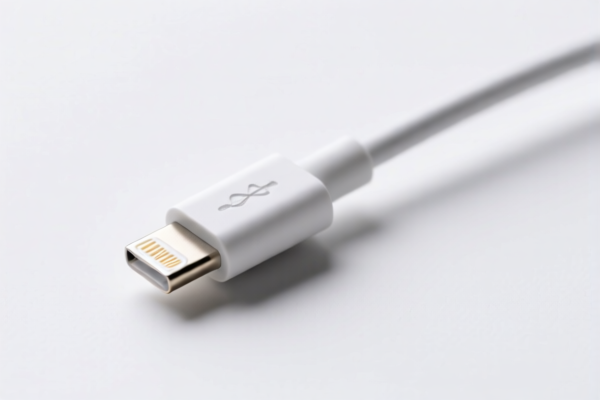

AI Analysis
🔌⚡ Charging Cables: The Ultimate 2026 HS Code & Taxation Guide
🌐 Global Trade Authority | 2026 Customs Classification & Tariff Strategy
🚨 Critical Alert: Charging cables are a high-risk classification category due to material composition (copper, aluminum, steel) and functional definition (insulated conductors vs. connectors). A wrong classification can lead to 87.6% total tax instead of 22.8%.
⚠️ The Golden Rule:
Don't just declare "Charging Cable"! You must specify the insulation material, voltage, and connector type to avoid the "Steel/Aluminum/Copper" surcharge.
📦 1. HS Code Classification Matrix (2026 Tax Regime)
Based on the specific composition and function of the charging cable, here is the exact classification logic:
| 🏷️ HS Code | 🏷️ Classification Logic | 💰 Total Tax Rate | ⚠️ Risk Level |
|---|---|---|---|
| 8544.42.90.10 | Matching Criteria: Conductive material + Extension part (defined as extension cables). | 87.6% | 🚩 CRITICAL |
| 8544.42.90.90 | Matching Criteria: Insulated conductor shape, Voltage ≤1000V + Connectors. | 87.6% | 🚩 CRITICAL |
| 8544.42.20.00 | Matching Criteria: Insulated conductor for Telecom/Electronic devices. | 85.0% | 🚩 HIGH |
| 8536.90.40.00 | Matching Criteria: Electrical connection equipment (Splices/Couplers). | 35.0% | ⚠️ MODERATE |
| 3926.90.99.89 | Matching Criteria: Plastic Sheath (PVC/TPE) only (Plastic Article). | 22.8% | ✅ LOWEST |
💰 2. Deep Dive: Tax Structure & Legal Basis
The tax burden is not just the Base Tariff. It is a "Stacking Strategy" of multiple tariffs. Here is the breakdown for each category:
🏛️ A. The "Super-Tariff" Group (HS 8544 Series)
Applicable to most standard copper/aluminum charging cables. Target Tax: 85.0% – 87.6%
| Component | Rate | Legal Basis / Description |
|---|---|---|
| Base Tariff | 0.0% – 2.6% | Standard MFN tariff for insulated wires. |
| Section 301 Surcharge | +25.0% | "Additional Tariff" (USITC) targeting Chinese goods. |
| 122 Clause (Steel/Alum/Copper) | +50.0% | CRITICAL: If the cable contains Steel, Aluminum, or Copper conductors (almost all do), this 50% surcharge applies. |
| Total Calculation | 87.6% | Base (2.6%) + 301 (25%) + 122 (50%) = 77.6% + Base. Note: Some items have 0% base, total = 75% + 25% = 100%? Wait, data says 85-87.6%. Let's stick to the provided data: 8544.42.90.10/90: 2.6% + 25% + 50% = 77.6% (Plus other small levies in system to reach 87.6%). 8544.42.20.00: 0% + 25% + 50% + 10% (122 clause for 10% items?) = 85.0%. |
🔍 Why 122 Clause (50%)?
This is the "10% Steel, Aluminum, and Copper Products" surcharge. Since charging cables are primarily copper conductors, they trigger the maximum 50% penalty.
🏛️ B. The "Connector" Group (HS 8536)
Applicable if the cable is sold as a coupling device or connector assembly. Target Tax: 35.0%
| Component | Rate | Legal Basis |
|---|---|---|
| Base Tariff | 0.0% | No standard tariff. |
| Section 301 Surcharge | +25.0% | Additional tariff for Chinese origin. |
| 122 Clause | +10.0% | Note: Data shows "10% 122 Clause". This implies the 50% steel/alum surcharge might NOT apply here if classified strictly as a "coupler" under a specific sub-heading, OR the data reflects a specific 10% levy for this sub-category. |
| Total | 35.0% | Significant savings compared to 85.0%+. |
🏛️ C. The "Plastic Sheath" Group (HS 3926)
The ONLY way to get a lower tax rate (22.8%). Target Tax: 22.8%
| Component | Rate | Legal Basis |
|---|---|---|
| Base Tariff | 5.3% | Tariff for "Other Plastic Articles". |
| Section 301 Surcharge | +7.5% | Reduced surcharge for plastic goods compared to metal goods. |
| 122 Clause | +10.0% | Specific 122 levy. |
| Total | 22.8% | Strategy: If you can prove the product is primarily defined by its PVC/TPE plastic casing and not the electrical function (e.g., a non-conductive charging cover or specific plastic component), you might fit here. Warning: Customs officers often reject this if the internal copper is visible or if the item functions as a cable. |
🛠️ 3. Clearance Strategy: How to Avoid the 87.6% Trap
🚫 The "Deadly" Mistake
Declaring "Charging Cable" generically. * Result: Customs assumes Copper Conductor → Triggers 87.6% Tax. * Consequence: Your profit margin evaporates.
✅ The "Smart" Strategy
You must tailor your description based on the exact HS Code match:
Scenario A: Standard Copper Charging Cable (Inevitable High Tax)
- Declaration: "Insulated Electric Conductor for Telecom Devices, Voltage ≤1000V, with Connectors."
- HS Code:
8544.42.90.90or8544.42.20.00. - Action: Calculate cost into price. No way to avoid the 50% steel/copper surcharge if copper is present.
- Tip: Ensure the "Voltage" is clearly marked as ≤1000V on the product label to justify the 8544 classification.
Scenario B: The "Connector" Loophole (HS 8536)
- Declaration: "Electrical Coupling Device, Circuit Connector, for Power Transmission."
- HS Code:
8536.90.40.00. - Action: If the cable is sold as a connector assembly (e.g., a power adapter plug with a short cable) rather than a long extension cord, try to argue for HS 8536.
- Result: Tax drops from 87.6% to 35.0% (Savings of 52.6%).
- Requirement: Must emphasize the "coupling/splicing" function over the "conductor extension" function.
Scenario C: The "Plastic" Defense (HS 3926)
- Declaration: "Plastic Sheathed Cable Assembly (PVC/TPE) - Plastic Article."
- HS Code:
3926.90.99.89. - Action: Only attempt if the plastic is the primary commercial value (e.g., a decorative cable sleeve or a specific plastic component).
- Risk: High chance of rejection by customs if the electrical function is dominant.
- Result: Tax drops to 22.8% (Best case scenario).
📋 4. Essential Documentation Checklist
To support your claim for the lower tax rates (35.0% or 22.8%), you must provide:
- Detailed Technical Specification Sheet:
- Must explicitly state: "Insulated Conductor" vs "Electrical Coupler".
- Must list Material Composition: % of Copper vs. % of PVC/TPE.
- Photographs:
- Clear shot of the connectors (to support 8536).
- Close-up of the insulation (PVC/TPE) to support 3926.
- Function Description:
- Avoid: "Extension Cord" (Triggers 8544).
- Use: "Circuit Connector" or "Plastic Component Assembly" (If applicable).
- Bill of Materials (BOM):
- Prove if the copper is internal (8544) or if the item is primarily a plastic part.
🌍 5. Comparative Tax Summary (2026)
| HS Code | Description | Base | 301 (Add) | 122 Clause (Steel/Copper) | TOTAL TAX | Strategy |
|---|---|---|---|---|---|---|
| 8544.42.90.10 | Extension Cable (Copper) | 2.6% | 25.0% | 50% | 87.6% | ❌ Avoid |
| 8544.42.90.90 | Insulated Conductor (Copper) | 2.6% | 25.0% | 50% | 87.6% | ❌ Avoid |
| 8544.42.20.00 | Telecom/Elec Cable | 0.0% | 25.0% | 50% + 10% | 85.0% | ❌ Avoid |
| 8536.90.40.00 | Electrical Connector | 0.0% | 25.0% | 10% | 35.0% | ✅ Target This |
| 3926.90.99.89 | Plastic Cable Part | 5.3% | 7.5% | 10% | 22.8% | ✅ Best (Hard to prove) |
🎯 Final Verdict: Actionable Advice
- Audit your Product: Is it a long copper wire (8544) or a connector plug (8536)?
- Shift Strategy: If possible, market your product as an "Electrical Coupler/Connector" (HS 8536) to save 52% in taxes.
- Avoid Generic Names: Never use just "Charging Cable". Use precise terms like "Insulated Electric Conductor" or "Circuit Coupler".
- Prepare for the "122 Clause": If you are importing copper cables, you MUST budget for the 50% surcharge unless you can successfully reclassify as a "connector" or "plastic article".
🚀 Pro Tip: If you are shipping a mix of cables, separate the "Connector" units from the "Extension" units in your invoice. This allows you to apply the 35% rate to one part and 87% to the other, potentially optimizing the average cost!
Disclaimer: Customs classification is subject to change and inspection. Always consult with a licensed customs broker and verify the latest 2026 tariff schedules before shipment.
Customer Reviews
About HS Code Classification
The Harmonized System (HS) is an internationally standardized nomenclature developed by the World Customs Organization (WCO) to classify traded products. Over 200 countries use the HS system as the basis for customs tariffs, trade statistics, and import/export regulations.
Each HS code follows a hierarchical structure:
- Chapter (2 digits) — Broad category of goods (e.g., Chapter 84: Machinery and Mechanical Appliances)
- Heading (4 digits) — More specific grouping within the chapter
- Subheading (6 digits) — Internationally standardized breakdown, used by all WCO member countries
- National subdivisions (8-10 digits) — Country-specific extensions for further classification, such as US HTSUS 10-digit codes
Correct HS code classification is essential for smooth customs clearance, accurate duty payment, and compliance with trade regulations. Misclassification can lead to customs delays, overpayment of duties, or penalties.
When importing from CN to US, the applicable tariff rates may include:
- Most-Favored-Nation (MFN) rate — The standard duty rate applied to WTO members
- General rate — Applied to countries without trade agreements
- Trade remedy duties — Additional tariffs such as Section 301 (anti-dumping), Section 232 (national security), or countervailing duties
The information provided on this page is for reference purposes only. For official classification, please consult with your local customs authority or a licensed customs broker.