Chemical Mixture for Analysis
CN → US| HS编码 | 关税税率 | 原产国 | 目的国 | 文档 |
|---|---|---|---|---|
| 9027106000 | 35.0% | CN | US | 官方文档 |
| 8421390130 | 35.0% | CN | US | 官方文档 |
| 9031808060 | 35.0% | CN | US | 官方文档 |
| 8421390190 | 35.0% | CN | US | 官方文档 |
| 9027106000 | 35.0% | CN | US | 官方文档 |
商品图片
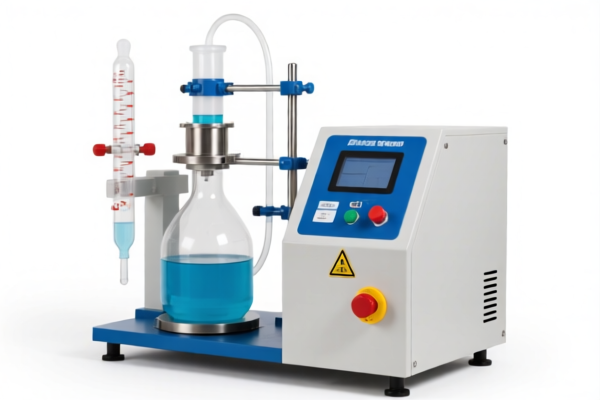
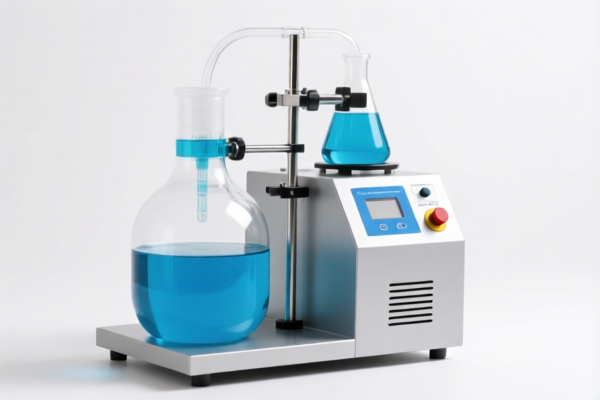
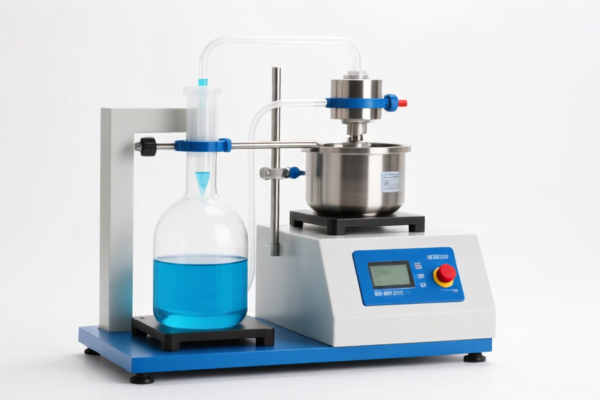
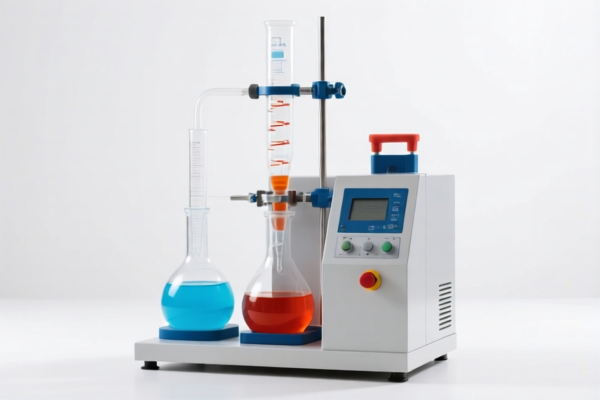
AI分析
🧪 Chemical Mixture for Analysis (Gas Analysis Equipment & Accessories)
🌐 HS Code Reference & Customs Clearance Guide | 2026 Latest Tariff Analysis | Professional Entry Strategy
📌 I. Product Definition & Classification: What is "Chemical Mixture for Analysis"?
In the context of international trade, "Chemical Mixture for Analysis" is not a single standalone product but refers to a system or components used to mix, filter, purify, or analyze gas mixtures. Depending on whether the item is the main analytical instrument, a pre-treatment device, or a testing accessory, it falls into different Harmonized System (HS) categories.
Key Categories: 1. Gas Analysis Instruments: The core device that measures chemical composition (e.g., chromatographs, spectrometers). 2. Gas Treatment/Filtering Devices: Equipment that prepares the gas sample before analysis (e.g., filters, purifiers). 3. Testing/Analysis Accessories: Auxiliary instruments or parts used for testing the mixture or the equipment itself.
⚠️ Critical Distinction Point:
- If it is the main analytical unit (measures concentration/composition) → HS 9027.
- If it is a pre-treatment device (filters/purifies gas for analysis) → HS 8421.
- If it is a testing/verification instrument (checks accuracy or tests other devices) → HS 9031.
📦 II. HS Code Classification Details (2026 Latest Tariff Alignment)
The provided data contains five entries. Note that two entries (9027.10.60.00) are duplicates, representing the same primary classification.
| HS Code | Product Description (from Data) | Category | Primary Function |
|---|---|---|---|
9027.10.60.00 |
Instrument for analysis of gas mixtures, classified as gas analysis equipment. | Main Instrument | Directly analyzes chemical composition of gas mixtures. |
8421.39.01.30 |
Filtration or purification equipment for gas mixture analysis, classified as gas treatment devices. | Pre-Treatment | Cleans, filters, or purifies gas before it enters the analyzer. |
9031.80.80.60 |
Testing/analysis instrument for gas mixture analysis, classified as other test equipment. | Testing/Auxiliary | Used for testing, calibration, or verifying the gas mixture or analysis process. |
8421.39.01.90 |
Gas filtration or purification equipment for gas mixture analysis, classified as other gas treatment devices. | Pre-Treatment | Similar to .30, but classified under "Other" gas treatment devices (likely broader application). |
9027.10.60.00 |
Duplicate: Instrument for analysis of gas mixtures. | Main Instrument | Same as first entry. |
🔍 Key Insight:
-9027is for the "Brain" of the operation (the analyzer).
-8421is for the "Stomach" of the operation (preparing the sample).
-9031is for the "Check" of the operation (testing/calibration).
💰 III. 2026 Latest Tariff Rate Details (Including Surtaxes)
✅ Applicable Country: United States (US)
✅ Origin: China (CN) (Implied by tax structure)
✅ Total Tax Rate: 35.0% for all listed HS Codes
🎯 1. Breakdown of the 35% Total Tax
| Component | Rate | Source/Description |
|---|---|---|
| Base Tariff | 0.0% | Most gas analysis and treatment equipment from China has a low or zero MFN base duty. |
| Section 301 Surtax | 25.0% | Standard "Additional Duty" under US Trade Act Section 301 for Chinese goods. |
| Section 122 Duty | 10.0% | Specific additional duty (often referred to as "122 clause tariff" in internal systems, likely related to specific enforcement actions or local rules). |
| TOTAL | 35.0% | Sum: 0% + 25% + 10% |
📌 Explanation:
- Despite the low base tariff, the 35% effective rate is significant for cost calculation.
- This rate applies uniformly to all four unique HS codes listed in the data.
- No de minimis exemption is mentioned in the source data, implying these are likely commercial imports subject to full duty.
🛠️ IV. Customs Clearance Practical Advice (Anti-Pitfall Guide)
✅ 1. Documentation Checklist (Non-Negotiable)
| Document | Requirement | Notes |
|---|---|---|
| Commercial Invoice | Must clearly state "Chemical Mixture Analysis Instrument/Equipment" | Avoid vague terms like "Laboratory Parts." |
| Product Specification Sheet | Critical: Must define function. | - For 9027: Show how it analyzes.- For 8421: Show how it filters/purifies.- For 9031: Show how it tests/calibrates. |
| Catalog/Brochure | High-quality images showing labels/model numbers | Helps CBP distinguish between analyzer (9027) and purifier (8421). |
| Bill of Lading | Match HS Code description exactly | Ensure package count and weight align with invoice. |
✅ 2. Classification Strategy & Risk Mitigation
| Scenario | Recommended HS Code | Reason | Risk if Incorrect |
|---|---|---|---|
| Main Analyzer Unit | 9027.10.60.00 |
Primary function is analysis. | Misclassifying as 8421 (filter) could lead to scrutiny if the device clearly has sensors/detectors. |
| Gas Purifier/Filter | 8421.39.01.30 or .90 |
Primary function is physical separation/cleaning. | Misclassifying as 9027 might raise questions about why a filter is being taxed as an analyzer. |
| Test/Certification Device | 9031.80.80.60 |
Used for testing/verification, not production analysis. | Must prove it is not part of the main analytical process. |
🔥 "Golden Rule" for Declaration:
"Function Determines Classification, Not Just Name!"
If the device has sensors, detectors, and data output for composition, it is9027.
If it has membranes, adsorbents, or separators for cleaning, it is8421.
✅ 3. Special Considerations
- Combined Systems: If a system includes both an analyzer and a purifier in one shipment:
- Best Practice: Declare separately if possible.
- Alternative: If inseparable, declare the principal function (usually the analyzer
9027). However, ensure the invoice clearly lists the purifier as an accessory to avoid confusion.
- Parts vs. Whole: Ensure that "Chemical Mixture" does not refer to actual chemicals (which would fall under Chapter 28/38). The data explicitly refers to equipment for analysis, so this is hardware, not liquid/gas chemicals.
- Labeling: Ensure all units have clear model numbers and country of origin markings ("Made in China") to facilitate CBP inspection.
🌍 V. Global Market Context (Quick Reference)
| Market | Recommended HS Code | Est. Duty (China Origin) | Notes |
|---|---|---|---|
| 🇺🇸 USA | 9027.10.60.00 / 8421.39.01.30 |
35% (25% Sec 301 + 10% 122) | High duty due to trade measures. |
| 🇪🇺 EU | 9027.80 / 8421.39 |
Varies (often 0-4.5%) | No Section 301 equivalent. Check for CE marking requirements. |
| 🇨🇳 China | 9027.80 / 8421.39 |
~5-10% | Import duties for re-export or domestic use. |
📌 Conclusion for US Imports:
The 35% total duty is a fixed cost factor. There are no obvious preferential rates for these specific HS codes from China in the provided data.
📌 VI. Common Errors & Pitfalls
❌ Error 1: Calling it "Gas Sensor" instead of "Gas Analysis Instrument"
👉 Consequence: May lead to incorrect classification under 9031 (parts/accessories) or 8543 (electrical machines), causing delays.
👉 Fix: Use precise technical descriptions from the manual.
❌ Error 2: Ignoring the "122 Clause" 10% Surtax
👉 Consequence: Underpaying duty by 10%, leading to post-audit penalties and interest.
👉 Fix: Ensure your customs broker applies the correct "Additional Duty Code" for the 122 clause.
❌ Error 3: Confusing "Filter for Analysis" (8421) with "Analysis Instrument" (9027)
👉 Consequence: While the tax rate is the same (35%) in this specific dataset, misclassification can lead to:
- Incorrect licensing requirements (some 9027 items may require FDA or EPA approval depending on application).
- Import bans or restrictions on specific analytical technologies.
👉 Fix: Provide clear functional diagrams to prove whether the device measures or cleans.
🎯 VII. Conclusion: Professional Declaration, Risk Minimization
🎯 Key Takeaway:
"Analyze 9027, Filter 8421, Test 9031. All carry 35% US Duty from China."
- Step 1: Identify if the product is the Analyzer, Purifier, or Tester.
- Step 2: Select the correct HS Code from the four options above.
- Step 3: Prepare technical documentation proving the primary function.
- Step 4: Budget for 35% total duty in your cost model.
📌 Pro Tip:
If you are importing a system that contains multiple components (e.g., a purifier connected to an analyzer), declare the main instrument (9027) as the primary item and list the purifier (8421) as a part/accessory on the invoice. This can sometimes simplify customs examination, provided the primary function is clearly analytical.
📣 Immediate Action:
📞 Consult your customs broker with the product datasheet.
📋 Verify the "122 Clause" applicability for your specific entry type.
🚀 Ensure accurate HS Code selection to avoid hold-ups at US ports of entry.
✨ Precision in Classification, Savings in Compliance!
💼 Your gas analysis equipment is high-value—don't let duty errors eat your margins!
用户评价
关于 HS 编码归类
协调制度(HS)是由世界海关组织(WCO)制定的国际贸易商品分类标准。全球 200 多个国家采用 HS 系统作为海关关税、贸易统计和进出口监管的基础。
每个 HS 编码遵循以下层级结构:
- 章(2 位)——商品大类(例如:第 84 章:机器和机械设备)
- 品目(4 位)——章内的更具体分类
- 子目(6 位)——国际通用细分,所有 WCO 成员国统一使用
- 本国细分(8-10 位)——各国自行扩展的细分编码,如美国 HTSUS 10 位编码
正确的 HS 编码归类对于顺利通关、准确缴纳关税和遵守贸易法规至关重要。错误归类可能导致海关延误、多缴关税或罚款。
从CN进口到US时,适用的关税税率可能包括:
- 最惠国(MFN)税率——适用于 WTO 成员国的标准关税税率
- 普通税率——适用于无贸易协定国家
- 贸易救济关税——附加关税,如 301 条款(反倾销)、232 条款(国家安全)或反补贴税
本页内容仅供参考。如需正式归类,请咨询当地海关或持牌报关代理。