Chemical Mixture for Analysis
CN → US| HS Code | Tariff Rate | Origin | Destination | Doc |
|---|---|---|---|---|
| 9027106000 | 35.0% | CN | US | Official Doc |
| 8421390130 | 35.0% | CN | US | Official Doc |
| 9031808060 | 35.0% | CN | US | Official Doc |
| 8421390190 | 35.0% | CN | US | Official Doc |
| 9027106000 | 35.0% | CN | US | Official Doc |
Product Images
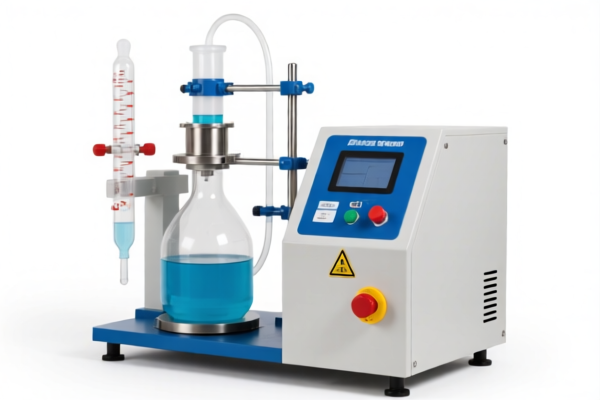
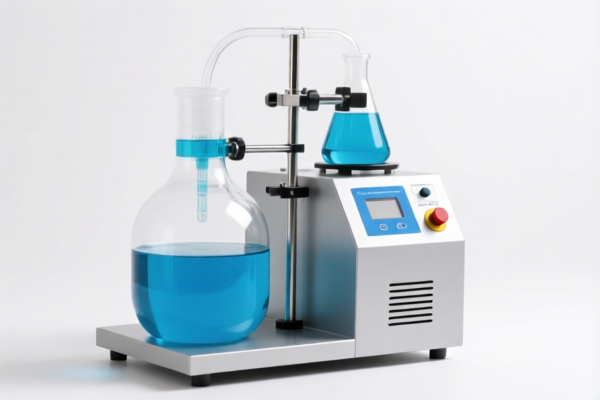
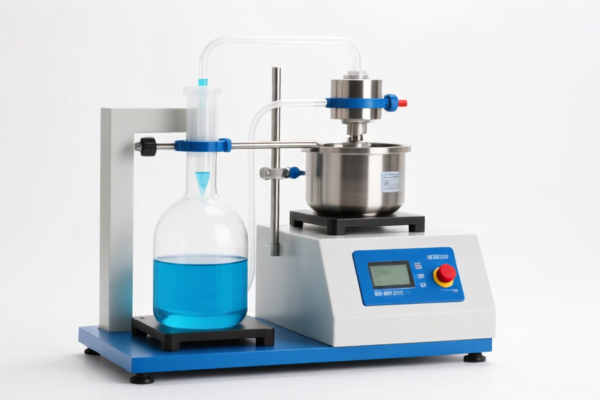
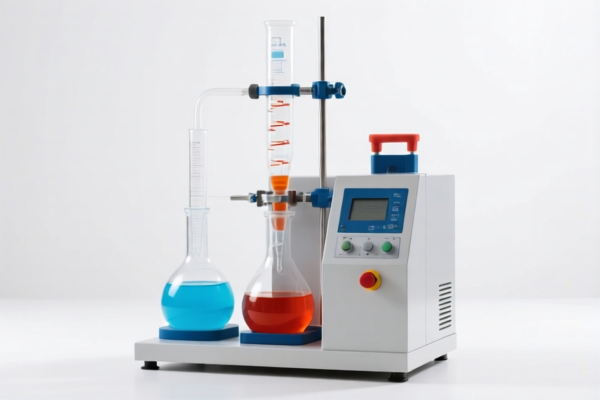
AI Analysis
🧪 Chemical Mixture for Analysis (Gas Analysis Equipment & Accessories)
🌐 HS Code Reference & Customs Clearance Guide | 2026 Latest Tariff Analysis | Professional Entry Strategy
📌 I. Product Definition & Classification: What is "Chemical Mixture for Analysis"?
In the context of international trade, "Chemical Mixture for Analysis" is not a single standalone product but refers to a system or components used to mix, filter, purify, or analyze gas mixtures. Depending on whether the item is the main analytical instrument, a pre-treatment device, or a testing accessory, it falls into different Harmonized System (HS) categories.
Key Categories: 1. Gas Analysis Instruments: The core device that measures chemical composition (e.g., chromatographs, spectrometers). 2. Gas Treatment/Filtering Devices: Equipment that prepares the gas sample before analysis (e.g., filters, purifiers). 3. Testing/Analysis Accessories: Auxiliary instruments or parts used for testing the mixture or the equipment itself.
⚠️ Critical Distinction Point:
- If it is the main analytical unit (measures concentration/composition) → HS 9027.
- If it is a pre-treatment device (filters/purifies gas for analysis) → HS 8421.
- If it is a testing/verification instrument (checks accuracy or tests other devices) → HS 9031.
📦 II. HS Code Classification Details (2026 Latest Tariff Alignment)
The provided data contains five entries. Note that two entries (9027.10.60.00) are duplicates, representing the same primary classification.
| HS Code | Product Description (from Data) | Category | Primary Function |
|---|---|---|---|
9027.10.60.00 |
Instrument for analysis of gas mixtures, classified as gas analysis equipment. | Main Instrument | Directly analyzes chemical composition of gas mixtures. |
8421.39.01.30 |
Filtration or purification equipment for gas mixture analysis, classified as gas treatment devices. | Pre-Treatment | Cleans, filters, or purifies gas before it enters the analyzer. |
9031.80.80.60 |
Testing/analysis instrument for gas mixture analysis, classified as other test equipment. | Testing/Auxiliary | Used for testing, calibration, or verifying the gas mixture or analysis process. |
8421.39.01.90 |
Gas filtration or purification equipment for gas mixture analysis, classified as other gas treatment devices. | Pre-Treatment | Similar to .30, but classified under "Other" gas treatment devices (likely broader application). |
9027.10.60.00 |
Duplicate: Instrument for analysis of gas mixtures. | Main Instrument | Same as first entry. |
🔍 Key Insight:
-9027is for the "Brain" of the operation (the analyzer).
-8421is for the "Stomach" of the operation (preparing the sample).
-9031is for the "Check" of the operation (testing/calibration).
💰 III. 2026 Latest Tariff Rate Details (Including Surtaxes)
✅ Applicable Country: United States (US)
✅ Origin: China (CN) (Implied by tax structure)
✅ Total Tax Rate: 35.0% for all listed HS Codes
🎯 1. Breakdown of the 35% Total Tax
| Component | Rate | Source/Description |
|---|---|---|
| Base Tariff | 0.0% | Most gas analysis and treatment equipment from China has a low or zero MFN base duty. |
| Section 301 Surtax | 25.0% | Standard "Additional Duty" under US Trade Act Section 301 for Chinese goods. |
| Section 122 Duty | 10.0% | Specific additional duty (often referred to as "122 clause tariff" in internal systems, likely related to specific enforcement actions or local rules). |
| TOTAL | 35.0% | Sum: 0% + 25% + 10% |
📌 Explanation:
- Despite the low base tariff, the 35% effective rate is significant for cost calculation.
- This rate applies uniformly to all four unique HS codes listed in the data.
- No de minimis exemption is mentioned in the source data, implying these are likely commercial imports subject to full duty.
🛠️ IV. Customs Clearance Practical Advice (Anti-Pitfall Guide)
✅ 1. Documentation Checklist (Non-Negotiable)
| Document | Requirement | Notes |
|---|---|---|
| Commercial Invoice | Must clearly state "Chemical Mixture Analysis Instrument/Equipment" | Avoid vague terms like "Laboratory Parts." |
| Product Specification Sheet | Critical: Must define function. | - For 9027: Show how it analyzes.- For 8421: Show how it filters/purifies.- For 9031: Show how it tests/calibrates. |
| Catalog/Brochure | High-quality images showing labels/model numbers | Helps CBP distinguish between analyzer (9027) and purifier (8421). |
| Bill of Lading | Match HS Code description exactly | Ensure package count and weight align with invoice. |
✅ 2. Classification Strategy & Risk Mitigation
| Scenario | Recommended HS Code | Reason | Risk if Incorrect |
|---|---|---|---|
| Main Analyzer Unit | 9027.10.60.00 |
Primary function is analysis. | Misclassifying as 8421 (filter) could lead to scrutiny if the device clearly has sensors/detectors. |
| Gas Purifier/Filter | 8421.39.01.30 or .90 |
Primary function is physical separation/cleaning. | Misclassifying as 9027 might raise questions about why a filter is being taxed as an analyzer. |
| Test/Certification Device | 9031.80.80.60 |
Used for testing/verification, not production analysis. | Must prove it is not part of the main analytical process. |
🔥 "Golden Rule" for Declaration:
"Function Determines Classification, Not Just Name!"
If the device has sensors, detectors, and data output for composition, it is9027.
If it has membranes, adsorbents, or separators for cleaning, it is8421.
✅ 3. Special Considerations
- Combined Systems: If a system includes both an analyzer and a purifier in one shipment:
- Best Practice: Declare separately if possible.
- Alternative: If inseparable, declare the principal function (usually the analyzer
9027). However, ensure the invoice clearly lists the purifier as an accessory to avoid confusion.
- Parts vs. Whole: Ensure that "Chemical Mixture" does not refer to actual chemicals (which would fall under Chapter 28/38). The data explicitly refers to equipment for analysis, so this is hardware, not liquid/gas chemicals.
- Labeling: Ensure all units have clear model numbers and country of origin markings ("Made in China") to facilitate CBP inspection.
🌍 V. Global Market Context (Quick Reference)
| Market | Recommended HS Code | Est. Duty (China Origin) | Notes |
|---|---|---|---|
| 🇺🇸 USA | 9027.10.60.00 / 8421.39.01.30 |
35% (25% Sec 301 + 10% 122) | High duty due to trade measures. |
| 🇪🇺 EU | 9027.80 / 8421.39 |
Varies (often 0-4.5%) | No Section 301 equivalent. Check for CE marking requirements. |
| 🇨🇳 China | 9027.80 / 8421.39 |
~5-10% | Import duties for re-export or domestic use. |
📌 Conclusion for US Imports:
The 35% total duty is a fixed cost factor. There are no obvious preferential rates for these specific HS codes from China in the provided data.
📌 VI. Common Errors & Pitfalls
❌ Error 1: Calling it "Gas Sensor" instead of "Gas Analysis Instrument"
👉 Consequence: May lead to incorrect classification under 9031 (parts/accessories) or 8543 (electrical machines), causing delays.
👉 Fix: Use precise technical descriptions from the manual.
❌ Error 2: Ignoring the "122 Clause" 10% Surtax
👉 Consequence: Underpaying duty by 10%, leading to post-audit penalties and interest.
👉 Fix: Ensure your customs broker applies the correct "Additional Duty Code" for the 122 clause.
❌ Error 3: Confusing "Filter for Analysis" (8421) with "Analysis Instrument" (9027)
👉 Consequence: While the tax rate is the same (35%) in this specific dataset, misclassification can lead to:
- Incorrect licensing requirements (some 9027 items may require FDA or EPA approval depending on application).
- Import bans or restrictions on specific analytical technologies.
👉 Fix: Provide clear functional diagrams to prove whether the device measures or cleans.
🎯 VII. Conclusion: Professional Declaration, Risk Minimization
🎯 Key Takeaway:
"Analyze 9027, Filter 8421, Test 9031. All carry 35% US Duty from China."
- Step 1: Identify if the product is the Analyzer, Purifier, or Tester.
- Step 2: Select the correct HS Code from the four options above.
- Step 3: Prepare technical documentation proving the primary function.
- Step 4: Budget for 35% total duty in your cost model.
📌 Pro Tip:
If you are importing a system that contains multiple components (e.g., a purifier connected to an analyzer), declare the main instrument (9027) as the primary item and list the purifier (8421) as a part/accessory on the invoice. This can sometimes simplify customs examination, provided the primary function is clearly analytical.
📣 Immediate Action:
📞 Consult your customs broker with the product datasheet.
📋 Verify the "122 Clause" applicability for your specific entry type.
🚀 Ensure accurate HS Code selection to avoid hold-ups at US ports of entry.
✨ Precision in Classification, Savings in Compliance!
💼 Your gas analysis equipment is high-value—don't let duty errors eat your margins!
Customer Reviews
About HS Code Classification
The Harmonized System (HS) is an internationally standardized nomenclature developed by the World Customs Organization (WCO) to classify traded products. Over 200 countries use the HS system as the basis for customs tariffs, trade statistics, and import/export regulations.
Each HS code follows a hierarchical structure:
- Chapter (2 digits) — Broad category of goods (e.g., Chapter 84: Machinery and Mechanical Appliances)
- Heading (4 digits) — More specific grouping within the chapter
- Subheading (6 digits) — Internationally standardized breakdown, used by all WCO member countries
- National subdivisions (8-10 digits) — Country-specific extensions for further classification, such as US HTSUS 10-digit codes
Correct HS code classification is essential for smooth customs clearance, accurate duty payment, and compliance with trade regulations. Misclassification can lead to customs delays, overpayment of duties, or penalties.
When importing from CN to US, the applicable tariff rates may include:
- Most-Favored-Nation (MFN) rate — The standard duty rate applied to WTO members
- General rate — Applied to countries without trade agreements
- Trade remedy duties — Additional tariffs such as Section 301 (anti-dumping), Section 232 (national security), or countervailing duties
The information provided on this page is for reference purposes only. For official classification, please consult with your local customs authority or a licensed customs broker.