Chemical Reagents (Alcohols with Carbon Number Less than 11)
CN → US| HS编码 | 关税税率 | 原产国 | 目的国 | 文档 |
|---|---|---|---|---|
| 2905199010 | 38.7% | CN | US | 官方文档 |
| 2905199020 | 38.7% | CN | US | 官方文档 |
| 3824999310 | 40.0% | CN | US | 官方文档 |
| 3824999330 | 40.0% | CN | US | 官方文档 |
| 2905199010 | 38.7% | CN | US | 官方文档 |
商品图片
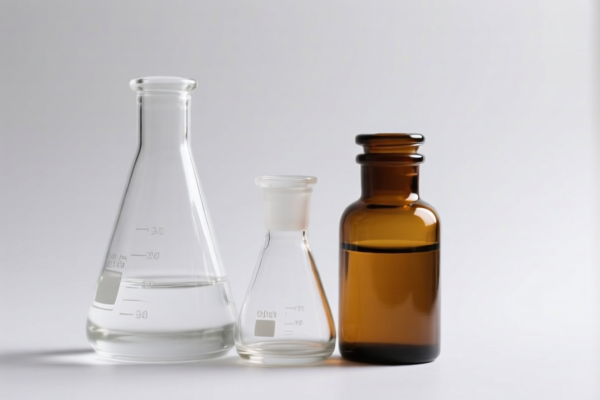
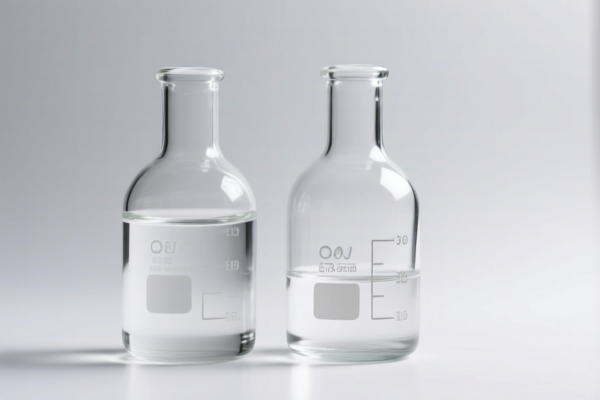
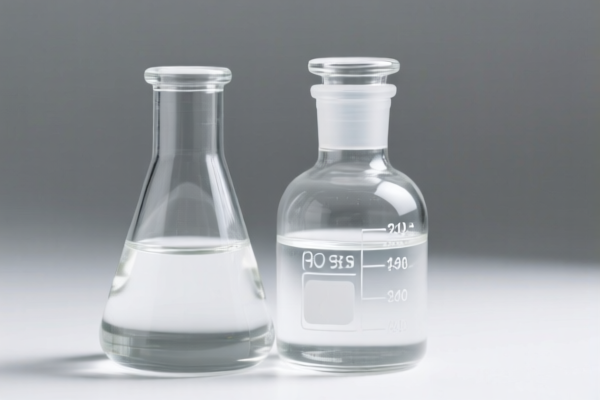
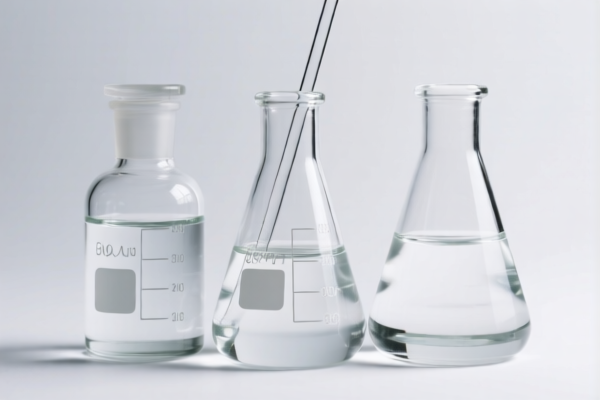
AI分析
🧪 Chemical Reagents: Alcohols (C<11)
🌐 HS Code Reference & Customs Clearance Guide | 2026 Latest Tariff Analysis | Professional Level Clearance Strategy
📌 I. Product Definition and Classification: What Are "Alcohols with Carbon Number Less than 11"?
These reagents refer to organic compounds containing one or more hydroxyl (-OH) groups, where the carbon chain length is strictly less than 11 (i.e., C1 to C10). In international trade, they are primarily classified based on their chemical structure (saturated/unsaturated, cyclic/acyclic) and purity form (pure substances vs. mixtures).
Two Main Categories: 1. Pure Alcohols (Chapter 29): Single chemical entities or well-defined isomers (e.g., Methanol, Ethanol, Butanol, Decanol). 2. Alcohol Mixtures (Chapter 38): Mixtures containing only C11-or-lower alcohols, or specific mixtures where these alcohols are the primary component.
⚠️ Key Distinction Point: * If the product is a pure, single alcohol (e.g., pure 1-Decanol) → Classified under 2905 (Acyclic alcohols). * If the product is a mixture where all alcohol components are C11 or lower, or a mixture containing C11-and-lower alcohols → Classified under 3824 (Prepared binders/chemical products).
📦 II. HS Code Classification Details (Latest Tariff Authority Cross-Reference)
| HS Code | Product Description | Applicable Scenario | Chemical Nature |
|---|---|---|---|
2905.19.90.10 |
Acyclic alcohols with ≤10 carbons (General classification) | Pure acyclic alcohols not specifically listed elsewhere (e.g., branched or unlisted linear alcohols C1-C10) | ✅ Pure Substance |
2905.19.90.20 |
Saturated monohydric alcohols with ≤10 carbons | Pure saturated, single-OH alcohols (e.g., normal alkanols like 1-Decanol) | ✅ Pure Substance |
3824.99.93.10 |
Mixtures containing only alcohols with C≤11 | Blends where the entire alcoholic content is limited to C11 or lower chains | ✅ Mixture |
3824.99.93.30 |
Mixtures of non-cyclic, monohydric, unsubstituted alcohols (C≤11) | Specific mixtures of simple, unbranched, single-OH alcohols (C≤11) without other complex chemical modifications | ✅ Mixture |
🔍 Critical Reminder: * Pure vs. Mixture: Customs authorities heavily scrutinize whether the product is a "defined chemical" (Ch 29) or a "prepared mixture" (Ch 38). * If a mixture contains alcohols with C12 or higher, it cannot use the
3824.99.93.xxcodes above. It may require different subheadings depending on the primary component. * Saturated vs. Unsaturated:2905primarily covers saturated acyclic alcohols. Unsaturated alcohols or those with double bonds may fall under different subheadings (e.g., 2905.49), so verify the chemical structure carefully.
💰 III. 2026 Latest Tariff Rate Details (Including Surcharges & Policy Add-ons)
✅ Applicable Country: United States (US) ✅ Origin: China (CN) ✅ Effective Date: November 10, 2025 (and subsequent imports)
🎯 1. 2905.19.90.10 & 2905.19.90.20 —— Pure Acyclic/Saturated Alcohols (C<11)
| Item | Content |
|---|---|
| Base Tariff Rate | 3.7% (Ad valorem) |
| Section 301 Surcharge | +25.0% |
| Section 122 Surcharge | +10.0% |
| Total Tariff Rate | 38.7% |
| Tax Calculation | CIF Value × 38.7% |
| De Minimis Exemption | ❌ Not Eligible (deny_de_minimis) |
| Legal Basis Path | USITC:2905.19.90.10/20 → Section301:Footnote301 → Section122:USITC |
📌 Explanation: * "Base Tariff 3.7%": The standard Most Favored Nation (MFN) rate for acyclic alcohols. * "Section 301 Surcharge 25%": Imposed under US Trade Law Section 301 against Chinese goods. * "Section 122 Surcharge 10%": Additional tariff under Section 122 of the Trade Expansion Act of 1962 (national security/import relief). * Total 38.7%: This is a high-cost tariff. Importers must factor this into their landed cost calculation.
🎯 2. 3824.99.93.10 & 3824.99.93.30 —— Alcohol Mixtures (C≤11)
| Item | Content |
|---|---|
| Base Tariff Rate | 5.0% (Ad valorem) |
| Section 301 Surcharge | +25.0% |
| Section 122 Surcharge | +10.0% |
| Total Tariff Rate | 40.0% |
| Tax Calculation | CIF Value × 40.0% |
| De Minimis Exemption | ❌ Not Eligible (deny_de_minimis) |
| Legal Basis Path | USITC:3824.99.93.10/30 → Section301:Footnote301 → Section122:USITC |
📌 Note: * The base rate for Chapter 38 products is slightly higher (5.0%) than for Chapter 29 (3.7%), leading to a 40.0% total tariff. * This represents an additional 1.3% cost compared to pure alcohols, but the classification risk must be weighed. If misclassified, penalties apply.
🛠️ IV. Customs Clearance Practical Advice (Battle-Tested Pitfall Avoidance Guide)
✅ 1. Required Documentation Checklist (Missing Items = Delays)
| Document | Mandatory | Description |
|---|---|---|
| ✅ Product Specification Sheet | ✔️ | Must explicitly state: "Carbon Chain Length: C1–C10", "Pure Substance" or "Mixture", "Single Hydroxyl Group" |
| ✅ Chemical Structure Diagram | ✔️ | Crucial for proving acyclic, saturated, monohydric nature. |
| ✅ Product Photos (Label & Bulk) | ✔️ | Clear label showing HS-relevant info (e.g., "1-Decanol", "Solvent Alcohol Mixture"). |
| ✅ Third-Party Lab Report | ✔️ | GC-MS (Gas Chromatography-Mass Spectrometry) report proving carbon number distribution. |
| ✅ Commercial Invoice | ✔️ | Description must match HS summary: e.g., "Pure Acyclic Alcohol, C10, Not Elsewhere Specified". |
| ✅ Certificate of Origin (CO) | ✔️ | Required for verifying Chinese origin to apply surcharges correctly. |
| ✅ Packing List | ✔️ | Details net/gross weight and packaging type. |
✅ 2. Declaration Tips (Key Mantras)
🔥 "Specify Carbon Count, Define Structure, Avoid Generic Terms!"
| Scenario | Correct Declaration Method | Wrong Practice |
|---|---|---|
| Pure 1-Decanol | 2905.19.90.20 - "Saturated Monohydric Alcohol, C10" |
Labeling as "General Solvent" → Misclassification risk |
| Mixture of Methanol/Ethanol/Butanol (All C<11) | 3824.99.93.10 - "Mixture of Alcohols C≤11" |
Calling it "Ethanol" if it contains other C1-C10 alcohols → Incorrect HS |
| Mixture containing C12 Alcohols | Do NOT use 3824.99.93.xx |
Using C≤11 code for C12+ content → Audit failure |
✅ 3. Special Case Handling
| Scenario | Handling Advice |
|---|---|
| Industrial Grade vs. Pharmaceutical Grade | Both fall under same HS if structure is identical. Grade affects pricing, not classification. |
| Mixtures with Other Solvents | If the mixture contains non-alcohol components (e.g., ketones, esters), 3824.99.93.xx may not apply. It becomes a "Prepared Chemical Mixture" under a different 3824 subheading. |
| Reagent Grade (High Purity >99%) | Strongly supports Chapter 29 (Pure Substance) classification. |
| Technical Grade (Mixtures) | Strongly supports Chapter 38 classification, provided it meets the "C≤11" criteria. |
🌍 V. Global Main Market Clearance Comparison (2026 Latest)
| Country/Region | Recommended HS Code | Tariff Rate (China Origin) | Certification Requirements | Notes |
|---|---|---|---|---|
| 🇺🇸 USA | 2905.19.90.xx / 3824.99.93.xx |
38.7% - 40.0% | None specific, but CO required | High Surcharges (301+122). De Minimis exempt. |
| 🇨🇳 China | 2905.19.90.xx / 3824.99.93.xx |
~3.7% - 5.0% | Standard import license | No Section 301/122. Lower cost. |
| 🇪🇺 EU | 2905.49.00 / 3824.99 |
~4.5% - 6.5% | REACH Registration | No US-style surcharges. REACH compliance critical. |
| 🇬🇧 UK | 2905.49.00 / 3824.99 |
~4.5% - 6.5% | UK REACH | Post-Brexit rules apply. Similar to EU. |
| 🇯🇵 Japan | 2905.49.00 / 3824.99 |
~3.5% - 5.0% | FSCA (if cosmetic/pharma) | No major surcharges. |
📌 Conclusion: * USA is the most expensive market for these reagents due to the叠加 (stacking) of Section 301 (25%) and Section 122 (10%) tariffs. * EU and Japan offer lower base duties but require strict regulatory compliance (REACH, FSCA).
📌 VI. Common Errors & Pitfall Avoidance Guide (Lessons Learned)
❌ Error 1: Using "Ethanol" or "Methanol" as the generic description for a complex mixture.
👉 Consequence: Customs may reject the code if the mixture contains other C1-C10 alcohols. Use specific HS-based descriptions.
❌ Error 2: Classifying a C12+ alcohol mixture under 3824.99.93.xx.
👉 Consequence: Classifications errors lead to audits, back-taxes, and potential fines. Verify carbon chain length strictly.
❌ Error 3: Ignoring the Section 122 Surcharge.
👉 Consequence: Budgeting only for Section 301 (25%) results in a 40% vs 45% shortfall. Total cost must include all layers.
❌ Error 4: Failing to provide GC-MS Reports for mixtures.
👉 Consequence: Customs cannot verify the "C≤11" claim. Goods may be held for inspection or reclassified to higher-duty categories.
✅ Correct Approach:
"Acyclic Alcohol, 1-Decanol, Purity 99%, Saturated, Monohydric, For Laboratory Use Only"
OR
"Solvent Mixture, Containing Methanol, Ethanol, Propanol (All C≤3), Industrial Grade"
🎯 VII. Conclusion: Professional Declaration, Cost Optimization!
🎯 Remember the Mantras:
🔹 "C<11 is Key, Pure or Mix Defines HS."
🔹 "USA Tariffs Stack: 3.7% + 25% + 10% = 38.7%."
🔹 "Mixtures Need GC-MS Proof, Don't Guess, Verify!"
📌 Pro Tip:
If your alcohols are originating from Vietnam, Mexico, or Malaysia, you may be eligible for IEEPA Exemptions or lower Section 301 rates.
Recommend Applying for a Binding Ruling (Pre-classification) with US CBP to secure your HS Code and duty rate before shipment.
📣 Immediate Action:
📞 Contact a Certified Customs Broker + Provide GC-MS Report + Apply for Binding Ruling
🚀 Ensure your alcohol reagents clear customs smoothly, minimize tax leakage, and maximize profit!
✨ Professional Clearance Starts with Precise Classification!
💼 Every Cent of Tariff Should Be Accurately Calculated!
用户评价
关于 HS 编码归类
协调制度(HS)是由世界海关组织(WCO)制定的国际贸易商品分类标准。全球 200 多个国家采用 HS 系统作为海关关税、贸易统计和进出口监管的基础。
每个 HS 编码遵循以下层级结构:
- 章(2 位)——商品大类(例如:第 84 章:机器和机械设备)
- 品目(4 位)——章内的更具体分类
- 子目(6 位)——国际通用细分,所有 WCO 成员国统一使用
- 本国细分(8-10 位)——各国自行扩展的细分编码,如美国 HTSUS 10 位编码
正确的 HS 编码归类对于顺利通关、准确缴纳关税和遵守贸易法规至关重要。错误归类可能导致海关延误、多缴关税或罚款。
从CN进口到US时,适用的关税税率可能包括:
- 最惠国(MFN)税率——适用于 WTO 成员国的标准关税税率
- 普通税率——适用于无贸易协定国家
- 贸易救济关税——附加关税,如 301 条款(反倾销)、232 条款(国家安全)或反补贴税
本页内容仅供参考。如需正式归类,请咨询当地海关或持牌报关代理。