Chemical Reagents (Alcohols with Carbon Number Less than 11)
CN → US| HS Code | Tariff Rate | Origin | Destination | Doc |
|---|---|---|---|---|
| 2905199010 | 38.7% | CN | US | Official Doc |
| 2905199020 | 38.7% | CN | US | Official Doc |
| 3824999310 | 40.0% | CN | US | Official Doc |
| 3824999330 | 40.0% | CN | US | Official Doc |
| 2905199010 | 38.7% | CN | US | Official Doc |
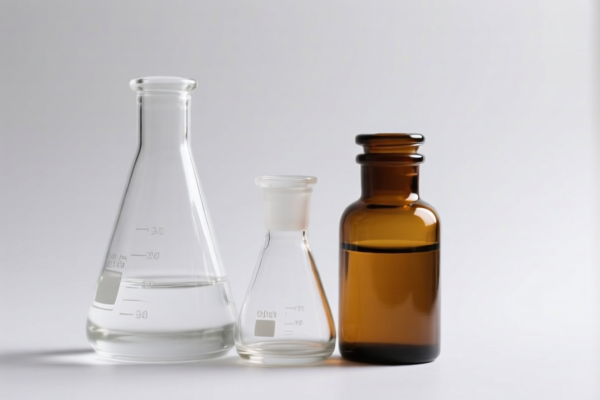
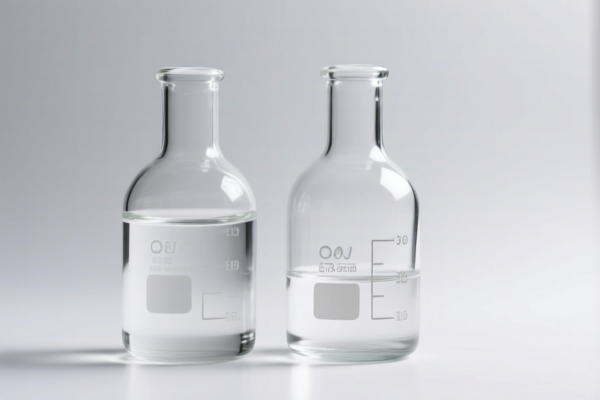
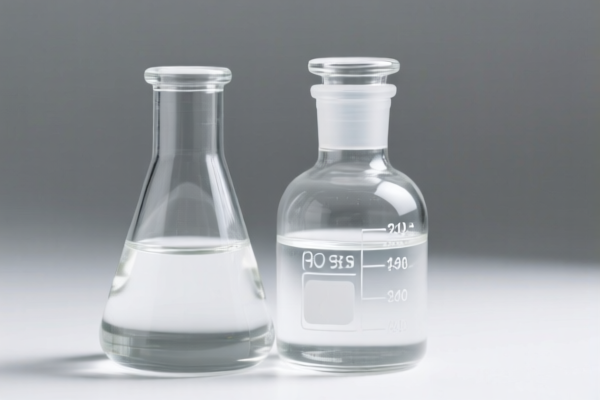
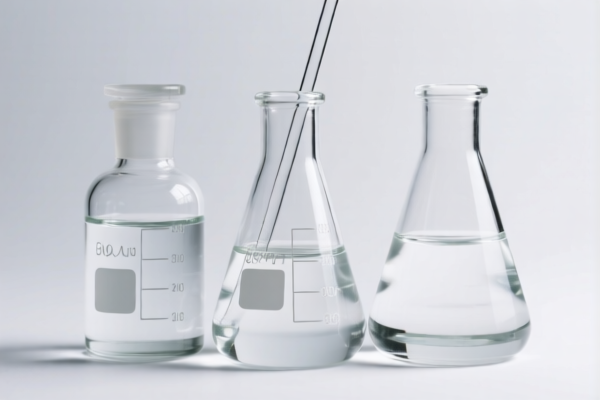
Product Images
AI Analysis
🧪 Chemical Reagents: Alcohols (C<11)
🌐 HS Code Reference & Customs Clearance Guide | 2026 Latest Tariff Analysis | Professional Level Clearance Strategy
📌 I. Product Definition and Classification: What Are "Alcohols with Carbon Number Less than 11"?
These reagents refer to organic compounds containing one or more hydroxyl (-OH) groups, where the carbon chain length is strictly less than 11 (i.e., C1 to C10). In international trade, they are primarily classified based on their chemical structure (saturated/unsaturated, cyclic/acyclic) and purity form (pure substances vs. mixtures).
Two Main Categories: 1. Pure Alcohols (Chapter 29): Single chemical entities or well-defined isomers (e.g., Methanol, Ethanol, Butanol, Decanol). 2. Alcohol Mixtures (Chapter 38): Mixtures containing only C11-or-lower alcohols, or specific mixtures where these alcohols are the primary component.
⚠️ Key Distinction Point: * If the product is a pure, single alcohol (e.g., pure 1-Decanol) → Classified under 2905 (Acyclic alcohols). * If the product is a mixture where all alcohol components are C11 or lower, or a mixture containing C11-and-lower alcohols → Classified under 3824 (Prepared binders/chemical products).
📦 II. HS Code Classification Details (Latest Tariff Authority Cross-Reference)
| HS Code | Product Description | Applicable Scenario | Chemical Nature |
|---|---|---|---|
2905.19.90.10 |
Acyclic alcohols with ≤10 carbons (General classification) | Pure acyclic alcohols not specifically listed elsewhere (e.g., branched or unlisted linear alcohols C1-C10) | ✅ Pure Substance |
2905.19.90.20 |
Saturated monohydric alcohols with ≤10 carbons | Pure saturated, single-OH alcohols (e.g., normal alkanols like 1-Decanol) | ✅ Pure Substance |
3824.99.93.10 |
Mixtures containing only alcohols with C≤11 | Blends where the entire alcoholic content is limited to C11 or lower chains | ✅ Mixture |
3824.99.93.30 |
Mixtures of non-cyclic, monohydric, unsubstituted alcohols (C≤11) | Specific mixtures of simple, unbranched, single-OH alcohols (C≤11) without other complex chemical modifications | ✅ Mixture |
🔍 Critical Reminder: * Pure vs. Mixture: Customs authorities heavily scrutinize whether the product is a "defined chemical" (Ch 29) or a "prepared mixture" (Ch 38). * If a mixture contains alcohols with C12 or higher, it cannot use the
3824.99.93.xxcodes above. It may require different subheadings depending on the primary component. * Saturated vs. Unsaturated:2905primarily covers saturated acyclic alcohols. Unsaturated alcohols or those with double bonds may fall under different subheadings (e.g., 2905.49), so verify the chemical structure carefully.
💰 III. 2026 Latest Tariff Rate Details (Including Surcharges & Policy Add-ons)
✅ Applicable Country: United States (US) ✅ Origin: China (CN) ✅ Effective Date: November 10, 2025 (and subsequent imports)
🎯 1. 2905.19.90.10 & 2905.19.90.20 —— Pure Acyclic/Saturated Alcohols (C<11)
| Item | Content |
|---|---|
| Base Tariff Rate | 3.7% (Ad valorem) |
| Section 301 Surcharge | +25.0% |
| Section 122 Surcharge | +10.0% |
| Total Tariff Rate | 38.7% |
| Tax Calculation | CIF Value × 38.7% |
| De Minimis Exemption | ❌ Not Eligible (deny_de_minimis) |
| Legal Basis Path | USITC:2905.19.90.10/20 → Section301:Footnote301 → Section122:USITC |
📌 Explanation: * "Base Tariff 3.7%": The standard Most Favored Nation (MFN) rate for acyclic alcohols. * "Section 301 Surcharge 25%": Imposed under US Trade Law Section 301 against Chinese goods. * "Section 122 Surcharge 10%": Additional tariff under Section 122 of the Trade Expansion Act of 1962 (national security/import relief). * Total 38.7%: This is a high-cost tariff. Importers must factor this into their landed cost calculation.
🎯 2. 3824.99.93.10 & 3824.99.93.30 —— Alcohol Mixtures (C≤11)
| Item | Content |
|---|---|
| Base Tariff Rate | 5.0% (Ad valorem) |
| Section 301 Surcharge | +25.0% |
| Section 122 Surcharge | +10.0% |
| Total Tariff Rate | 40.0% |
| Tax Calculation | CIF Value × 40.0% |
| De Minimis Exemption | ❌ Not Eligible (deny_de_minimis) |
| Legal Basis Path | USITC:3824.99.93.10/30 → Section301:Footnote301 → Section122:USITC |
📌 Note: * The base rate for Chapter 38 products is slightly higher (5.0%) than for Chapter 29 (3.7%), leading to a 40.0% total tariff. * This represents an additional 1.3% cost compared to pure alcohols, but the classification risk must be weighed. If misclassified, penalties apply.
🛠️ IV. Customs Clearance Practical Advice (Battle-Tested Pitfall Avoidance Guide)
✅ 1. Required Documentation Checklist (Missing Items = Delays)
| Document | Mandatory | Description |
|---|---|---|
| ✅ Product Specification Sheet | ✔️ | Must explicitly state: "Carbon Chain Length: C1–C10", "Pure Substance" or "Mixture", "Single Hydroxyl Group" |
| ✅ Chemical Structure Diagram | ✔️ | Crucial for proving acyclic, saturated, monohydric nature. |
| ✅ Product Photos (Label & Bulk) | ✔️ | Clear label showing HS-relevant info (e.g., "1-Decanol", "Solvent Alcohol Mixture"). |
| ✅ Third-Party Lab Report | ✔️ | GC-MS (Gas Chromatography-Mass Spectrometry) report proving carbon number distribution. |
| ✅ Commercial Invoice | ✔️ | Description must match HS summary: e.g., "Pure Acyclic Alcohol, C10, Not Elsewhere Specified". |
| ✅ Certificate of Origin (CO) | ✔️ | Required for verifying Chinese origin to apply surcharges correctly. |
| ✅ Packing List | ✔️ | Details net/gross weight and packaging type. |
✅ 2. Declaration Tips (Key Mantras)
🔥 "Specify Carbon Count, Define Structure, Avoid Generic Terms!"
| Scenario | Correct Declaration Method | Wrong Practice |
|---|---|---|
| Pure 1-Decanol | 2905.19.90.20 - "Saturated Monohydric Alcohol, C10" |
Labeling as "General Solvent" → Misclassification risk |
| Mixture of Methanol/Ethanol/Butanol (All C<11) | 3824.99.93.10 - "Mixture of Alcohols C≤11" |
Calling it "Ethanol" if it contains other C1-C10 alcohols → Incorrect HS |
| Mixture containing C12 Alcohols | Do NOT use 3824.99.93.xx |
Using C≤11 code for C12+ content → Audit failure |
✅ 3. Special Case Handling
| Scenario | Handling Advice |
|---|---|
| Industrial Grade vs. Pharmaceutical Grade | Both fall under same HS if structure is identical. Grade affects pricing, not classification. |
| Mixtures with Other Solvents | If the mixture contains non-alcohol components (e.g., ketones, esters), 3824.99.93.xx may not apply. It becomes a "Prepared Chemical Mixture" under a different 3824 subheading. |
| Reagent Grade (High Purity >99%) | Strongly supports Chapter 29 (Pure Substance) classification. |
| Technical Grade (Mixtures) | Strongly supports Chapter 38 classification, provided it meets the "C≤11" criteria. |
🌍 V. Global Main Market Clearance Comparison (2026 Latest)
| Country/Region | Recommended HS Code | Tariff Rate (China Origin) | Certification Requirements | Notes |
|---|---|---|---|---|
| 🇺🇸 USA | 2905.19.90.xx / 3824.99.93.xx |
38.7% - 40.0% | None specific, but CO required | High Surcharges (301+122). De Minimis exempt. |
| 🇨🇳 China | 2905.19.90.xx / 3824.99.93.xx |
~3.7% - 5.0% | Standard import license | No Section 301/122. Lower cost. |
| 🇪🇺 EU | 2905.49.00 / 3824.99 |
~4.5% - 6.5% | REACH Registration | No US-style surcharges. REACH compliance critical. |
| 🇬🇧 UK | 2905.49.00 / 3824.99 |
~4.5% - 6.5% | UK REACH | Post-Brexit rules apply. Similar to EU. |
| 🇯🇵 Japan | 2905.49.00 / 3824.99 |
~3.5% - 5.0% | FSCA (if cosmetic/pharma) | No major surcharges. |
📌 Conclusion: * USA is the most expensive market for these reagents due to the叠加 (stacking) of Section 301 (25%) and Section 122 (10%) tariffs. * EU and Japan offer lower base duties but require strict regulatory compliance (REACH, FSCA).
📌 VI. Common Errors & Pitfall Avoidance Guide (Lessons Learned)
❌ Error 1: Using "Ethanol" or "Methanol" as the generic description for a complex mixture.
👉 Consequence: Customs may reject the code if the mixture contains other C1-C10 alcohols. Use specific HS-based descriptions.
❌ Error 2: Classifying a C12+ alcohol mixture under 3824.99.93.xx.
👉 Consequence: Classifications errors lead to audits, back-taxes, and potential fines. Verify carbon chain length strictly.
❌ Error 3: Ignoring the Section 122 Surcharge.
👉 Consequence: Budgeting only for Section 301 (25%) results in a 40% vs 45% shortfall. Total cost must include all layers.
❌ Error 4: Failing to provide GC-MS Reports for mixtures.
👉 Consequence: Customs cannot verify the "C≤11" claim. Goods may be held for inspection or reclassified to higher-duty categories.
✅ Correct Approach:
"Acyclic Alcohol, 1-Decanol, Purity 99%, Saturated, Monohydric, For Laboratory Use Only"
OR
"Solvent Mixture, Containing Methanol, Ethanol, Propanol (All C≤3), Industrial Grade"
🎯 VII. Conclusion: Professional Declaration, Cost Optimization!
🎯 Remember the Mantras:
🔹 "C<11 is Key, Pure or Mix Defines HS."
🔹 "USA Tariffs Stack: 3.7% + 25% + 10% = 38.7%."
🔹 "Mixtures Need GC-MS Proof, Don't Guess, Verify!"
📌 Pro Tip:
If your alcohols are originating from Vietnam, Mexico, or Malaysia, you may be eligible for IEEPA Exemptions or lower Section 301 rates.
Recommend Applying for a Binding Ruling (Pre-classification) with US CBP to secure your HS Code and duty rate before shipment.
📣 Immediate Action:
📞 Contact a Certified Customs Broker + Provide GC-MS Report + Apply for Binding Ruling
🚀 Ensure your alcohol reagents clear customs smoothly, minimize tax leakage, and maximize profit!
✨ Professional Clearance Starts with Precise Classification!
💼 Every Cent of Tariff Should Be Accurately Calculated!
Customer Reviews
About HS Code Classification
The Harmonized System (HS) is an internationally standardized nomenclature developed by the World Customs Organization (WCO) to classify traded products. Over 200 countries use the HS system as the basis for customs tariffs, trade statistics, and import/export regulations.
Each HS code follows a hierarchical structure:
- Chapter (2 digits) — Broad category of goods (e.g., Chapter 84: Machinery and Mechanical Appliances)
- Heading (4 digits) — More specific grouping within the chapter
- Subheading (6 digits) — Internationally standardized breakdown, used by all WCO member countries
- National subdivisions (8-10 digits) — Country-specific extensions for further classification, such as US HTSUS 10-digit codes
Correct HS code classification is essential for smooth customs clearance, accurate duty payment, and compliance with trade regulations. Misclassification can lead to customs delays, overpayment of duties, or penalties.
When importing from CN to US, the applicable tariff rates may include:
- Most-Favored-Nation (MFN) rate — The standard duty rate applied to WTO members
- General rate — Applied to countries without trade agreements
- Trade remedy duties — Additional tariffs such as Section 301 (anti-dumping), Section 232 (national security), or countervailing duties
The information provided on this page is for reference purposes only. For official classification, please consult with your local customs authority or a licensed customs broker.