Chicken Liver Sausage
CN → US| HS编码 | 关税税率 | 原产国 | 目的国 | 文档 |
|---|---|---|---|---|
| 1601006080 | 20.7% | CN | US | 官方文档 |
| 1602202000 | 0.0% | CN | US | 官方文档 |
| 2106909998 | 16.4% | CN | US | 官方文档 |
| 2106909990 | 16.4% | CN | US | 官方文档 |
| 1601006060 | 20.7% | CN | US | 官方文档 |
| 1602204000 | 20.7% | CN | US | 官方文档 |
商品图片
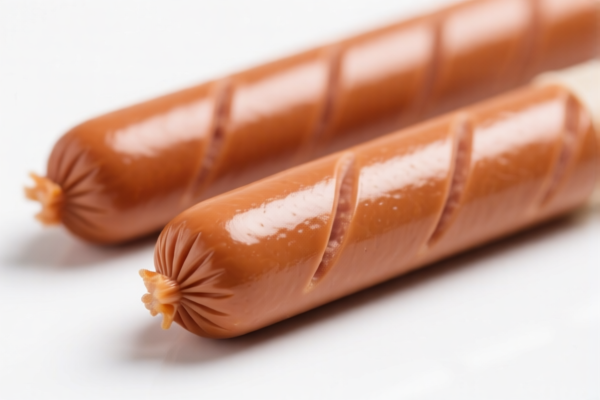
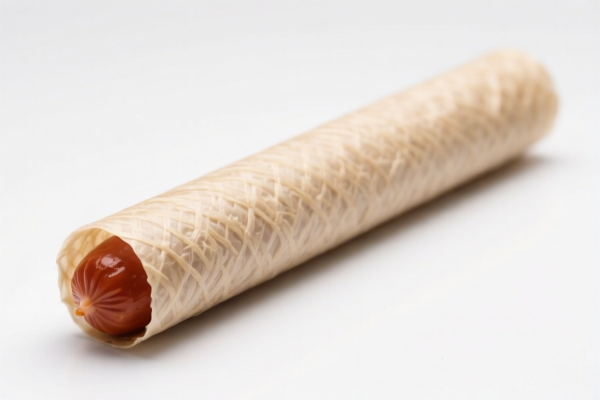


AI分析
🐔 Chicken Liver Sausage: HS Code Classification & U.S. Customs Clearance Guide (2026)
🌐 HS Code Reference & Customs Strategy | 2026 Latest Tariff Analysis | Professional Clearance Protocol
📌 I. Product Definition & Classification: What Exactly is "Chicken Liver Sausage"?
Chicken Liver Sausage is a processed meat product categorized under Chapter 16 (Preparations of Meat, Fish, or Crustaceans). It is defined by two key characteristics:
1. Material: Chicken liver (animal offal/organs) as the primary protein source.
2. Form: Sausage-like preparation (ground, mixed with spices/fillers, encased or formed into links).
⚠️ Key Distinction:
- If the product is ground/minced liver but not formed into a sausage shape → It may fall under 1602.20 (Prepared liver).
- If the product is shaped into a sausage/casing → It falls under 1601.00 (Sausages).
- If it is a complex food mixture with low meat content or specific processing methods not covered elsewhere → It may fall under 2106.90 (Food preparations).
📦 II. HS Code Classification Details (2026 Latest Tariff Authority)
| HS Code | Product Description | Applicability | Key Matching Logic |
|---|---|---|---|
1601.00.60.80 |
Sausages and similar products, of liver | Processed liver sausages | ✅ Matches form (sausage) and material (liver) |
1602.20.20.00 |
Other prepared or preserved liver | Minced/chopped liver products | ✅ Matches material (liver) and processing (prepared) |
2106.90.99.98 |
Other food preparations (non-excluded) | Complex meat mixtures | ✅ Matches food preparation category; catch-all for non-specific meat mixes |
2106.90.99.90 |
Other food preparations (Canned/Non-Canned) | Packaged sausage-like items | ✅ Matches form (sausage-like) and canned/packaged status |
1601.00.60.60 |
Sausages of other meats (incl. liver) | General meat sausages | ✅ Matches form (sausage) and material (meat/liver) |
1602.20.40.00 |
Other prepared/preserved liver (incl. other animals) | Non-sausage liver products | ✅ Matches material (liver) and processing (prepared) |
🔍 Important Note:
- Sausage vs. Prepared Liver: The physical shape (casing/linked) strongly favors 1601 over 1602.
- Composition: If the product contains >20% meat/liver, 1601/1602 is preferred. If it’s a composite food with minimal meat, 2106 may apply.
- Packaging: Canned vs. fresh may influence sub-classification in 2106, but 1601/1602 are primary for meat content.
💰 III. 2026 U.S. Tariff Rate Breakdown (Including Additional Duties)
✅ Applicable Country: United States (US)
✅ Country of Origin: China (CN)
✅ Effective Date: November 10, 2025 (and onwards)
🎯 1. 1601.00.60.80 & 1601.00.60.60 —— Sausages & Similar Products
| Item | Details |
|---|---|
| Base Duty | 3.2% (ad valorem) |
| Section 301 Tariff | +7.5% |
| Section 122 Tariff | +10% |
| Total Duty Rate | 20.7% |
| Tax Calculation | CIF Value × 20.7% |
| De Minimis Exemption | ❌ Not Eligible (deny_de_minimis) |
| Legal Pathway | Base Tariff → USITC:1601.00.60 → 301:7.5% → 122:10% |
📌 Explanation:
- Section 301 (7.5%): Applied to most Chinese meat products.
- Section 122 (10%): Additional duty on certain Chinese imports.
- Total 20.7% is a significant cost driver. High meat content triggers higher scrutiny.
🎯 2. 1602.20.20.00 & 1602.20.40.00 —— Prepared Liver
| Item | Details |
|---|---|
| Base Duty | 4.9¢/kg (specific) OR 3.2% (ad valorem) |
| Section 301 Tariff | +7.5% |
| Section 122 Tariff | +10% |
| Total Duty Rate | 4.9¢/kg + 17.5% |
| Tax Calculation | (4.9¢ × Weight in kg) + (CIF Value × 17.5%) |
| De Minimis Exemption | ❌ Not Eligible (deny_de_minimis) |
| Legal Pathway | Specific Duty → 301:7.5% → 122:10% |
📌 Explanation:
- If classified as prepared liver (not sausage), the base duty is 4.9¢/kg.
- Additional duties add 17.5% on the ad valorem portion.
- Note: This rate structure can be more favorable for high-weight, low-value liver products compared to 1601 sausages.
🎯 3. 2106.90.99.98 & 2106.90.99.90 —— Food Preparations
| Item | Details |
|---|---|
| Base Duty | 6.4% (ad valorem) |
| Section 301 Tariff | 0.0% |
| Section 122 Tariff | +10% |
| Total Duty Rate | 16.4% |
| Tax Calculation | CIF Value × 16.4% |
| De Minimis Exemption | ❌ Not Eligible (deny_de_minimis) |
| Legal Pathway | Base Tariff → USITC:2106.90.99 → 122:10% |
📌 Explanation:
- Section 301 does NOT apply to these specific sub-headings under current policy.
- Only 122 Tariff (10%) applies on top of the base 6.4%.
- Total 16.4% is lower than 1601/1602 rates.
- Risk: Customs may reclassify as 1601/1602 if meat content is high and form is sausage-like.
🛠️ IV. Customs Clearance Practical Advice (Avoiding Pitfalls)
✅ 1. Required Documentation Checklist
| Document | Mandatory? | Notes |
|---|---|---|
| ✅ Product Spec Sheet | ✔️ | Must specify: % chicken liver, casing type, processing method |
| ✅ Ingredient List | ✔️ | Critical for determining meat content vs. filler ratio |
| ✅ Product Photos | ✔️ | Show packaging, casing, and product form (sausage vs. loaf) |
| ✅ Commercial Invoice | ✔️ | Clearly state "Chicken Liver Sausage" or "Prepared Liver" |
| ✅ Certificate of Origin | ✔️ | To prove Chinese origin and apply relevant tariffs |
| ✅ Processing Description | ✔️ | Detail if it’s canned, fresh, frozen, or shelf-stable |
| ✅ FCC/USDA Approval | ✔️ | For meat products, USDA FSIS approval is mandatory |
✅ 2. Declaration Strategy (Key Tips)
🔥 "Shape Determines Chapter 16, Meat % Determines Sub-Chapter"
| Scenario | Recommended HS Code | Why? | Risk if Misclassified |
|---|---|---|---|
| Cased Sausage | 1601.00.60.80 |
Form is sausage; matches 1601 logic | If declared as 2106, may be reclassified + penalties |
| Minced Liver (No Casing) | 1602.20.20.00 |
Form is prepared liver; matches 1602 logic | If declared as 1601, may overpay or face discrepancy |
| Low-Meat Food Mix | 2106.90.99.98 |
Not primarily meat; food preparation | If declared as 1601, may be reclassified + penalties |
| Canned Liver Pâté | 1602.20.40.00 |
Prepared liver; canned | If declared as 2106, may face higher scrutiny |
📌 Critical Warning:
- Do NOT split shipment into "casing" and "liver" to avoid tariff. This is considered fraudulent and leads to seizure.
- Do NOT use vague terms like "Meat Product." Be specific: "Chicken Liver Sausage, 80% liver, 20% filler."
✅ 3. Special Cases
| Scenario | Handling Advice |
|---|---|
| OEM/Private Label | Provide brand authorization letter to avoid IP issues |
| High Meat Content (>20%) | Strongly recommend 1601/1602 for compliance |
| Low Meat Content (<20%) | Consider 2106 for lower tax rate, but provide proof of composition |
| Shelf-Stable/Canned | Ensure USDA FSIS label meets U.S. standards |
| Frozen vs. Fresh | No change in HS code, but affects storage requirements |
🌍 V. Global Market Comparison (2026 Latest)
| Country/Region | Recommended HS Code | Tariff Rate (China Origin) | Certification Required | Notes |
|---|---|---|---|---|
| 🇺🇸 USA | 1601.00.60.80 |
20.7% | USDA FSIS + FDA | High tariff due to 301/122 |
| 🇨🇳 China | 1601.00.60.80 |
10-15% | CCC (if applicable) | Lower domestic tariffs |
| 🇪🇺 EU | 1601.00 |
0-5% (if quota filled) | EU Health Certificate | No Section 301 |
| 🇬🇧 UK | 1601.00 |
5-10% | UK Health Certificate | Post-Brexit rules apply |
| 🇦🇺 Australia | 1601.00 |
5% | AQIS Approval | No additional duties |
📌 Conclusion:
- USA has the highest tariff burden due to Section 301 and 122.
- EU/UK/Australia are more favorable for meat products.
- Consider supply chain diversification if targeting the U.S. market with high-volume sausage products.
📌 VI. Common Errors & Pitfalls (Lessons Learned)
❌ Error 1: Declaring "Sausage" as "Spices" or "Flavoring"
👉 Consequence: Seizure, fines, and blacklisting. Meat content is easily detectable.
❌ Error 2: Using HS Code 2106 for a product that is clearly a sausage
👉 Consequence: Customs reclassification to 1601 + 10% penalty + duty difference.
❌ Error 3: Ignoring Section 122 Tariff
👉 Consequence: Underpayment by 10%. Customs will demand back payment + interest.
❌ Error 4: Failing to provide USDA FSIS Approval
👉 Consequence: Product rejected at port. Returns or destruction at exporter's cost.
✅ Correct Approach:
"Chicken Liver Sausage, 80% Chicken Liver, 20% Pork Fat & Spices, Cased, Frozen, USDA Approved, Model XYZ"
🎯 VII. Conclusion: Professional Declaration Saves Money
🎯 Remember the Rules:
🔹 "Sausage Shape → Chapter 16 (1601); Prepared Liver → 1602; Food Mix → 2106"
🔹 "U.S. Tariff = Base + 301 + 122. Check each layer!"
🔹 "HS Code Accuracy Prevents 100%+ Penalty Risks"
📌 Pro Tip:
If your product has low meat content and is primarily a food preparation, consider 2106.90.99.98 for a 16.4% effective rate (vs. 20.7%). However, must provide composition proof.
For high-meats sausages, 1601.00.60.80 is the safest and most compliant choice.
📣 Immediate Action:
📞 Consult a licensed customs broker
📄 Submit pre-classification ruling for HS Code confirmation
🚀 Ensure USDA FSIS approval is in place before shipping
✨ Professional Clearance Starts with Accurate Classification!
💼 Your Profit Margin Depends on Precision!
用户评价
关于 HS 编码归类
协调制度(HS)是由世界海关组织(WCO)制定的国际贸易商品分类标准。全球 200 多个国家采用 HS 系统作为海关关税、贸易统计和进出口监管的基础。
每个 HS 编码遵循以下层级结构:
- 章(2 位)——商品大类(例如:第 84 章:机器和机械设备)
- 品目(4 位)——章内的更具体分类
- 子目(6 位)——国际通用细分,所有 WCO 成员国统一使用
- 本国细分(8-10 位)——各国自行扩展的细分编码,如美国 HTSUS 10 位编码
正确的 HS 编码归类对于顺利通关、准确缴纳关税和遵守贸易法规至关重要。错误归类可能导致海关延误、多缴关税或罚款。
从CN进口到US时,适用的关税税率可能包括:
- 最惠国(MFN)税率——适用于 WTO 成员国的标准关税税率
- 普通税率——适用于无贸易协定国家
- 贸易救济关税——附加关税,如 301 条款(反倾销)、232 条款(国家安全)或反补贴税
本页内容仅供参考。如需正式归类,请咨询当地海关或持牌报关代理。