Chicken Liver Sausage
CN → US| HS Code | Tariff Rate | Origin | Destination | Doc |
|---|---|---|---|---|
| 1601006080 | 20.7% | CN | US | Official Doc |
| 1602202000 | 0.0% | CN | US | Official Doc |
| 2106909998 | 16.4% | CN | US | Official Doc |
| 2106909990 | 16.4% | CN | US | Official Doc |
| 1601006060 | 20.7% | CN | US | Official Doc |
| 1602204000 | 20.7% | CN | US | Official Doc |
Product Images
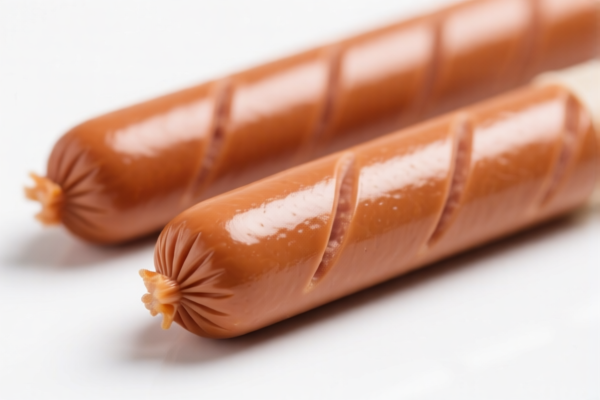
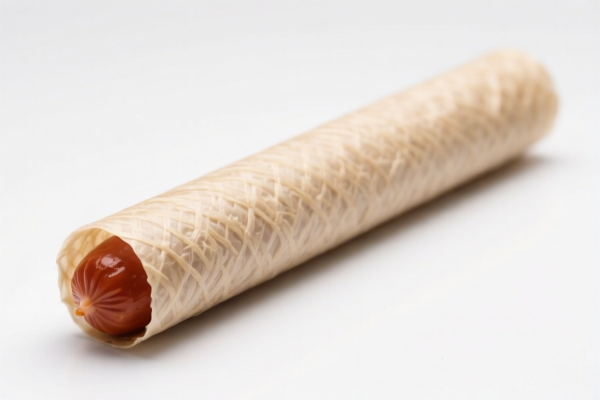


AI Analysis
🐔 Chicken Liver Sausage: HS Code Classification & U.S. Customs Clearance Guide (2026)
🌐 HS Code Reference & Customs Strategy | 2026 Latest Tariff Analysis | Professional Clearance Protocol
📌 I. Product Definition & Classification: What Exactly is "Chicken Liver Sausage"?
Chicken Liver Sausage is a processed meat product categorized under Chapter 16 (Preparations of Meat, Fish, or Crustaceans). It is defined by two key characteristics:
1. Material: Chicken liver (animal offal/organs) as the primary protein source.
2. Form: Sausage-like preparation (ground, mixed with spices/fillers, encased or formed into links).
⚠️ Key Distinction:
- If the product is ground/minced liver but not formed into a sausage shape → It may fall under 1602.20 (Prepared liver).
- If the product is shaped into a sausage/casing → It falls under 1601.00 (Sausages).
- If it is a complex food mixture with low meat content or specific processing methods not covered elsewhere → It may fall under 2106.90 (Food preparations).
📦 II. HS Code Classification Details (2026 Latest Tariff Authority)
| HS Code | Product Description | Applicability | Key Matching Logic |
|---|---|---|---|
1601.00.60.80 |
Sausages and similar products, of liver | Processed liver sausages | ✅ Matches form (sausage) and material (liver) |
1602.20.20.00 |
Other prepared or preserved liver | Minced/chopped liver products | ✅ Matches material (liver) and processing (prepared) |
2106.90.99.98 |
Other food preparations (non-excluded) | Complex meat mixtures | ✅ Matches food preparation category; catch-all for non-specific meat mixes |
2106.90.99.90 |
Other food preparations (Canned/Non-Canned) | Packaged sausage-like items | ✅ Matches form (sausage-like) and canned/packaged status |
1601.00.60.60 |
Sausages of other meats (incl. liver) | General meat sausages | ✅ Matches form (sausage) and material (meat/liver) |
1602.20.40.00 |
Other prepared/preserved liver (incl. other animals) | Non-sausage liver products | ✅ Matches material (liver) and processing (prepared) |
🔍 Important Note:
- Sausage vs. Prepared Liver: The physical shape (casing/linked) strongly favors 1601 over 1602.
- Composition: If the product contains >20% meat/liver, 1601/1602 is preferred. If it’s a composite food with minimal meat, 2106 may apply.
- Packaging: Canned vs. fresh may influence sub-classification in 2106, but 1601/1602 are primary for meat content.
💰 III. 2026 U.S. Tariff Rate Breakdown (Including Additional Duties)
✅ Applicable Country: United States (US)
✅ Country of Origin: China (CN)
✅ Effective Date: November 10, 2025 (and onwards)
🎯 1. 1601.00.60.80 & 1601.00.60.60 —— Sausages & Similar Products
| Item | Details |
|---|---|
| Base Duty | 3.2% (ad valorem) |
| Section 301 Tariff | +7.5% |
| Section 122 Tariff | +10% |
| Total Duty Rate | 20.7% |
| Tax Calculation | CIF Value × 20.7% |
| De Minimis Exemption | ❌ Not Eligible (deny_de_minimis) |
| Legal Pathway | Base Tariff → USITC:1601.00.60 → 301:7.5% → 122:10% |
📌 Explanation:
- Section 301 (7.5%): Applied to most Chinese meat products.
- Section 122 (10%): Additional duty on certain Chinese imports.
- Total 20.7% is a significant cost driver. High meat content triggers higher scrutiny.
🎯 2. 1602.20.20.00 & 1602.20.40.00 —— Prepared Liver
| Item | Details |
|---|---|
| Base Duty | 4.9¢/kg (specific) OR 3.2% (ad valorem) |
| Section 301 Tariff | +7.5% |
| Section 122 Tariff | +10% |
| Total Duty Rate | 4.9¢/kg + 17.5% |
| Tax Calculation | (4.9¢ × Weight in kg) + (CIF Value × 17.5%) |
| De Minimis Exemption | ❌ Not Eligible (deny_de_minimis) |
| Legal Pathway | Specific Duty → 301:7.5% → 122:10% |
📌 Explanation:
- If classified as prepared liver (not sausage), the base duty is 4.9¢/kg.
- Additional duties add 17.5% on the ad valorem portion.
- Note: This rate structure can be more favorable for high-weight, low-value liver products compared to 1601 sausages.
🎯 3. 2106.90.99.98 & 2106.90.99.90 —— Food Preparations
| Item | Details |
|---|---|
| Base Duty | 6.4% (ad valorem) |
| Section 301 Tariff | 0.0% |
| Section 122 Tariff | +10% |
| Total Duty Rate | 16.4% |
| Tax Calculation | CIF Value × 16.4% |
| De Minimis Exemption | ❌ Not Eligible (deny_de_minimis) |
| Legal Pathway | Base Tariff → USITC:2106.90.99 → 122:10% |
📌 Explanation:
- Section 301 does NOT apply to these specific sub-headings under current policy.
- Only 122 Tariff (10%) applies on top of the base 6.4%.
- Total 16.4% is lower than 1601/1602 rates.
- Risk: Customs may reclassify as 1601/1602 if meat content is high and form is sausage-like.
🛠️ IV. Customs Clearance Practical Advice (Avoiding Pitfalls)
✅ 1. Required Documentation Checklist
| Document | Mandatory? | Notes |
|---|---|---|
| ✅ Product Spec Sheet | ✔️ | Must specify: % chicken liver, casing type, processing method |
| ✅ Ingredient List | ✔️ | Critical for determining meat content vs. filler ratio |
| ✅ Product Photos | ✔️ | Show packaging, casing, and product form (sausage vs. loaf) |
| ✅ Commercial Invoice | ✔️ | Clearly state "Chicken Liver Sausage" or "Prepared Liver" |
| ✅ Certificate of Origin | ✔️ | To prove Chinese origin and apply relevant tariffs |
| ✅ Processing Description | ✔️ | Detail if it’s canned, fresh, frozen, or shelf-stable |
| ✅ FCC/USDA Approval | ✔️ | For meat products, USDA FSIS approval is mandatory |
✅ 2. Declaration Strategy (Key Tips)
🔥 "Shape Determines Chapter 16, Meat % Determines Sub-Chapter"
| Scenario | Recommended HS Code | Why? | Risk if Misclassified |
|---|---|---|---|
| Cased Sausage | 1601.00.60.80 |
Form is sausage; matches 1601 logic | If declared as 2106, may be reclassified + penalties |
| Minced Liver (No Casing) | 1602.20.20.00 |
Form is prepared liver; matches 1602 logic | If declared as 1601, may overpay or face discrepancy |
| Low-Meat Food Mix | 2106.90.99.98 |
Not primarily meat; food preparation | If declared as 1601, may be reclassified + penalties |
| Canned Liver Pâté | 1602.20.40.00 |
Prepared liver; canned | If declared as 2106, may face higher scrutiny |
📌 Critical Warning:
- Do NOT split shipment into "casing" and "liver" to avoid tariff. This is considered fraudulent and leads to seizure.
- Do NOT use vague terms like "Meat Product." Be specific: "Chicken Liver Sausage, 80% liver, 20% filler."
✅ 3. Special Cases
| Scenario | Handling Advice |
|---|---|
| OEM/Private Label | Provide brand authorization letter to avoid IP issues |
| High Meat Content (>20%) | Strongly recommend 1601/1602 for compliance |
| Low Meat Content (<20%) | Consider 2106 for lower tax rate, but provide proof of composition |
| Shelf-Stable/Canned | Ensure USDA FSIS label meets U.S. standards |
| Frozen vs. Fresh | No change in HS code, but affects storage requirements |
🌍 V. Global Market Comparison (2026 Latest)
| Country/Region | Recommended HS Code | Tariff Rate (China Origin) | Certification Required | Notes |
|---|---|---|---|---|
| 🇺🇸 USA | 1601.00.60.80 |
20.7% | USDA FSIS + FDA | High tariff due to 301/122 |
| 🇨🇳 China | 1601.00.60.80 |
10-15% | CCC (if applicable) | Lower domestic tariffs |
| 🇪🇺 EU | 1601.00 |
0-5% (if quota filled) | EU Health Certificate | No Section 301 |
| 🇬🇧 UK | 1601.00 |
5-10% | UK Health Certificate | Post-Brexit rules apply |
| 🇦🇺 Australia | 1601.00 |
5% | AQIS Approval | No additional duties |
📌 Conclusion:
- USA has the highest tariff burden due to Section 301 and 122.
- EU/UK/Australia are more favorable for meat products.
- Consider supply chain diversification if targeting the U.S. market with high-volume sausage products.
📌 VI. Common Errors & Pitfalls (Lessons Learned)
❌ Error 1: Declaring "Sausage" as "Spices" or "Flavoring"
👉 Consequence: Seizure, fines, and blacklisting. Meat content is easily detectable.
❌ Error 2: Using HS Code 2106 for a product that is clearly a sausage
👉 Consequence: Customs reclassification to 1601 + 10% penalty + duty difference.
❌ Error 3: Ignoring Section 122 Tariff
👉 Consequence: Underpayment by 10%. Customs will demand back payment + interest.
❌ Error 4: Failing to provide USDA FSIS Approval
👉 Consequence: Product rejected at port. Returns or destruction at exporter's cost.
✅ Correct Approach:
"Chicken Liver Sausage, 80% Chicken Liver, 20% Pork Fat & Spices, Cased, Frozen, USDA Approved, Model XYZ"
🎯 VII. Conclusion: Professional Declaration Saves Money
🎯 Remember the Rules:
🔹 "Sausage Shape → Chapter 16 (1601); Prepared Liver → 1602; Food Mix → 2106"
🔹 "U.S. Tariff = Base + 301 + 122. Check each layer!"
🔹 "HS Code Accuracy Prevents 100%+ Penalty Risks"
📌 Pro Tip:
If your product has low meat content and is primarily a food preparation, consider 2106.90.99.98 for a 16.4% effective rate (vs. 20.7%). However, must provide composition proof.
For high-meats sausages, 1601.00.60.80 is the safest and most compliant choice.
📣 Immediate Action:
📞 Consult a licensed customs broker
📄 Submit pre-classification ruling for HS Code confirmation
🚀 Ensure USDA FSIS approval is in place before shipping
✨ Professional Clearance Starts with Accurate Classification!
💼 Your Profit Margin Depends on Precision!
Customer Reviews
About HS Code Classification
The Harmonized System (HS) is an internationally standardized nomenclature developed by the World Customs Organization (WCO) to classify traded products. Over 200 countries use the HS system as the basis for customs tariffs, trade statistics, and import/export regulations.
Each HS code follows a hierarchical structure:
- Chapter (2 digits) — Broad category of goods (e.g., Chapter 84: Machinery and Mechanical Appliances)
- Heading (4 digits) — More specific grouping within the chapter
- Subheading (6 digits) — Internationally standardized breakdown, used by all WCO member countries
- National subdivisions (8-10 digits) — Country-specific extensions for further classification, such as US HTSUS 10-digit codes
Correct HS code classification is essential for smooth customs clearance, accurate duty payment, and compliance with trade regulations. Misclassification can lead to customs delays, overpayment of duties, or penalties.
When importing from CN to US, the applicable tariff rates may include:
- Most-Favored-Nation (MFN) rate — The standard duty rate applied to WTO members
- General rate — Applied to countries without trade agreements
- Trade remedy duties — Additional tariffs such as Section 301 (anti-dumping), Section 232 (national security), or countervailing duties
The information provided on this page is for reference purposes only. For official classification, please consult with your local customs authority or a licensed customs broker.