Cleaning Kit
CN → US| HS编码 | 关税税率 | 原产国 | 目的国 | 文档 |
|---|---|---|---|---|
| 3924905650 | 20.9% | CN | US | 官方文档 |
| 3402905030 | 38.7% | CN | US | 官方文档 |
| 3924104000 | 13.4% | CN | US | 官方文档 |
| 3402505100 | 35.0% | CN | US | 官方文档 |
| 3926909989 | 22.8% | CN | US | 官方文档 |
商品图片
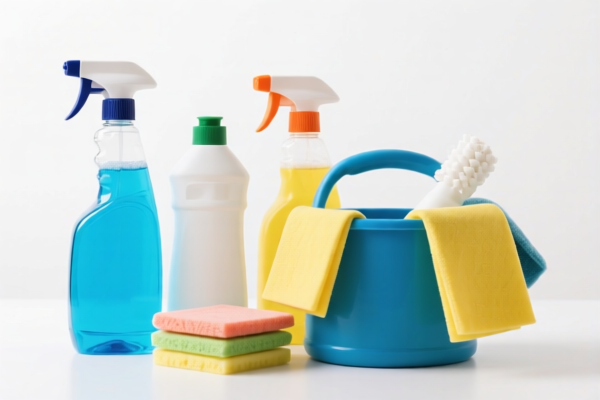
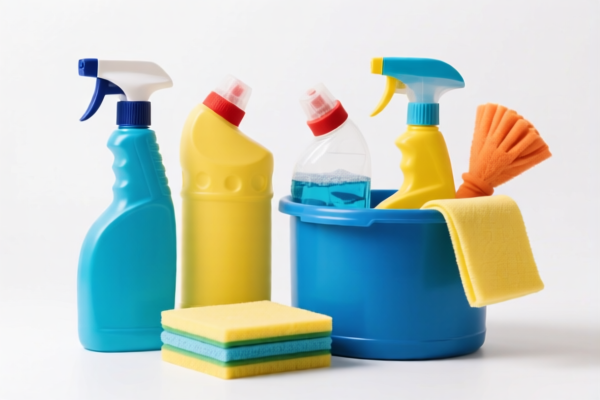
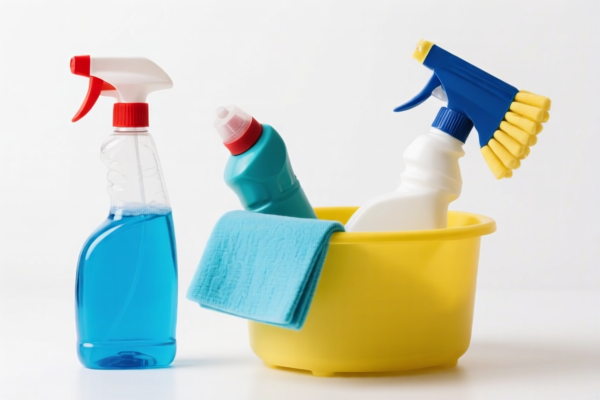
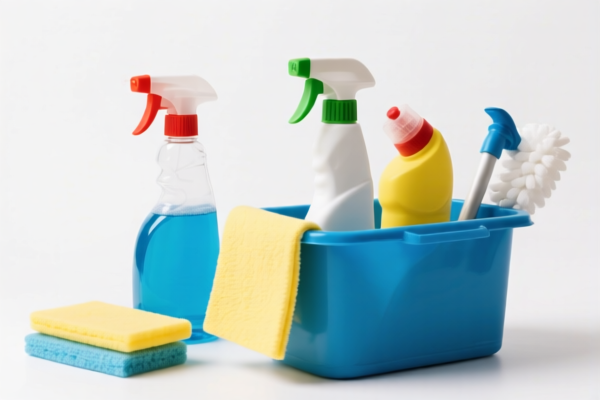
AI分析
🧼 Cleaning Kit: Navigating the Minefield of US Customs Classification
🌐 HS Code Reference & Clearance Guide | 2026 Latest Tariff Analysis | Professional Clearance Strategy
📌 I. Product Definition: What is a "Cleaning Kit"?
A "Cleaning Kit" is a generic term that creates significant ambiguity in international trade. It is not a single, self-defined product in the Harmonized System (HS) but rather a collection of goods. In US Customs practice, a "Kit" is generally classified based on the essential character of its components.
Common Scenarios for Cleaning Kits: 1. Plastic Hygiene Set: Brushes, trays, and containers (e.g., toilet brushes, bidet sprays). 2. Chemical Solution Set: Bottles of detergents, surfactants, or cleaning agents. 3. Mixed Utility Set: A box containing plastic brushes, sponges, and small bottles of cleaner. 4. General Miscellaneous Set: Plastic household items not elsewhere specified.
⚠️ Critical Distinction:
- If the kit is primarily containers/brushes with minimal chemical content → It falls under Chapter 39 (Plastics) or Chapter 96 (Misc. Articles).
- If the kit is primarily chemicals/surfactants with minimal packaging → It falls under Chapter 34 (Soap, Organic Surface-Active Agents).
- Customs Warning: Misclassifying a chemical-heavy kit as a plastic container (or vice versa) can lead to massive duty discrepancies, seizure, or penalties due to Section 301 and IEEPA additional tariffs.
📦 II. HS Code Classification Details (Based on Provided Data)
Below are the 5 most probable HS Codes for a "Cleaning Kit" imported from China to the US, along with their tax implications.
| HS Code | Product Description & Logic | Primary Component | Total Tax Rate (China Origin) |
|---|---|---|---|
| 3924.10.40.00 | Plastic Sanitary/Closet Articles Inferred as plastic hygiene items (toilet brushes, bidets, etc.). |
Plastic Hygiene Parts | 13.4% |
| 3402.50.51.00 | Surfactants & Cleaning Preparations Inferred as cleaning agents/detergents. |
Chemical Solutions | 35.0% |
| 3924.90.56.50 | Other Plastic Household Articles Inferred as general plastic brushes/containers (Plastic Houseware). |
Plastic General Items | 20.9% |
| 3402.90.50.30 | Other Organic Surface-Active Agents Inferred as mixed cleaning preparations/chemicals. |
Chemical Mixtures | 38.7% |
| 3926.90.99.89 | Other Articles of Plastics/Materials Inferred as mixed-material kits or miscellaneous plastic goods. |
Mixed/Misc Plastic | 22.8% |
🔍 Key Observation:
- The duty rate varies wildly from 13.4% to 38.7% depending on whether Customs views your kit as Plastic (Chapter 39) or Chemical (Chapter 34).
- Chemical classifications (3402) are subject to higher Section 301 tariffs, resulting in significantly higher total duties.
💰 III. 2026 Latest Tariff Rate Breakdown (Detailed)
✅ Applicable Country: United States (US)
✅ Country of Origin: China (CN)
✅ Effective Date: Current rates apply (including Section 301 and IEEPA measures).
🎯 1. 3924.10.40.00 – Plastic Sanitary/Closet Articles (Lowest Risk/Cost)
This code is often preferred for kits dominated by plastic brushes, trays, or containers.
| Item | Content |
|---|---|
| Base Tariff | 3.4% |
| Section 301 Tariff (Add-on) | 0.0% |
| IEEPA Section 122 Tariff | 10.0% |
| Total Effective Rate | 13.4% |
| Tax Calculation | CIF Value × 13.4% |
| De Minimis Eligibility | ❌ No (Subject to strict scrutiny if < $800, but generally taxable if classified here). |
| Legal Basis | USITC HTSUS 3924.10.40.00 + IEEPA Footnotes |
📌 Explanation:
- This is the most favorable classification among the options provided.
- The 0% Section 301 rate is crucial; it means no additional 25% tariff on top of the base and IEEPA.
- Condition: The kit must be predominantly plastic sanitary/closet items. If it contains significant liquid chemicals, Customs may reject this.
🎯 2. 3924.90.56.50 – Other Plastic Household Articles
For general plastic cleaning tools (sponges, non-specific plastic scrubbers) not classified as sanitary.
| Item | Content |
|---|---|
| Base Tariff | 3.4% |
| Section 301 Tariff (Add-on) | 7.5% |
| IEEPA Section 122 Tariff | 10.0% |
| Total Effective Rate | 20.9% |
| Tax Calculation | CIF Value × 20.9% |
| De Minimis Eligibility | ❌ No |
| Legal Basis | USITC HTSUS 3924.90.56.50 + Section 301 List 4A |
📌 Explanation:
- Moderate cost.
- The 7.5% Section 301 is lower than the standard 25%, likely due to specific exclusions or list adjustments for certain plastic household goods.
- Suitable for kits where plastic tools are the main component, but not strictly "sanitary/closet" items.
🎯 3. 3926.90.99.89 – Other Articles of Plastics
A "catch-all" for mixed-material kits or plastic items not fitting Chapter 39.4 (Household).
| Item | Content |
|---|---|
| Base Tariff | 5.3% |
| Section 301 Tariff (Add-on) | 7.5% |
| IEEPA Section 122 Tariff | 10.0% |
| Total Effective Rate | 22.8% |
| Tax Calculation | CIF Value × 22.8% |
| De Minimis Eligibility | ❌ No |
| Legal Basis | USITC HTSUS 3926.90.99.89 + Section 301 List 4A |
📌 Explanation:
- Slightly higher base rate (5.3%) but still benefits from the lower 7.5% Section 301.
- Use this if the kit contains non-plastic elements (e.g., wooden handles, metal parts) that prevent classification under the more specific "Plastic Household" codes.
🎯 4. 3402.50.51.00 – Surfactants & Cleaning Preparations
High Risk/High Cost. Used if the kit is primarily cleaning liquids/detergents.
| Item | Content |
|---|---|
| Base Tariff | 0.0% |
| Section 301 Tariff (Add-on) | 25.0% |
| IEEPA Section 122 Tariff | 10.0% |
| Total Effective Rate | 35.0% |
| Tax Calculation | CIF Value × 35.0% |
| De Minimis Eligibility | ❌ No |
| Legal Basis | USITC HTSUS 3402.50.51.00 + Section 301 List 3/4 |
📌 Explanation:
- The 0% base rate is misleading. The 25% Section 301 penalty is severe.
- This classification is triggered if the "Cleaning Kit" is viewed as a bundle of cleaning chemicals.
- Danger: If you try to declare a chemical-heavy kit under3924.10.40.00to save tax, Customs may reclassify it here and charge back-duties + penalties.
🎯 5. 3402.90.50.30 – Other Organic Surface-Active Agents
Highest Cost. For mixed chemical cleaning preparations.
| Item | Content |
|---|---|
| Base Tariff | 3.7% |
| Section 301 Tariff (Add-on) | 25.0% |
| IEEPA Section 122 Tariff | 10.0% |
| Total Effective Rate | 38.7% |
| Tax Calculation | CIF Value × 38.7% |
| De Minimis Eligibility | ❌ No |
| Legal Basis | USITC HTSUS 3402.90.50.30 + Section 301 List 3/4 |
📌 Explanation:
- The most expensive classification.
- Only apply if the product is definitively a mixture of cleaning agents/surfactants.
- Avoid this for kits that are physically dominated by plastic tools/containers.
🛠️ IV. Customs Clearance Practical Advice (Pitfall Avoidance)
✅ 1. Documentation Checklist (Non-Negotiable)
| Document | Required? | Purpose |
|---|---|---|
| ✅ Detailed Product Specification | ✔️ | Must list every item in the kit, its material (e.g., "PP Plastic," "Surfactant"), and function. |
| ✅ Commercial Invoice | ✔️ | Description must be precise. Do NOT just write "Cleaning Kit." Write: "Plastic Toilet Brush Set (1pc) + Cleaning Solution (1 bottle)." |
| ✅ Packing List | ✔️ | Itemize contents to prove "essential character" (e.g., volume of plastic vs. volume of liquid). |
| ✅ Certificate of Free Sale / MSDS | ✔️ | Crucial if chemicals are present. Proves safety and composition. |
| ✅ Photos | ✔️ | Show the kit assembled and disassembled. Highlight materials. |
✅ 2. Classification Strategy (The "Essential Character" Test)
🔥 Golden Rule: Classify based on the component that gives the kit its essential character.
| Scenario | Recommended HS Code | Why? |
|---|---|---|
| Kit contains 90% Plastic Brushes/Containers and small detergent samples. | 3924.10.40.00 or 3924.90.56.50 |
The plastic items define the kit. The chemicals are incidental. |
| Kit contains 90% Cleaning Liquid/Detergent and a small sponge. | 3402.50.51.00 or 3402.90.50.30 |
The chemicals are the main purpose. The sponge is incidental. |
| Mixed Kit (50/50) | Risky Area. Consult a broker. | Customs may split the entry or choose the higher duty rate. Best to separate shipments if possible. |
✅ 3. Special Handling for "Kit" Declarations
| Situation | Best Practice | Mistake to Avoid |
|---|---|---|
| Naming | Use specific names: "Plastic Cleaning Brush Set" OR "Multi-Surface Cleaner Kit." | Vague names like "Cleaning Kit" invite Customs scrutiny and delays. |
| Shipping | Consider splitting the shipment if one part is plastic and one is chemical. | Shipping mixed plastic/chemical kits in one box often triggers detailed inspection. |
| Valuation | Ensure the value reflects the components accurately. | Under-declaring to reduce duty on the chemical portion can lead to fraud allegations. |
✅ 4. Mitigating Tariff Costs
- Opt for Chapter 39 (Plastics): As shown, plastic-based kits (
3924.10.40.00) have a 13.4% total rate, while chemical-based kits (3402.90.50.30) have 38.7%.- Strategy: If possible, design the kit to emphasize the reusable plastic tools (brushes, trays, sprayers) rather than the disposable chemical refills.
- Check for Exclusions: Regularly check the Section 301 Exclusion List for your specific HS Codes. Some plastic household items may have temporary exclusions that lower the 7.5% or 25% add-on.
- IEEPA Section 122: Note that all current classifications include a 10% IEEPA tariff. This is a baseline cost for Chinese goods and cannot be avoided without changing the country of origin (e.g., manufacturing in Vietnam/Mexico).
🌍 V. Global Market Comparison (2026 Outlook)
| Region | Typical HS Code for Cleaning Kit | Est. Duty Rate | Notes |
|---|---|---|---|
| 🇺🇸 USA | 3924.10.40.00 (Plastic) or 3402.50.51.00 (Chemical) |
13.4% - 38.7% | Highly sensitive to "Kit" classification. Section 301 is the major cost driver. |
| 🇨🇳 China | 3924.10.40.00 / 3402.50.51.00 |
0% - 3.5% | Low import duties. Focus is on VAT (13%) and Consumption Tax (if applicable). |
| 🇪🇺 EU | 3924.10.00 / 3402.50 |
0% - 6.5% | Generally lower duties. No Section 301 equivalent. CE marking required. |
| 🇬🇧 UK | 3924.10.00 / 3402.50 |
0% - 6.5% | Post-Brexit tariffs. Generally competitive. |
📌 Conclusion:
The US is the most expensive market for cleaning kits due to the combination of Base Tariffs, Section 301, and IEEPA tariffs.
Plastic-based kits (Chapter 39) are significantly cheaper to import into the US than Chemical-based kits (Chapter 34).
📌 VI. Common Errors & Pitfalls (Lessons Learned)
❌ Error 1: Declaring a "Cleaning Kit" as just "Cleaning Supplies"
👉 Result: Customs rejects the vague description, delays shipment, and may reclassify under the highest applicable rate.
✅ Fix: Be specific. "Set of Plastic Toilet Brush and Cleaner Bottle."
❌ Error 2: Misclassifying a chemical-heavy kit as 3924.10.40.00 to save tax
👉 Result: Customs audit finds high liquid content. Reclassifies to 3402. Charges 25% back-duties + penalties.
✅ Fix: If chemicals are >10-20% by weight/value, consider chemical classification or separate the products.
❌ Error 3: Ignoring the IEEPA 10% tariff
👉 Result: Unexpected cost increase in 2026.
✅ Fix: Always include the 10% IEEPA in your landed cost calculations for China-origin goods.
❌ Error 4: Failing to provide MSDS for kits with liquids
👉 Result: Shipment held at port for hazardous material inspection.
✅ Fix: Provide MSDS (Material Safety Data Sheet) for any chemical components.
🎯 VII. Conclusion: Strategic Classification for Profit
🎯 Key Takeaway:
"Plastic is Profitable; Chemicals are Costly."
For "Cleaning Kits" entering the US, Chapter 39 (Plastics) offers a total tariff of 13.4%, while Chapter 34 (Chemicals) can reach 38.7%.
✅ Action Plan:
1. Maximize Plastic Content: Design kits with durable, reusable plastic tools (brushes, sprayers, trays).
2. Minimize Chemical Volume: If chemicals are necessary, include them as small "sample" sizes or sell refills separately.
3. Precise Declaration: Clearly state "Plastic Cleaning Kit" vs. "Chemical Cleaning Solution."
4. Consult a Broker: For mixed kits, get a professional opinion on "Essential Character" to avoid audit risks.
📌 Pro Tip:
If your cleaning kit is exclusively plastic tools (no liquids, no powders), stick to
3924.10.40.00. It is the most stable, lowest-cost, and least controversial classification for US Customs.
📣 Immediate Action:
📞 Review your BOM (Bill of Materials): Calculate the weight/volume ratio of Plastic vs. Chemicals.
🚀 Adjust Packaging: If possible, ship the chemical refills separately to allow different HS Code declarations.
✨ Smart Classification Saves Money!
💼 Don't let vague descriptions cost you thousands in duties.
用户评价
关于 HS 编码归类
协调制度(HS)是由世界海关组织(WCO)制定的国际贸易商品分类标准。全球 200 多个国家采用 HS 系统作为海关关税、贸易统计和进出口监管的基础。
每个 HS 编码遵循以下层级结构:
- 章(2 位)——商品大类(例如:第 84 章:机器和机械设备)
- 品目(4 位)——章内的更具体分类
- 子目(6 位)——国际通用细分,所有 WCO 成员国统一使用
- 本国细分(8-10 位)——各国自行扩展的细分编码,如美国 HTSUS 10 位编码
正确的 HS 编码归类对于顺利通关、准确缴纳关税和遵守贸易法规至关重要。错误归类可能导致海关延误、多缴关税或罚款。
从CN进口到US时,适用的关税税率可能包括:
- 最惠国(MFN)税率——适用于 WTO 成员国的标准关税税率
- 普通税率——适用于无贸易协定国家
- 贸易救济关税——附加关税,如 301 条款(反倾销)、232 条款(国家安全)或反补贴税
本页内容仅供参考。如需正式归类,请咨询当地海关或持牌报关代理。