Cleaning Kit
CN → US| HS Code | Tariff Rate | Origin | Destination | Doc |
|---|---|---|---|---|
| 3924905650 | 20.9% | CN | US | Official Doc |
| 3402905030 | 38.7% | CN | US | Official Doc |
| 3924104000 | 13.4% | CN | US | Official Doc |
| 3402505100 | 35.0% | CN | US | Official Doc |
| 3926909989 | 22.8% | CN | US | Official Doc |
Product Images
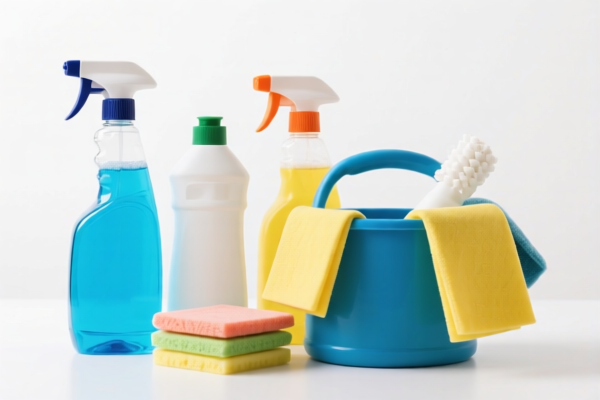
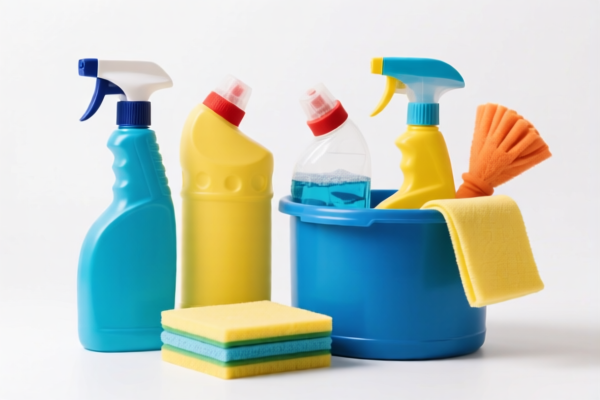
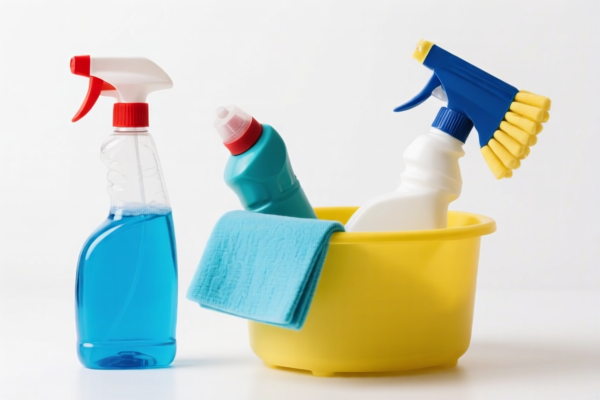
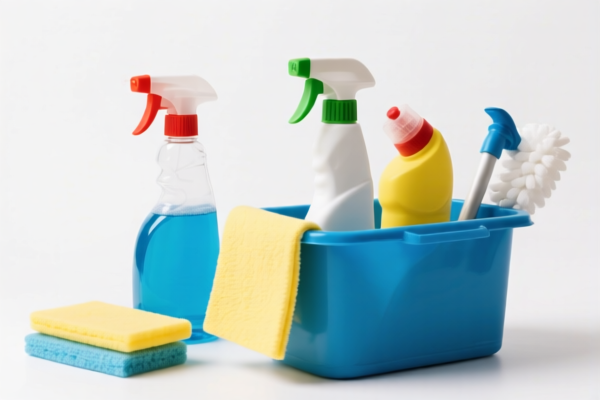
AI Analysis
🧼 Cleaning Kit: Navigating the Minefield of US Customs Classification
🌐 HS Code Reference & Clearance Guide | 2026 Latest Tariff Analysis | Professional Clearance Strategy
📌 I. Product Definition: What is a "Cleaning Kit"?
A "Cleaning Kit" is a generic term that creates significant ambiguity in international trade. It is not a single, self-defined product in the Harmonized System (HS) but rather a collection of goods. In US Customs practice, a "Kit" is generally classified based on the essential character of its components.
Common Scenarios for Cleaning Kits: 1. Plastic Hygiene Set: Brushes, trays, and containers (e.g., toilet brushes, bidet sprays). 2. Chemical Solution Set: Bottles of detergents, surfactants, or cleaning agents. 3. Mixed Utility Set: A box containing plastic brushes, sponges, and small bottles of cleaner. 4. General Miscellaneous Set: Plastic household items not elsewhere specified.
⚠️ Critical Distinction:
- If the kit is primarily containers/brushes with minimal chemical content → It falls under Chapter 39 (Plastics) or Chapter 96 (Misc. Articles).
- If the kit is primarily chemicals/surfactants with minimal packaging → It falls under Chapter 34 (Soap, Organic Surface-Active Agents).
- Customs Warning: Misclassifying a chemical-heavy kit as a plastic container (or vice versa) can lead to massive duty discrepancies, seizure, or penalties due to Section 301 and IEEPA additional tariffs.
📦 II. HS Code Classification Details (Based on Provided Data)
Below are the 5 most probable HS Codes for a "Cleaning Kit" imported from China to the US, along with their tax implications.
| HS Code | Product Description & Logic | Primary Component | Total Tax Rate (China Origin) |
|---|---|---|---|
| 3924.10.40.00 | Plastic Sanitary/Closet Articles Inferred as plastic hygiene items (toilet brushes, bidets, etc.). |
Plastic Hygiene Parts | 13.4% |
| 3402.50.51.00 | Surfactants & Cleaning Preparations Inferred as cleaning agents/detergents. |
Chemical Solutions | 35.0% |
| 3924.90.56.50 | Other Plastic Household Articles Inferred as general plastic brushes/containers (Plastic Houseware). |
Plastic General Items | 20.9% |
| 3402.90.50.30 | Other Organic Surface-Active Agents Inferred as mixed cleaning preparations/chemicals. |
Chemical Mixtures | 38.7% |
| 3926.90.99.89 | Other Articles of Plastics/Materials Inferred as mixed-material kits or miscellaneous plastic goods. |
Mixed/Misc Plastic | 22.8% |
🔍 Key Observation:
- The duty rate varies wildly from 13.4% to 38.7% depending on whether Customs views your kit as Plastic (Chapter 39) or Chemical (Chapter 34).
- Chemical classifications (3402) are subject to higher Section 301 tariffs, resulting in significantly higher total duties.
💰 III. 2026 Latest Tariff Rate Breakdown (Detailed)
✅ Applicable Country: United States (US)
✅ Country of Origin: China (CN)
✅ Effective Date: Current rates apply (including Section 301 and IEEPA measures).
🎯 1. 3924.10.40.00 – Plastic Sanitary/Closet Articles (Lowest Risk/Cost)
This code is often preferred for kits dominated by plastic brushes, trays, or containers.
| Item | Content |
|---|---|
| Base Tariff | 3.4% |
| Section 301 Tariff (Add-on) | 0.0% |
| IEEPA Section 122 Tariff | 10.0% |
| Total Effective Rate | 13.4% |
| Tax Calculation | CIF Value × 13.4% |
| De Minimis Eligibility | ❌ No (Subject to strict scrutiny if < $800, but generally taxable if classified here). |
| Legal Basis | USITC HTSUS 3924.10.40.00 + IEEPA Footnotes |
📌 Explanation:
- This is the most favorable classification among the options provided.
- The 0% Section 301 rate is crucial; it means no additional 25% tariff on top of the base and IEEPA.
- Condition: The kit must be predominantly plastic sanitary/closet items. If it contains significant liquid chemicals, Customs may reject this.
🎯 2. 3924.90.56.50 – Other Plastic Household Articles
For general plastic cleaning tools (sponges, non-specific plastic scrubbers) not classified as sanitary.
| Item | Content |
|---|---|
| Base Tariff | 3.4% |
| Section 301 Tariff (Add-on) | 7.5% |
| IEEPA Section 122 Tariff | 10.0% |
| Total Effective Rate | 20.9% |
| Tax Calculation | CIF Value × 20.9% |
| De Minimis Eligibility | ❌ No |
| Legal Basis | USITC HTSUS 3924.90.56.50 + Section 301 List 4A |
📌 Explanation:
- Moderate cost.
- The 7.5% Section 301 is lower than the standard 25%, likely due to specific exclusions or list adjustments for certain plastic household goods.
- Suitable for kits where plastic tools are the main component, but not strictly "sanitary/closet" items.
🎯 3. 3926.90.99.89 – Other Articles of Plastics
A "catch-all" for mixed-material kits or plastic items not fitting Chapter 39.4 (Household).
| Item | Content |
|---|---|
| Base Tariff | 5.3% |
| Section 301 Tariff (Add-on) | 7.5% |
| IEEPA Section 122 Tariff | 10.0% |
| Total Effective Rate | 22.8% |
| Tax Calculation | CIF Value × 22.8% |
| De Minimis Eligibility | ❌ No |
| Legal Basis | USITC HTSUS 3926.90.99.89 + Section 301 List 4A |
📌 Explanation:
- Slightly higher base rate (5.3%) but still benefits from the lower 7.5% Section 301.
- Use this if the kit contains non-plastic elements (e.g., wooden handles, metal parts) that prevent classification under the more specific "Plastic Household" codes.
🎯 4. 3402.50.51.00 – Surfactants & Cleaning Preparations
High Risk/High Cost. Used if the kit is primarily cleaning liquids/detergents.
| Item | Content |
|---|---|
| Base Tariff | 0.0% |
| Section 301 Tariff (Add-on) | 25.0% |
| IEEPA Section 122 Tariff | 10.0% |
| Total Effective Rate | 35.0% |
| Tax Calculation | CIF Value × 35.0% |
| De Minimis Eligibility | ❌ No |
| Legal Basis | USITC HTSUS 3402.50.51.00 + Section 301 List 3/4 |
📌 Explanation:
- The 0% base rate is misleading. The 25% Section 301 penalty is severe.
- This classification is triggered if the "Cleaning Kit" is viewed as a bundle of cleaning chemicals.
- Danger: If you try to declare a chemical-heavy kit under3924.10.40.00to save tax, Customs may reclassify it here and charge back-duties + penalties.
🎯 5. 3402.90.50.30 – Other Organic Surface-Active Agents
Highest Cost. For mixed chemical cleaning preparations.
| Item | Content |
|---|---|
| Base Tariff | 3.7% |
| Section 301 Tariff (Add-on) | 25.0% |
| IEEPA Section 122 Tariff | 10.0% |
| Total Effective Rate | 38.7% |
| Tax Calculation | CIF Value × 38.7% |
| De Minimis Eligibility | ❌ No |
| Legal Basis | USITC HTSUS 3402.90.50.30 + Section 301 List 3/4 |
📌 Explanation:
- The most expensive classification.
- Only apply if the product is definitively a mixture of cleaning agents/surfactants.
- Avoid this for kits that are physically dominated by plastic tools/containers.
🛠️ IV. Customs Clearance Practical Advice (Pitfall Avoidance)
✅ 1. Documentation Checklist (Non-Negotiable)
| Document | Required? | Purpose |
|---|---|---|
| ✅ Detailed Product Specification | ✔️ | Must list every item in the kit, its material (e.g., "PP Plastic," "Surfactant"), and function. |
| ✅ Commercial Invoice | ✔️ | Description must be precise. Do NOT just write "Cleaning Kit." Write: "Plastic Toilet Brush Set (1pc) + Cleaning Solution (1 bottle)." |
| ✅ Packing List | ✔️ | Itemize contents to prove "essential character" (e.g., volume of plastic vs. volume of liquid). |
| ✅ Certificate of Free Sale / MSDS | ✔️ | Crucial if chemicals are present. Proves safety and composition. |
| ✅ Photos | ✔️ | Show the kit assembled and disassembled. Highlight materials. |
✅ 2. Classification Strategy (The "Essential Character" Test)
🔥 Golden Rule: Classify based on the component that gives the kit its essential character.
| Scenario | Recommended HS Code | Why? |
|---|---|---|
| Kit contains 90% Plastic Brushes/Containers and small detergent samples. | 3924.10.40.00 or 3924.90.56.50 |
The plastic items define the kit. The chemicals are incidental. |
| Kit contains 90% Cleaning Liquid/Detergent and a small sponge. | 3402.50.51.00 or 3402.90.50.30 |
The chemicals are the main purpose. The sponge is incidental. |
| Mixed Kit (50/50) | Risky Area. Consult a broker. | Customs may split the entry or choose the higher duty rate. Best to separate shipments if possible. |
✅ 3. Special Handling for "Kit" Declarations
| Situation | Best Practice | Mistake to Avoid |
|---|---|---|
| Naming | Use specific names: "Plastic Cleaning Brush Set" OR "Multi-Surface Cleaner Kit." | Vague names like "Cleaning Kit" invite Customs scrutiny and delays. |
| Shipping | Consider splitting the shipment if one part is plastic and one is chemical. | Shipping mixed plastic/chemical kits in one box often triggers detailed inspection. |
| Valuation | Ensure the value reflects the components accurately. | Under-declaring to reduce duty on the chemical portion can lead to fraud allegations. |
✅ 4. Mitigating Tariff Costs
- Opt for Chapter 39 (Plastics): As shown, plastic-based kits (
3924.10.40.00) have a 13.4% total rate, while chemical-based kits (3402.90.50.30) have 38.7%.- Strategy: If possible, design the kit to emphasize the reusable plastic tools (brushes, trays, sprayers) rather than the disposable chemical refills.
- Check for Exclusions: Regularly check the Section 301 Exclusion List for your specific HS Codes. Some plastic household items may have temporary exclusions that lower the 7.5% or 25% add-on.
- IEEPA Section 122: Note that all current classifications include a 10% IEEPA tariff. This is a baseline cost for Chinese goods and cannot be avoided without changing the country of origin (e.g., manufacturing in Vietnam/Mexico).
🌍 V. Global Market Comparison (2026 Outlook)
| Region | Typical HS Code for Cleaning Kit | Est. Duty Rate | Notes |
|---|---|---|---|
| 🇺🇸 USA | 3924.10.40.00 (Plastic) or 3402.50.51.00 (Chemical) |
13.4% - 38.7% | Highly sensitive to "Kit" classification. Section 301 is the major cost driver. |
| 🇨🇳 China | 3924.10.40.00 / 3402.50.51.00 |
0% - 3.5% | Low import duties. Focus is on VAT (13%) and Consumption Tax (if applicable). |
| 🇪🇺 EU | 3924.10.00 / 3402.50 |
0% - 6.5% | Generally lower duties. No Section 301 equivalent. CE marking required. |
| 🇬🇧 UK | 3924.10.00 / 3402.50 |
0% - 6.5% | Post-Brexit tariffs. Generally competitive. |
📌 Conclusion:
The US is the most expensive market for cleaning kits due to the combination of Base Tariffs, Section 301, and IEEPA tariffs.
Plastic-based kits (Chapter 39) are significantly cheaper to import into the US than Chemical-based kits (Chapter 34).
📌 VI. Common Errors & Pitfalls (Lessons Learned)
❌ Error 1: Declaring a "Cleaning Kit" as just "Cleaning Supplies"
👉 Result: Customs rejects the vague description, delays shipment, and may reclassify under the highest applicable rate.
✅ Fix: Be specific. "Set of Plastic Toilet Brush and Cleaner Bottle."
❌ Error 2: Misclassifying a chemical-heavy kit as 3924.10.40.00 to save tax
👉 Result: Customs audit finds high liquid content. Reclassifies to 3402. Charges 25% back-duties + penalties.
✅ Fix: If chemicals are >10-20% by weight/value, consider chemical classification or separate the products.
❌ Error 3: Ignoring the IEEPA 10% tariff
👉 Result: Unexpected cost increase in 2026.
✅ Fix: Always include the 10% IEEPA in your landed cost calculations for China-origin goods.
❌ Error 4: Failing to provide MSDS for kits with liquids
👉 Result: Shipment held at port for hazardous material inspection.
✅ Fix: Provide MSDS (Material Safety Data Sheet) for any chemical components.
🎯 VII. Conclusion: Strategic Classification for Profit
🎯 Key Takeaway:
"Plastic is Profitable; Chemicals are Costly."
For "Cleaning Kits" entering the US, Chapter 39 (Plastics) offers a total tariff of 13.4%, while Chapter 34 (Chemicals) can reach 38.7%.
✅ Action Plan:
1. Maximize Plastic Content: Design kits with durable, reusable plastic tools (brushes, sprayers, trays).
2. Minimize Chemical Volume: If chemicals are necessary, include them as small "sample" sizes or sell refills separately.
3. Precise Declaration: Clearly state "Plastic Cleaning Kit" vs. "Chemical Cleaning Solution."
4. Consult a Broker: For mixed kits, get a professional opinion on "Essential Character" to avoid audit risks.
📌 Pro Tip:
If your cleaning kit is exclusively plastic tools (no liquids, no powders), stick to
3924.10.40.00. It is the most stable, lowest-cost, and least controversial classification for US Customs.
📣 Immediate Action:
📞 Review your BOM (Bill of Materials): Calculate the weight/volume ratio of Plastic vs. Chemicals.
🚀 Adjust Packaging: If possible, ship the chemical refills separately to allow different HS Code declarations.
✨ Smart Classification Saves Money!
💼 Don't let vague descriptions cost you thousands in duties.
Customer Reviews
About HS Code Classification
The Harmonized System (HS) is an internationally standardized nomenclature developed by the World Customs Organization (WCO) to classify traded products. Over 200 countries use the HS system as the basis for customs tariffs, trade statistics, and import/export regulations.
Each HS code follows a hierarchical structure:
- Chapter (2 digits) — Broad category of goods (e.g., Chapter 84: Machinery and Mechanical Appliances)
- Heading (4 digits) — More specific grouping within the chapter
- Subheading (6 digits) — Internationally standardized breakdown, used by all WCO member countries
- National subdivisions (8-10 digits) — Country-specific extensions for further classification, such as US HTSUS 10-digit codes
Correct HS code classification is essential for smooth customs clearance, accurate duty payment, and compliance with trade regulations. Misclassification can lead to customs delays, overpayment of duties, or penalties.
When importing from CN to US, the applicable tariff rates may include:
- Most-Favored-Nation (MFN) rate — The standard duty rate applied to WTO members
- General rate — Applied to countries without trade agreements
- Trade remedy duties — Additional tariffs such as Section 301 (anti-dumping), Section 232 (national security), or countervailing duties
The information provided on this page is for reference purposes only. For official classification, please consult with your local customs authority or a licensed customs broker.