Cloth Insulation Tape
CN → US| HS编码 | 关税税率 | 原产国 | 目的国 | 文档 |
|---|---|---|---|---|
| 3919905060 | 40.8% | CN | US | 官方文档 |
| 3926909989 | 22.8% | CN | US | 官方文档 |
| 3926904590 | 38.5% | CN | US | 官方文档 |
| 3919102040 | 40.8% | CN | US | 官方文档 |
| 3919905040 | 40.8% | CN | US | 官方文档 |
商品图片
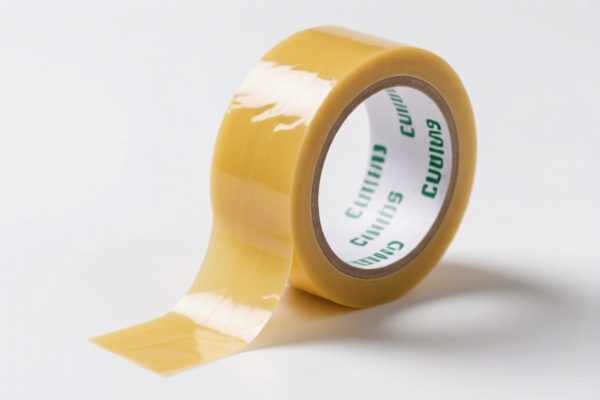
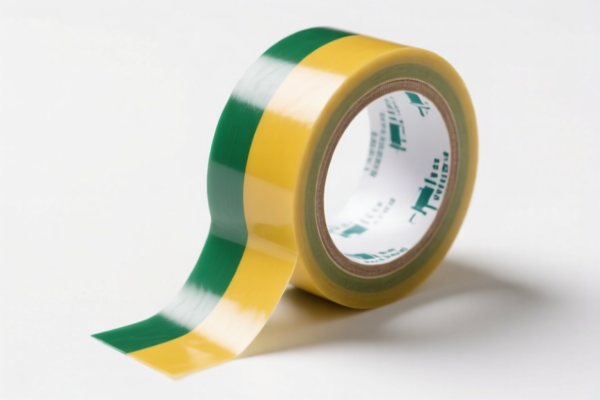
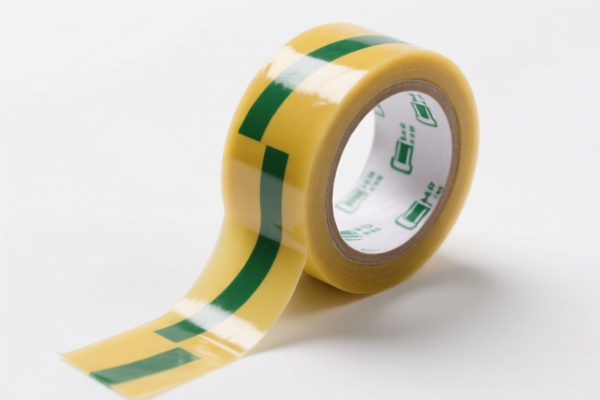
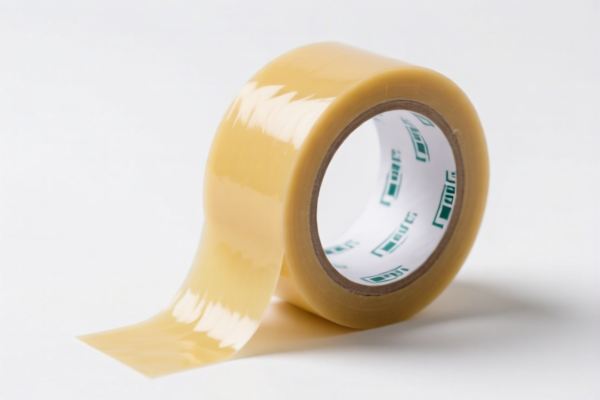
AI分析
🧶 Cloth Insulation Tape (Fabric-Based Adhesive Tape)
🌐 HS Code Reference & Customs Clearance Guide | 2026 Latest Tariff Analysis | Professional-Level Entry Strategy
📌 I. Product Definition & Classification: What Exactly is "Cloth Tape"?
Cloth insulation tape, often referred to as fabric tape or duct tape (fabric-backed), is a versatile adhesive material widely used in electrical insulation, bundling, sealing, and general-purpose repair. In international trade, its classification depends heavily on its material composition, form, and primary function.
Key Distinction:
- If the base material is primarily plastic/polymer (e.g., vinyl, PVC, PE) with a fabric reinforcement, it falls under Chapter 39 (Plastics).
- If it is purely natural fibers (cotton, linen) without significant plastic content, it might fall under Chapter 59 (Impregnated Textiles), but most commercial "cloth tapes" today are plastic-backed fabric tapes.
⚠️ Critical Classification Point:
- Most "cloth tapes" used in industrial/commercial settings are plastic-based self-adhesive tapes with a fabric texture or backing →归入 3919 (Self-adhesive plates, sheets, film, foil, tape, strip and other flat shapes).
- If classified as a general "plastic article" due to complex composite structure not fitting 3919 →归入 3926 (Other articles of plastics).
- If it functions primarily as a sealing/gasket material → May be classified under 3926.90 (Specific subheading for seals/gaskets).
📦 II. HS Code Classification Details (2026 Latest Tariff Authority Mapping)
Based on the provided data, here are the possible HS Codes for Cloth Insulation Tape, along with their specific interpretations:
| HS Code | Product Description | Application Scenario | Tax Rate Structure (China to US) |
|---|---|---|---|
3919.90.50.60 |
Cloth Tape, Flat Shape, Plastic Base Material | General-purpose fabric tape, plastic-backed, not specifically self-adhesive in the primary polymer sense | 40.8% |
3926.90.99.89 |
Cloth Tape, Plastic & Other Materials | Composite articles of plastic and fabric, general plastic articles | 22.8% |
3926.90.45.90 |
Cloth Tape, Plastic/Synthetic, Sealing/Adhesive Function | Used as seals, gaskets, or padding; flat shape for sealing | 38.5% |
3919.10.20.40 |
Transparent Cloth Tape, Plastic/Resin, Self-Adhesive | Clear fabric-backed tape, flat roll form, self-adhesive plastic strip | 40.8% |
3919.90.50.40 |
Transparent Cloth Tape, Self-Adhesive Plastic Strip | Self-adhesive plastic band, similar to transparent tape but fabric-textured | 40.8% |
🔍 Key Interpretation:
- 3919 Series: Best for self-adhesive tapes where the adhesive and backing are integral. Includes both opaque and transparent cloth tapes.
- 3926 Series: Used for composite articles or tapes that don’t fit the strict "self-adhesive flat shape" definition, or those classified as general plastic articles/seals.
💰 III. 2026 Latest Tariff Rate Breakdown (Including Surtaxes & Policy Add-ons)
✅ Applicable Country: United States (US)
✅ Country of Origin: China (CN)
✅ Effective Date: From November 10, 2025 (inclusive of subsequent imports)
🎯 1. 3919.90.50.60 & 3919.10.20.40 & 3919.90.50.40 —— Self-Adhesive Cloth Tapes (Plastic-Based)
| Item | Detail |
|---|---|
| Base Tariff | 5.8% (for 3919.90.50.60 / 3919.10.20.40 / 3919.90.50.40) |
| Section 301 Surtax | +25.0% (Due to Section 301, USITC Footnote 9903.88.01) |
| Section 122 / IEEPA Surtax | +10.0% (Against China/HK products, effective Nov 10, 2025) |
| Total Tariff Rate | 40.8% |
| Calculation Basis | CIF Value × 40.8% |
| De Minimis Eligibility | ❌ Not Eligible (deny_de_minimis) |
| Legal Pathway | IEEPA:9903.01.25 → IEEPA:9903.01.24 → USITC:3919.* → FOOTNOTE:9903.88.01 |
📌 Explanation:
- These codes fall under Chapter 39 (Plastics), specifically self-adhesive tapes.
- The 25% Section 301 tax is standard for most plastic tapes from China.
- The 10% IEEPA tax is the new additional burden under the International Emergency Economic Powers Act.
- Total 40.8% is a high barrier for entry.
🎯 2. 3926.90.45.90 —— Plastic/Synthetic Tape for Sealing/Gasket Use
| Item | Detail |
|---|---|
| Base Tariff | 3.5% |
| Section 301 Surtax | +25.0% |
| Section 122 / IEEPA Surtax | +10.0% |
| Total Tariff Rate | 38.5% |
| Calculation Basis | CIF Value × 38.5% |
| De Minimis Eligibility | ❌ Not Eligible |
| Legal Pathway | IEEPA:9903.01.25 → IEEPA:9903.01.24 → USITC:3926.90.45.90 → FOOTNOTE:9903.88.01 |
📌 Explanation:
- If the tape is explicitly marketed as a sealing or gasket material, this code may apply.
- Slightly lower base rate (3.5% vs 5.8%), but still subject to full surtaxes.
🎯 3. 3926.90.99.89 —— General Plastic Articles (Composite Cloth Tape)
| Item | Detail |
|---|---|
| Base Tariff | 5.3% |
| Section 301 Surtax | +7.5% (Note: Lower Surtax for this specific subcategory) |
| Section 122 / IEEPA Surtax | +10.0% |
| Total Tariff Rate | 22.8% |
| Calculation Basis | CIF Value × 22.8% |
| De Minimis Eligibility | ❌ Not Eligible |
| Legal Pathway | IEEPA:9901.25 → IEEPA:9903.01.24 → USITC:3926.90.99.89 → FOOTNOTE:9903.88.01 |
📌 Explanation:
- This is the most tariff-efficient option (22.8% total).
- Applicable when the tape is classified as a general plastic article rather than a self-adhesive tape.
- Key Strategy: If your product can be justified as a "composite plastic article" rather than a "self-adhesive plastic tape," you can save 18 percentage points in tariffs.
🛠️ IV. Customs Clearance Practical Advice (Pitfall Avoidance Guide)
✅ 1. Preparation Checklist (Mandatory)
| Document | Required | Note |
|---|---|---|
| ✅ Product Specification Sheet | ✔️ | Must detail: Base material (plastic/fabric), adhesive type, thickness, width, core diameter. |
| ✅ Product Photos | ✔️ | Clear images of the tape roll, label, and adhesive side. Show if it’s transparent or opaque. |
| ✅ Commercial Invoice | ✔️ | Accurately describe as "Cloth Tape" or "Fabric-Backed Adhesive Tape." Avoid vague terms like "Packaging Material." |
| ✅ Packing List | ✔️ | Include net/gross weight, number of rolls, dimensions. |
| ✅ Certificate of Origin (CO) | ✔️ | Mandatory for China-origin goods to prove eligibility for surtaxes. |
| ✅ Declaration of Composition | ✔️ | Explicitly state % of plastic vs. fabric. Critical for 3919 vs. 3926 classification. |
✅ 2. Declaration Tips (Key Mantra)
🔥 "Material Determines Code, Adhesive Determines Chapter!"
| Scenario | Correct HS Code | Wrong Approach |
|---|---|---|
| Opaque fabric tape, plastic backing, self-adhesive | 3919.90.50.60 (40.8%) |
Misclassifying as 3926 → Risk of penalty |
| Transparent cloth tape, self-adhesive | 3919.10.20.40 or 3919.90.50.40 (40.8%) |
Using 3926 without justification → Audit risk |
| Tape used strictly as a gasket/seal | 3926.90.45.90 (38.5%) |
Ignoring functional use → Missed opportunity |
| Composite plastic/fabric article, not primarily self-adhesive | 3926.90.99.89 (22.8%) |
Best Cost Option if justifiable |
📌 Critical Strategy:
- If your cloth tape is primarily for general-purpose bundling or electrical insulation and is self-adhesive, you are likely stuck with 3919 (40.8%).
- However, if you can demonstrate that the tape is a composite article where the plastic component is secondary or the product is more of a "plastic sheet/article" than a "tape," you may qualify for 3926.90.99.89 (22.8%).
- Recommendation: Consult a customs broker to argue for 3926.90.99.89 if the tape’s fabric backing is substantial and it’s not a typical "tape" in the consumer sense.
✅ 3. Special Cases
| Case | Handling Advice |
|---|---|
| OEM Private Label | Provide OEM agreement and design specs to avoid "generic" classification issues. |
| Transparent vs. Opaque | Both fall under 3919 but different subcodes. Ensure invoice matches physical product. |
| Large Volume Imports | Consider Advance Ruling from US CBP to lock in HS Code and tariff rate before shipment. |
| Non-China Origin | If manufactured in Vietnam, Thailand, or Mexico, IEEPA 10% tax may be waived. Verify Country of Origin! |
🌍 V. Global Market Comparison (2026 Latest)
| Country/Region | Recommended HS Code | Tariff (China Origin) | Certification | Notes |
|---|---|---|---|---|
| 🇺🇸 USA | 3919.90.50.60 / 3926.90.99.89 |
40.8% (3919) / 22.8% (3926) | None specific | High tariffs; verify origin carefully. |
| 🇨🇳 China | 3919 / 3926 |
~5-10% | CCC (if applicable) | Low entry barrier. |
| 🇪🇺 EU | 3919 / 3926 |
4-6% | CE (if applicable) | No Section 301/IEEPA equivalents. |
| 🇬🇧 UK | 3919 / 3926 |
4-6% | UKCA | Post-Brexit, no US-style surtaxes. |
| 🇯🇵 Japan | 3919 / 3926 |
3-5% | PSE (if electrical) | Stable tariff environment. |
📌 Conclusion:
- USA is the only major market with punitive tariffs on Chinese plastic/cloth tapes.
- Cost Saving Tip: If possible, shift production to ASEAN countries (Vietnam, Thailand) to avoid Section 301 (25%) + IEEPA (10%).
- Domestic US Classification: Always aim for 3926.90.99.89 (22.8%) if technically defensible, to save 18% vs. 3919.
📌 VI. Common Errors & Pitfalls (Blood Lessons)
❌ Error 1: Classifying all cloth tape as 3926 to avoid high taxes.
👉 Consequence: If CBP determines it’s a self-adhesive plastic tape, they will reclassify to 3919 (40.8%) + penalties + interest.
❌ Error 2: Ignoring the 10% IEEPA Surtax.
👉 Consequence: Underpayment by 10% on every shipment → Seizure or severe fines.
❌ Error 3: Using vague descriptions like "Packaging Tape" on invoices.
👉 Consequence: CBP may assign a different, higher tariff code or delay clearance for further inquiry.
❌ Error 4: Assuming De Minimis (Section 321) applies.
👉 Consequence: Section 301 and IEEPA taxes are NOT eligible for De Minimis exemption. Shipments under $800 will still be taxed!
✅ Correct Declaration Example:
"Cloth Insulation Tape, Fabric-Backed, Pressure-Sensitive Adhesive, Plastic Base, Roll Form, 1 inch x 10 yards, Model XYZ, Made in China"
🎯 VII. Conclusion: Smart Classification, Lower Costs
🎯 Remember the Mantra:
🔹 "Self-Adhesive = 3919 (40.8%) | Composite Article = 3926 (22.8%) | Non-China Origin = 0% Surcharge!"
🔹 "HS Code Saves or Breaks Your Margin! 18% Difference is Real!"
📌 Pro Tip:
If your cloth tape is imported in volumes >$800, you must pay tariffs.
If you can structure the product as a general plastic article (3926) rather than a tape (3919), you save 18 percentage points.
For maximum savings, consider non-China origin production to eliminate the 25% + 10% surtaxes entirely.
📣 Call to Action:
📞 Engage a licensed customs broker before shipment.
📝 Request a CBP Advance Ruling if your product is borderline between 3919 and 3926.
🚀 Optimize your HS Code, protect your margins, and ensure smooth customs clearance!
✨ Professional Clearance Starts with Accurate Classification!
💼 Every Percent of Tariff is a Percent of Your Profit!
用户评价
关于 HS 编码归类
协调制度(HS)是由世界海关组织(WCO)制定的国际贸易商品分类标准。全球 200 多个国家采用 HS 系统作为海关关税、贸易统计和进出口监管的基础。
每个 HS 编码遵循以下层级结构:
- 章(2 位)——商品大类(例如:第 84 章:机器和机械设备)
- 品目(4 位)——章内的更具体分类
- 子目(6 位)——国际通用细分,所有 WCO 成员国统一使用
- 本国细分(8-10 位)——各国自行扩展的细分编码,如美国 HTSUS 10 位编码
正确的 HS 编码归类对于顺利通关、准确缴纳关税和遵守贸易法规至关重要。错误归类可能导致海关延误、多缴关税或罚款。
从CN进口到US时,适用的关税税率可能包括:
- 最惠国(MFN)税率——适用于 WTO 成员国的标准关税税率
- 普通税率——适用于无贸易协定国家
- 贸易救济关税——附加关税,如 301 条款(反倾销)、232 条款(国家安全)或反补贴税
本页内容仅供参考。如需正式归类,请咨询当地海关或持牌报关代理。