Cloth Insulation Tape
CN → US| HS Code | Tariff Rate | Origin | Destination | Doc |
|---|---|---|---|---|
| 3919905060 | 40.8% | CN | US | Official Doc |
| 3926909989 | 22.8% | CN | US | Official Doc |
| 3926904590 | 38.5% | CN | US | Official Doc |
| 3919102040 | 40.8% | CN | US | Official Doc |
| 3919905040 | 40.8% | CN | US | Official Doc |
Product Images
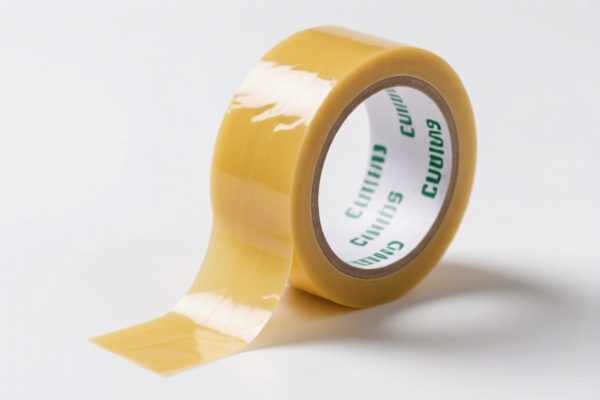
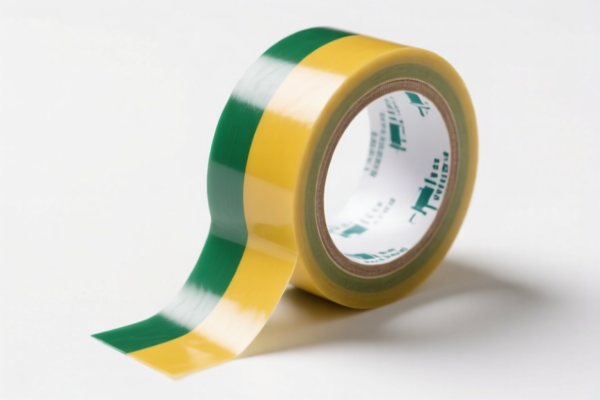
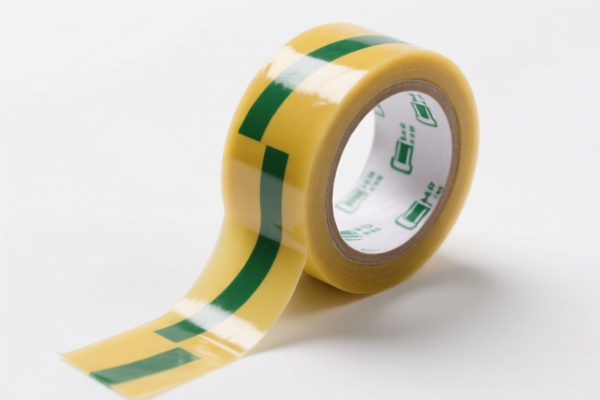
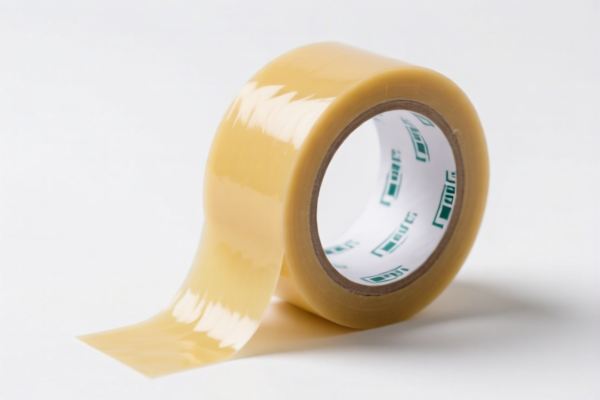
AI Analysis
🧶 Cloth Insulation Tape (Fabric-Based Adhesive Tape)
🌐 HS Code Reference & Customs Clearance Guide | 2026 Latest Tariff Analysis | Professional-Level Entry Strategy
📌 I. Product Definition & Classification: What Exactly is "Cloth Tape"?
Cloth insulation tape, often referred to as fabric tape or duct tape (fabric-backed), is a versatile adhesive material widely used in electrical insulation, bundling, sealing, and general-purpose repair. In international trade, its classification depends heavily on its material composition, form, and primary function.
Key Distinction:
- If the base material is primarily plastic/polymer (e.g., vinyl, PVC, PE) with a fabric reinforcement, it falls under Chapter 39 (Plastics).
- If it is purely natural fibers (cotton, linen) without significant plastic content, it might fall under Chapter 59 (Impregnated Textiles), but most commercial "cloth tapes" today are plastic-backed fabric tapes.
⚠️ Critical Classification Point:
- Most "cloth tapes" used in industrial/commercial settings are plastic-based self-adhesive tapes with a fabric texture or backing →归入 3919 (Self-adhesive plates, sheets, film, foil, tape, strip and other flat shapes).
- If classified as a general "plastic article" due to complex composite structure not fitting 3919 →归入 3926 (Other articles of plastics).
- If it functions primarily as a sealing/gasket material → May be classified under 3926.90 (Specific subheading for seals/gaskets).
📦 II. HS Code Classification Details (2026 Latest Tariff Authority Mapping)
Based on the provided data, here are the possible HS Codes for Cloth Insulation Tape, along with their specific interpretations:
| HS Code | Product Description | Application Scenario | Tax Rate Structure (China to US) |
|---|---|---|---|
3919.90.50.60 |
Cloth Tape, Flat Shape, Plastic Base Material | General-purpose fabric tape, plastic-backed, not specifically self-adhesive in the primary polymer sense | 40.8% |
3926.90.99.89 |
Cloth Tape, Plastic & Other Materials | Composite articles of plastic and fabric, general plastic articles | 22.8% |
3926.90.45.90 |
Cloth Tape, Plastic/Synthetic, Sealing/Adhesive Function | Used as seals, gaskets, or padding; flat shape for sealing | 38.5% |
3919.10.20.40 |
Transparent Cloth Tape, Plastic/Resin, Self-Adhesive | Clear fabric-backed tape, flat roll form, self-adhesive plastic strip | 40.8% |
3919.90.50.40 |
Transparent Cloth Tape, Self-Adhesive Plastic Strip | Self-adhesive plastic band, similar to transparent tape but fabric-textured | 40.8% |
🔍 Key Interpretation:
- 3919 Series: Best for self-adhesive tapes where the adhesive and backing are integral. Includes both opaque and transparent cloth tapes.
- 3926 Series: Used for composite articles or tapes that don’t fit the strict "self-adhesive flat shape" definition, or those classified as general plastic articles/seals.
💰 III. 2026 Latest Tariff Rate Breakdown (Including Surtaxes & Policy Add-ons)
✅ Applicable Country: United States (US)
✅ Country of Origin: China (CN)
✅ Effective Date: From November 10, 2025 (inclusive of subsequent imports)
🎯 1. 3919.90.50.60 & 3919.10.20.40 & 3919.90.50.40 —— Self-Adhesive Cloth Tapes (Plastic-Based)
| Item | Detail |
|---|---|
| Base Tariff | 5.8% (for 3919.90.50.60 / 3919.10.20.40 / 3919.90.50.40) |
| Section 301 Surtax | +25.0% (Due to Section 301, USITC Footnote 9903.88.01) |
| Section 122 / IEEPA Surtax | +10.0% (Against China/HK products, effective Nov 10, 2025) |
| Total Tariff Rate | 40.8% |
| Calculation Basis | CIF Value × 40.8% |
| De Minimis Eligibility | ❌ Not Eligible (deny_de_minimis) |
| Legal Pathway | IEEPA:9903.01.25 → IEEPA:9903.01.24 → USITC:3919.* → FOOTNOTE:9903.88.01 |
📌 Explanation:
- These codes fall under Chapter 39 (Plastics), specifically self-adhesive tapes.
- The 25% Section 301 tax is standard for most plastic tapes from China.
- The 10% IEEPA tax is the new additional burden under the International Emergency Economic Powers Act.
- Total 40.8% is a high barrier for entry.
🎯 2. 3926.90.45.90 —— Plastic/Synthetic Tape for Sealing/Gasket Use
| Item | Detail |
|---|---|
| Base Tariff | 3.5% |
| Section 301 Surtax | +25.0% |
| Section 122 / IEEPA Surtax | +10.0% |
| Total Tariff Rate | 38.5% |
| Calculation Basis | CIF Value × 38.5% |
| De Minimis Eligibility | ❌ Not Eligible |
| Legal Pathway | IEEPA:9903.01.25 → IEEPA:9903.01.24 → USITC:3926.90.45.90 → FOOTNOTE:9903.88.01 |
📌 Explanation:
- If the tape is explicitly marketed as a sealing or gasket material, this code may apply.
- Slightly lower base rate (3.5% vs 5.8%), but still subject to full surtaxes.
🎯 3. 3926.90.99.89 —— General Plastic Articles (Composite Cloth Tape)
| Item | Detail |
|---|---|
| Base Tariff | 5.3% |
| Section 301 Surtax | +7.5% (Note: Lower Surtax for this specific subcategory) |
| Section 122 / IEEPA Surtax | +10.0% |
| Total Tariff Rate | 22.8% |
| Calculation Basis | CIF Value × 22.8% |
| De Minimis Eligibility | ❌ Not Eligible |
| Legal Pathway | IEEPA:9901.25 → IEEPA:9903.01.24 → USITC:3926.90.99.89 → FOOTNOTE:9903.88.01 |
📌 Explanation:
- This is the most tariff-efficient option (22.8% total).
- Applicable when the tape is classified as a general plastic article rather than a self-adhesive tape.
- Key Strategy: If your product can be justified as a "composite plastic article" rather than a "self-adhesive plastic tape," you can save 18 percentage points in tariffs.
🛠️ IV. Customs Clearance Practical Advice (Pitfall Avoidance Guide)
✅ 1. Preparation Checklist (Mandatory)
| Document | Required | Note |
|---|---|---|
| ✅ Product Specification Sheet | ✔️ | Must detail: Base material (plastic/fabric), adhesive type, thickness, width, core diameter. |
| ✅ Product Photos | ✔️ | Clear images of the tape roll, label, and adhesive side. Show if it’s transparent or opaque. |
| ✅ Commercial Invoice | ✔️ | Accurately describe as "Cloth Tape" or "Fabric-Backed Adhesive Tape." Avoid vague terms like "Packaging Material." |
| ✅ Packing List | ✔️ | Include net/gross weight, number of rolls, dimensions. |
| ✅ Certificate of Origin (CO) | ✔️ | Mandatory for China-origin goods to prove eligibility for surtaxes. |
| ✅ Declaration of Composition | ✔️ | Explicitly state % of plastic vs. fabric. Critical for 3919 vs. 3926 classification. |
✅ 2. Declaration Tips (Key Mantra)
🔥 "Material Determines Code, Adhesive Determines Chapter!"
| Scenario | Correct HS Code | Wrong Approach |
|---|---|---|
| Opaque fabric tape, plastic backing, self-adhesive | 3919.90.50.60 (40.8%) |
Misclassifying as 3926 → Risk of penalty |
| Transparent cloth tape, self-adhesive | 3919.10.20.40 or 3919.90.50.40 (40.8%) |
Using 3926 without justification → Audit risk |
| Tape used strictly as a gasket/seal | 3926.90.45.90 (38.5%) |
Ignoring functional use → Missed opportunity |
| Composite plastic/fabric article, not primarily self-adhesive | 3926.90.99.89 (22.8%) |
Best Cost Option if justifiable |
📌 Critical Strategy:
- If your cloth tape is primarily for general-purpose bundling or electrical insulation and is self-adhesive, you are likely stuck with 3919 (40.8%).
- However, if you can demonstrate that the tape is a composite article where the plastic component is secondary or the product is more of a "plastic sheet/article" than a "tape," you may qualify for 3926.90.99.89 (22.8%).
- Recommendation: Consult a customs broker to argue for 3926.90.99.89 if the tape’s fabric backing is substantial and it’s not a typical "tape" in the consumer sense.
✅ 3. Special Cases
| Case | Handling Advice |
|---|---|
| OEM Private Label | Provide OEM agreement and design specs to avoid "generic" classification issues. |
| Transparent vs. Opaque | Both fall under 3919 but different subcodes. Ensure invoice matches physical product. |
| Large Volume Imports | Consider Advance Ruling from US CBP to lock in HS Code and tariff rate before shipment. |
| Non-China Origin | If manufactured in Vietnam, Thailand, or Mexico, IEEPA 10% tax may be waived. Verify Country of Origin! |
🌍 V. Global Market Comparison (2026 Latest)
| Country/Region | Recommended HS Code | Tariff (China Origin) | Certification | Notes |
|---|---|---|---|---|
| 🇺🇸 USA | 3919.90.50.60 / 3926.90.99.89 |
40.8% (3919) / 22.8% (3926) | None specific | High tariffs; verify origin carefully. |
| 🇨🇳 China | 3919 / 3926 |
~5-10% | CCC (if applicable) | Low entry barrier. |
| 🇪🇺 EU | 3919 / 3926 |
4-6% | CE (if applicable) | No Section 301/IEEPA equivalents. |
| 🇬🇧 UK | 3919 / 3926 |
4-6% | UKCA | Post-Brexit, no US-style surtaxes. |
| 🇯🇵 Japan | 3919 / 3926 |
3-5% | PSE (if electrical) | Stable tariff environment. |
📌 Conclusion:
- USA is the only major market with punitive tariffs on Chinese plastic/cloth tapes.
- Cost Saving Tip: If possible, shift production to ASEAN countries (Vietnam, Thailand) to avoid Section 301 (25%) + IEEPA (10%).
- Domestic US Classification: Always aim for 3926.90.99.89 (22.8%) if technically defensible, to save 18% vs. 3919.
📌 VI. Common Errors & Pitfalls (Blood Lessons)
❌ Error 1: Classifying all cloth tape as 3926 to avoid high taxes.
👉 Consequence: If CBP determines it’s a self-adhesive plastic tape, they will reclassify to 3919 (40.8%) + penalties + interest.
❌ Error 2: Ignoring the 10% IEEPA Surtax.
👉 Consequence: Underpayment by 10% on every shipment → Seizure or severe fines.
❌ Error 3: Using vague descriptions like "Packaging Tape" on invoices.
👉 Consequence: CBP may assign a different, higher tariff code or delay clearance for further inquiry.
❌ Error 4: Assuming De Minimis (Section 321) applies.
👉 Consequence: Section 301 and IEEPA taxes are NOT eligible for De Minimis exemption. Shipments under $800 will still be taxed!
✅ Correct Declaration Example:
"Cloth Insulation Tape, Fabric-Backed, Pressure-Sensitive Adhesive, Plastic Base, Roll Form, 1 inch x 10 yards, Model XYZ, Made in China"
🎯 VII. Conclusion: Smart Classification, Lower Costs
🎯 Remember the Mantra:
🔹 "Self-Adhesive = 3919 (40.8%) | Composite Article = 3926 (22.8%) | Non-China Origin = 0% Surcharge!"
🔹 "HS Code Saves or Breaks Your Margin! 18% Difference is Real!"
📌 Pro Tip:
If your cloth tape is imported in volumes >$800, you must pay tariffs.
If you can structure the product as a general plastic article (3926) rather than a tape (3919), you save 18 percentage points.
For maximum savings, consider non-China origin production to eliminate the 25% + 10% surtaxes entirely.
📣 Call to Action:
📞 Engage a licensed customs broker before shipment.
📝 Request a CBP Advance Ruling if your product is borderline between 3919 and 3926.
🚀 Optimize your HS Code, protect your margins, and ensure smooth customs clearance!
✨ Professional Clearance Starts with Accurate Classification!
💼 Every Percent of Tariff is a Percent of Your Profit!
Customer Reviews
About HS Code Classification
The Harmonized System (HS) is an internationally standardized nomenclature developed by the World Customs Organization (WCO) to classify traded products. Over 200 countries use the HS system as the basis for customs tariffs, trade statistics, and import/export regulations.
Each HS code follows a hierarchical structure:
- Chapter (2 digits) — Broad category of goods (e.g., Chapter 84: Machinery and Mechanical Appliances)
- Heading (4 digits) — More specific grouping within the chapter
- Subheading (6 digits) — Internationally standardized breakdown, used by all WCO member countries
- National subdivisions (8-10 digits) — Country-specific extensions for further classification, such as US HTSUS 10-digit codes
Correct HS code classification is essential for smooth customs clearance, accurate duty payment, and compliance with trade regulations. Misclassification can lead to customs delays, overpayment of duties, or penalties.
When importing from CN to US, the applicable tariff rates may include:
- Most-Favored-Nation (MFN) rate — The standard duty rate applied to WTO members
- General rate — Applied to countries without trade agreements
- Trade remedy duties — Additional tariffs such as Section 301 (anti-dumping), Section 232 (national security), or countervailing duties
The information provided on this page is for reference purposes only. For official classification, please consult with your local customs authority or a licensed customs broker.