Coarse Spun Yarn
CN → US| HS编码 | 关税税率 | 原产国 | 目的国 | 文档 |
|---|---|---|---|---|
| 5109909000 | 41.0% | CN | US | 官方文档 |
| 5109109000 | 41.0% | CN | US | 官方文档 |
| 5106100090 | 41.0% | CN | US | 官方文档 |
| 5106100090 | 41.0% | CN | US | 官方文档 |
| 5106100090 | 41.0% | CN | US | 官方文档 |
商品图片
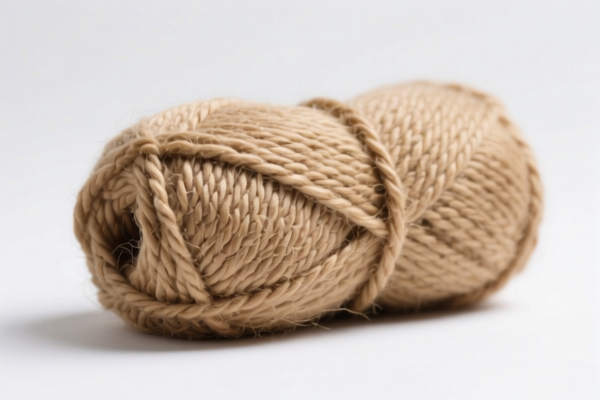
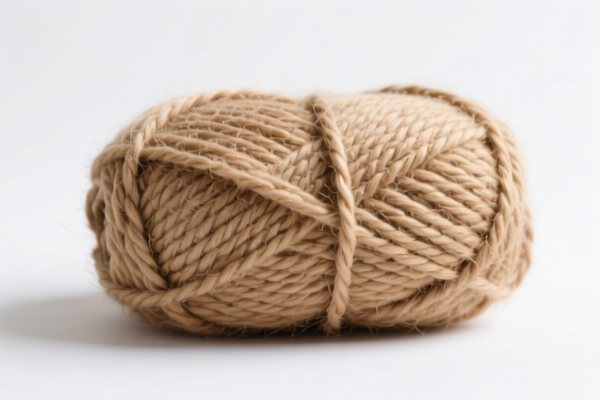

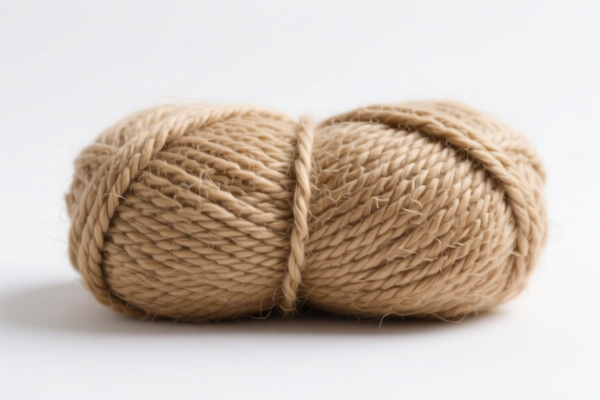
AI分析
🧶 Coarse Spun Yarn (Wool/Animal Hair)
🌐 HS Code Reference & Customs Clearance Guide | 2024/2025 Latest Tariff Analysis | Professional Entry Strategies
📌 I. Product Definition & Classification: Do You Truly Understand "Coarse Spun Yarn"?
Coarse Spun Yarn refers to yarn produced from wool or fine animal hair through a worsted process (carding without combing), typically used for heavy fabrics, tweeds, or carpets. In international trade, classification depends heavily on fiber composition, fineness, and retail packaging status.
⚠️ Key Distinction Points:
- If the yarn is wool or fine animal hair and not for retail sale → Falls under 5106 or 5109 depending on fineness.
- If it is synthetic or blended (with significant non-wool content not specified here) → Different HS codes apply (not in current dataset).
- "Coarse" implies it is not ultra-fine; however, the specific HS code split (5106 vs. 5109) often hinges on whether it is considered "fine" (<67 decitex) or standard coarse yarn. The provided data suggests a fallback logic due to ambiguity in fine/coarse distinction.
📦 II. HS Code Classification Details (Based on Provided Data)
| HS Code | Product Description | Application Scenario | Logical Basis |
|---|---|---|---|
5109.90.90.00 |
Coarse spun yarn, material: Wool or fine animal hair; classified under "Other" sub-category | Yarns of wool/animal hair not meeting specific "fine yarn" criteria for other sub-headings | Fallback Principle: Classified as "Other" when specific fine/coarse demarcation is ambiguous or when it doesn't fit precise fine-yarn definitions. |
5109.10.90.00 |
Coarse spun yarn, form: Yarn; classified under "Other" category based on fallback principles | General coarse spun yarn where material specificity is less critical than form | Form-Based Classification: Emphasizes the physical form (yarn) rather than specific fiber content nuances, using the "other" catch-all. |
5106.10.00.90 |
Coarse spun yarn, inferred: Wool or wool-blend; matches characteristics of non-retail combed wool yarn | Yarns inferred to be wool-based, suitable for wholesale/industrial use (not retail) | Inference Logic: Assumes wool content based on product name "Coarse Spun Yarn," assuming it fits the "non-retail" definition. |
5106.10.00.90 |
Wool coarse spun, material: Wool; form: Primary/Semi-finished yarn | Industrial wool yarn, not yet finished for consumer retail | Material & Form: Specifically identifies as wool, categorized as a semi-finished good. |
5106.10.00.90 |
Wool coarse spun, matches characteristics of non-retail sale yarn | Wholesale wool yarn | Retail Status: Key differentiator is "not for retail sale," pushing it to 5106. |
🔍 Important Note:
- The dataset shows a recurring tax rate of 41.0% across all these codes.
- The primary distinction between5109and5106in real-world customs is often fineness (decitex) and exact fiber composition. However, the provided summary indicates a fallback or inference-based classification leading to similar high-tariff treatment.
- Do not assume these codes are interchangeable without verifying the exact decitex (fineness) and fiber percentage (e.g., % wool vs. % synthetic).
💰 III. 2024/2025 Latest Tariff Rate Details (Including Surtaxes & Policy Add-ons)
✅ Applicable Country: United States (US)
✅ Origin: China (CN) (Inferred from tax structure matching US-China trade war tariffs)
✅ Effective Time: Post-2018 (Section 301) and 2019 (Section 301/122 adjustments)
🎯 1. General Rate for Wool/Animal Hair Yarns (5106.10.00.90, 5109.xxxx)
| Item | Content |
|---|---|
| Base Tariff Rate | 6.0% (MFN Rate for Wool Yarn) |
| Section 301 Surcharge | +25.0% (Additional duty under US Trade Law Section 301) |
| Section 122 Surcharge | +10.0% (Additional duty under Section 122 of the Trade Act of 1974, often applied to certain imports) |
| Total Effective Rate | 41.0% |
| Tax Calculation | CIF Value × 41% |
| De Minimis Exemption Eligibility | ❌ NO (Deny De Minimis) |
| Legal Authority Path | Section 301 → Section 122 → HTSUS: 5106.10.00.90 / 5109.90.90.00 |
📌 Explanation:
- The 6% base tariff is the standard Most Favored Nation (MFN) rate for wool yarns.
- The 25% surcharge is a direct result of the US-China trade war (Section 301 investigations into China's unfair trade practices).
- The 10% surcharge refers to "Section 122" tariffs, which were historically applied to certain imports to reduce trade deficits.
- Total 41% is a very high barrier, significantly impacting profitability.
- No De Minimis Exemption: Small shipments (under $800) do NOT escape these tariffs if they are subject to Section 301/122 duties.
🛠️ IV. Customs Clearance Practical Advice (Combat Pitfalls Guide)
✅ 1. Required Documentation Checklist (None Can Be Missing)
| Document | Mandatory? | Explanation |
|---|---|---|
| ✅ Product Specification Sheet | ✔️ | Must detail fiber content (e.g., 100% Wool vs. 80% Wool/20% Nylon), count (Nm/Ne), and twist direction. |
| ✅ Fiber Analysis Report | ✔️ | Third-party lab report confirming wool/animal hair content. Critical for proving eligibility for 5106/5109. |
| ✅ Commercial Invoice | ✔️ | Must clearly state "Coarse Spun Yarn, Wool," not just generic "Textile Yarn." |
| ✅ Packing List | ✔️ | Must distinguish between bulk spools and retail packages (if any). |
| ✅ Certificate of Origin (CO) | ✔️ | Required for determining if other trade agreements apply (though unlikely to waive 301 duties). |
| ✅ Photos of Product & Label | ✔️ | Show spool size, label info, and brand. |
✅ 2. Declaration Techniques (Key Mnemonic)
🔥 "Fiber Truth, Fineness Check, No Retail, Tariff Risk High!"
| Scenario | Correct Declaration Method | Wrong Action |
|---|---|---|
| 100% Wool, Non-Retail, Coarse | 5106.10.00.90 |
Misdeclare as synthetic → 100% penalty + fraud charges. |
| Wool Blend (e.g., 70% Wool, 30% Acrylic) | Check main character fiber → Likely 5109 or 5106 based on % |
Declare as 100% Wool → Customs seizure. |
| Yarn for Retail Sale (Small Skeins) | Might fall under different sub-headings (e.g., 5107/5108 if fine) → Different tax? | Declare as industrial bulk → Delay & inspection. |
| Non-Wool Yarn (e.g., Cotton, Synthetic) | Wrong HS Code entirely → Should be 52 or 54/55 | Use wool codes → Rejection + penalties. |
✅ 3. Special Circumstances Handling
| Situation | Handling Advice |
|---|---|
| OEM Custom Yarn | Provide customer contract and spec sheet. Ensure fiber content matches exactly. |
| Mixed Fiber Yarn | If >85% wool, may still be classified as wool. If <50%, it might be a "textile piece" or other category. Verify with lab report. |
| Sample Shipments | Still subject to 41% tariff if Section 301/122 applies. Do not assume "free samples" escape tariffs. |
| Transshipment (e.g., via Vietnam) | High Risk: US Customs scrutinizes transshipment to evade 301 duties. Ensure substantial transformation occurred. |
🌍 V. Global Market Comparison (2024/2025 Latest)
| Country/Region | Recommended HS Code | Tariff Rate | Certification Requirements | Remarks |
|---|---|---|---|---|
| 🇺🇸 USA | 5106.10.00.90 / 5109.90.90.00 |
41% (China Origin) | None specific (but fiber proof required) | Extremely High Tariff. Consider pricing strategy. |
| 🇨🇳 China | 5106.10.00.90 |
~6-12% (Import Duty) | N/A | Domestic production dominates. |
| 🇪🇺 EU | 5106.10.00.90 |
~7-14% (MFN) | OEKO-TEX (if consumer goods) | No Section 301 equivalent. Lower cost than US. |
| 🇬🇧 UK | 5106.10.00.90 |
~7-14% | CE (if applicable) | Post-Brexit, independent trade policy. |
| 🇦🇺 Australia | 5106.10.00.90 |
~5-10% | N/A | Favorable compared to US. |
📌 Conclusion:
- The US market is the most expensive for Chinese-origin wool yarns due to the 41% combined tariff.
- EU and UK markets offer more competitive tariff structures (~7-14%).
- Supply Chain Strategy: Consider sourcing from non-China origins (e.g., New Zealand, Australia, EU) for US-bound goods to avoid 301/122 duties, or negotiate cost-sharing with buyers.
📌 VI. Common Errors & Pitfalls Guide (Lessons Learned)
❌ Error 1: Declaring "Synthetic Yarn" when it is Wool
👉 Consequence: Seizure, fines, and potential fraud investigation.
✅ Fix: Always provide fiber analysis reports.
❌ Error 2: Ignoring "Section 122" and "Section 301"
👉 Consequence: Underpayment of duties → Back taxes + penalties.
✅ Fix: Budget for 41% total duty, not just the base 6%.
❌ Error 3: Misclassifying "Retail" vs. "Non-Retail"
👉 Consequence: Wrong HS code → Delayed clearance.
✅ Fix: Clearly state "For Industrial Use, Not for Retail Sale" on invoice.
❌ Error 4: Assuming De Minimis ($800) applies
👉 Consequence: Unexpected tax bill for small shipments.
✅ Fix: Apply 41% tariff to all shipments, regardless of value.
🎯 VII. Conclusion: Precision Classification, Cost Control, Efficiency!
🎯 Remember the Mantra:
🔹 "Fiber is King, Fineness Matters, 301/122 Hit Hard, 41% is the Target!"
🔹 "HS Code Determines Life, Tax Differs by 35 Points, One Mistake Costs Thousands!"
📌 Pro Tip:
If your yarn is originating from New Zealand, Australia, or the EU, the US tariff drops significantly (often 0-7% under various agreements or MFN).
Recommendation: Evaluate supply chain diversification. Consider Advance Rulings from US Customs (CBP) if your product characteristics are borderline between 5106 and 5109.
📣 Immediate Action:
📞 Consult a Licensed Customs Broker + Provide Fiber Lab Reports + Check CBP Advance Ruling Database
🚀 Ensure your Coarse Spun Yarn enters the US legally, efficiently, and profitably!
✨ Professional Clearance Starts with Accurate Classification!
💼 Every Dollar of Cost Deserves Precise Calculation!
用户评价
关于 HS 编码归类
协调制度(HS)是由世界海关组织(WCO)制定的国际贸易商品分类标准。全球 200 多个国家采用 HS 系统作为海关关税、贸易统计和进出口监管的基础。
每个 HS 编码遵循以下层级结构:
- 章(2 位)——商品大类(例如:第 84 章:机器和机械设备)
- 品目(4 位)——章内的更具体分类
- 子目(6 位)——国际通用细分,所有 WCO 成员国统一使用
- 本国细分(8-10 位)——各国自行扩展的细分编码,如美国 HTSUS 10 位编码
正确的 HS 编码归类对于顺利通关、准确缴纳关税和遵守贸易法规至关重要。错误归类可能导致海关延误、多缴关税或罚款。
从CN进口到US时,适用的关税税率可能包括:
- 最惠国(MFN)税率——适用于 WTO 成员国的标准关税税率
- 普通税率——适用于无贸易协定国家
- 贸易救济关税——附加关税,如 301 条款(反倾销)、232 条款(国家安全)或反补贴税
本页内容仅供参考。如需正式归类,请咨询当地海关或持牌报关代理。