Coarse Spun Yarn
CN → US| HS Code | Tariff Rate | Origin | Destination | Doc |
|---|---|---|---|---|
| 5109909000 | 41.0% | CN | US | Official Doc |
| 5109109000 | 41.0% | CN | US | Official Doc |
| 5106100090 | 41.0% | CN | US | Official Doc |
| 5106100090 | 41.0% | CN | US | Official Doc |
| 5106100090 | 41.0% | CN | US | Official Doc |
Product Images
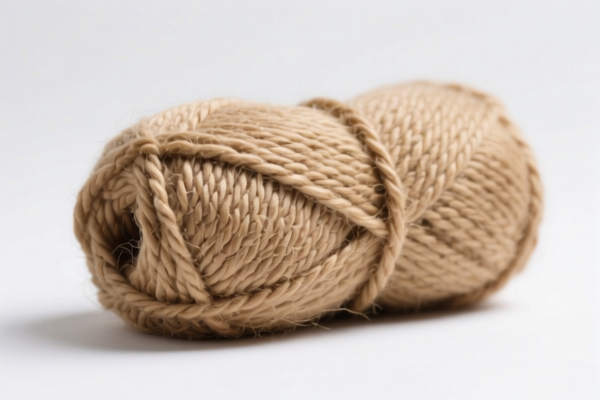
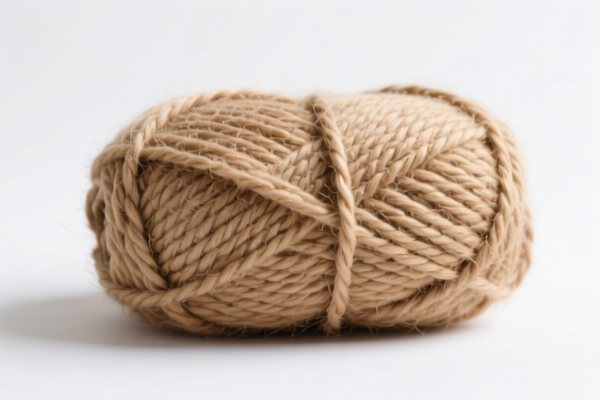
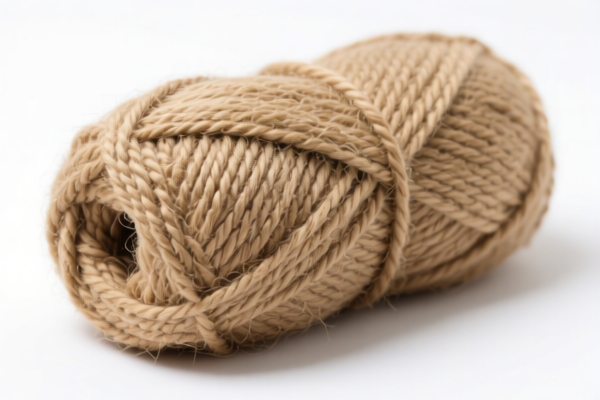
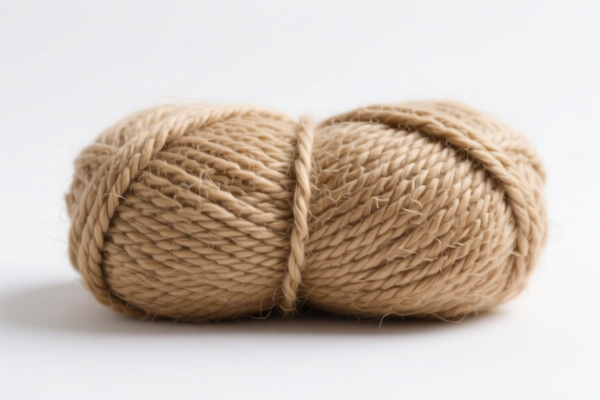
AI Analysis
🧶 Coarse Spun Yarn (Wool/Animal Hair)
🌐 HS Code Reference & Customs Clearance Guide | 2024/2025 Latest Tariff Analysis | Professional Entry Strategies
📌 I. Product Definition & Classification: Do You Truly Understand "Coarse Spun Yarn"?
Coarse Spun Yarn refers to yarn produced from wool or fine animal hair through a worsted process (carding without combing), typically used for heavy fabrics, tweeds, or carpets. In international trade, classification depends heavily on fiber composition, fineness, and retail packaging status.
⚠️ Key Distinction Points:
- If the yarn is wool or fine animal hair and not for retail sale → Falls under 5106 or 5109 depending on fineness.
- If it is synthetic or blended (with significant non-wool content not specified here) → Different HS codes apply (not in current dataset).
- "Coarse" implies it is not ultra-fine; however, the specific HS code split (5106 vs. 5109) often hinges on whether it is considered "fine" (<67 decitex) or standard coarse yarn. The provided data suggests a fallback logic due to ambiguity in fine/coarse distinction.
📦 II. HS Code Classification Details (Based on Provided Data)
| HS Code | Product Description | Application Scenario | Logical Basis |
|---|---|---|---|
5109.90.90.00 |
Coarse spun yarn, material: Wool or fine animal hair; classified under "Other" sub-category | Yarns of wool/animal hair not meeting specific "fine yarn" criteria for other sub-headings | Fallback Principle: Classified as "Other" when specific fine/coarse demarcation is ambiguous or when it doesn't fit precise fine-yarn definitions. |
5109.10.90.00 |
Coarse spun yarn, form: Yarn; classified under "Other" category based on fallback principles | General coarse spun yarn where material specificity is less critical than form | Form-Based Classification: Emphasizes the physical form (yarn) rather than specific fiber content nuances, using the "other" catch-all. |
5106.10.00.90 |
Coarse spun yarn, inferred: Wool or wool-blend; matches characteristics of non-retail combed wool yarn | Yarns inferred to be wool-based, suitable for wholesale/industrial use (not retail) | Inference Logic: Assumes wool content based on product name "Coarse Spun Yarn," assuming it fits the "non-retail" definition. |
5106.10.00.90 |
Wool coarse spun, material: Wool; form: Primary/Semi-finished yarn | Industrial wool yarn, not yet finished for consumer retail | Material & Form: Specifically identifies as wool, categorized as a semi-finished good. |
5106.10.00.90 |
Wool coarse spun, matches characteristics of non-retail sale yarn | Wholesale wool yarn | Retail Status: Key differentiator is "not for retail sale," pushing it to 5106. |
🔍 Important Note:
- The dataset shows a recurring tax rate of 41.0% across all these codes.
- The primary distinction between5109and5106in real-world customs is often fineness (decitex) and exact fiber composition. However, the provided summary indicates a fallback or inference-based classification leading to similar high-tariff treatment.
- Do not assume these codes are interchangeable without verifying the exact decitex (fineness) and fiber percentage (e.g., % wool vs. % synthetic).
💰 III. 2024/2025 Latest Tariff Rate Details (Including Surtaxes & Policy Add-ons)
✅ Applicable Country: United States (US)
✅ Origin: China (CN) (Inferred from tax structure matching US-China trade war tariffs)
✅ Effective Time: Post-2018 (Section 301) and 2019 (Section 301/122 adjustments)
🎯 1. General Rate for Wool/Animal Hair Yarns (5106.10.00.90, 5109.xxxx)
| Item | Content |
|---|---|
| Base Tariff Rate | 6.0% (MFN Rate for Wool Yarn) |
| Section 301 Surcharge | +25.0% (Additional duty under US Trade Law Section 301) |
| Section 122 Surcharge | +10.0% (Additional duty under Section 122 of the Trade Act of 1974, often applied to certain imports) |
| Total Effective Rate | 41.0% |
| Tax Calculation | CIF Value × 41% |
| De Minimis Exemption Eligibility | ❌ NO (Deny De Minimis) |
| Legal Authority Path | Section 301 → Section 122 → HTSUS: 5106.10.00.90 / 5109.90.90.00 |
📌 Explanation:
- The 6% base tariff is the standard Most Favored Nation (MFN) rate for wool yarns.
- The 25% surcharge is a direct result of the US-China trade war (Section 301 investigations into China's unfair trade practices).
- The 10% surcharge refers to "Section 122" tariffs, which were historically applied to certain imports to reduce trade deficits.
- Total 41% is a very high barrier, significantly impacting profitability.
- No De Minimis Exemption: Small shipments (under $800) do NOT escape these tariffs if they are subject to Section 301/122 duties.
🛠️ IV. Customs Clearance Practical Advice (Combat Pitfalls Guide)
✅ 1. Required Documentation Checklist (None Can Be Missing)
| Document | Mandatory? | Explanation |
|---|---|---|
| ✅ Product Specification Sheet | ✔️ | Must detail fiber content (e.g., 100% Wool vs. 80% Wool/20% Nylon), count (Nm/Ne), and twist direction. |
| ✅ Fiber Analysis Report | ✔️ | Third-party lab report confirming wool/animal hair content. Critical for proving eligibility for 5106/5109. |
| ✅ Commercial Invoice | ✔️ | Must clearly state "Coarse Spun Yarn, Wool," not just generic "Textile Yarn." |
| ✅ Packing List | ✔️ | Must distinguish between bulk spools and retail packages (if any). |
| ✅ Certificate of Origin (CO) | ✔️ | Required for determining if other trade agreements apply (though unlikely to waive 301 duties). |
| ✅ Photos of Product & Label | ✔️ | Show spool size, label info, and brand. |
✅ 2. Declaration Techniques (Key Mnemonic)
🔥 "Fiber Truth, Fineness Check, No Retail, Tariff Risk High!"
| Scenario | Correct Declaration Method | Wrong Action |
|---|---|---|
| 100% Wool, Non-Retail, Coarse | 5106.10.00.90 |
Misdeclare as synthetic → 100% penalty + fraud charges. |
| Wool Blend (e.g., 70% Wool, 30% Acrylic) | Check main character fiber → Likely 5109 or 5106 based on % |
Declare as 100% Wool → Customs seizure. |
| Yarn for Retail Sale (Small Skeins) | Might fall under different sub-headings (e.g., 5107/5108 if fine) → Different tax? | Declare as industrial bulk → Delay & inspection. |
| Non-Wool Yarn (e.g., Cotton, Synthetic) | Wrong HS Code entirely → Should be 52 or 54/55 | Use wool codes → Rejection + penalties. |
✅ 3. Special Circumstances Handling
| Situation | Handling Advice |
|---|---|
| OEM Custom Yarn | Provide customer contract and spec sheet. Ensure fiber content matches exactly. |
| Mixed Fiber Yarn | If >85% wool, may still be classified as wool. If <50%, it might be a "textile piece" or other category. Verify with lab report. |
| Sample Shipments | Still subject to 41% tariff if Section 301/122 applies. Do not assume "free samples" escape tariffs. |
| Transshipment (e.g., via Vietnam) | High Risk: US Customs scrutinizes transshipment to evade 301 duties. Ensure substantial transformation occurred. |
🌍 V. Global Market Comparison (2024/2025 Latest)
| Country/Region | Recommended HS Code | Tariff Rate | Certification Requirements | Remarks |
|---|---|---|---|---|
| 🇺🇸 USA | 5106.10.00.90 / 5109.90.90.00 |
41% (China Origin) | None specific (but fiber proof required) | Extremely High Tariff. Consider pricing strategy. |
| 🇨🇳 China | 5106.10.00.90 |
~6-12% (Import Duty) | N/A | Domestic production dominates. |
| 🇪🇺 EU | 5106.10.00.90 |
~7-14% (MFN) | OEKO-TEX (if consumer goods) | No Section 301 equivalent. Lower cost than US. |
| 🇬🇧 UK | 5106.10.00.90 |
~7-14% | CE (if applicable) | Post-Brexit, independent trade policy. |
| 🇦🇺 Australia | 5106.10.00.90 |
~5-10% | N/A | Favorable compared to US. |
📌 Conclusion:
- The US market is the most expensive for Chinese-origin wool yarns due to the 41% combined tariff.
- EU and UK markets offer more competitive tariff structures (~7-14%).
- Supply Chain Strategy: Consider sourcing from non-China origins (e.g., New Zealand, Australia, EU) for US-bound goods to avoid 301/122 duties, or negotiate cost-sharing with buyers.
📌 VI. Common Errors & Pitfalls Guide (Lessons Learned)
❌ Error 1: Declaring "Synthetic Yarn" when it is Wool
👉 Consequence: Seizure, fines, and potential fraud investigation.
✅ Fix: Always provide fiber analysis reports.
❌ Error 2: Ignoring "Section 122" and "Section 301"
👉 Consequence: Underpayment of duties → Back taxes + penalties.
✅ Fix: Budget for 41% total duty, not just the base 6%.
❌ Error 3: Misclassifying "Retail" vs. "Non-Retail"
👉 Consequence: Wrong HS code → Delayed clearance.
✅ Fix: Clearly state "For Industrial Use, Not for Retail Sale" on invoice.
❌ Error 4: Assuming De Minimis ($800) applies
👉 Consequence: Unexpected tax bill for small shipments.
✅ Fix: Apply 41% tariff to all shipments, regardless of value.
🎯 VII. Conclusion: Precision Classification, Cost Control, Efficiency!
🎯 Remember the Mantra:
🔹 "Fiber is King, Fineness Matters, 301/122 Hit Hard, 41% is the Target!"
🔹 "HS Code Determines Life, Tax Differs by 35 Points, One Mistake Costs Thousands!"
📌 Pro Tip:
If your yarn is originating from New Zealand, Australia, or the EU, the US tariff drops significantly (often 0-7% under various agreements or MFN).
Recommendation: Evaluate supply chain diversification. Consider Advance Rulings from US Customs (CBP) if your product characteristics are borderline between 5106 and 5109.
📣 Immediate Action:
📞 Consult a Licensed Customs Broker + Provide Fiber Lab Reports + Check CBP Advance Ruling Database
🚀 Ensure your Coarse Spun Yarn enters the US legally, efficiently, and profitably!
✨ Professional Clearance Starts with Accurate Classification!
💼 Every Dollar of Cost Deserves Precise Calculation!
Customer Reviews
About HS Code Classification
The Harmonized System (HS) is an internationally standardized nomenclature developed by the World Customs Organization (WCO) to classify traded products. Over 200 countries use the HS system as the basis for customs tariffs, trade statistics, and import/export regulations.
Each HS code follows a hierarchical structure:
- Chapter (2 digits) — Broad category of goods (e.g., Chapter 84: Machinery and Mechanical Appliances)
- Heading (4 digits) — More specific grouping within the chapter
- Subheading (6 digits) — Internationally standardized breakdown, used by all WCO member countries
- National subdivisions (8-10 digits) — Country-specific extensions for further classification, such as US HTSUS 10-digit codes
Correct HS code classification is essential for smooth customs clearance, accurate duty payment, and compliance with trade regulations. Misclassification can lead to customs delays, overpayment of duties, or penalties.
When importing from CN to US, the applicable tariff rates may include:
- Most-Favored-Nation (MFN) rate — The standard duty rate applied to WTO members
- General rate — Applied to countries without trade agreements
- Trade remedy duties — Additional tariffs such as Section 301 (anti-dumping), Section 232 (national security), or countervailing duties
The information provided on this page is for reference purposes only. For official classification, please consult with your local customs authority or a licensed customs broker.