Coated Flat Rolled Iron or Non Alloy Steel
CN → US| HS编码 | 关税税率 | 原产国 | 目的国 | 文档 |
|---|---|---|---|---|
| 7226990110 | 35.0% | CN | US | 官方文档 |
| 7226990130 | 35.0% | CN | US | 官方文档 |
| 7225910000 | 35.0% | CN | US | 官方文档 |
| 7225920000 | 35.0% | CN | US | 官方文档 |
| 7210120000 | 35.0% | CN | US | 官方文档 |
| 7210300030 | 35.0% | CN | US | 官方文档 |
商品图片
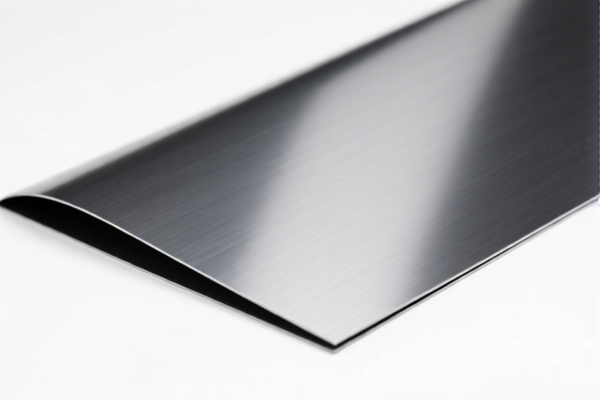
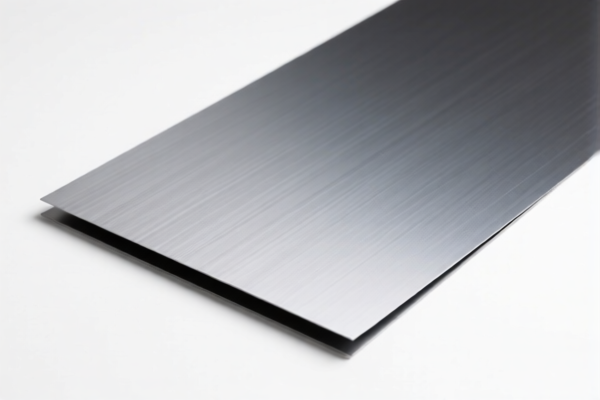
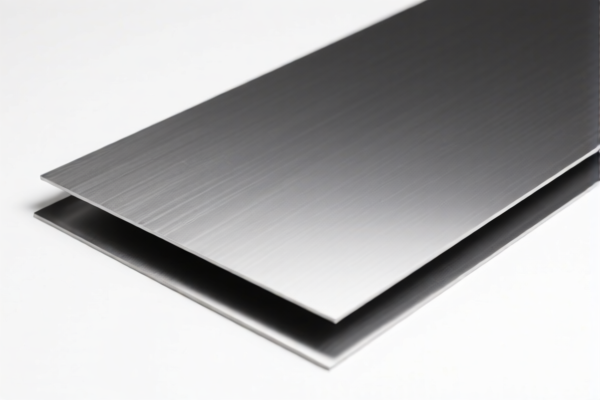
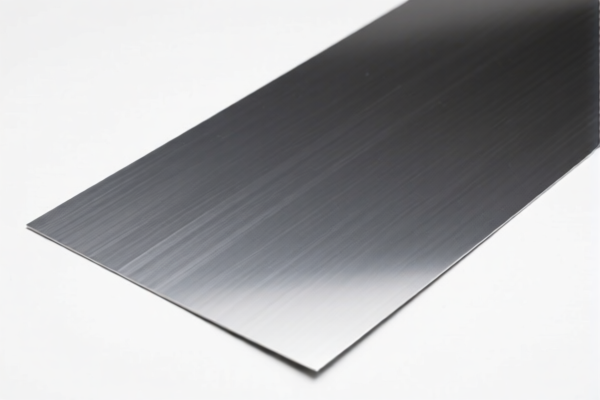
AI分析
🏭 Coated Flat-Rolled Iron or Non-Alloy Steel (Clad, Plated, or Coated)
🌐 HS Code Reference & Customs Clearance Guide | 2026 Latest Tariff Analysis | Professional Level Compliance Strategy
📌 I. Product Definition & Classification: What Are We Actually Shipping?
In international trade, "Coated Flat-Rolled Steel" is a broad category encompassing iron or non-alloy steel strips/plates that have been treated with a protective or decorative layer. The classification hinges on three critical factors: 1. Width: Is it wider than 600mm? 2. Base Material: Is it pure Iron/Non-alloy Steel, or "Other Alloy Steel"? 3. Coating Type & Process: Is it Tin, Zinc? Is it Electrolytic or "Otherwise" (Hot-dip/other)?
⚠️ Key Distinction Point: * Tin Plating (7210.12): Strictly for Iron/Non-alloy Steel only. If it’s alloy steel, it’s a different code. * Zinc Coating (7210/7225/7226): Can be Iron or Alloy Steel. Must distinguish between Electrolytic (E-coat) and Otherwise (e.g., Hot-dip/Galvanized). * Thickness Threshold (0.5mm): Critical for Tin Plating classification.
📦 II. HS Code Classification Matrix (Based on Provided Data)
| HS Code | Product Description | Material Type | Width | Coating/Process | Thickness Constraint |
|---|---|---|---|---|---|
7210.12.00.00 |
Clad, plated or coated; Plated with Tin | Iron or Non-alloy Steel | ≥ 600 mm | Tin Plated | < 0.5 mm |
7210.30.00.30 |
Clad, plated or coated; Electrolytically plated with Zinc | High-Strength Steel* | ≥ 600 mm | Electrolytic Zinc | N/A |
7225.91.00.00 |
Other alloy steel; Clad, plated or coated | Other Alloy Steel | ≥ 600 mm | Electrolytic Zinc | N/A |
7225.92.00.00 |
Other alloy steel; Clad, plated or coated | Other Alloy Steel | ≥ 600 mm | Otherwise (e.g., Hot-dip) Zinc | N/A |
7226.99.01.10 |
Other alloy steel; Clad, plated or coated | Other Alloy Steel | < 600 mm | Electrolytic Zinc | N/A |
7226.99.01.30 |
Other alloy steel; Clad, plated or coated | Other Alloy Steel | < 600 mm | Otherwise (e.g., Hot-dip) Zinc | N/A |
🔍 Critical Note: * Note 1: "High-strength steel" in
7210.30.00.30falls under Iron/Non-alloy Steel chapter definitions in this specific data set context, despite the name "Other Alloy Steel" appearing in other codes. Please verify material composition certificates. * Note 2: "Otherwise plated or coated" with Zinc typically refers to Hot-Dip Galvanizing (HDG) or continuous coating lines, distinct from Electrolytic Zinc (E-coating).
💰 III. 2026 Tariff Rate Breakdown (Detailed Tax Analysis)
✅ Applicable Country: United States (US)
✅ Origin: China (CN)
✅ General Tariff Structure for These Items
All six HS Codes listed in the data share the identical tariff structure. This indicates a uniform trade policy for these specific steel products from China.
🎯 1. Universal Tariff Structure for All Listed HS Codes
| Item | Rate | Description |
|---|---|---|
| Basic Tariff (MFN) | 0.0% | Standard Most-Favored-Nation duty is 0%. |
| Section 301 / Additional Tariff | +25.0% | Imposed under US Trade Act Section 301 on Chinese imports. |
| Total Effective Tax Rate | 25.0% | Sum of Basic + Additional. |
📌 Explanation: * Basic Tariff (0.0%): Under normal WTO rules, these steel products may carry a 0% duty. * Additional Tariff (25.0%): This is the critical cost driver. The data explicitly states "Additional Tariff: 25.0%". This is likely due to Section 301 tariffs targeting Chinese steel products. * No De Minimis Exemption: These are heavy industrial commodities. They cannot use the de minimis (Section 321) shipment clearance for individual items. They require full customs entry.
🛠️ IV. Customs Clearance Operational Advice (Risk Mitigation)
✅ 1. Documentation Checklist (Non-Negotiable)
| Document | Requirement | Reason |
|---|---|---|
| Commercial Invoice | Must specify: Width, Thickness, Coating Type (Tin/Zinc), Process (Electrolytic/Hot-dip). | Customs uses these fields to reject wrong HS codes. |
| Product Specification Sheet | Must define "Non-alloy" vs "Alloy" content. | Crucial for distinguishing Chapter 72 headings. |
| Coating Certificate | Specify Zinc vs. Tin. Electrolytic vs. Hot-dip. | Differentiates between 7210 (Iron) and 7225/7226 (Alloy). |
| Origin Proof | Certificate of Origin (CO). | To confirm China origin and apply the 25% tariff correctly (avoiding penalties for misdeclaration). |
| Import License | Check if steel requires specific import licenses. | Some steel categories may face anti-dumping/countervailing duties (AD/CVD) on top of the 25%. Verify AD/CVD status separately! |
✅ 2. Classification Strategy & Common Pitfalls
🔥 "Width Matters, Alloy Defines, Coating Proves!"
| Scenario | Correct HS Code | Risk of Misclassification |
|---|---|---|
| Tin Plated Steel, Width 700mm, Thick 0.4mm | 7210.12.00.00 |
If width is <600mm, it’s not in this list. If thickness ≥0.5mm, it’s a different subheading. |
| Zinc Coated, Width 800mm, High-Strength | 7210.30.00.30 |
If it’s not high-strength, or is alloy steel, this code is wrong. |
| Zinc Coated (Hot-dip), Width 500mm, Alloy Steel | 7226.99.01.30 |
If width ≥600mm, it moves to 7225.92.00.00. If Electrolytic, it’s .10. |
| Zinc Coated (E-coat), Width 500mm, Alloy Steel | 7226.99.01.10 |
If width ≥600mm, it moves to 7225.91.00.00. |
📌 Warning: * Alloy vs. Non-Alloy: Misclassifying "Other Alloy Steel" as "Non-alloy" can lead to significant classification errors, though in this specific data set, the tax rate is the same (25%). However, legal compliance requires accurate material declaration. * Electrolytic vs. Otherwise: Do not confuse E-coated zinc with Hot-dip. They fall under different HS codes (
...91vs...92for width ≥600mm;...10vs...30for width <600mm).
✅ 3. Special Handling Recommendations
-
Anti-Dumping/Countervailing Duties (AD/CVD):
- CRITICAL: The data provided only shows the 25% Additional Tariff. Many steel products from China are subject to separate AD/CVD rates that can range from 10% to over 100%.
- Action: Check the specific AD/CVD orders for each HS Code with CBP (Customs and Border Protection) before shipping. The 25% tariff is in addition to AD/CVD if applicable.
-
Section 232 Tariffs:
- Check if these products are subject to Section 232 (National Security) tariffs (currently 25% on steel). Note: The data shows 25% total, which may already include Section 232 or Section 301. Verify if they are stacked.
🌍 V. Global Market Comparison (2026 Perspective)
| Market | HS Code Alignment | Estimated Duty (China Origin) | Key Requirement |
|---|---|---|---|
| 🇺🇸 USA | Exact match to data | 25.0% (as per data) | Verify AD/CVD. Strict origin checks. |
| 🇨🇳 China | Same HS Codes | Low/0% (Import) | CCC Certification (if applicable). |
| 🇪🇺 EU | Similar HS Codes | Varies (0-6.5%) | CE Marking, REACH Compliance. |
| 🇬🇧 UK | Similar HS Codes | Varies (0-6.5%) | UKCA Marking. |
📌 Conclusion: * The USA remains the most tariff-heavy market for Chinese steel products due to the explicit 25% additional tariff in the data. * Supply Chain Risk: High. Consider sourcing from non-China origins (e.g., Vietnam, Thailand) if AD/CVD or Section 301 tariffs apply, to mitigate cost volatility.
📌 VI. Common Errors & Pitfalls (Lessons Learned)
❌ Error 1: Ignoring the 600mm Width Threshold.
👉 Consequence: Misclassification between 7210/7225 (≥600mm) and 7226 (<600mm). While tax is same here, it violates customs accuracy requirements.
❌ Error 2: Confusing Electrolytic vs. Hot-Dip Zinc. 👉 Consequence: Wrong subheading. Customs may demand re-classification, causing delays.
❌ Error 3: Assuming 0% Basic Tariff = 0% Total Duty. 👉 Consequence: Underpayment of 25% Additional Tariff. Results in penalties, interest, and seizure.
❌ Error 4: Overlooking AD/CVD. 👉 Consequence: The 25% shown is likely only the Section 301/232 tariff. AD/CVD could add another 10-50%+. Always verify AD/CVD status.
✅ Correct Action:
"Flat-Rolled Steel, 650mm Width, Tin-Plated, 0.4mm Thick, Origin China. HS: 7210.12.00.00. Duty: 25% Additional. Check AD/CVD Status."
🎯 VII. Conclusion: Precision is Profit
🎯 Remember the Mantra:
🔹 "Width First, Then Alloy, Then Coating." 🔹 "25% is the Minimum; AD/CVD could be the Maximum." 🔹 "Tin is Thin (<0.5mm), Zinc is Versatile (E-coat vs. Hot-dip)."
📌 Pro Tip: If you are importing large volumes, consider applying for a Customs Bonded Warehouse status to defer duties until the goods are sold or withdrawn for consumption. This improves cash flow.
📣 Immediate Action:
📞 Consult a Licensed Customs Broker. 📄 Verify AD/CVD Orders. 📋 Ensure Accurate Material Certification.
✨ Professional clearance starts with precise classification! 💼 Your supply chain’s profitability depends on getting the HS Code right.
用户评价
关于 HS 编码归类
协调制度(HS)是由世界海关组织(WCO)制定的国际贸易商品分类标准。全球 200 多个国家采用 HS 系统作为海关关税、贸易统计和进出口监管的基础。
每个 HS 编码遵循以下层级结构:
- 章(2 位)——商品大类(例如:第 84 章:机器和机械设备)
- 品目(4 位)——章内的更具体分类
- 子目(6 位)——国际通用细分,所有 WCO 成员国统一使用
- 本国细分(8-10 位)——各国自行扩展的细分编码,如美国 HTSUS 10 位编码
正确的 HS 编码归类对于顺利通关、准确缴纳关税和遵守贸易法规至关重要。错误归类可能导致海关延误、多缴关税或罚款。
从CN进口到US时,适用的关税税率可能包括:
- 最惠国(MFN)税率——适用于 WTO 成员国的标准关税税率
- 普通税率——适用于无贸易协定国家
- 贸易救济关税——附加关税,如 301 条款(反倾销)、232 条款(国家安全)或反补贴税
本页内容仅供参考。如需正式归类,请咨询当地海关或持牌报关代理。