Coated Flat Rolled Iron or Non Alloy Steel
CN → US| HS Code | Tariff Rate | Origin | Destination | Doc |
|---|---|---|---|---|
| 7226990110 | 35.0% | CN | US | Official Doc |
| 7226990130 | 35.0% | CN | US | Official Doc |
| 7225910000 | 35.0% | CN | US | Official Doc |
| 7225920000 | 35.0% | CN | US | Official Doc |
| 7210120000 | 35.0% | CN | US | Official Doc |
| 7210300030 | 35.0% | CN | US | Official Doc |
Product Images
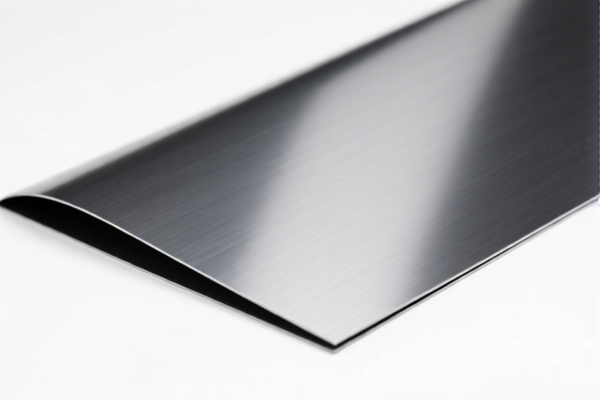
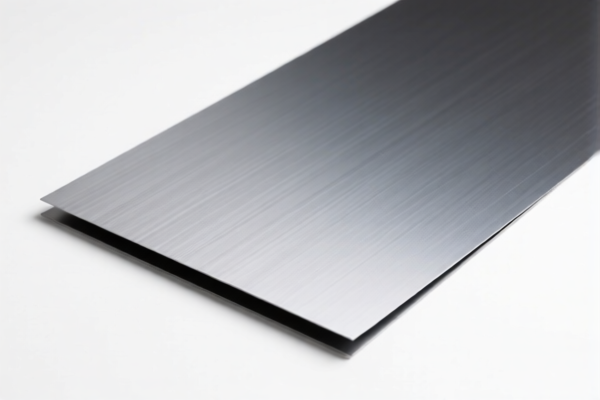
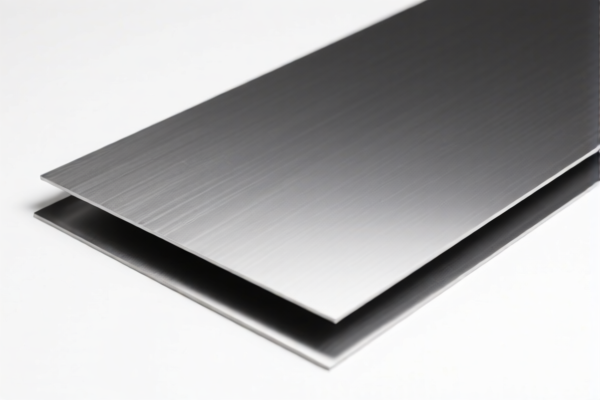
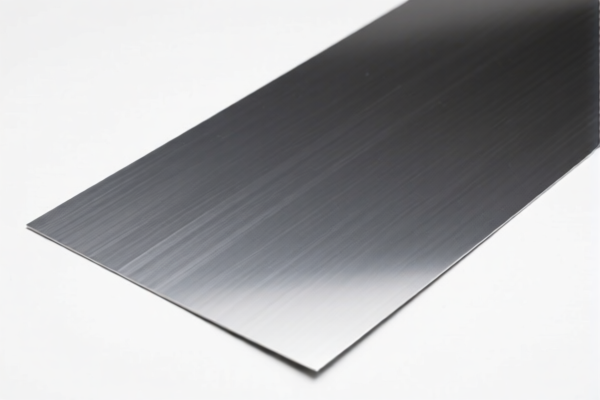
AI Analysis
🏭 Coated Flat-Rolled Iron or Non-Alloy Steel (Clad, Plated, or Coated)
🌐 HS Code Reference & Customs Clearance Guide | 2026 Latest Tariff Analysis | Professional Level Compliance Strategy
📌 I. Product Definition & Classification: What Are We Actually Shipping?
In international trade, "Coated Flat-Rolled Steel" is a broad category encompassing iron or non-alloy steel strips/plates that have been treated with a protective or decorative layer. The classification hinges on three critical factors: 1. Width: Is it wider than 600mm? 2. Base Material: Is it pure Iron/Non-alloy Steel, or "Other Alloy Steel"? 3. Coating Type & Process: Is it Tin, Zinc? Is it Electrolytic or "Otherwise" (Hot-dip/other)?
⚠️ Key Distinction Point: * Tin Plating (7210.12): Strictly for Iron/Non-alloy Steel only. If it’s alloy steel, it’s a different code. * Zinc Coating (7210/7225/7226): Can be Iron or Alloy Steel. Must distinguish between Electrolytic (E-coat) and Otherwise (e.g., Hot-dip/Galvanized). * Thickness Threshold (0.5mm): Critical for Tin Plating classification.
📦 II. HS Code Classification Matrix (Based on Provided Data)
| HS Code | Product Description | Material Type | Width | Coating/Process | Thickness Constraint |
|---|---|---|---|---|---|
7210.12.00.00 |
Clad, plated or coated; Plated with Tin | Iron or Non-alloy Steel | ≥ 600 mm | Tin Plated | < 0.5 mm |
7210.30.00.30 |
Clad, plated or coated; Electrolytically plated with Zinc | High-Strength Steel* | ≥ 600 mm | Electrolytic Zinc | N/A |
7225.91.00.00 |
Other alloy steel; Clad, plated or coated | Other Alloy Steel | ≥ 600 mm | Electrolytic Zinc | N/A |
7225.92.00.00 |
Other alloy steel; Clad, plated or coated | Other Alloy Steel | ≥ 600 mm | Otherwise (e.g., Hot-dip) Zinc | N/A |
7226.99.01.10 |
Other alloy steel; Clad, plated or coated | Other Alloy Steel | < 600 mm | Electrolytic Zinc | N/A |
7226.99.01.30 |
Other alloy steel; Clad, plated or coated | Other Alloy Steel | < 600 mm | Otherwise (e.g., Hot-dip) Zinc | N/A |
🔍 Critical Note: * Note 1: "High-strength steel" in
7210.30.00.30falls under Iron/Non-alloy Steel chapter definitions in this specific data set context, despite the name "Other Alloy Steel" appearing in other codes. Please verify material composition certificates. * Note 2: "Otherwise plated or coated" with Zinc typically refers to Hot-Dip Galvanizing (HDG) or continuous coating lines, distinct from Electrolytic Zinc (E-coating).
💰 III. 2026 Tariff Rate Breakdown (Detailed Tax Analysis)
✅ Applicable Country: United States (US)
✅ Origin: China (CN)
✅ General Tariff Structure for These Items
All six HS Codes listed in the data share the identical tariff structure. This indicates a uniform trade policy for these specific steel products from China.
🎯 1. Universal Tariff Structure for All Listed HS Codes
| Item | Rate | Description |
|---|---|---|
| Basic Tariff (MFN) | 0.0% | Standard Most-Favored-Nation duty is 0%. |
| Section 301 / Additional Tariff | +25.0% | Imposed under US Trade Act Section 301 on Chinese imports. |
| Total Effective Tax Rate | 25.0% | Sum of Basic + Additional. |
📌 Explanation: * Basic Tariff (0.0%): Under normal WTO rules, these steel products may carry a 0% duty. * Additional Tariff (25.0%): This is the critical cost driver. The data explicitly states "Additional Tariff: 25.0%". This is likely due to Section 301 tariffs targeting Chinese steel products. * No De Minimis Exemption: These are heavy industrial commodities. They cannot use the de minimis (Section 321) shipment clearance for individual items. They require full customs entry.
🛠️ IV. Customs Clearance Operational Advice (Risk Mitigation)
✅ 1. Documentation Checklist (Non-Negotiable)
| Document | Requirement | Reason |
|---|---|---|
| Commercial Invoice | Must specify: Width, Thickness, Coating Type (Tin/Zinc), Process (Electrolytic/Hot-dip). | Customs uses these fields to reject wrong HS codes. |
| Product Specification Sheet | Must define "Non-alloy" vs "Alloy" content. | Crucial for distinguishing Chapter 72 headings. |
| Coating Certificate | Specify Zinc vs. Tin. Electrolytic vs. Hot-dip. | Differentiates between 7210 (Iron) and 7225/7226 (Alloy). |
| Origin Proof | Certificate of Origin (CO). | To confirm China origin and apply the 25% tariff correctly (avoiding penalties for misdeclaration). |
| Import License | Check if steel requires specific import licenses. | Some steel categories may face anti-dumping/countervailing duties (AD/CVD) on top of the 25%. Verify AD/CVD status separately! |
✅ 2. Classification Strategy & Common Pitfalls
🔥 "Width Matters, Alloy Defines, Coating Proves!"
| Scenario | Correct HS Code | Risk of Misclassification |
|---|---|---|
| Tin Plated Steel, Width 700mm, Thick 0.4mm | 7210.12.00.00 |
If width is <600mm, it’s not in this list. If thickness ≥0.5mm, it’s a different subheading. |
| Zinc Coated, Width 800mm, High-Strength | 7210.30.00.30 |
If it’s not high-strength, or is alloy steel, this code is wrong. |
| Zinc Coated (Hot-dip), Width 500mm, Alloy Steel | 7226.99.01.30 |
If width ≥600mm, it moves to 7225.92.00.00. If Electrolytic, it’s .10. |
| Zinc Coated (E-coat), Width 500mm, Alloy Steel | 7226.99.01.10 |
If width ≥600mm, it moves to 7225.91.00.00. |
📌 Warning: * Alloy vs. Non-Alloy: Misclassifying "Other Alloy Steel" as "Non-alloy" can lead to significant classification errors, though in this specific data set, the tax rate is the same (25%). However, legal compliance requires accurate material declaration. * Electrolytic vs. Otherwise: Do not confuse E-coated zinc with Hot-dip. They fall under different HS codes (
...91vs...92for width ≥600mm;...10vs...30for width <600mm).
✅ 3. Special Handling Recommendations
-
Anti-Dumping/Countervailing Duties (AD/CVD):
- CRITICAL: The data provided only shows the 25% Additional Tariff. Many steel products from China are subject to separate AD/CVD rates that can range from 10% to over 100%.
- Action: Check the specific AD/CVD orders for each HS Code with CBP (Customs and Border Protection) before shipping. The 25% tariff is in addition to AD/CVD if applicable.
-
Section 232 Tariffs:
- Check if these products are subject to Section 232 (National Security) tariffs (currently 25% on steel). Note: The data shows 25% total, which may already include Section 232 or Section 301. Verify if they are stacked.
🌍 V. Global Market Comparison (2026 Perspective)
| Market | HS Code Alignment | Estimated Duty (China Origin) | Key Requirement |
|---|---|---|---|
| 🇺🇸 USA | Exact match to data | 25.0% (as per data) | Verify AD/CVD. Strict origin checks. |
| 🇨🇳 China | Same HS Codes | Low/0% (Import) | CCC Certification (if applicable). |
| 🇪🇺 EU | Similar HS Codes | Varies (0-6.5%) | CE Marking, REACH Compliance. |
| 🇬🇧 UK | Similar HS Codes | Varies (0-6.5%) | UKCA Marking. |
📌 Conclusion: * The USA remains the most tariff-heavy market for Chinese steel products due to the explicit 25% additional tariff in the data. * Supply Chain Risk: High. Consider sourcing from non-China origins (e.g., Vietnam, Thailand) if AD/CVD or Section 301 tariffs apply, to mitigate cost volatility.
📌 VI. Common Errors & Pitfalls (Lessons Learned)
❌ Error 1: Ignoring the 600mm Width Threshold.
👉 Consequence: Misclassification between 7210/7225 (≥600mm) and 7226 (<600mm). While tax is same here, it violates customs accuracy requirements.
❌ Error 2: Confusing Electrolytic vs. Hot-Dip Zinc. 👉 Consequence: Wrong subheading. Customs may demand re-classification, causing delays.
❌ Error 3: Assuming 0% Basic Tariff = 0% Total Duty. 👉 Consequence: Underpayment of 25% Additional Tariff. Results in penalties, interest, and seizure.
❌ Error 4: Overlooking AD/CVD. 👉 Consequence: The 25% shown is likely only the Section 301/232 tariff. AD/CVD could add another 10-50%+. Always verify AD/CVD status.
✅ Correct Action:
"Flat-Rolled Steel, 650mm Width, Tin-Plated, 0.4mm Thick, Origin China. HS: 7210.12.00.00. Duty: 25% Additional. Check AD/CVD Status."
🎯 VII. Conclusion: Precision is Profit
🎯 Remember the Mantra:
🔹 "Width First, Then Alloy, Then Coating." 🔹 "25% is the Minimum; AD/CVD could be the Maximum." 🔹 "Tin is Thin (<0.5mm), Zinc is Versatile (E-coat vs. Hot-dip)."
📌 Pro Tip: If you are importing large volumes, consider applying for a Customs Bonded Warehouse status to defer duties until the goods are sold or withdrawn for consumption. This improves cash flow.
📣 Immediate Action:
📞 Consult a Licensed Customs Broker. 📄 Verify AD/CVD Orders. 📋 Ensure Accurate Material Certification.
✨ Professional clearance starts with precise classification! 💼 Your supply chain’s profitability depends on getting the HS Code right.
Customer Reviews
About HS Code Classification
The Harmonized System (HS) is an internationally standardized nomenclature developed by the World Customs Organization (WCO) to classify traded products. Over 200 countries use the HS system as the basis for customs tariffs, trade statistics, and import/export regulations.
Each HS code follows a hierarchical structure:
- Chapter (2 digits) — Broad category of goods (e.g., Chapter 84: Machinery and Mechanical Appliances)
- Heading (4 digits) — More specific grouping within the chapter
- Subheading (6 digits) — Internationally standardized breakdown, used by all WCO member countries
- National subdivisions (8-10 digits) — Country-specific extensions for further classification, such as US HTSUS 10-digit codes
Correct HS code classification is essential for smooth customs clearance, accurate duty payment, and compliance with trade regulations. Misclassification can lead to customs delays, overpayment of duties, or penalties.
When importing from CN to US, the applicable tariff rates may include:
- Most-Favored-Nation (MFN) rate — The standard duty rate applied to WTO members
- General rate — Applied to countries without trade agreements
- Trade remedy duties — Additional tariffs such as Section 301 (anti-dumping), Section 232 (national security), or countervailing duties
The information provided on this page is for reference purposes only. For official classification, please consult with your local customs authority or a licensed customs broker.