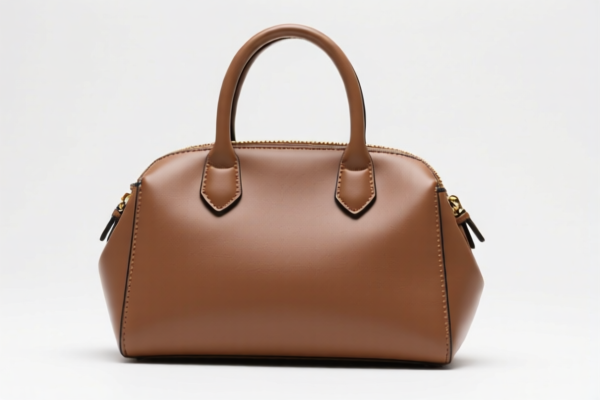
Coated Handbag
CN → US| HS编码 | 关税税率 | 原产国 | 目的国 | 文档 |
|---|---|---|---|---|
| 5903902000 | 35.0% | CN | US | 官方文档 |
| 5906992500 | 35.0% | CN | US | 官方文档 |
| 5906993000 | 38.3% | CN | US | 官方文档 |
| 5903902500 | 42.5% | CN | US | 官方文档 |
商品图片



AI分析
👜 Coated Handbag Linings & Interlinings (Fabric for Bags)
🌐 HS Code Reference & Customs Clearance Guide | 2026 Updated Tariff Analysis | Professional Strategy for US-China Trade
📌 I. Product Definition & Classification: What exactly are we importing?
The term "Coated Handbag" often refers to the component materials (linings, interlinings, or stiffeners) made from textile fabrics that have been treated to be water-resistant, durable, or stiff. In international trade, these are not finished bags but textile intermediate goods used in bag manufacturing.
They are primarily classified under Chapter 59: Textile articles impregnated, coated, covered or laminated; textile articles for technical uses.
⚠️ Key Distinction:
- If the fabric is impregnated with plastics (PVC, PU, etc.) → Generally Chapter 59.03.
- If the fabric is rubberized (coated with natural/synthetic rubber) → Generally Chapter 59.06.
- The specific HS code depends on the chemical composition of the coating and the base fiber of the textile.
📦 II. HS Code Classification Details (2026 Latest Tariff Alignment)
Based on the provided data, here are the four specific classifications for coated fabrics used in handbag manufacturing:
| HS Code | Product Description | Key Characteristics | Base Tariff | Add-on Tariff (Sec 301) | IEEPA Tariff (122 Clause) | Total Tax Rate |
|--------|--------------------------|-------------------|----------------|-----------------------|------------------------|
| 5903.90.20.00 | Coated Fabric (Plastic) | Impregnated, coated, covered, or laminated with plastic. Used for bags. Textile fabric form. | 0.0% | 25.0% | 10.0% | 35.0% |
| 5906.99.25.00 | Rubberized Fabric | Matches characteristics of rubberized textile fabrics. Material inferred as artificial or synthetic fiber. Used for bags. | 0.0% | 25.0% | 10.0% | 35.0% |
| 5906.99.30.00 | Rubberized Fabric (Other) | Matches characteristics of rubberized textile fabrics. Form is textile intermediate good. Used for bags. | 3.3% | 25.0% | 10.0% | 38.3% |
| 5903.90.25.00 | Coated Fabric (Plastic - Other) | Impregnated, coated, or laminated (unspecified plastic type). Purpose: Bags. Material unspecified but no conflict. | 7.5% | 25.0% | 10.0% | 42.5% |
🔍 Critical Note:
- Codes5903relate to plastic-coated textiles (e.g., PVC, PU).
- Codes5906relate to rubber-coated textiles (e.g., rubberized canvas).
- The difference in base tariffs (0%, 3.3%, 7.5%) depends on the specific sub-category of the coating and the base fiber composition, which must be verified against physical samples and lab reports.
💰 III. 2026 Latest Tariff Rate Breakdown (Including Surcharges & Policy Add-ons)
✅ Applicable Country: United States (US)
✅ Country of Origin: China (CN)
✅ Effective Date: November 10, 2025 (for subsequent imports)
🎯 1. 5903.90.20.00 & 5906.99.25.00
(Plastic-Coated & Synthetic Rubberized Fabrics with 0% Base Tariff)
| Item | Content |
|---|---|
| Base Duty Rate | 0% (ad valorem) |
| Section 301 Surcharge | +25% (USITC Footnote related to China-origin goods) |
| IEEPA Surcharge (122 Clause) | +10% (Targeting specific Chinese imports) |
| Total Tax Rate | 35.0% |
| Tax Calculation | CIF Value × 35% |
| De Minimis Eligibility | ❌ Not Eligible (deny_de_minimis) |
| Legal Basis Path | USITC:5903.90.20.00 + Section 301 + IEEPA:122Clause |
📌 Explanation:
- Although the base tariff is 0%, the 25% Section 301 tariff applies because the goods originate from China.
- The additional 10% IEEPA tariff is applied under specific executive orders targeting certain Chinese manufacturing inputs.
- Total burden: 35%. This is a significant cost increase that must be factored into pricing strategies.
🎯 2. 5906.99.30.00
(Rubberized Fabric with 3.3% Base Tariff)
| Item | Content |
|---|---|
| Base Duty Rate | 3.3% |
| Section 301 Surcharge | +25% |
| IEEPA Surcharge (122 Clause) | +10% |
| Total Tax Rate | 38.3% |
| Tax Calculation | CIF Value × 38.3% |
| De Minimis Eligibility | ❌ Not Eligible |
| Legal Basis Path | USITC:5906.99.30.00 + Section 301 + IEEPA:122Clause |
📌 Note:
- This code applies if the rubberized fabric does not fit into the 0% base category.
- The total tax is 3.3% higher than the 0% base codes due to the underlying duty structure.
🎯 3. 5903.90.25.00
(Other Plastic-Coated Fabrics with 7.5% Base Tariff)
| Item | Content |
|---|---|
| Base Duty Rate | 7.5% |
| Section 301 Surcharge | +25% |
| IEEPA Surcharge (122 Clause) | +10% |
| Total Tax Rate | 42.5% |
| Tax Calculation | CIF Value × 42.5% |
| De Minimis Eligibility | ❌ Not Eligible |
| Legal Basis Path | USITC:5903.90.25.00 + Section 301 + IEEPA:122Clause |
📌 Warning:
- This is the highest tax bracket in the provided data.
- It applies to coated fabrics that do not meet the specific criteria for the 0% or 3.3% base rates (e.g., different plastic types or unspecified material compositions).
- Avoid misclassification to prevent audit risks and back-taxes.
🛠️ IV. Customs Clearance Practical Advice (Real-World Pitfall Guide)
✅ 1. Preparation Checklist (Mandatory Documents)
| Document | Required | Description |
|---|---|---|
| ✅ Product Specification Sheet | ✔️ | Must detail: Base fabric type (polyester, nylon, etc.), Coating material (PVC, PU, Rubber), Thickness, Weight. |
| ✅ Lab Test Report | ✔️ | Essential to prove if the coating is Plastic (Ch 59.03) or Rubber (Ch 59.06). |
| ✅ Photos (Internal/External) | ✔️ | Show the texture, coating finish, and any labels. |
| ✅ Commercial Invoice | ✔️ | Clearly state "Coated Textile Fabric for Handbag Linings/Interlinings" – DO NOT use "Finished Handbags" if they are components. |
| ✅ Packing List | ✔️ | List net/gross weight and dimensions. |
✅ 2. Declaration Strategy (Key Rules)
🔥 "Declare Material, Not Function; Label Coating, Not Just Fabric!"
| Scenario | Correct Declaration | Incorrect Action | Consequence |
|---|---|---|---|
| PVC-Coated Polyester | 5903.90.20.00 |
Declare as "General Textile" | Missed 301/122 tariffs → Penalties |
| Rubberized Canvas | 5906.99.25.00 or .30 |
Declare as 5903 (Plastic) |
Wrong HS Code → Reclassification + Back Taxes |
| Unspecified Coating | 5903.90.25.00 (Safe High-Band) |
Guess lower code | If audited, difference between 35% and 42.5% → Huge Back Tax |
| Finished Bags | 4202 Category |
Importing components as "Finished Bags" | Fraud Risk → Seizure |
📌 Crucial Tip:
- The distinction between5903(Plastic) and5906(Rubber) is chemical.
- If you import "Coated Fabric," you must know the coating chemistry.
- If unsure, consult a lab test. Declaring rubber as plastic (or vice versa) is a common audit trigger.
✅ 3. Special Cases
| Situation | Handling Advice |
|---|---|
| OEM Components | Clearly mark as "Components for Handbags, Not for Retail Sale" to avoid duty rate confusion with finished goods. |
| Mixed Shipments | If a shipment contains both coated linings and uncoated linings, declare separately to apply correct rates. |
| Value Adjustment | Ensure CIF value includes coating costs. Customs may undervalue if only base fabric price is declared. |
🌍 V. Global Market Comparison (2026 Update)
| Country/Region | Recommended HS Code | Approx. Duty (China Origin) | Certification Notes |
|---|---|---|---|
| 🇺🇸 USA | 5903.90 / 5906.99 |
35% - 42.5% | High scrutiny on Sec 301 & IEEPA |
| 🇨🇳 China | 5903 / 5906 |
~6.5% - 10% | Standard import duty |
| 🇪🇺 EU | 5903 / 5906 |
~6.5% | No Sec 301, but check CBAM/Ecolabel |
| 🇬🇧 UK | 5903 / 5906 |
~6.5% | Post-Brexit tariff schedule applies |
📌 Conclusion:
- The US market is the most expensive for coated handbag materials from China due to the叠加 (stacked) tariffs: Base + 25% (301) + 10% (IEEPA).
- Total effective tax ranges from 35% to 42.5%.
- Importers must absorb this cost or negotiate price adjustments with suppliers.
📌 VI. Common Mistakes & Pitfalls (Blood Lessons)
❌ Mistake 1: Declaring "Coated Fabric" as "Handbags" (HS 4202)
👉 Result: Handbags may have lower base duty (e.g., 16-22%) but are still subject to 301 tariffs. However, if the goods are clearly components, misdeclaring them as finished goods is customs fraud.
❌ Mistake 2: Ignoring the IEEPA 10% Surcharge
👉 Result: Underpaying taxes. The 10% is additional to the 25%. Failure to include it leads to immediate debt notices.
❌ Mistake 3: Confusing "Plastic-Coated" (5903) with "Rubber-Coated" (5906)
👉 Result: Different base rates. If you declare PVC-coated as rubber-coated, you might pay less base duty, but the risk of reclassification and penalties is high.
❌ Mistake 4: Assuming "De Minimis" ($800) applies
👉 Result: NO. China-origin goods under 301 and IEEPA are excluded from the Section 321 de minimis exemption. Even small samples are taxed.
🎯 VII. Conclusion: Precision Matters
🎯 Key Takeaway:
🔹 "Coated Fabric is NOT just Fabric. It is a Tariff-Heavy Category."
🔹 "Base Rate + 25% (301) + 10% (IEEPA) = 35%-42.5% Total Duty."
🔹 "Declare Accurately: Plastic vs. Rubber. Do Not Guess."
📌 Pro Tip:
If you are importing large volumes, consider Advance Rulings from U.S. Customs and Border Protection (CBP) to lock in the HS code and avoid post-entry audits.
Also, evaluate if any part of the product can be classified under a different chemical composition (e.g., minor rubber content vs. major plastic) to optimize the base rate, but only with valid lab evidence.
📣 Immediate Action:
📞 Get a Lab Test on the coating material.
📄 Verify HS Code against the test results.
💸 Calculate Landed Cost including the full 35%-42.5% tariff.
🚀 Ensure Smooth Customs Clearance and avoid costly delays!
✨ Professional Clearance Starts with Accurate Classification!
💼 Your Profit Margin Depends on Correct Tariff Handling!
用户评价
关于 HS 编码归类
协调制度(HS)是由世界海关组织(WCO)制定的国际贸易商品分类标准。全球 200 多个国家采用 HS 系统作为海关关税、贸易统计和进出口监管的基础。
每个 HS 编码遵循以下层级结构:
- 章(2 位)——商品大类(例如:第 84 章:机器和机械设备)
- 品目(4 位)——章内的更具体分类
- 子目(6 位)——国际通用细分,所有 WCO 成员国统一使用
- 本国细分(8-10 位)——各国自行扩展的细分编码,如美国 HTSUS 10 位编码
正确的 HS 编码归类对于顺利通关、准确缴纳关税和遵守贸易法规至关重要。错误归类可能导致海关延误、多缴关税或罚款。
从CN进口到US时,适用的关税税率可能包括:
- 最惠国(MFN)税率——适用于 WTO 成员国的标准关税税率
- 普通税率——适用于无贸易协定国家
- 贸易救济关税——附加关税,如 301 条款(反倾销)、232 条款(国家安全)或反补贴税
本页内容仅供参考。如需正式归类,请咨询当地海关或持牌报关代理。