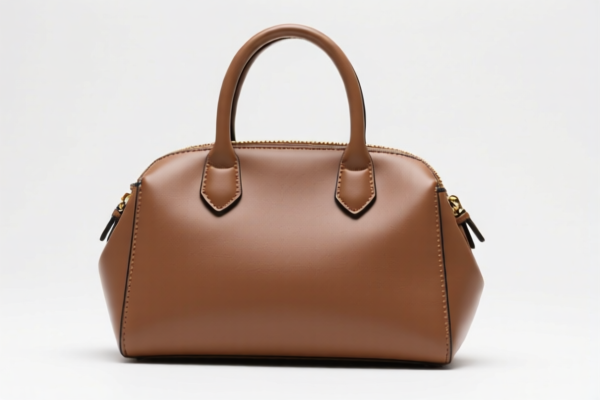
Coated Handbag
CN → US| HS Code | Tariff Rate | Origin | Destination | Doc |
|---|---|---|---|---|
| 5903902000 | 35.0% | CN | US | Official Doc |
| 5906992500 | 35.0% | CN | US | Official Doc |
| 5906993000 | 38.3% | CN | US | Official Doc |
| 5903902500 | 42.5% | CN | US | Official Doc |
Product Images



AI Analysis
👜 Coated Handbag Linings & Interlinings (Fabric for Bags)
🌐 HS Code Reference & Customs Clearance Guide | 2026 Updated Tariff Analysis | Professional Strategy for US-China Trade
📌 I. Product Definition & Classification: What exactly are we importing?
The term "Coated Handbag" often refers to the component materials (linings, interlinings, or stiffeners) made from textile fabrics that have been treated to be water-resistant, durable, or stiff. In international trade, these are not finished bags but textile intermediate goods used in bag manufacturing.
They are primarily classified under Chapter 59: Textile articles impregnated, coated, covered or laminated; textile articles for technical uses.
⚠️ Key Distinction:
- If the fabric is impregnated with plastics (PVC, PU, etc.) → Generally Chapter 59.03.
- If the fabric is rubberized (coated with natural/synthetic rubber) → Generally Chapter 59.06.
- The specific HS code depends on the chemical composition of the coating and the base fiber of the textile.
📦 II. HS Code Classification Details (2026 Latest Tariff Alignment)
Based on the provided data, here are the four specific classifications for coated fabrics used in handbag manufacturing:
| HS Code | Product Description | Key Characteristics | Base Tariff | Add-on Tariff (Sec 301) | IEEPA Tariff (122 Clause) | Total Tax Rate |
|--------|--------------------------|-------------------|----------------|-----------------------|------------------------|
| 5903.90.20.00 | Coated Fabric (Plastic) | Impregnated, coated, covered, or laminated with plastic. Used for bags. Textile fabric form. | 0.0% | 25.0% | 10.0% | 35.0% |
| 5906.99.25.00 | Rubberized Fabric | Matches characteristics of rubberized textile fabrics. Material inferred as artificial or synthetic fiber. Used for bags. | 0.0% | 25.0% | 10.0% | 35.0% |
| 5906.99.30.00 | Rubberized Fabric (Other) | Matches characteristics of rubberized textile fabrics. Form is textile intermediate good. Used for bags. | 3.3% | 25.0% | 10.0% | 38.3% |
| 5903.90.25.00 | Coated Fabric (Plastic - Other) | Impregnated, coated, or laminated (unspecified plastic type). Purpose: Bags. Material unspecified but no conflict. | 7.5% | 25.0% | 10.0% | 42.5% |
🔍 Critical Note:
- Codes5903relate to plastic-coated textiles (e.g., PVC, PU).
- Codes5906relate to rubber-coated textiles (e.g., rubberized canvas).
- The difference in base tariffs (0%, 3.3%, 7.5%) depends on the specific sub-category of the coating and the base fiber composition, which must be verified against physical samples and lab reports.
💰 III. 2026 Latest Tariff Rate Breakdown (Including Surcharges & Policy Add-ons)
✅ Applicable Country: United States (US)
✅ Country of Origin: China (CN)
✅ Effective Date: November 10, 2025 (for subsequent imports)
🎯 1. 5903.90.20.00 & 5906.99.25.00
(Plastic-Coated & Synthetic Rubberized Fabrics with 0% Base Tariff)
| Item | Content |
|---|---|
| Base Duty Rate | 0% (ad valorem) |
| Section 301 Surcharge | +25% (USITC Footnote related to China-origin goods) |
| IEEPA Surcharge (122 Clause) | +10% (Targeting specific Chinese imports) |
| Total Tax Rate | 35.0% |
| Tax Calculation | CIF Value × 35% |
| De Minimis Eligibility | ❌ Not Eligible (deny_de_minimis) |
| Legal Basis Path | USITC:5903.90.20.00 + Section 301 + IEEPA:122Clause |
📌 Explanation:
- Although the base tariff is 0%, the 25% Section 301 tariff applies because the goods originate from China.
- The additional 10% IEEPA tariff is applied under specific executive orders targeting certain Chinese manufacturing inputs.
- Total burden: 35%. This is a significant cost increase that must be factored into pricing strategies.
🎯 2. 5906.99.30.00
(Rubberized Fabric with 3.3% Base Tariff)
| Item | Content |
|---|---|
| Base Duty Rate | 3.3% |
| Section 301 Surcharge | +25% |
| IEEPA Surcharge (122 Clause) | +10% |
| Total Tax Rate | 38.3% |
| Tax Calculation | CIF Value × 38.3% |
| De Minimis Eligibility | ❌ Not Eligible |
| Legal Basis Path | USITC:5906.99.30.00 + Section 301 + IEEPA:122Clause |
📌 Note:
- This code applies if the rubberized fabric does not fit into the 0% base category.
- The total tax is 3.3% higher than the 0% base codes due to the underlying duty structure.
🎯 3. 5903.90.25.00
(Other Plastic-Coated Fabrics with 7.5% Base Tariff)
| Item | Content |
|---|---|
| Base Duty Rate | 7.5% |
| Section 301 Surcharge | +25% |
| IEEPA Surcharge (122 Clause) | +10% |
| Total Tax Rate | 42.5% |
| Tax Calculation | CIF Value × 42.5% |
| De Minimis Eligibility | ❌ Not Eligible |
| Legal Basis Path | USITC:5903.90.25.00 + Section 301 + IEEPA:122Clause |
📌 Warning:
- This is the highest tax bracket in the provided data.
- It applies to coated fabrics that do not meet the specific criteria for the 0% or 3.3% base rates (e.g., different plastic types or unspecified material compositions).
- Avoid misclassification to prevent audit risks and back-taxes.
🛠️ IV. Customs Clearance Practical Advice (Real-World Pitfall Guide)
✅ 1. Preparation Checklist (Mandatory Documents)
| Document | Required | Description |
|---|---|---|
| ✅ Product Specification Sheet | ✔️ | Must detail: Base fabric type (polyester, nylon, etc.), Coating material (PVC, PU, Rubber), Thickness, Weight. |
| ✅ Lab Test Report | ✔️ | Essential to prove if the coating is Plastic (Ch 59.03) or Rubber (Ch 59.06). |
| ✅ Photos (Internal/External) | ✔️ | Show the texture, coating finish, and any labels. |
| ✅ Commercial Invoice | ✔️ | Clearly state "Coated Textile Fabric for Handbag Linings/Interlinings" – DO NOT use "Finished Handbags" if they are components. |
| ✅ Packing List | ✔️ | List net/gross weight and dimensions. |
✅ 2. Declaration Strategy (Key Rules)
🔥 "Declare Material, Not Function; Label Coating, Not Just Fabric!"
| Scenario | Correct Declaration | Incorrect Action | Consequence |
|---|---|---|---|
| PVC-Coated Polyester | 5903.90.20.00 |
Declare as "General Textile" | Missed 301/122 tariffs → Penalties |
| Rubberized Canvas | 5906.99.25.00 or .30 |
Declare as 5903 (Plastic) |
Wrong HS Code → Reclassification + Back Taxes |
| Unspecified Coating | 5903.90.25.00 (Safe High-Band) |
Guess lower code | If audited, difference between 35% and 42.5% → Huge Back Tax |
| Finished Bags | 4202 Category |
Importing components as "Finished Bags" | Fraud Risk → Seizure |
📌 Crucial Tip:
- The distinction between5903(Plastic) and5906(Rubber) is chemical.
- If you import "Coated Fabric," you must know the coating chemistry.
- If unsure, consult a lab test. Declaring rubber as plastic (or vice versa) is a common audit trigger.
✅ 3. Special Cases
| Situation | Handling Advice |
|---|---|
| OEM Components | Clearly mark as "Components for Handbags, Not for Retail Sale" to avoid duty rate confusion with finished goods. |
| Mixed Shipments | If a shipment contains both coated linings and uncoated linings, declare separately to apply correct rates. |
| Value Adjustment | Ensure CIF value includes coating costs. Customs may undervalue if only base fabric price is declared. |
🌍 V. Global Market Comparison (2026 Update)
| Country/Region | Recommended HS Code | Approx. Duty (China Origin) | Certification Notes |
|---|---|---|---|
| 🇺🇸 USA | 5903.90 / 5906.99 |
35% - 42.5% | High scrutiny on Sec 301 & IEEPA |
| 🇨🇳 China | 5903 / 5906 |
~6.5% - 10% | Standard import duty |
| 🇪🇺 EU | 5903 / 5906 |
~6.5% | No Sec 301, but check CBAM/Ecolabel |
| 🇬🇧 UK | 5903 / 5906 |
~6.5% | Post-Brexit tariff schedule applies |
📌 Conclusion:
- The US market is the most expensive for coated handbag materials from China due to the叠加 (stacked) tariffs: Base + 25% (301) + 10% (IEEPA).
- Total effective tax ranges from 35% to 42.5%.
- Importers must absorb this cost or negotiate price adjustments with suppliers.
📌 VI. Common Mistakes & Pitfalls (Blood Lessons)
❌ Mistake 1: Declaring "Coated Fabric" as "Handbags" (HS 4202)
👉 Result: Handbags may have lower base duty (e.g., 16-22%) but are still subject to 301 tariffs. However, if the goods are clearly components, misdeclaring them as finished goods is customs fraud.
❌ Mistake 2: Ignoring the IEEPA 10% Surcharge
👉 Result: Underpaying taxes. The 10% is additional to the 25%. Failure to include it leads to immediate debt notices.
❌ Mistake 3: Confusing "Plastic-Coated" (5903) with "Rubber-Coated" (5906)
👉 Result: Different base rates. If you declare PVC-coated as rubber-coated, you might pay less base duty, but the risk of reclassification and penalties is high.
❌ Mistake 4: Assuming "De Minimis" ($800) applies
👉 Result: NO. China-origin goods under 301 and IEEPA are excluded from the Section 321 de minimis exemption. Even small samples are taxed.
🎯 VII. Conclusion: Precision Matters
🎯 Key Takeaway:
🔹 "Coated Fabric is NOT just Fabric. It is a Tariff-Heavy Category."
🔹 "Base Rate + 25% (301) + 10% (IEEPA) = 35%-42.5% Total Duty."
🔹 "Declare Accurately: Plastic vs. Rubber. Do Not Guess."
📌 Pro Tip:
If you are importing large volumes, consider Advance Rulings from U.S. Customs and Border Protection (CBP) to lock in the HS code and avoid post-entry audits.
Also, evaluate if any part of the product can be classified under a different chemical composition (e.g., minor rubber content vs. major plastic) to optimize the base rate, but only with valid lab evidence.
📣 Immediate Action:
📞 Get a Lab Test on the coating material.
📄 Verify HS Code against the test results.
💸 Calculate Landed Cost including the full 35%-42.5% tariff.
🚀 Ensure Smooth Customs Clearance and avoid costly delays!
✨ Professional Clearance Starts with Accurate Classification!
💼 Your Profit Margin Depends on Correct Tariff Handling!
Customer Reviews
About HS Code Classification
The Harmonized System (HS) is an internationally standardized nomenclature developed by the World Customs Organization (WCO) to classify traded products. Over 200 countries use the HS system as the basis for customs tariffs, trade statistics, and import/export regulations.
Each HS code follows a hierarchical structure:
- Chapter (2 digits) — Broad category of goods (e.g., Chapter 84: Machinery and Mechanical Appliances)
- Heading (4 digits) — More specific grouping within the chapter
- Subheading (6 digits) — Internationally standardized breakdown, used by all WCO member countries
- National subdivisions (8-10 digits) — Country-specific extensions for further classification, such as US HTSUS 10-digit codes
Correct HS code classification is essential for smooth customs clearance, accurate duty payment, and compliance with trade regulations. Misclassification can lead to customs delays, overpayment of duties, or penalties.
When importing from CN to US, the applicable tariff rates may include:
- Most-Favored-Nation (MFN) rate — The standard duty rate applied to WTO members
- General rate — Applied to countries without trade agreements
- Trade remedy duties — Additional tariffs such as Section 301 (anti-dumping), Section 232 (national security), or countervailing duties
The information provided on this page is for reference purposes only. For official classification, please consult with your local customs authority or a licensed customs broker.